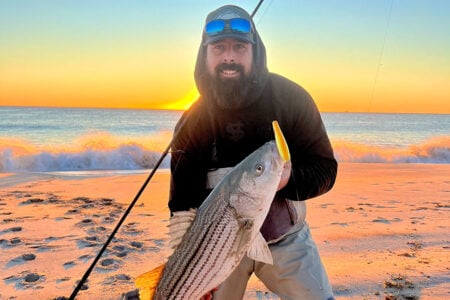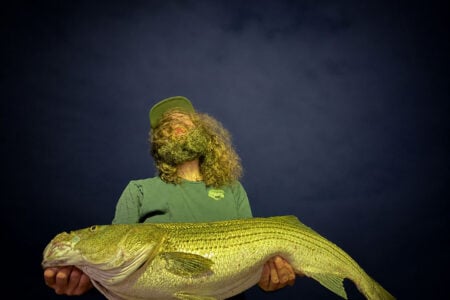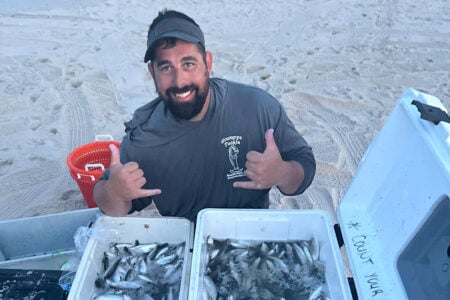
Outflows remain one of the most reliable producers for fall run surfcasters.
Year after year, outflows—or breachways, as we call them in Rhode Island—remain some of the most consistent destinations for surfcasters targeting striped bass. Even during lean seasons, these rocky tidal funnels continue to produce dependable action.
I cut my teeth as a surfcaster on outflows. For years, the vast majority of my surf fishing took place along the granite-lined channels connecting Rhode Island’s South County salt ponds to the open Atlantic. At one point, I did a rough calculation and realized I had spent well over a full year’s worth of tides on one particular wall alone. The number of Korkers scrapes I’ve left on those granite slabs is probably impossible to calculate, but for every scar I left behind, I caught a few fish.
Over those hundreds of night tides, one thing became abundantly clear: success follows a pattern. It’s not a rigid formula, but rather a loose schedule of conditions that consistently stacks the odds in my favor.
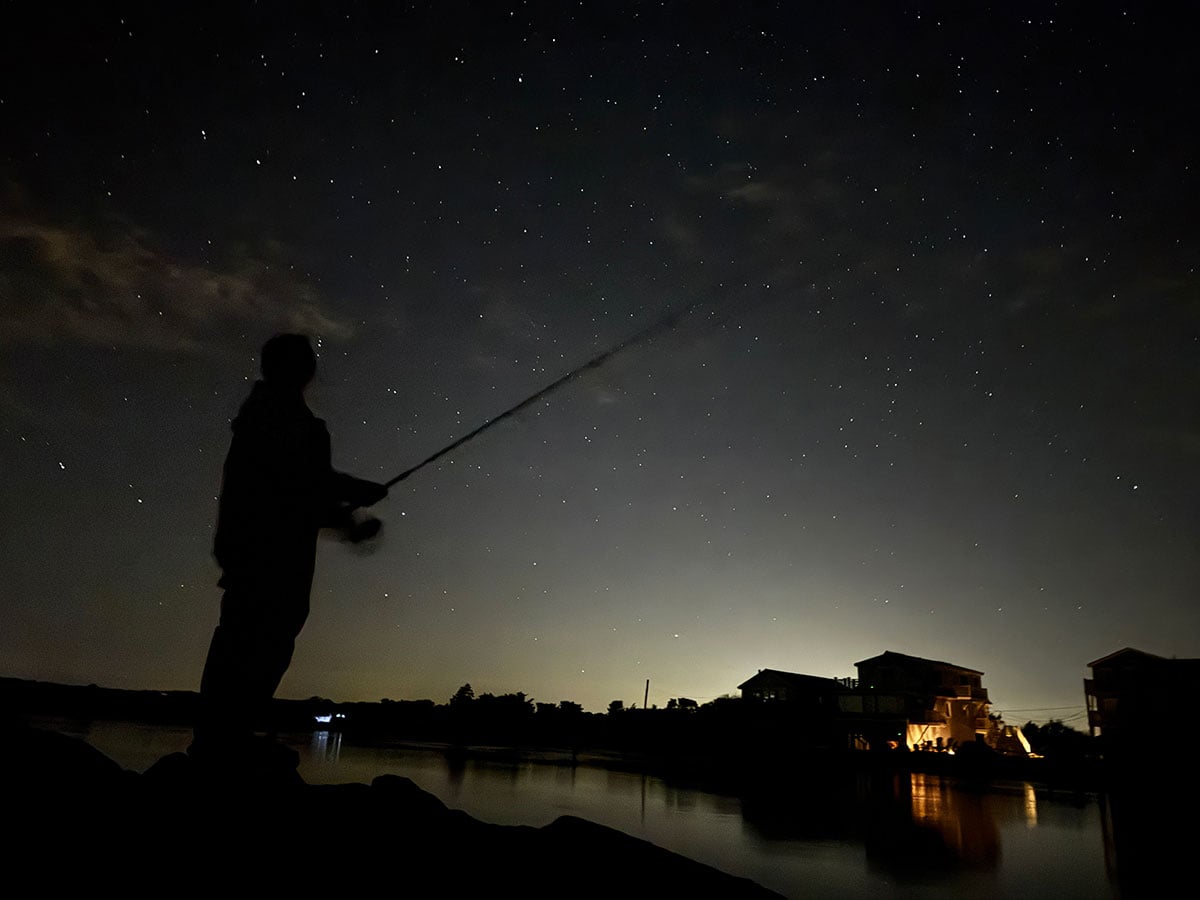
The Darker The Better. The shallower the channel, the more important a dark night becomes. Darkness can come in the form of the new moon, heavy cloud cover, or simply timing a trip before the moon rises or after it sets. Preferring dark nights isn’t exactly groundbreaking among surfcasters, but I believe it plays an even greater role in outflows than it does on the open beach, especially when targeting larger striped bass.
A dark night can overcome a lot of shortcomings. I’ve watched it compensate for a lack of visible bait, an unfavorable wind, and even less-than-ideal water conditions. It’s not magic, but there are nights when darkness seems to be the only ingredient separating success from failure.
There are, of course, exceptions. I’ll never forget watching a school of adult bunker get absolutely annihilated by giant bluefish beneath the bright light of a late-fall full moon. But memorable nights like that are rare. I can count them on one hand—and probably still have a finger or two left to angrily shake at that bright orb hanging over the water.
The Moon Moves Fish. Whether it’s the stronger tidal currents associated with the new and full moons, or something only the fish themselves can sense, I consistently experience better fishing during the major moon phases than I do around the quarters. The moon’s influence on striped bass is hardly a revolutionary topic—it’s probably the opening chapter in the book of surfcasting clichés—but my logbooks repeatedly point to it as one of the clearest differences between average nights and exceptional ones.
Many marine species organize their lives around the lunar cycle. Migration, spawning, and feeding are all influenced by the moon, and each of those rhythms plays out within the compact ecosystem of a fall outflow.
Bait: Not Always the Deciding Factor. I certainly prefer to fish breachways when baitfish are visible. Watching peanut bunker spray against the rocks or schools of mullet erupt across the channel is enough to make any surfcaster’s pulse quicken. But what you can see isn’t always what’s driving the bite.
Even when the surface appears lifeless, there is almost always something moving through the channel. Porgies, squid, fluke and other flatfish, weakfish, snapper blues, adult bunker, eels, black sea bass, sea robins, and even small striped bass all inhabit the salt ponds during the warmer months. As autumn progresses, they begin their migration to the ocean, and they must pass through the narrow confines of the outflow.
That seasonal migration is one of the primary reasons breachways remain such reliable producers throughout the fall. They serve as natural bottlenecks, concentrating an incredible variety of prey into a relatively small area. Large striped bass know this, and they return tide after tide to take advantage of what amounts to an all-you-can-eat buffet flowing straight toward the sea.