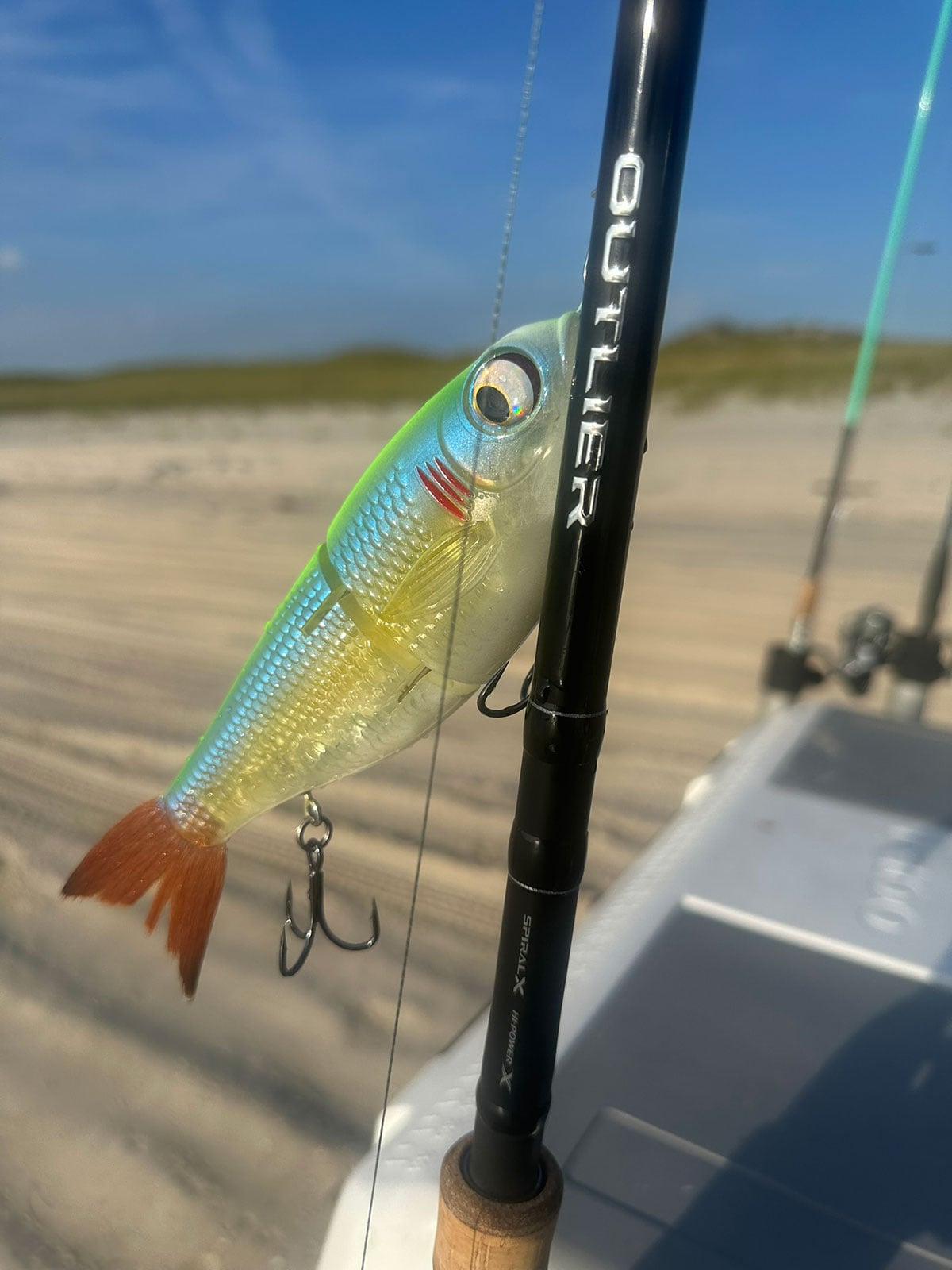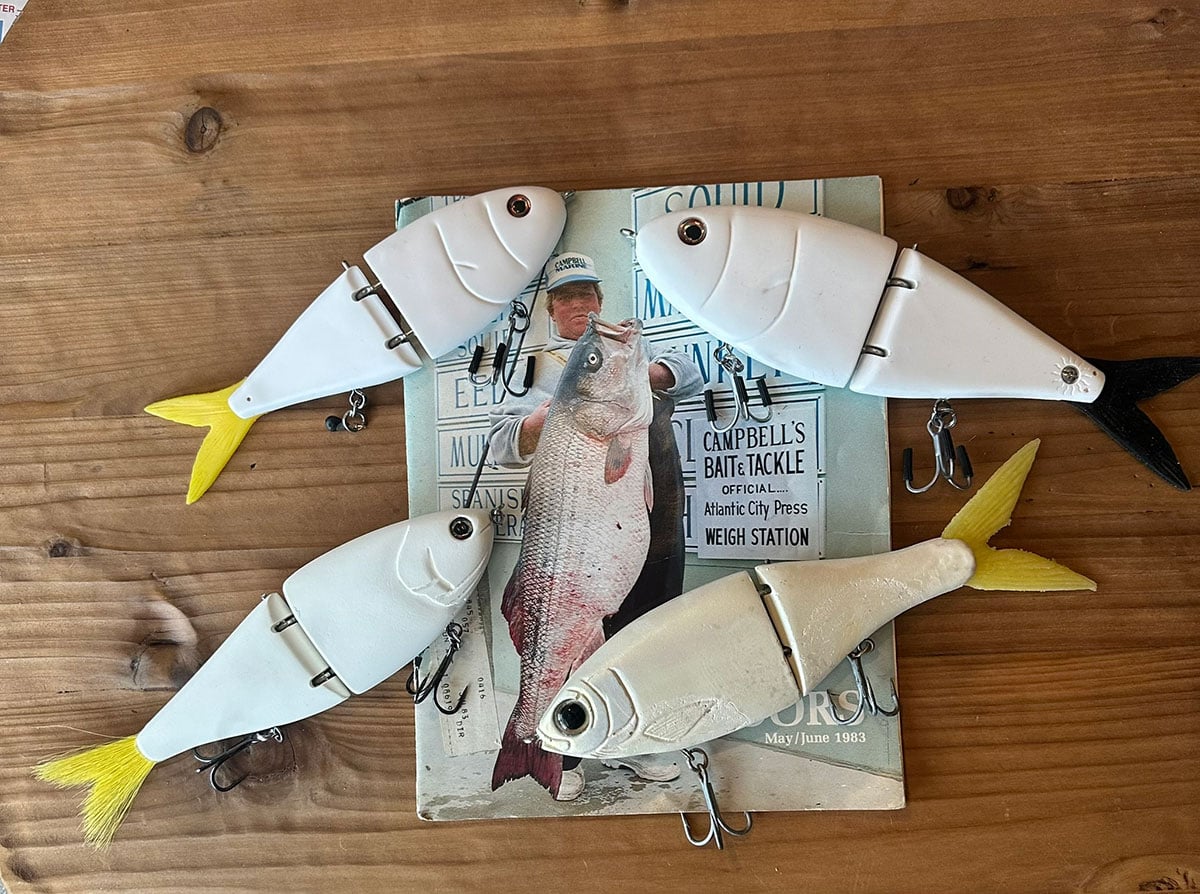
Glide baits may be the hottest thing going since the advent of graphite and braid.
This year marks the 70th anniversary of the first striped bass I ever landed all by myself. It happened on a warm August morning.
The fish weighed 28-1/2 pounds, and it was everything I thought it would be. It was a feeling I had not had prior. I was so amped up that as soon as I landed this beautiful fish I asked my dad for one of his cigarettes to calm my nerves! The year was 1956, and I was 10 years old. It is hard to believe that all these years have passed, and not only do I still remember how I felt then, I still get the same feeling today. From that day forward I was truly hooked for life; on striped bass of course!
In 1943, my family bought a summer home in Belmar for $3,500. My dad quickly became addicted to fishing the surf for stripers. His first surf rod was a Calcutta that he bought from Belmar rod-builder George Scheider. This rod along with two other Calcutta sticks cost $3.50 each in 1948. They were usually equipped with either a Pflueger or Penn conventional reel.
I still own all three of these Calcutta poles. Every fall I take out his Calcutta rod and try to catch a striper in his memory, and this fall I plan to use a $100 glide bait on that $3.50 rod!
Prior to the 1980s everyone used fiberglass fishing rods. But throughout the decade graphite rods would become more popular. When I was a teenager in the 1960s, I remember seeing a graphite rod – a Browning Silaflex at George Guy Rod and Gun Shop in Belmar. However it was so expensive that very few fishermen could afford it.
As time passed graphite fibers became cheaper to produce which made graphite rods more affordable to anglers. Rods made out of graphite were lighter, stronger, stiffer and more sensitive which made them popular for surf fishing with both bait and lures. Graphite rods are a must when using a glide baits.
The development of braided super lines had one of the largest impacts on surf fishing since the invention of the spinning reel. This thin diameter yet super strong line allowed anglers to cast farther without sacrificing strength. When fishing glide baits I recommend minimum of 50-pound braid with 60- to 80-pound fluorocarbon leader. This leader has a refractive index that closely matches water, which makes it virtually undetectable to striped bass and other gamefish. This is a must when fishing glide baits.
Gliding In, ‘62 To ‘26
Minnow plugs hit the surf in 1962. Lauri Rapala of Finland appeared in a Life Magazine article which introduced a lure that mimicked the movements of an injured minnow. Rapala made his first lures out of cork that he whittled, carved and sanded into shape. Tinfoil from chocolate bar wrapping formed the outer sides in order to impart a silvery flash in the water. To protect the lure’s surface and make it more durable Rapala used melted photographic negatives as a coating. This Rapala Minnow was the forefather of the swimming minnow lures that are staples in surfcasting today.
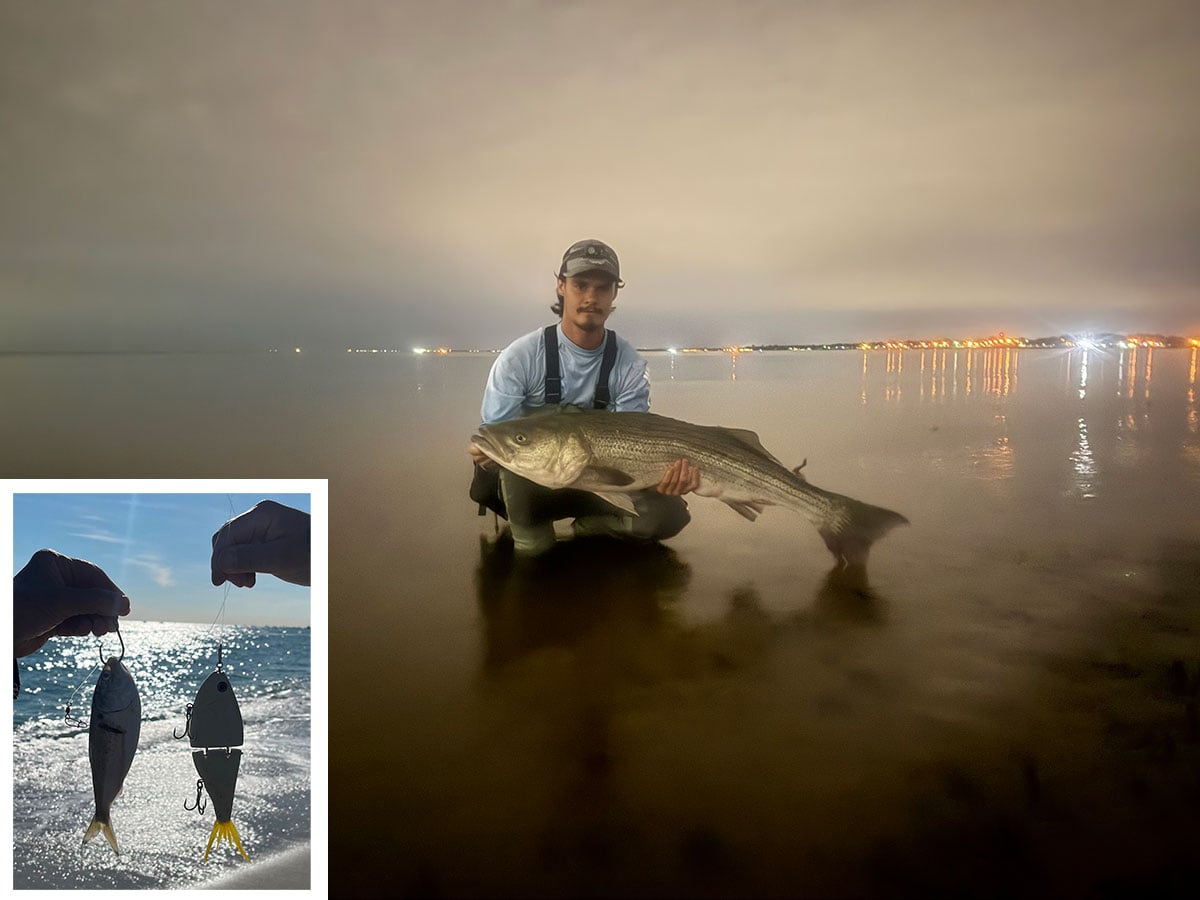
Flash forward over 60 years into the 2025-2026 surf scene and the new game-changer has been the Stride Baits glide bait. This lure was designed by Jesse Stanislaw from Somers Point, NJ. These slow-sinking resin baits are specifically designed to target large striped bass and other gamefish along the surf and back bay. Stride Baits come in sizes from 8 inches to 12 inches equipped with heavy-duty wire and BKK treble hooks. The Stride glide bait was one of the biggest “game-changers” that I have witnessed over the past two seasons. Jesse tests every lure to make sure it has the proper movement in the water. He has a piece of mono leader on every one of his lures tied to a fixed split ring. This shows it was field test before selling. They swim well right out of the package every time; my advice is that you make sure you have one n your plug bag arsenal.
SOL Lures are a handmade, poured resin glide bait; these are precision, custom-built lures that have amazing action. They come in 8-1/2- and 10-1/2-inch sizes equipped with BKK Fangs 63 UA 1/0 hooks. I have caught many stripers on this glide bait as it is one of my favorites. I always haven an SOL glide bait in my plug bag, right next to my Stride.
The Tactical Anglers (TA) Hybrid glide bait is new for 2026, and surfcasters will love the adaptability of this Alberto Knie creation. The TA Hybrid glide bait has outstanding balance for outstanding casting ability, with its sturdy-build, state-of-the-art technology. A slow-suspending action with real baitfish profile, it can be fished countless ways – you can glide it, and it chops easily without any difficulty. The action is so simple and natural. It can be fished near the surface and suspended on the pause, which allows you to fish it in the strike zone. They come in at 7 inches and weigh 2.75 ounces in a variety of colors. They have my full endorsement and I can’t wait to use them this fall.
Like many others, the Fish Everything glide baits are expensive because they require intensive amounts of work due to being handmade from the best materials. The Fish Everything glide baits are produced in small batches instead of being factory made, which is what makes them a little pricier. That said, they are absolutely worth every penny. You get what you pay for with this glide bait and you will not be disappointed.
Mast-produced glide baits that are more affordable include the Berkley Soft Side Glide Bait 10-inch (slow sinking), the Storm Arashi Glide 7-1/2-incher (slow sinking), Strike King’s Hog Father Jr. swim bait at 7 inches, and the Yo-Zuri Pro Series Glide Bait at 7 inches, just to name a few.
Another new glide bait this season is the JYG Glyde bait, a factory-made glide bait. This bait has a 250-pound rated wire with a through-head design. The JYG Glyde can be finely tuned to make longer glides and more hang time, by keeping the eyebolts in. When the eyebolts are out the bait will have tighter chops. With 8 inches of resin, wired through-head and 400-pound hook hangers, these baits swim well for around $50.
How To Fish A Glide
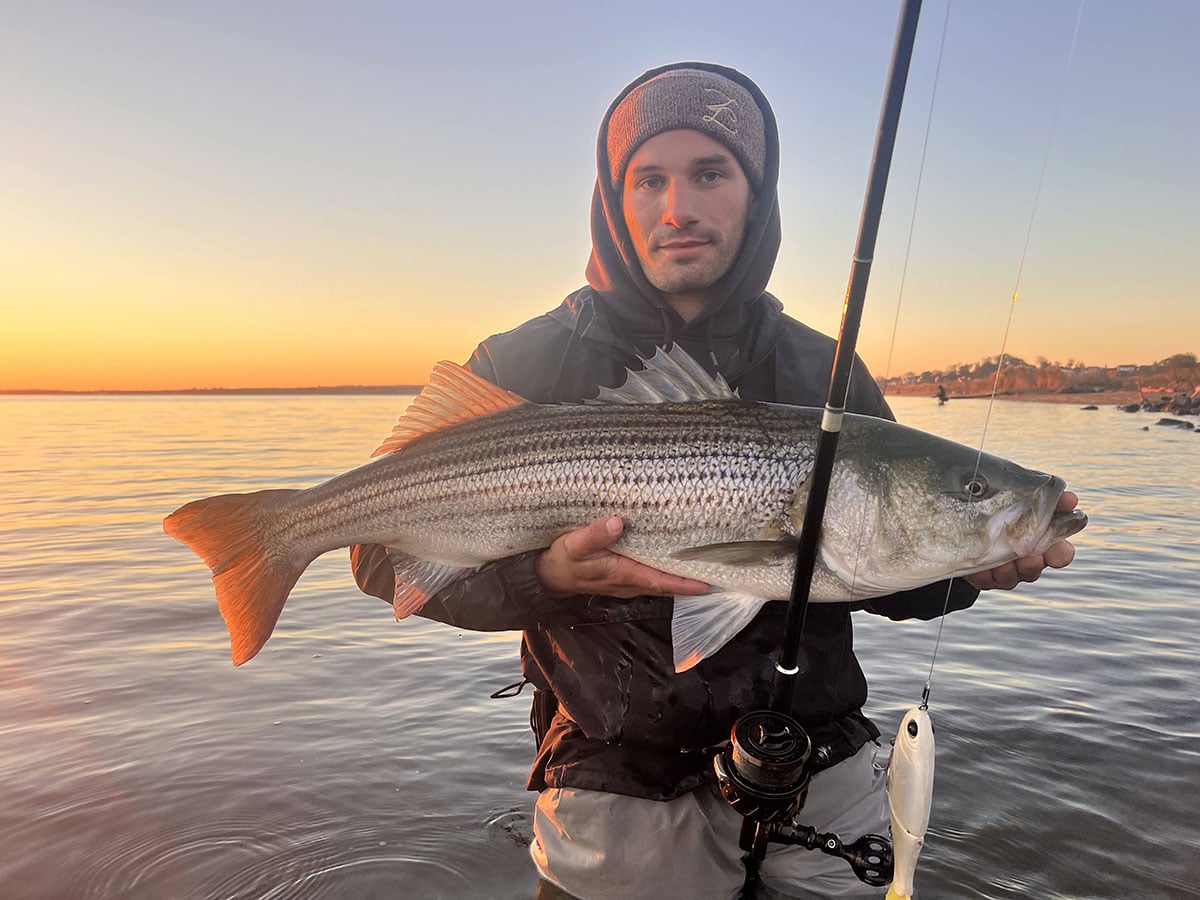
When it comes to technique, I like to fish the rod tip level or just below my waist. I use a slow, straight and steady retrieve with sporadic half-turns on the reel handle to create a wide side-to-side swimming action. I also like to pause and vary my retrieve. Word of advice, don’t snap the rod tip. Instead make smooth, rhythmic half-turns; this will make it glide gracefully, moving from left to right.
If you find that striped bass are only following and not committing, speed up the retrieve so it looks like a baitfish that is fleeing. I’ve found this method, at times, is what will generate and cause a strike to happen.
On the spinning side, my ‘go to’ rods are the St. Croix Legend Surf 10-1/2-foot rod rated 2 to 6 ounces, and the Tsunami SaltX 11-foot spinning rod rated for lures from 2 to 8 ounces. These particular rods provide maximum distance for casting heavy plugs and glide baits. Use 50- to 65-pound braid and a fluoro shock leader of 60 to 80 pounds. Reels of note include the Van Staal VS 200 X2 and VS 250 X2, ZeeBaas Zx-27 and the SaltX II 6000 series. All these reels are high-end and sealed for protection.
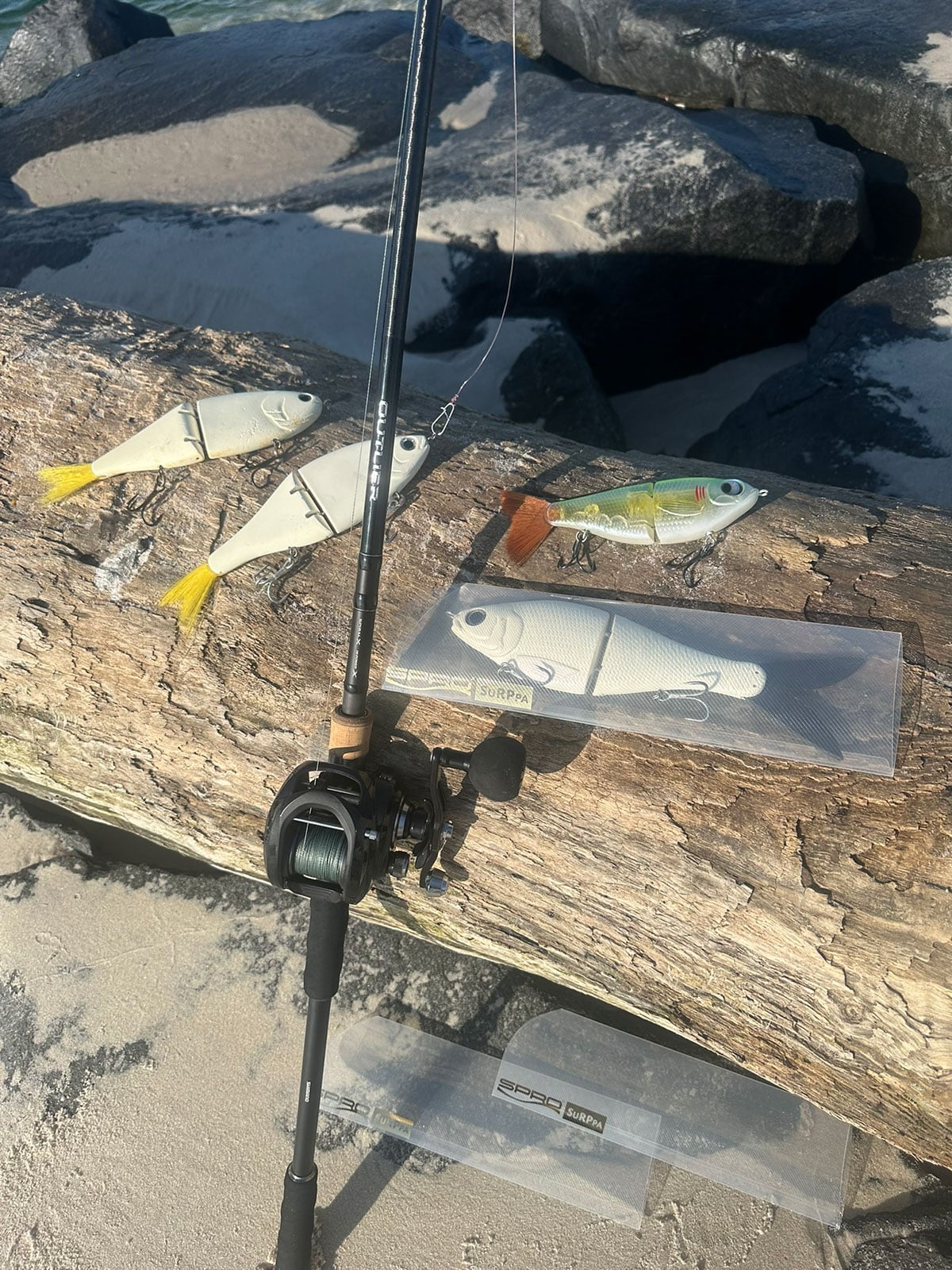
From a conventional standpoint, new this year is the Shimano Outlier conventional casting rod, designed for fishing glide baits, with a two-piece butt joint design. This massive 8-footer has ultra-strong performance when working a glide bait. The XX Heavy model has a lure rating of 6 to 14 ounces but is rated to use up to 100-pound braid; if you are a conventional surfcaster this rod is a must!
Other conventional rods to consider are the St. Croix Legend Tournament and Legend Elite Musky Series. They are lightweight rods that can handle lures up to 6 ounces, and can be paired with your favorite low profile conventional reel like Shimano Tranx, Abu Beast, Daiwa Lexa or the inexpensive Piscifun.
After 70 years, my utter joy for fishing today is the same as it was when I first started. Nothing has changed in terms of my attitude and love for fishing. What does continually change of course is equipment and technology. Glide baits have been a staple on the freshwater scene, and now they’ve made their presence in the saltwater surf well-known, getting credit that they well deserve.
They sure got me; in fact, glide baits have made me a little more excited about the fall run this season. Just make sure you are equipped with one or two as well.