Affordable and effective reel spooling at home.
I have been fishing for 50 plus years, and if there is one thing I have mastered it is getting the most bang for my buck where spinning reels are concerned. I am not talking about finding the best reel for the dollar value, I am talking about getting the best performance by spooling up the reel the “right way,” and in the most affordable fashion.
We have all witnessed the angler trying to cast from a pier, beach or boat, only to see the lure go about 25 feet and the spool looks empty. How about, “Braid is too expensive and I’m spending way too much money to fill a spool with 400 yards of the stuff.”
Over the years I have changed some things, but the bottom line is if you start off right – the arbor knot or tape, correct amount of backing and a full spool, you get the best results.
The Knot, or Tape. The first time I got a spool filled was way back in 1978 at Great Eastern in Bay Shore, NY. I bought my first-ever new reel – a 300 Garcia Mitchell, which spins backwards! Well, the “tech” at the store did not know this and after my first cast, and then trying to reel it in to no avail, I stripped the reel. The first thing I noticed was some kind of knot holding the line to the spool. To me it looked like 15 half hitches, but I can assure you, it was not an arbor knot. To this day I use an arbor knot 90% of the time, but I also use a piece of blue painters’ tape as well at times. I have never, and I mean never, had the line slip on a spool. For the skeptical ones, use the arbor knot; easy to tie, even easier to Google.
The Backing. Here is where you will save spending a lot of money on braid; fill the spool with backing to where it needs to be, and if heaven forbid you get down to the backing, the line and knot will hold so you can land the fish. When I first started surfcasting, there was no braid, so Ande 15-pound pink monofilament was the line choice for our Crack and Luxor 300 and Penn 300Z. We experimented with different kinds of backing and finally (I’m sure some old guy told us about it) began using yarn. Good old fashioned knitting yarn; it allowed the mono to be wound on tight and stay tight. As braid became the source, the yarn was replaced with monofilament. No, you do not need to get the highest price mono you can find. Quite frankly, as I have never gotten down to the mono, I use the cheapest I can find. The final height on the reel with backing will be determined in the next phase. For the knot from backing to braid – double Uni-Knot or GT Knot.
Top It Off. The final step is to top off the reel with your desired braid of choice. What braid is best…your guess is as good as mine, but I will tell you one thing; once you find one you like and trust, use it until it fails you. The tricky part is knowing how full to fill the reel with backing. This will take trial and error. Look, I do not care how far you think you can cast, but trust me, it isn’t 300 yards, it isn’t 200 yards and believe it or not fellas, it probably isn’t 100 yards. I use the 25% rule where I get the maximum distance, I can cast a specific spinning reel based on past performance and add 25%.
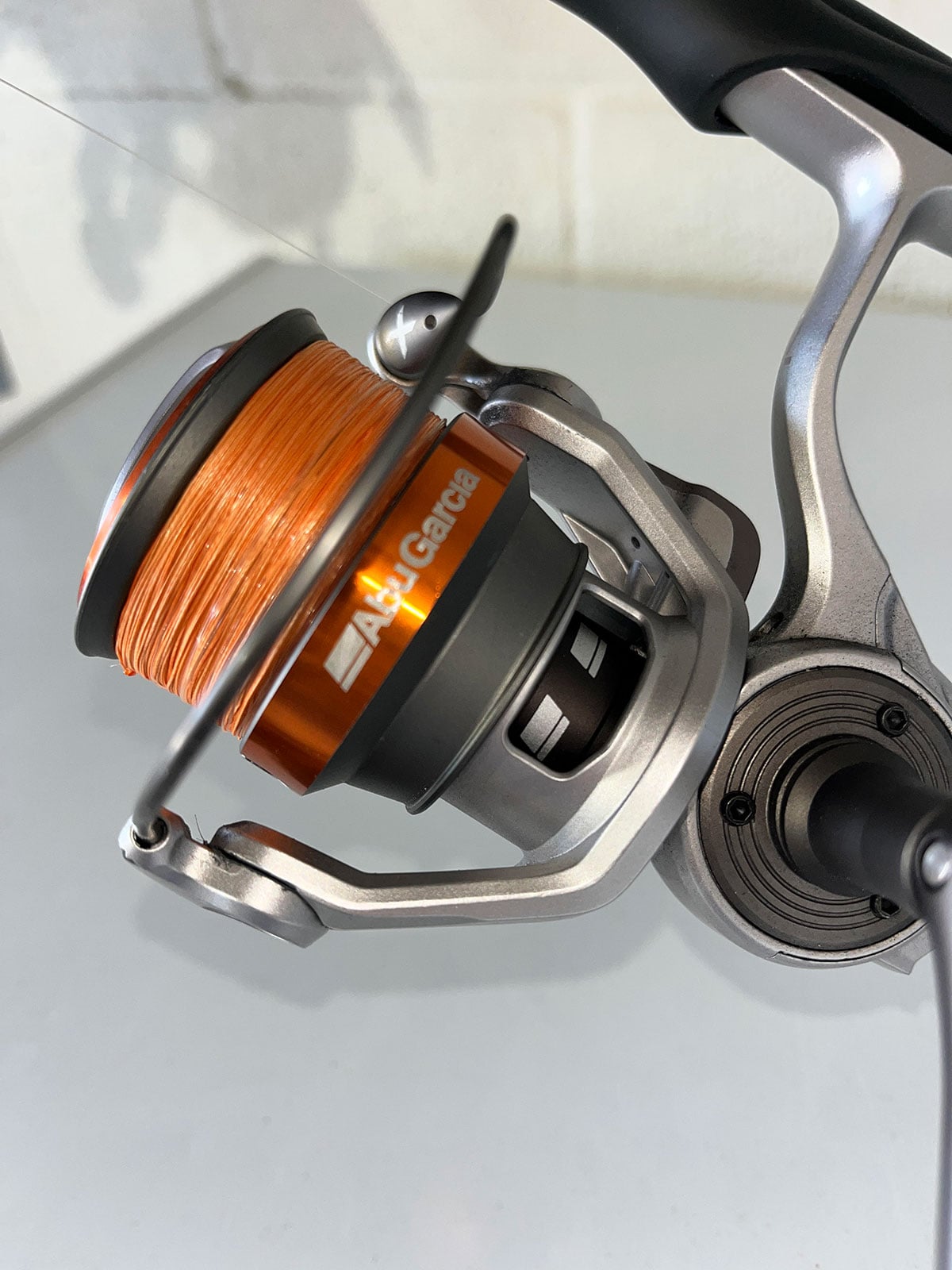
The final step is to fill the reel to its maximum capacity based on sight. I like my braid to be within 1/32 or less of the spool’s lip. “But Tom, then the line just falls off and gets all kinds of wind loops.” No, it really doesn’t, but here’s the key – pay attention to your spool at all times. If you are using a light lure and make multiple casts, your line will be loose as a goose on the spool and probably overflowing, and is about to give you the nastiest win loop you have ever seen. On the other hand, if you were paying attention and then made a cast and tightened up to spool, you will almost never have an issue.
Spools filled “right” will give you the best bang for your buck, and make your day on the water fun and less stressful. Give it a shot, I am sure you will say, “Thanks Tom!”
Learn to tie the uni-to-uni and other knots at www.thefisherman.com/fishing-knots.
PHOTO CAPTION
A properly filled spool will be right at the spool’s lip.