While the fall migration winds down, some striped bass remain in Long Island’s protected backwaters.
For most Long Island surfcasters, December signals the end of another striped bass season. The large schools of migrating fish that provided outstanding action throughout October and November have mostly moved south, leaving quieter beaches and fewer anglers along the shoreline.
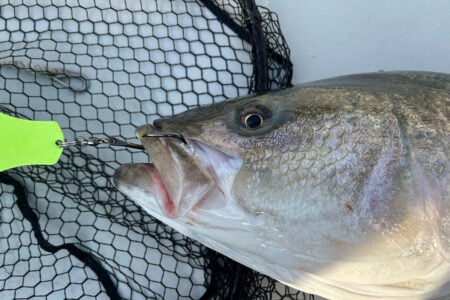
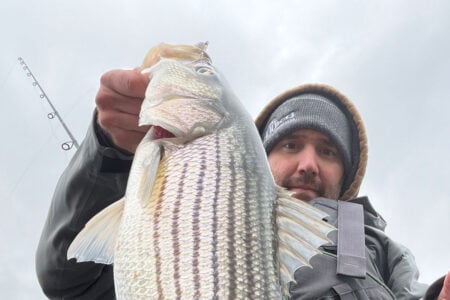
However, not every striped bass follows the same migratory pattern. Some remain in the region throughout winter, settling into protected bays, tidal creeks, rivers and deeper channels where conditions are more stable.
These holdover fish offer a different type of striped bass fishing than what anglers experience during the spring and fall migrations. Success often comes down to understanding water temperature, locating smaller baitfish and slowing down presentations to match the conditions.
Not Every Bass Heads South
Striped bass are known for their annual migrations along the Atlantic Coast, but not every fish makes the entire journey. Smaller bass, particularly juveniles and younger adults, sometimes remain in coastal estuaries rather than following larger fish south.
Long Island’s extensive network of back bays, tidal rivers and protected waterways provides ample winter habitat. Jamaica Bay, the western South Shore backwaters and portions of the Great South Bay all contain deeper channels and creek systems where fish may find suitable conditions.
Unlike migrating bass that travel considerable distances following baitfish, holdovers tend to make smaller movements within their winter habitat. They may shift between deeper holding areas and nearby feeding grounds depending on tides, temperatures and available forage.
These fish aren’t necessarily concentrated in the same locations every winter. Water conditions, bait availability and the severity of the season can all influence where they settle.
Don’t Overlook The North Shore
While the South Shore receives much of the attention when discussing winter striped bass, the North Shore shouldn’t be overlooked. Long Island Sound’s numerous harbors, tidal creeks and protected embayments provide the type of habitat worth investigating during the colder months.
Areas such as Huntington Harbor, Stony Brook Harbor, Port Jefferson Harbor and Mount Sinai Harbor feature deeper channels, tidal creeks and relatively protected water. These are the types of environments where smaller striped bass may remain after the larger migratory fish have departed.
The North Shore also offers an interesting combination of shallow flats, muddy bottom, marsh edges and deeper channels. During periods of mild weather, shallow water can warm slightly, potentially drawing baitfish into areas adjacent to deeper holding water.
Creek mouths and the entrances to smaller coves are worth investigating, especially where moving water creates noticeable current seams. Fish may position themselves along these edges to intercept small baitfish being carried through the system.
The Nissequogue River and other tidal waterways along the North Shore also provide examples of the type of habitat that can support smaller striped bass. However, the presence of suitable habitat doesn’t guarantee fish will be holding there, making exploration and observation particularly important.
Unlike fishing the open beaches, North Shore backwater fishing often requires shorter casts and more precise presentations. A small soft plastic worked along a channel edge or slowly retrieved past a bridge piling may be all that’s needed to draw a strike.
Access can be another consideration, as many North Shore shorelines are bordered by private property and residential development. Public parks, legal shoreline access points and areas accessible by kayak or small boat can provide opportunities to explore these waters.
Temperature Changes Everything
Water temperature becomes one of the most important factors when targeting striped bass during December. As temperatures fall through the 50s and into the 40s, the fish generally become less active and conserve energy between feeding opportunities.
This doesn’t mean striped bass stop eating altogether. Instead, their feeding windows may become shorter, and they often favor areas where food can be intercepted without expending unnecessary energy.
Channel edges, creek mouths, bridge pilings and deeper holes are all worth investigating. These areas can provide current breaks and access to baitfish moving with the tide.
Even small temperature changes can make a difference during the colder months. A shallow bay warmed by afternoon sunshine may attract baitfish, while deeper channels provide more stable conditions during extended periods of freezing weather.
Anglers should pay attention to weather patterns rather than relying entirely on the tide chart. A few consecutive mild days may create a better feeding opportunity than fishing immediately after a sharp cold front.
Small Baits Become Important
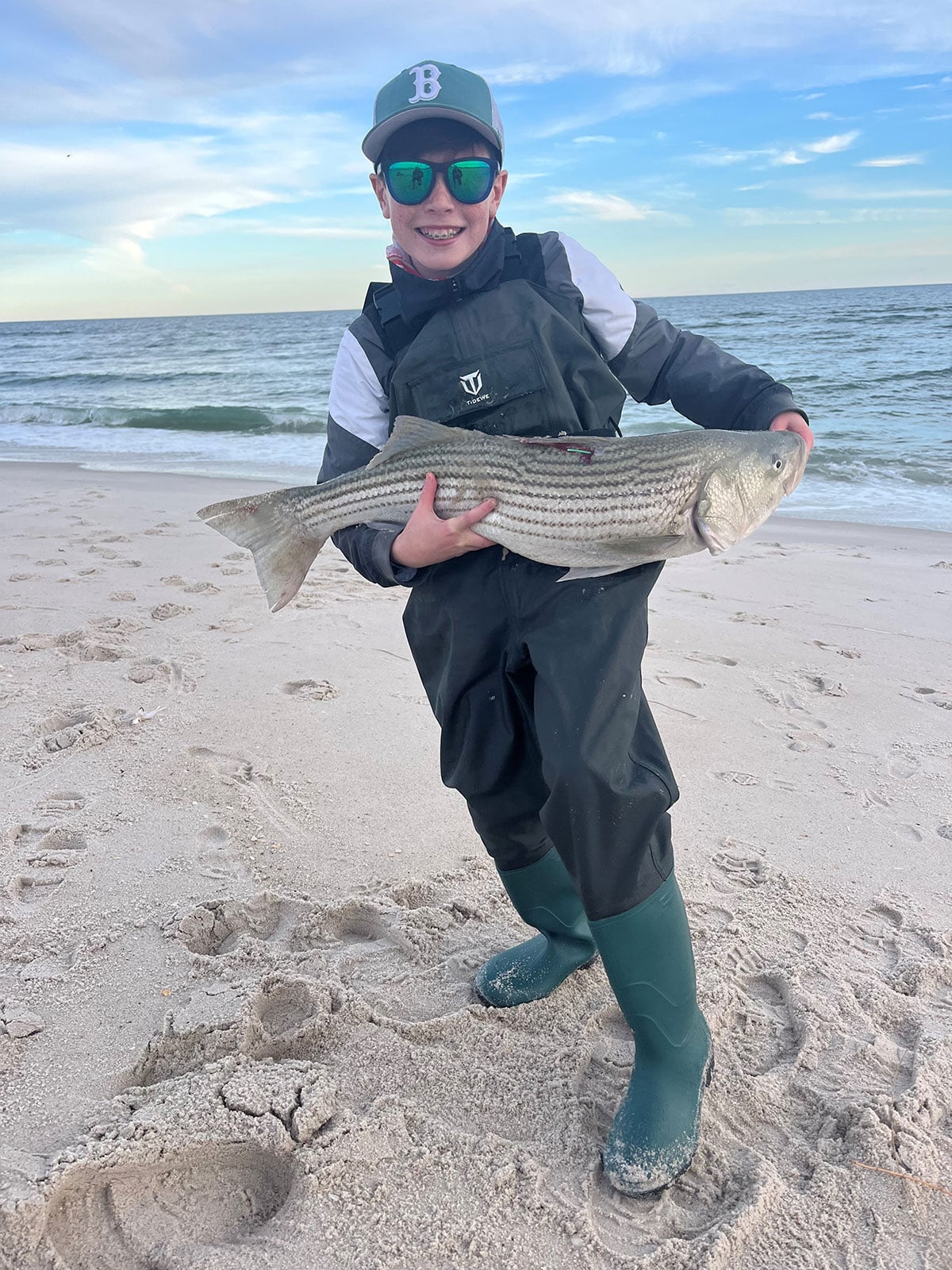
Throughout October, striped bass fishing along Long Island’s South Shore was very good, with fish feeding heavily around bait concentrations from Robert Moses to Shinnecock. Large plugs, bucktails, diamond jigs and soft plastics all produced quality fish, including numerous bass in the 30- and 40-pound classes.
By December, the available forage can look considerably different. Large schools of bunker may have moved out, leaving smaller baitfish such as silversides, killifish and other resident forage in protected waterways.
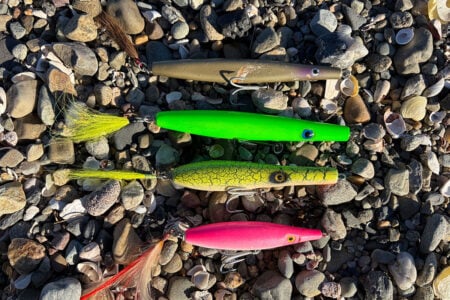
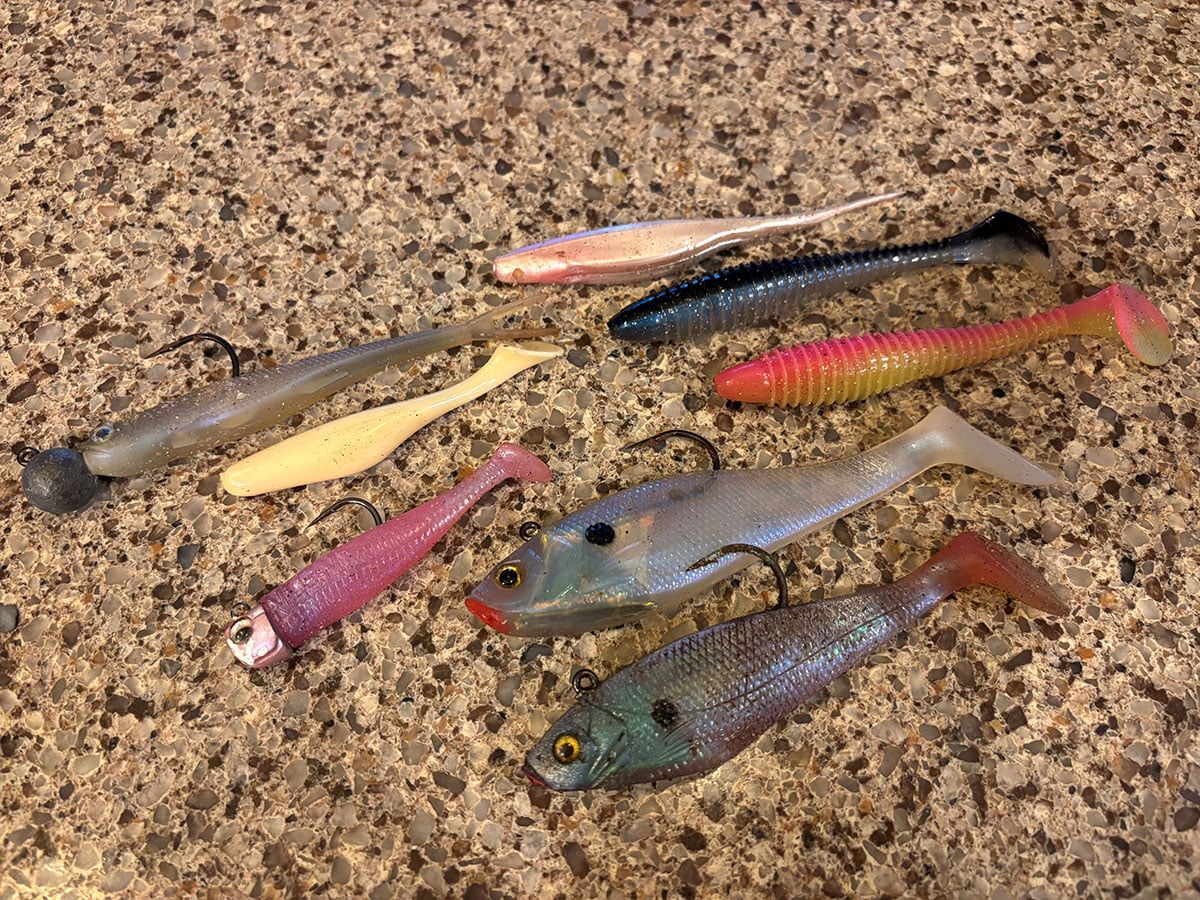
For anglers, this often means downsizing presentations. Smaller soft plastics, lightweight jigheads and compact swimming plugs can be more effective than the larger offerings used during the height of the fall run.
A 3- to 5-inch soft plastic on an appropriately weighted jighead is a good starting point. The goal is to present something that resembles the smaller baitfish moving through the area without creating an overly aggressive action.
Natural colors such as white, pearl, olive and translucent patterns are reliable choices. In stained water or during low-light conditions, a darker profile can also be effective.
Finding the bait is equally important. Small concentrations around creek mouths, bridge shadows and channel edges can indicate potential feeding areas even when there are no obvious signs of striped bass activity.
Lighten Up The Tackle
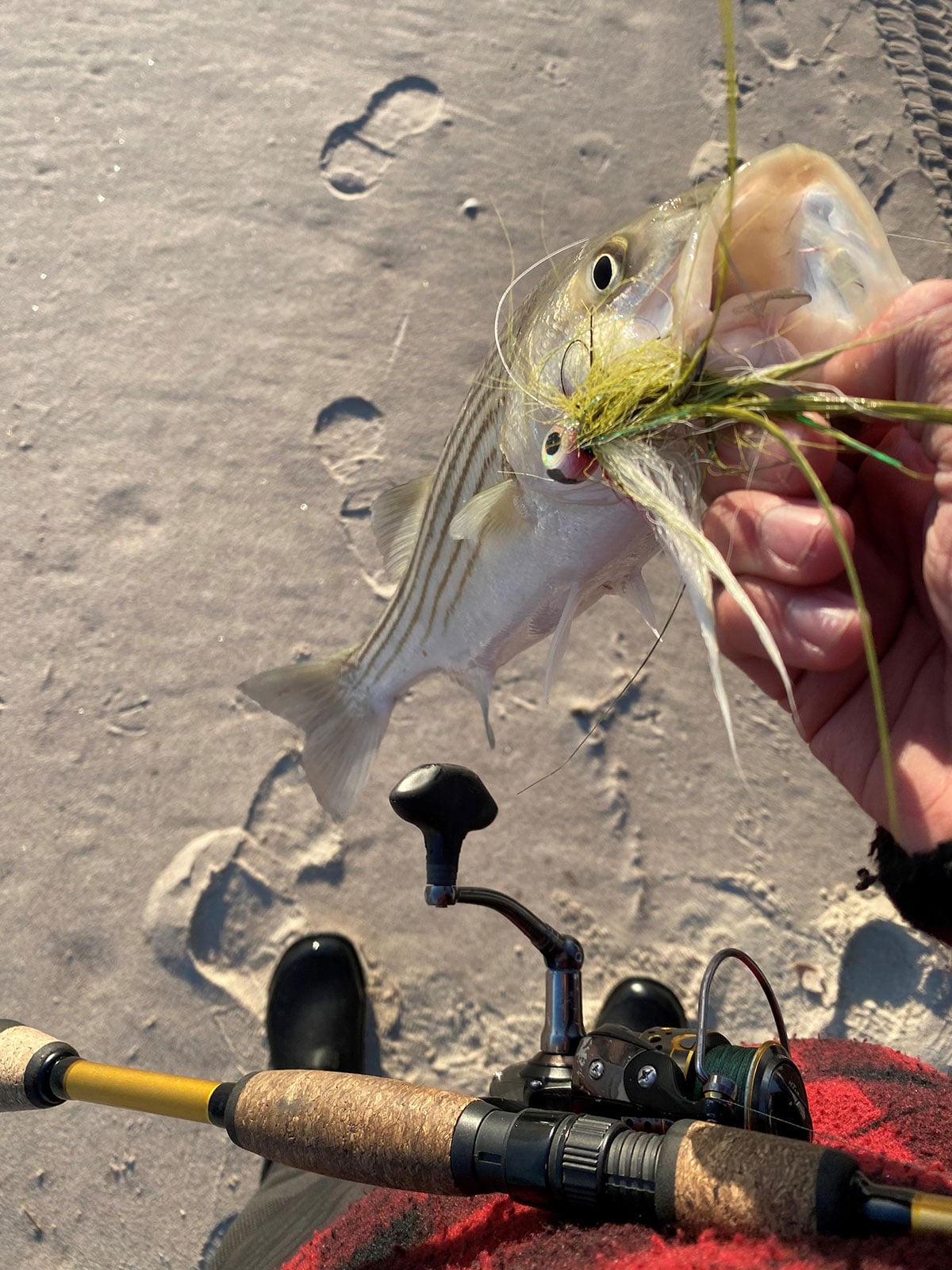
When targeting holdover striped bass in protected backwaters, there’s generally little need for the heavy surfcasting equipment used throughout the fall migration. A lighter spinning outfit provides improved sensitivity and makes working smaller lures considerably more enjoyable.
A 7- to 7-1/2-foot medium-light or medium-power spinning rod with a fast action is an excellent starting point. This setup provides enough backbone to handle a quality striped bass while offering the sensitivity needed to detect subtle strikes and effectively fish lightweight soft plastics.
Pairing the rod with a 2500- to 4000-size spinning reel creates a versatile combination for fishing tidal creeks, harbor shorelines and protected bays. A reel with a smooth drag is important, particularly when using lighter leaders around current and structure.
For braided line, 10- to 20-pound test is generally sufficient, with 15-pound braid offering a good balance of casting distance, sensitivity and strength. The thinner diameter also allows lightweight jigs to sink naturally and provides better contact with the lure when fishing deeper channels.
A 15- to 25-pound fluorocarbon leader will handle most open-water applications, although heavier material may be necessary around rocks, bridge pilings and other abrasive structure. Keeping the leader relatively light can also improve the action of smaller offerings.
Lure selection doesn’t need to be complicated. A handful of 3- to 5-inch paddle tails, straight-tail soft plastics and small swimming plugs will cover most situations encountered in the back bays.
Jigheads ranging from 1/8 to 1/2 ounce are useful, depending on depth and current. The idea is to use the lightest weight that maintains contact with the lure while allowing it to move naturally through the strike zone.
For shallow areas, small paddletails rigged on light jigheads can be slowly retrieved just above the bottom. In deeper channels or stronger current, increasing the weight slightly can help maintain contact without requiring an overly fast retrieve.
This lighter approach also makes December backwater fishing particularly accessible. A single spinning outfit, a small selection of soft plastics and a few spare leaders are often all that’s needed for a productive afternoon.
Slow Down The Presentation
One of the biggest adjustments when targeting December striped bass is retrieve speed. The fast, aggressive presentations that produce during fall blitzes may not be as effective when fish become less active in colder water.
Soft plastics are particularly useful because they can be worked slowly while maintaining a natural appearance. A steady retrieve just fast enough to keep the lure swimming, occasionally interrupted by a pause, is often a good approach.
Fishing near the bottom can also be productive, especially when bass are holding in deeper channels. Allowing a lightweight jig to sink before slowly swimming it along the bottom can keep the lure in the strike zone longer.
Current remains an important consideration. Rather than constantly casting and retrieving against a strong tide, anglers can use moving water to swing their offering naturally through likely holding areas.
The strike may also feel different during colder conditions. Instead of an aggressive hit, a bass may simply add weight to the line or produce a subtle tap as it takes the lure.
Timing The Bite
Although striped bass can feed throughout the day, certain conditions may offer advantages during December. Afternoon periods following several hours of sunshine can sometimes be productive, particularly in shallow backwater systems.
Moving water can also trigger feeding activity. The beginning or end of a tide may create favorable current conditions around creek mouths and channel edges where bass can intercept baitfish.
Night fishing remains an option, but December doesn’t always require the same overnight commitment as the peak fall run. A well-timed afternoon or early-evening session may be enough to locate a few fish.
Paying attention to recent weather is especially important. Extended periods of moderate temperatures and relatively stable conditions can be preferable to fishing immediately following a major cold front.
Keep Moving Until You Find Them
Winter striped bass can be difficult to locate, particularly when they’re scattered across large backwater systems. Unlike the fall migration, anglers generally can’t rely on birds, surface blitzes or widespread reports to identify productive areas.
The best approach is to concentrate on locations that combine deeper water, moving current and available bait. Creek intersections, channel bends and the edges of deeper holes are all logical places to begin searching.
If an area isn’t producing, moving to another nearby piece of structure may be more productive than repeatedly working the same water. However, once fish are located, slowing down and thoroughly covering the area can make a difference.
These fish may feed in short bursts, so an unproductive stretch doesn’t necessarily mean an area is empty. Keeping track of productive tides, water temperatures and weather conditions can help establish patterns for future outings.
One Last Opportunity
The outstanding striped bass fishing Long Island experienced during October 2026 will certainly be remembered for its quality and consistency. From the central South Shore beaches to the East End inlets, anglers encountered remarkable numbers of fish, including plenty of bass exceeding 40 inches.
December holdover fishing is a much different experience. There are generally fewer fish, less obvious activity and more time spent searching for a handful of bites.
For anglers who enjoy putting together a pattern and figuring out where fish are holding, that challenge can be part of the appeal. Light tackle, smaller presentations and a willingness to explore overlooked backwaters can turn an otherwise quiet December afternoon into a productive outing.
With New York’s marine striped bass season closing December 15, the opportunity to legally target these fish does continue into the winter with catch & release only.
As the final weeks of the season approach, there’s still a reason to keep a light spinning outfit rigged and ready. The main migration may be over, but a few striped bass could still be holding in the backwaters closer to home.