Gearing up for another season on the big game grounds.
Despite the variety of ways a tuna can be targeted, trolling remains the most effective way to pile up bites when fish aren’t balled up tightly.
But laying out a strategically-placed spread of lures and bait is more than just an act of guesswork. There’s a method to the madness that results in the best captains out there consistently catching more fish than the average skipper. And sometimes the most underrated and overlooked lines are those placed near the propwash.
With so much attention placed on the shotgun lines, outrigger selections, and way-backs that the presentations closest to the stern are an afterthought for some. The best spreads, however, include the same careful attention to their propwash game. Occasionally on the slowest of days, the flatlines, as they are known to most, receive the only tuna bites. Moreover, there are other outings where the in-tight bite is better than the lines far back and out-of-sight.
Flat & Happy
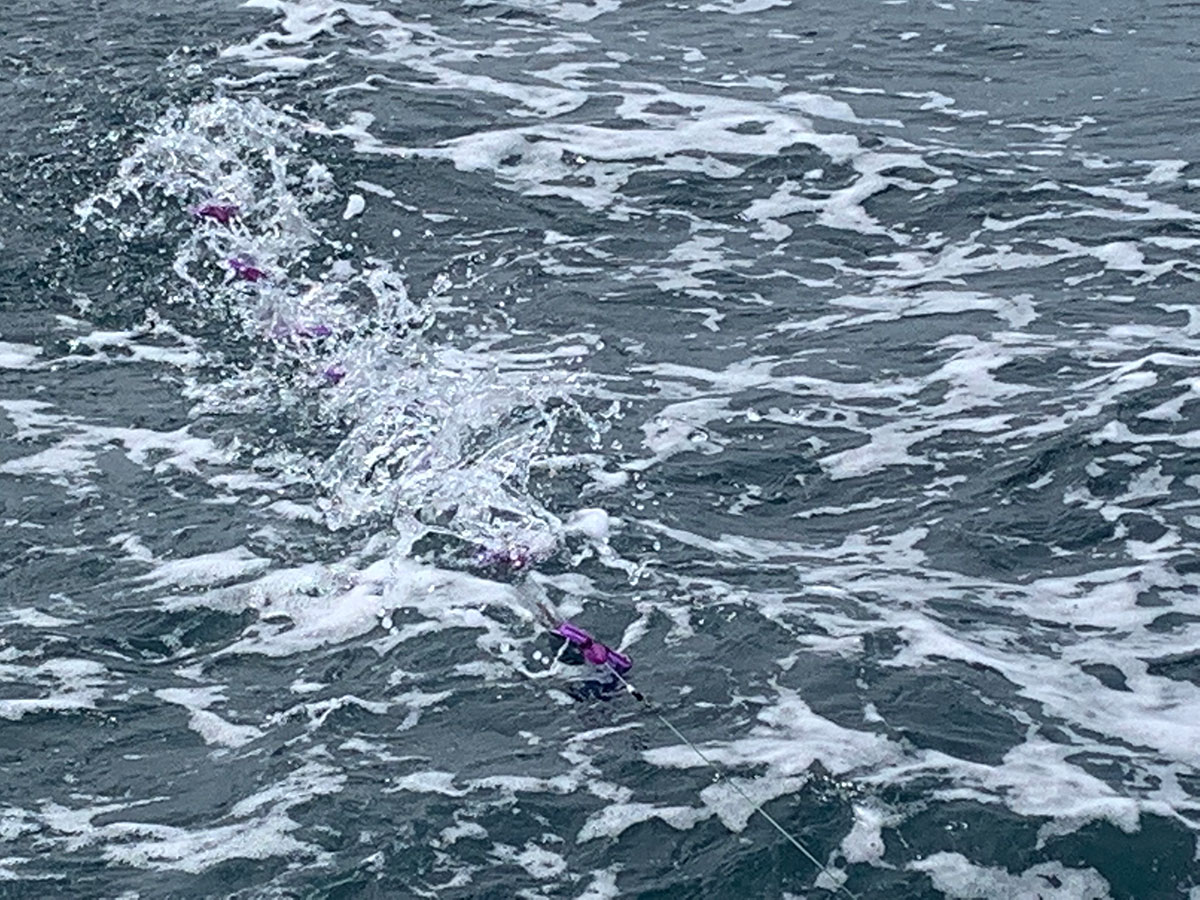
Flatlines are generally set off the corners of the boat and consist of a lure or bait running on or just below the surface. They run directly behind the boat, so don’t employ an outrigger or planer. And they are often positioned closest to the wake. Depending on the type of vessel, flatlines could be run just outside of the propwash where they encounter less oxygenated bubbles. The best set flatlines often sit just outside the bubble trail created by the prop. There are, of course, some captains who also choose a darker-colored lure to run within the bubble trail itself.

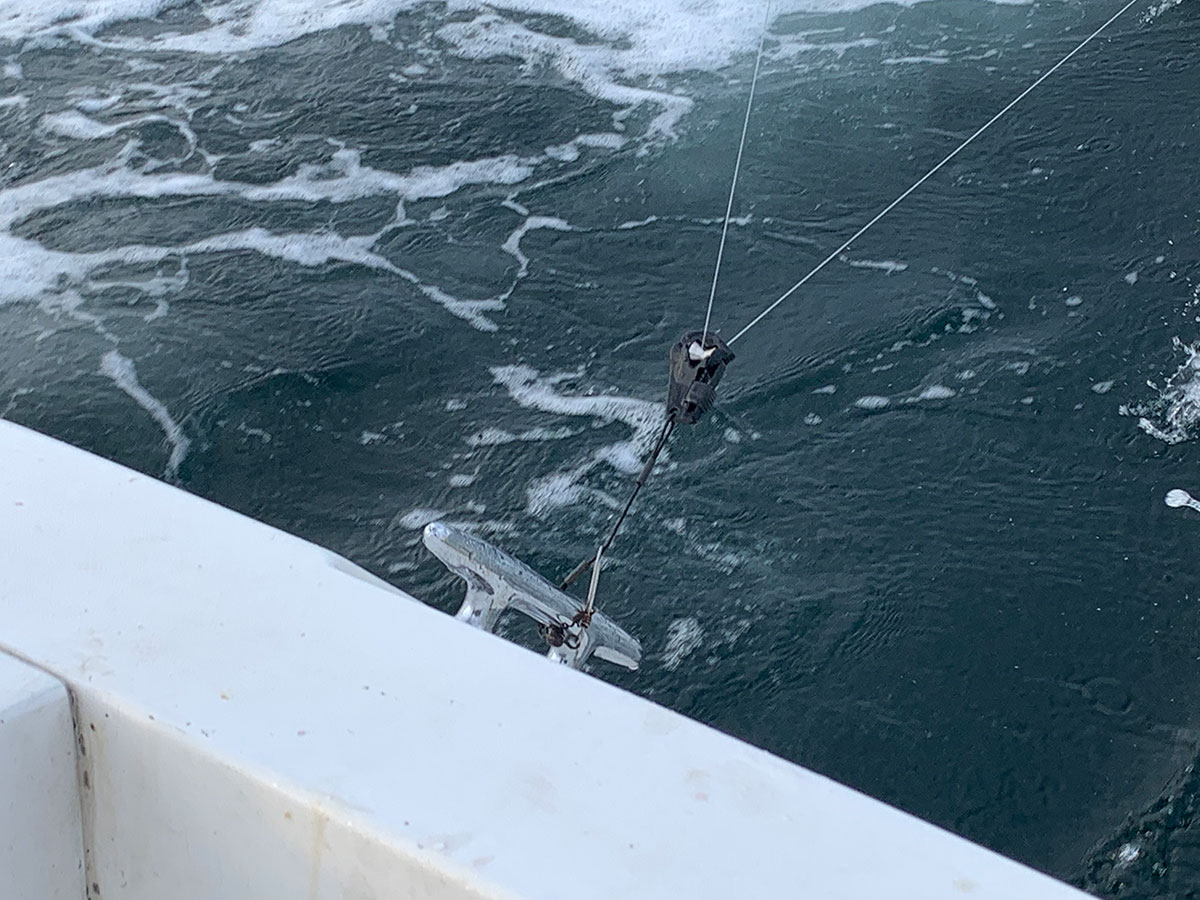
Flatline clips are a great way to keep a topwater lure running along the surface as intended. Running the lures straight from the tip and close to the vessel can result in the front of the lure or chain coming out of the water. The clip changes the point of departure from the boat so the lure can run parallel and properly on the surface as intended. Flatline clips are best tethered to cleat or other strong support area on the corner of the boat. When a fish strikes, the clip releases and the drag begins humming. Clips can be adjusted similar to the drag on your reel for the right release point based on the lure’s drag pressure through the water and chop.
Occasionally sargassum or debris will hang up on your lure and cause a tripped clip and false alarm. It’s infuriating, when the excitement of a popped clip turns out to be a floating garbage bag or some other piece of human trash. Some captains use rubber bands instead of clips. They work effectively, but I prefer the clips due to their dependability and ability to be set precisely for each lure. In addition, the rubber bands usually end up as more trash in the ocean as a byproduct of their use.
Immediately behind the moving boat is the most violent and chaotic water that’s coming off the screws. Large inboard engines powerfully churning water will send their distinct form of chaotic turbulence out. In contrast, outboards on large center consoles send a different form of foam and bubbles. Today’s sleek center consoles usually have two to six outboard engines, thus creating one heck of a propwash! Captains of each boat type must learn the characteristics of their ride in order to present tackle optimally.
A fishermen that goes on a tuna charter will learn so much from the pros that they can bring back to their vessel. But keep in mind those anglers may have to alter specifics slightly based on their own boat and engine make and model.
Strategic Placement
The idea behind flatlines is to address the feeding zone directly behind the vessel. Boats emit a hum that piques predatory curiosity and travels through the water. Tuna that weren’t actively feeding on the surface will rise to inspect the audio and see the large shape, perhaps resembling a whale traveling through water. The engine harmonics combined with the whale shape can fire up a tuna enough to get them right up to the boat where the lures are. It’s important to keep in mind that tuna regularly feed around and within pods of whales. It’s there that they join the dinner party in order to prey upon disoriented or wounded forage.
Again, the closer to the propellers, the more chaotic the bubble trail. Anglers placing a bait there may want to use dark colors that contrast the white bubbles that are spinning off the prop. Purple and black are a mainstay in this location, while darker hues of green, blue and maroon are also worth a shot.
Another way to fish directly off the engine’s screws, is to use a lure that has weight or easily dives below the heavy turbulence. Tuna have terrific eyesight, but even they have to see the presentation in order to eat it. Nonetheless, ignoring this spot could be a mistake because tuna sometimes find a lure in the densest smoke trails. The Deeprunner 28 and Deeprunner 48 by Sterling Tackle are chains designed with sufficient weight to dip below the bubbles and into sight. In addition, a heavy Joe Shute chain rigged with a ballyhoo or RonZ plastic will work well here. Diving plugs made by Nomad catch well near the back of the boat. Their iridescent color schemes are tuna eye-catchers and they are built ‘tuna tough’.
Rigged ballyhoo are also proven connectors, but many Northeast captains opt to go with lures up close to the stern and use the ballyhoo on the lines further back. Those who do employ ballyhoo tight to the boat are often rewarded since not many tuna can resist them. Anglers should remember that if the ballyhoo is mixing into the smoke trail, it’s going to find more turbulence and resistance, therefore it’s important to keep an eye on it, watching for when the bait washes out.
Just off to the side of the bubble trail lies a terrific lure placement location, as offerings that swim right where the bubbles meet the clean water are prime targets for predators. It’s a unique location when you can effectively place the lure just right. I’ve talked to captains that have told me they deploy and redeploy, if necessary, in order to put baits in this area because the rising tuna seem to be drawn to a bait running the contour of the propwash. Single cedar plugs are a superior choice in this location. They are designed to dart and dance erratically which helps to “sell” the disoriented forage theory.
Sterling Tackle’s Cedarflex lures are acclaimed for mastering the old cedar standby. The CedarFlex body is designed to compress after being bit – and hopefully hooked – and the chances of a fish shaking the lure are far lower than old-school cedar plugs. Again, dark colors fished near the boat are best, but it doesn’t hurt to try a green or zucchini shade on one of the lures. Mixing it up and experimenting is crucial to becoming a better captain or mate. Knowing the tuna’s tendencies and using this knowledge is essential, but a willingness to break away from norms in aggressive pursuit of better results leads to greatness at the helm and on the deck.
Additionally, a Sterling Tackle CedarRain Chain might be “just what the doctor ordered” on the edge of the wash. A CedarRain Chain is reversed rigged to give maximum movement to teasers while the trailer CedarFlex stinger finds the bite. This presentation provides the appearance of small school of fish erratically “bobbing and weaving”.
Mistakes To Avoid
There are common mistakes for those running flatlines, one is running all the gear in the perfectly clean water. Running several presentations in or near the bubble trail creates an entirely different look for rising tuna. Sure, I know this is contradictory to the entire objective of getting most presentations into totally clear, undisturbed ocean. But a tuna spread consisting of seven to a dozen lines still has plenty of tackle getting fished in clean water. Don’t ignore the opportunity to use the propwash to draw strikes.
Another mistake is running the flatlines too far back and into the short line position. Again, the turbulence created by a boat is similar to a mammal and not out of the ordinary. Tuna feed amongst whales and dolphins where the bait is balled up, bubble trails and carnage all coincide. Ignoring the biology and what is observed on the nature shows is an error. Embrace the mayhem of the propwash!
If ocean conditions create enough swell or chop that clips or bands are popping too frequently, try bringing the lures even closer to the boat where the stern may help alleviate these issues. Anglers that put out their spread and then move on to sipping their coffee, without the willingness to tweak the spread may miss out on strikes over the course of their season. Captains and mates should always have an eye on how the lures are performing in the area in which they are placed. As tedious as it may be, adjustments can and should be made if anything appears amiss.
| OUTSIDE THE BUBBLES |
| It’s possible to place flatlines completely outside of the propwash. Wide beams with a single or double screw setup have the advantage over go-fast center consoles tricked out with numerous outboards. Sterling Tackle has continued its assault on wide-tracking lures with their latest innovation of daisy chains that contain a keel and can be fished close to the boat, but outside the wake. Aptly named, Tracker Chains, have been reported to draw tons of strikes all over the tuna troll spread. They are definitely worth trying in the flatline or short line positions. |
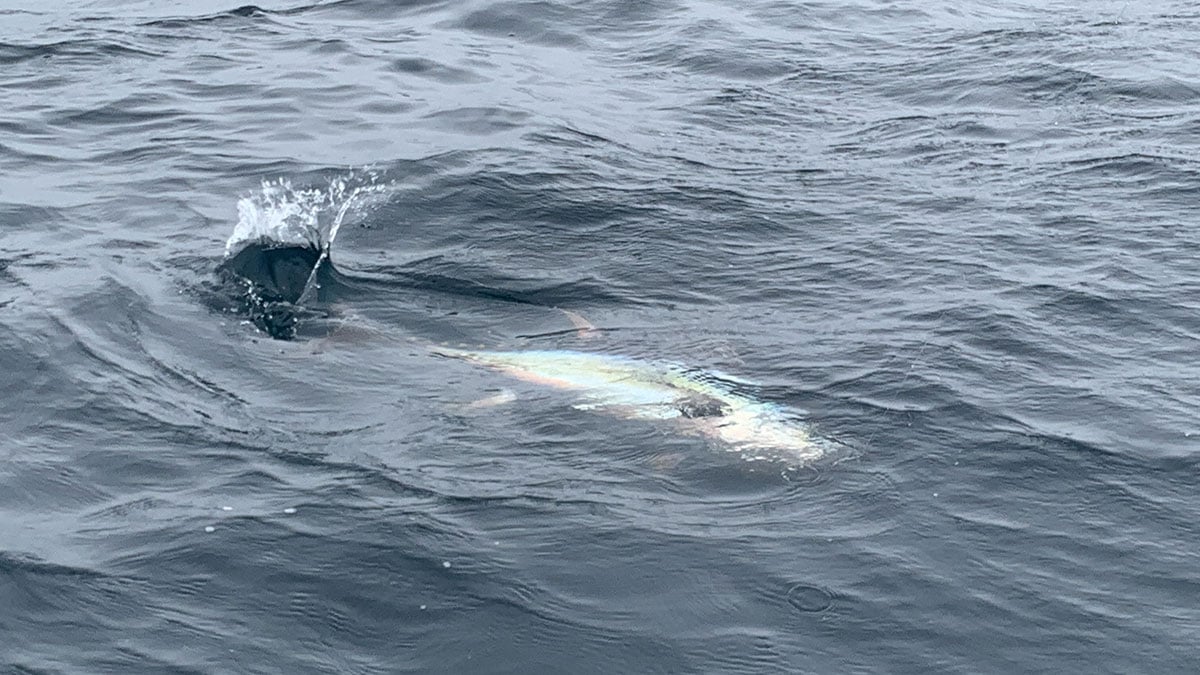
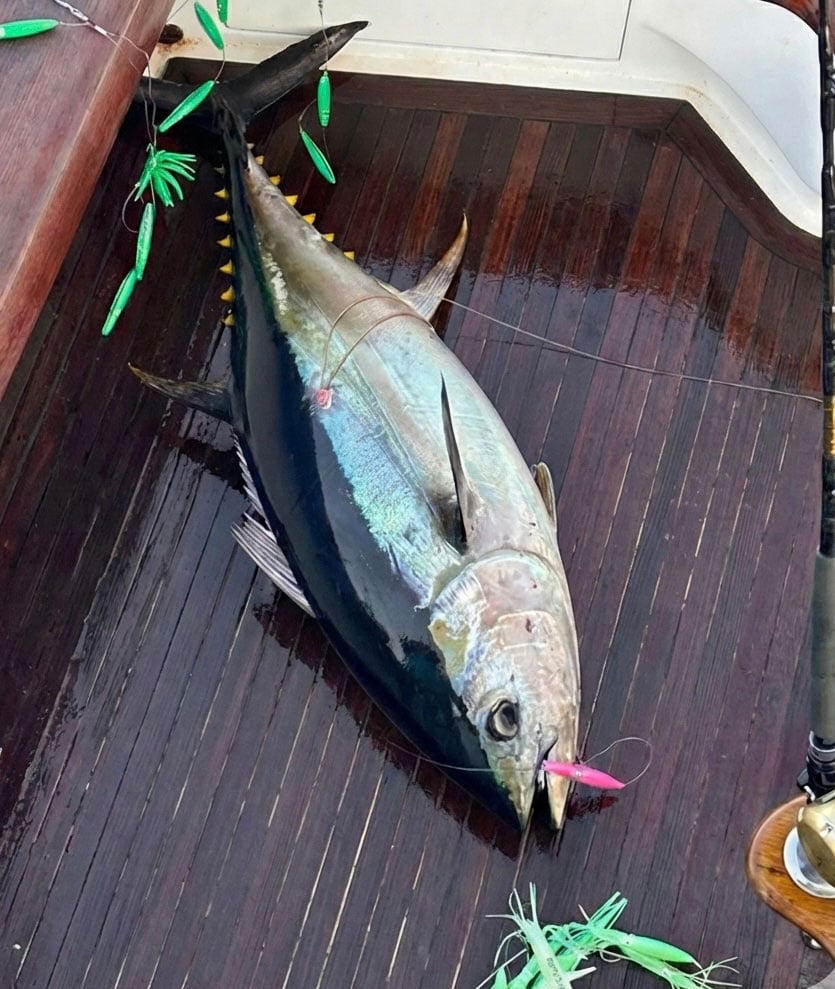
Nationally and internationally, different methods of flatline fishing take place. In the Northeast, yellowfin and school bluefin succumb to flatline temptation most often. When one line gets hammered, it’s best to stay on troll speed for brief time in order to give the other lures a chance to get hit. Multiple knockdowns are common in tuna trolling, especially when captains resist the temptation to come off speed and begin the landing prep too soon.
With all the time, dedication and planning it takes to get out to the tuna grounds, it’s imperative to pay attention to details. The seemingly simple flatlines are a big part of a quality tuna troll.