With a warmer El Nino winter likely on tap, use ice fishing sensibilities to keep the rod bent through the cold months.
Southern New England is no longer a reliable place to find safe ice. Lakes that once saw enough ice to drive a garbage truck across, now often only see ‘walkable ice’ for a week or two each winter. Of course, there are still good winters mixed into the bad ones, and each of the last two winters provided prolonged and excellent ice fishing, but that doesn’t mean the trend of warmer-than-historically-average winters is over.
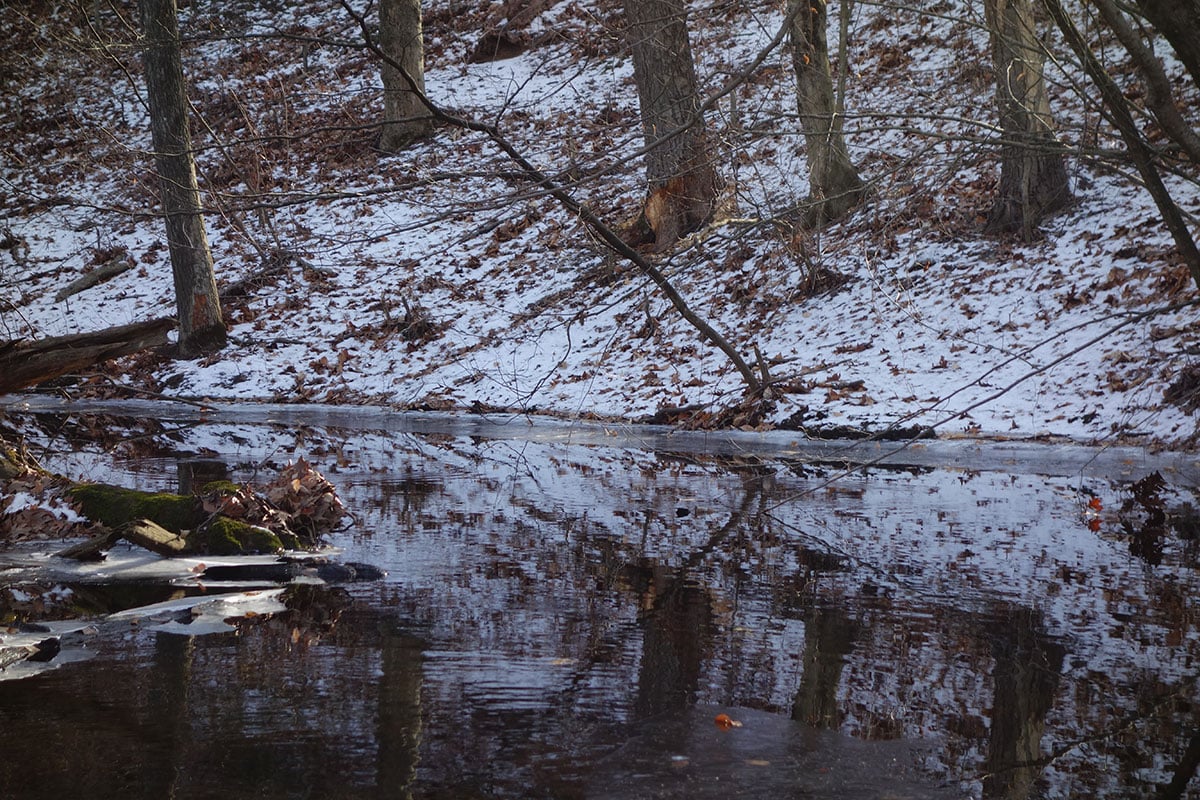
For those of you that love walking the hard water, that’s a bummer. It totally changes the winter dynamic and takes a lot of opportunities out of play. But what if there’s no ice at all? Some recent winters have left significant periods of completely open water, totally fishable but in a completely different mode than the warm season. Exploring ways to translate cold water tactics from the hard water to the open water is an effective way to continue catching through those winters that don’t provide prolonged safe ice.
Winter is winter. This is the Northeast, it isn’t exactly going to be balmy… just because the water isn’t frozen on top doesn’t mean it’s warm. The days are still short, the water is still cold, and the fish are still going to be in a fairly similar mood, with or without ice overhead. Fish are cold blooded, and there’s not that much of a difference between 33-degree water under ice and 35-degree open water. This necessarily dictates presentation, so if we assume that fish won’t be behaving terribly differently in winter open water than they do under the ice, that leaves us with a good template to work off of.
Keep It Vertical
Ice fishing, by its nature, is fishing vertically. Unless you dig a massive trench of a sight hole, there’s very little horizontal scope to your presentation. That’s by default; we cut a hole, we jig said hole, we move if no fish show. With fish pretty much at the lowest dip in their seasonal metabolic swing, they aren’t as inclined to move far and chase things down. That means a presentation that doesn’t move far horizontally will tempt more players. Even when the ice isn’t there but the water is bone chillingly cold, a presentation that suspends in the column (like a tip-up), or works the column but doesn’t move far horizontally (like jigging) are ideal ways to present to many of the species often targeted through the ice.
Replicating a tip-up on open water may seem a little contrived, but it really isn’t: floats! Bobber fishing does a fair job of replicating the same strategies employed with tip ups, albeit a little more dynamically. The water’s surface does tend to move a little when it isn’t frozen, and on all but the calmest of days on the stillest of ponds you can’t expect your float to stay in the same place as well as a tip-up does. A float rig still allows for a prolonged presentation of a dead or live baits tight to fish holding structure, and when the water’s cold that will produce bites.
Jigging Unfrozen
Jig presentations can be replicated a few ways. The closest thing to actually ice fishing would be fishing vertically from a boat, using your electronics to locate fish. An anchored or otherwise stationary boat over productive water acts as a platform for jigging vertically, and electronics don’t need to be treated any differently. I’ve even been known to set my Garmin to flasher when fishing open water for sluggish bass and panfish from my canoe. When the fish are slow and fickle it works and works well.
There’s no reason not to use the same subdued presentations you might through the ice as well. Think Swedish pimples, hair jigs plastic tipped tungsten, and baits like spikes and maggots. To bridge the two tactics and fish water that isn’t as accessible with a boat, use light float rigs to fish these same small presentations. For a better breakdown of these tactics and rigging, though, let’s break this down in terms of a few popular target species.
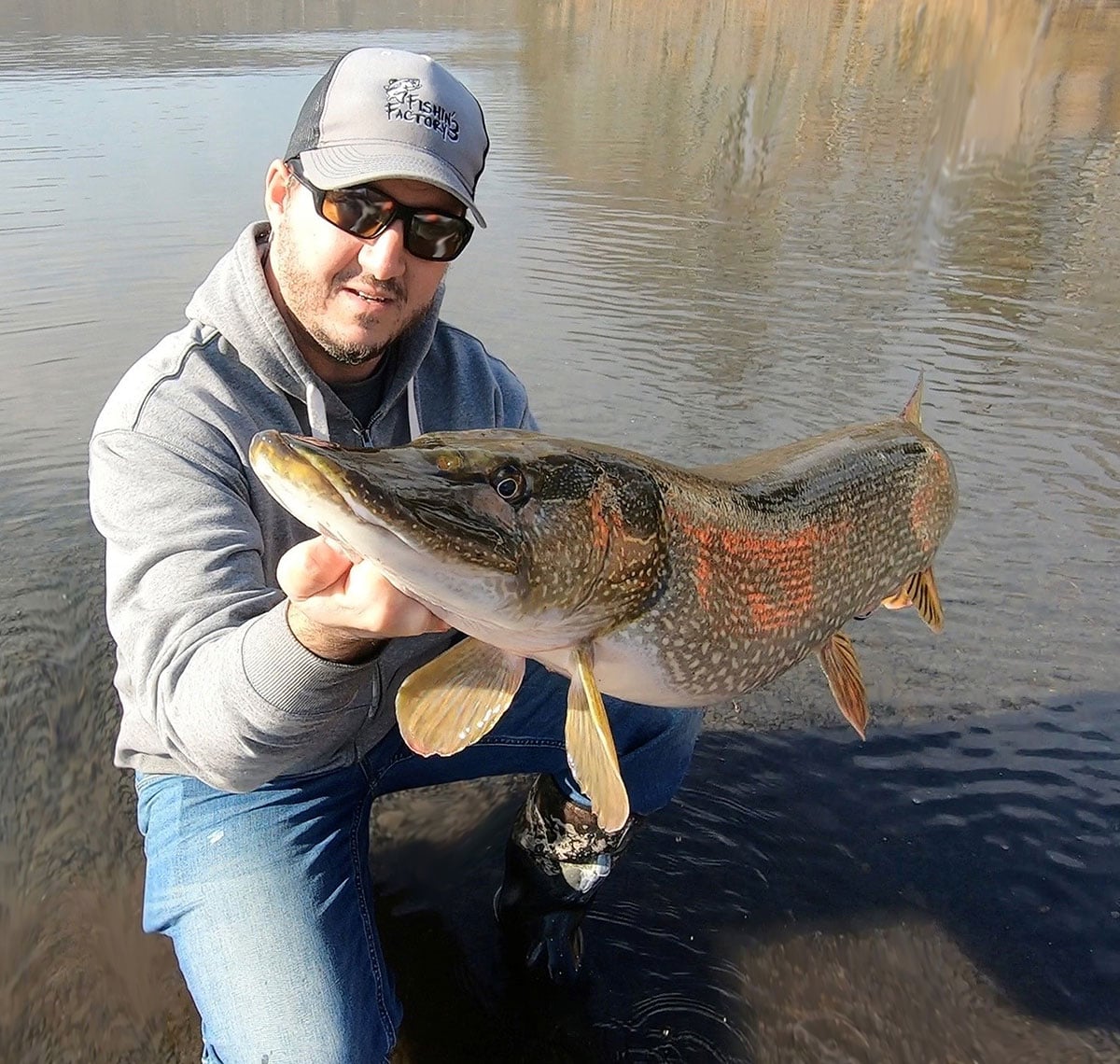
Floats For Pike
Float fishing for pike is already extremely popular in parts of Europe and especially the United Kingdom. The Brits have been soaking live and dead baits under cork and foam to catch big pike for ages, especially in the winter months. Given how similar a lot of cold season fisheries in the United States are – and how similar the strategy is as an open water counterpoint to tip ups – this is a logical path to take. Of course, there’s a minor limitation in that most states don’t allow as many baited rods as they do tip ups, but it would be a bit challenging to manage the float rod equivalent of the 6 tip-ups the state of Connecticut allows anyway. Common rigging the Brits use to fish dead bait for pike with a float involves a short trace or bite leader to the bait, which sits on the bottom under a small sliding sinker. The float is typically slip rigged with the bobber stop set just a bit above the water depth you intend to fish. You can also suspend live or dead baits with a quick strike rig a foot or two off the bottom.
Be mindful that a large, lively bait will move around with a float that’s too small, and that a live bait isn’t going to stay all that lively after repeated casts. Live baits like small golden shiners and fallfish are good options, and for dead baits don’t overlook oily sea herring and Atlantic mackerel. A sort of “set it and forget it” approach is a functional approach, though, when near freezing water temperatures have the pike moving slowly. You can focus on the same sort of areas you might set tip ups: weed edges, mud flats, and back bay entrances. The later in the season it gets, the more likely the pike will be gravitating toward those shallow back bays where they intend to spawn in the early spring. Try to head them off.
Panfish Handling
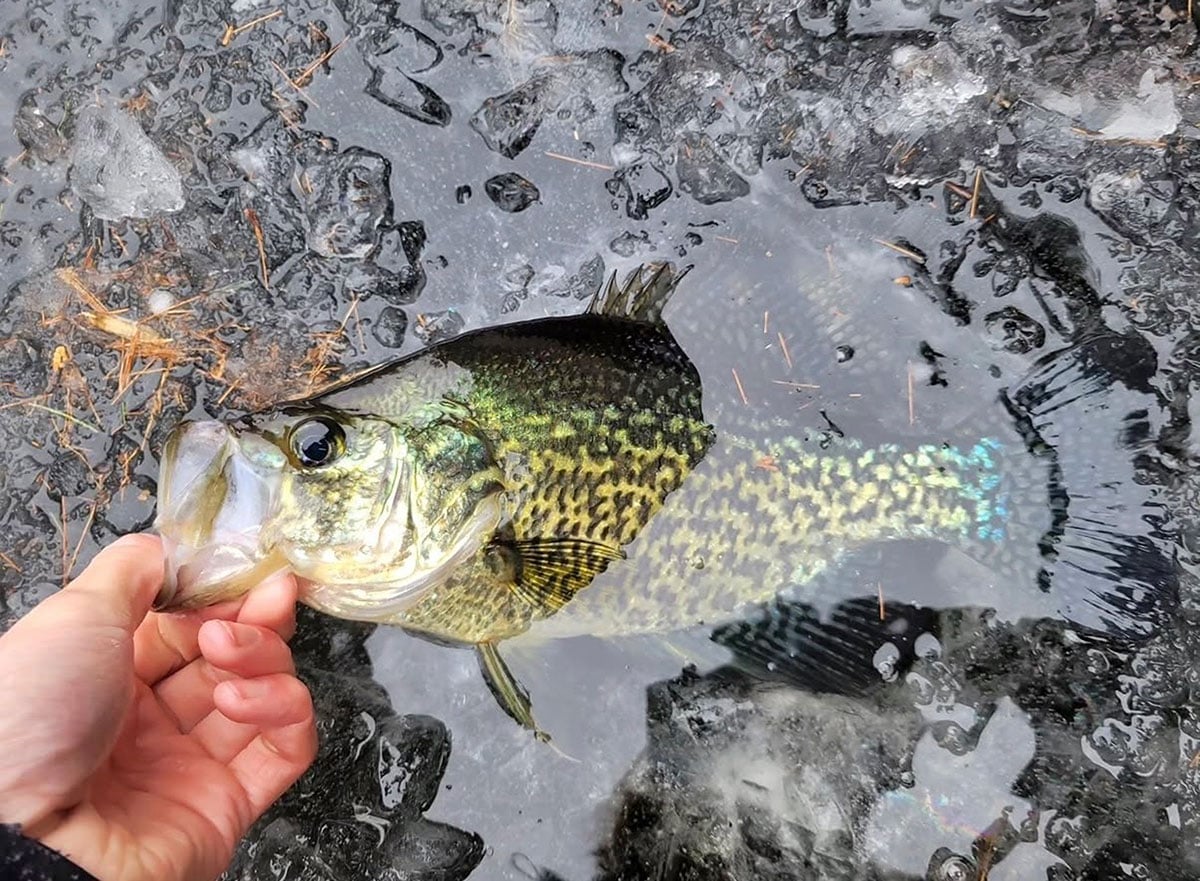
Crappies provide slightly different challenges, and often behave a little differently if there’s no ice overhead. Some fish will still hover in basins, but I have found that many more hold tight to structure. Look for submerged brush, docks, pilings and other structure in 5 to 12 feet of depth. Working small jigs with light or ultra-light spinning rods and line as light as 4-pound test is reliably productive for lethargic calicos, and the key is jigging in place for an extended period. This means positioning your boat right on top of structure you might otherwise anchor a ways off of and cast into. Move carefully and slowly into position, right on top of the structure, then pound your jig in place in all the nooks and crannies. Work the column too, from the bottom to just a few feet below the surface.
Other panfish remain in the basins regardless of ice coverage, especially white and yellow perch. This provides a prime opportunity to fish off of your electronics. Cover water in a marina or cove, focusing around 10 feet of depth, until you begin marking fish. You want lots of marks, not just one here and there. Then anchor in place and jig directly below your transducer to mark both your jig and the incoming fish. Sometimes there’s little need to do this when the fish are in an aggressive mood, but on days when they’re slow and fickle, fishing with your screen does make a difference. Conditions and behavior like this is why live scope is becoming such a popular technology, but in the right places you can make do with some of the most rudimentary fish finders, so there’s no need to break the bank.
Float-N-Fly
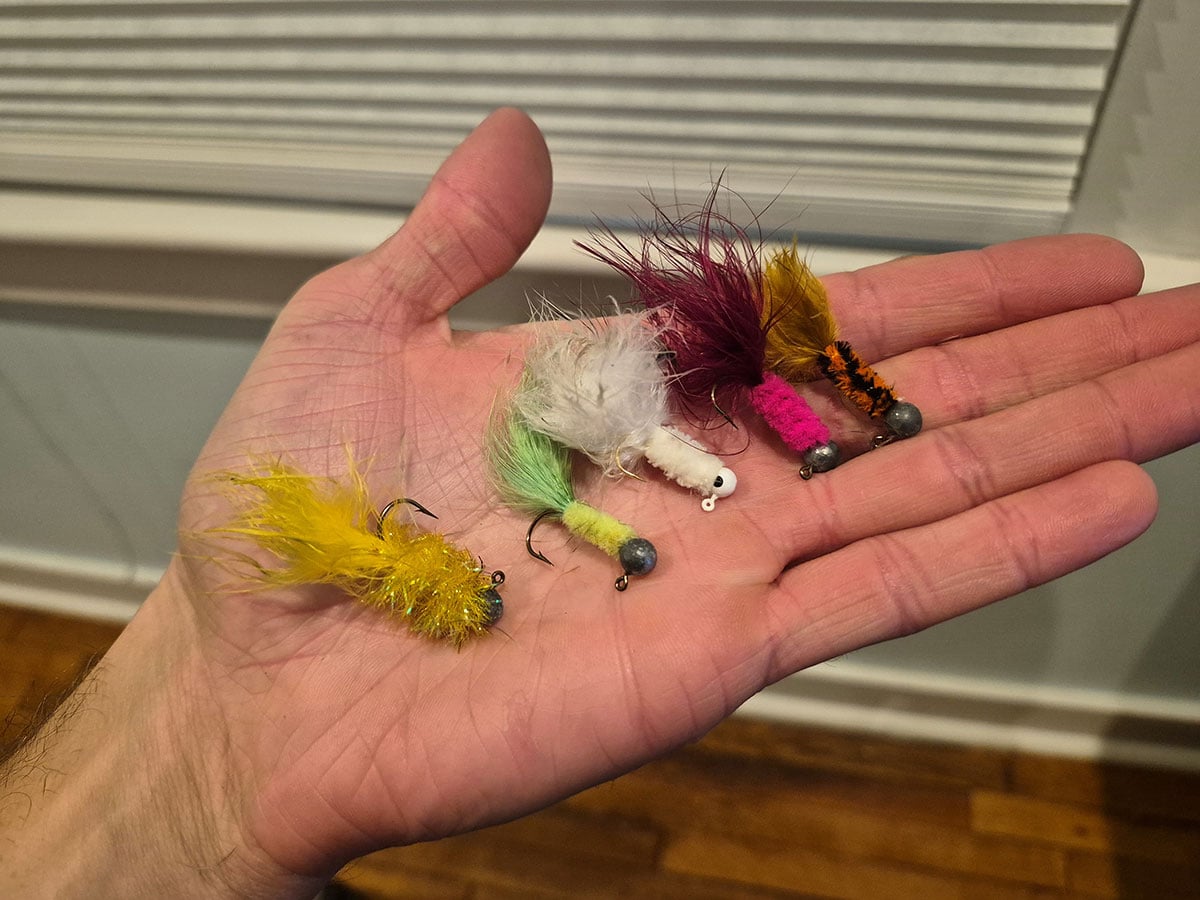
A favorite methodology of mine for winter largemouth bass sort of blends the float fishing methods used for the pike and the jigging strategies discussed for panfish. The good old float-n-fly rig is a dynamite way to fool “Larry” when the water is chilly. Bass are likely to gravitate to mud flats and structure on south-facing shorelines because they warm up better with the sun in the southern sky. Rig a float to have your jig or fly a couple feet off the bottom, and make sure it has sensitivity. You want the float to respond to very gentle takes, so match the weight of the jig you’re going to use to your float so that all it takes is a gentle pull for a bass to sink it. Adding small split shot can also aid in this presentation.
Fish the float-n-fly actively, but not too actively. A couple twitches now and then are enough to animate the jig and draw fish to it without moving the presentation too far horizontally. This strategy demands patience and persistence in all but the fastest paced bites, so stick with it. There’s something so satisfying about watching a float plunge and setting into the weight of a nice bass. Float-n-fly rigging is also easily downsized for good shore-based panfishing. A tungsten jig tipped with a couple of spikes fished under a very sensitive float is a great method for bluegills. They’re often not far from the same spots the bass are, perhaps a little shallower, eating small insect larvae. This makes a fly rod an especially effective winter presentation. Swap the float-n-fly for a 4-weight fly rod, floating line, and a dry-dropper rig with a small midge pupae pattern like a zebra midge and be prepared to catch plenty of winter ‘gills.
Bend To The Weather
Sometimes, the winter weather barely even straddles that ice to open water line. We’ve seen short spells with high temperatures right into the 60’s in southern New England in recent years, and that spikes water temperatures up in short order, creating spring-like bite windows. This is a little more common fairly late in the winter than it is in, say, January.
| EL NIÑO AHEAD |
| The El Niño southern oscillation, basically put, is the temperature anomaly of a strip of the Pacific Ocean, with El Niño specifically denoting –than-average temperatures. Even though that equatorial strip of water is quite far away it is a major driver of weather in the Eastern U.S. Typically, El Niño winters in the Northeast are on the milder side, often warmer than average. However, the 2026-2027 setup looks to be a record breaking, unprecedented event in the modern era. That means we really don’t know exactly what kind of changes to expect. It may be a fairly mild, somewhat wet winter during which the polar air stays largely restricted to the north, or blocking highs over the west may push cold air and storm systems into the Northeast. We will have to see… |
During such a window, it isn’t quite as necessary to focus on fishing vertically or near-static presentations. Fish will be more mobile, often shallower, and often set up in slightly different settings. In that case it’s reasonable to utilize more warm-season strategies, just slower. Work a jerkbait with a slower cadence for pike, plumb the deadfalls with a jig and pig for largemouth… the name of the game is still “slow and methodical,” but not nearly as much when the water is creeping into the 40s as when it’s still in the 30s. Those winter warmups can be wildly productive. They don’t require near the finesse that the cold-but-not-cold-enough-for-ice windows do, though. Those periods are frustrating. Ice addicts everywhere sit at home begging for the temperatures to fall. Tip ups and jigging rods sit – rigged and ready – on the sidelines, but with no certainty of fulfillment.
With a little effort and the tactics I’ve laid out here, we can still catch during those frustrating windows. I’d be remiss, of course, if I didn’t end on a safety note. If the water is cold enough to employ these tactics it is more than cold enough to be dangerous. Getting a boat in and out of a lake with snow and ice can be a slippery endeavor, and once you’re out on the water a fall, a tipped kayak, or a poorly interpreted weather forecast can be deadly. Quality winter weather clothing and gear is a mandate, and don’t dally if you’re wet; head in and get into dry clothes. Bad things rarely happen slowly, and this winter fishing is best done slow anyway. Get out there and adapt ice fishing tactics to the open water and you may find a new winter obsession, that doesn’t require the addition of ice!