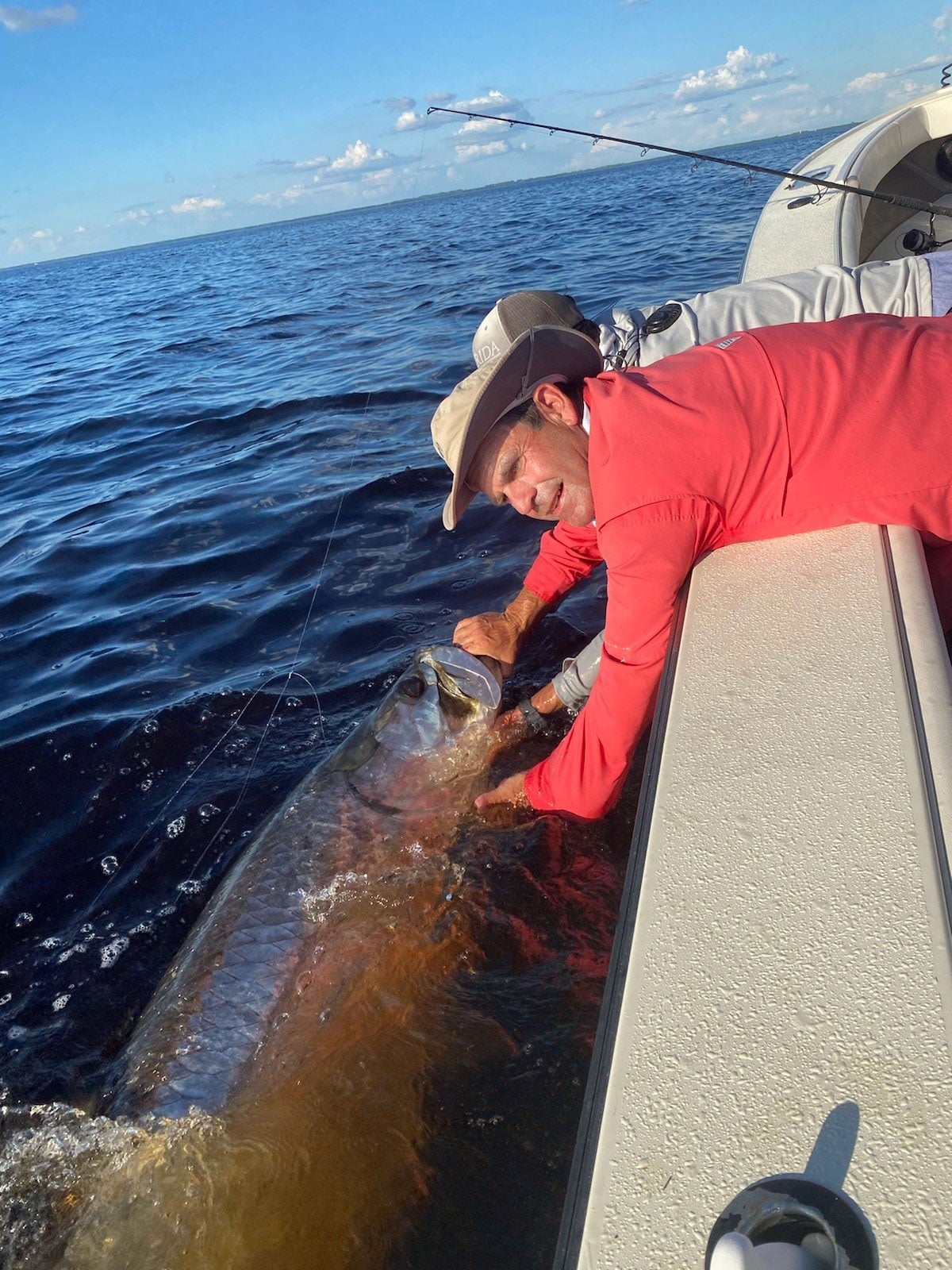
Your guide to fishing Islamorada this winter.
Until recently, a visit to the Florida Keys were usually in the cards for me each winter for a week’s stay. Although we try to spend a day or two fishing in Marathon and Key West, Islamorada is our main stomping grounds, fishing from the famous Bud and Mary’s Marina in Islamorada where we’ll spend much of the week bottom fishing for grouper, snappers and anything else that is willing to take a live grunt. We’ll also spend a day or two fishing in the Everglades for tarpon, snook, red and black drum as well as pompano that hopefully will be willing to smack our plugs or soft baits.
After supper, if were not to beat from the day’s fishing, we’ll hit one of the hot spots given to us by my good friend Capt. Ken Higgins of the Captree State Park party boat the Captree Pride. Capt. Ken has fished the Keys many times during the winter months, over the years, enjoying some great nighttime tarpon fishing from shore. With Ken’s valuable info, it has been ‘ditto’ for us with good action on tarpon estimated to reach 80 pounds. Realistically, Islamorada offers many fishing possibilities around the clock and 365 days a year, with hassle-free parking at most any park or pier. Therefore with a bit of planning beforehand and providing your willing to dish out the dough, a trip to Islamorada is a must during February for all round out action.
The Master Key
Thankfully, February is a prime month for fishing in Islamorada offering anglers a variety of opportunities. The cooler water temperatures drive many species closer to shore, making inshore fishing for redfish and speckled trout particularly fruitful on the flats and in the backcountry.
The offshore fishing at the Continental Shelf is typically on fire, particularly for sailfish, wahoo, and kingfish. In fact, proficient anglers from around the globe come here to take advantage of the exceptional fishing for sailfish that takes hold this month. The deep sea wrecks and reefs are alive with grouper, snappers and amberjack providing exciting action for bottom fishing enthusiasts. The mild winter weather, combined with the abundance of fish and fewer crowds, makes February an ideal time to explore Islamorada fishing.
One Stop Shopping
Since Bud and Mary’s Marina offers just about everything, it will function as the ‘home base’ of this article, allowing me to map out a few of the more dependable captains that will give their clients a 110% effort finding your species of choice.
As for lodging, we stay right at Bud and Mary’s Marina at The Key’s Motel. It’s clean and bright and only a minute or two drive to the boats. Actually, the marina has a lot of cool stuff and amenities to keep you busy between fishing trips. You can observe boats returning to the docks with their catch of the day. They have a nautical store, a deli on premises, an inground pool, a lounge and even a “feed the tarpon” dock where you can purchase some bait and feed the many tarpon that stick around for the freebies.

Productive Tactics
On the offshore scene, February is one of the best months to catch wahoo, especially around the full moon. Trolling at high speed with lures or rigged baits along the edge of the Continental Shelf is ideal. Sailfish are at their prime with kite fishing, while employing live baits is the top choice. However drifting or a slow troll using live pilchards or goggle eyes will also do the trick.
For blackfin tuna, try vertical jigging or live chumming over humps. At the wrecks and reefs gag grouper to 30 pounds are possible and these tough guys fight like freight trains. Conventional tackle in the 30- to 50-pound class is required to prevent the gags from diving into the wrecks or into the razor sharp coral of the reefs where the fish will surely shear you off on the sticky structure. A typical Florida rig with a 5-ounce egg sinker is all that is needed.
As for bait, live grunt will have you fighting these bulls all day long. Cut off the dorsal fin and replace it with a 5/0 Gamakatsu sea or octopus hook. If you want to catch the smaller groupers and snappers, then cigar minnows or sardines will suffice. Snappers, yellowtails and mangrove snappers are the most common duo and will share the same palate as grouper. Giant porgies known as migrates and large black sea bass are always a possibility. King mackerel also stack up around wrecks and deeper reefs. Be sure to use wire leaders and troll spoons or rigged ballyhoo.
| POPULAR FISHING SPOTS FROM SHORE |
| Robbie’s of Islamorada: A popular spot for shore fishing with access to various species according to the season.
Tea Table Relief Bridge: Great for shore fishing, especially for snapper and tarpon during early morning or late evening hours. Nearshore Reefs: These spots can be spotted while driving along the highway where you can pull to the side of the road along a safe shoulder. Target species like snapper, grouper, and amberjack. These areas are accessible for both boat and shore anglers. Channel 2 Bridge: Look for tarpon here on the night tides and mangrove snappers during the daytime. Trout and redfish are always a possibility here. |
Back closer to home and out in back country cooler waters temperatures will push snook, redfish, speckled trout and tarpon into deeper channels, mangrove edges, and residential canals. Soft plastics on leadheads will work well. Live pilchards or shrimp under a popping cork can also draw strikes when fished near structure. Provided the water doesn’t become too cold, there will be bonefish and permit on the flats feeding aggressively during the warmest parts of the day. Look for them on sun-warmed shallows. Live shrimp or small crabs on a light spinning rod hopefully will do the trick. Bonefish spook quite easily, making them a true challenge. The late great Hall of Famer and my friend Fred Golofaro, who loved the challenge of dealing with the bonefish had sporadic success over the years using these methods. I never toyed with the bones because I did not have the patience and could not handle the frustration those little boney creatures caused. Barracuda also stalk the flats chasing down anything they can get their toothy jaws around. Any tins or plugs will catch the attention of this carnivorous feeders.
Packing The Essentials
Aside from your clothing, what is paramount is any medication you take daily. You may also want to pack OTC meds like pain relivers, muscle relaxers like Motrin or Advil a small first aid kit for minor cuts and scrapes sun screen, motion sickness pills, plenty of insect repellant, prescription and sunglasses, hats and most relevant: a copy of February issue of The Fisherman Magazine.
As far as clothing is concerned, be sure to bring warm clothing as it may drop to 65 degrees during the evening hours. Shorts and a tee shirt should be fine during the day but you may want to switch to long pants and a sweater by night, especially if you are going to hit the water again after supper.
As for fishing gear, there are no worries if you fish on any party or charter boats as bait and tackle are all included in the fare or the price of the charter. Rod and reel are also included. Bringing along a favorite combo suited for the task at hand is certainly welcomed as well as a different lure or bait. Speaking of charters, the sportfishing boats will carry up to six passengers. should you have fewer than six passengers, most boats will put you on a standby list for your group and will put you with any other parties until the six man limit is filled. This also applies for a four pack.
Also, as long as you are fishing aboard a charter or head boat, a Florida fishing license is not needed, however once you set foot off the boat and decide you want to take a couple of casts from the dock, then a Florida fishing license is required. Should you plan on fishing from a private boat, a license is required. Fret not, however, as the license can be purchased online for 3 or 7 days as well as a year at a nonresident fee. Keep in mind that Florida’s DEC is adamant when it comes to enforcement with an ample number of DEC Officers checking for any violations around the clock.

Packing Tackle
If you are taking a plane to Miami and renting a car to the Keys, then a rod case is required. That means that special 8-foot custom spinning combo will not be joining you. In fact, all of those custom sticks will stay home as you’re going have to settle for the old fashion two piece break apart. On the other hand if you can talk a few buddies to join you on an adventure of a lifetime, you can rent a car and everyone can shares expenses right down the line, gas, food, hotel and motel stays, tolls, the whole Magilla to keep it fair. The best part, you don’t have to do the 20 hour drive in one day. Make it a two day event stopping off at a state along the way to break up the ride. If you rent a 4 cylinder SUV, you can pack those custom sticks and the tackle needed for a fun successful trip.
As for the terminal end, start with a well-organized tackle bag bringing along your favorite poppers and swimming plugs, a few metal jigs preferably Kastmasters and Crippled Herrings both products in assorted sizes. Bucktail and teasers should mimic the same color and shapes as shrimp, crabs and pilchards. Bass Assassin and Fin-S Fish have always been my go to soft baits in Albino Sea Shad and Arkansas Shiner. As for any hot lure or bait you may have brought along, you can always pick it up at any of the tackle shops down there. Except for fishing from the bridges, surf and docks. I strongly suggest leaving the gear you intend to bring aboard the charter boats at home where it is safe and waiting for you to come home, most of the captains and boats carry state of the art outfits as well as the perfect bait and lures to handle the situations at hand.
Whether you’re a beginner or an experienced angler, Islamorada provides a wealth of fishing opportunities. With its stunning scenery and diverse marine life, it’s a must visit destination for fishing enthusiasts. Be sure to check local regulations and consider booking a charter for the best experience.