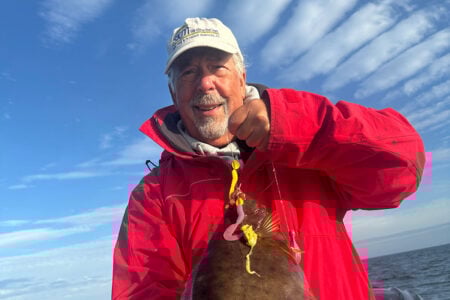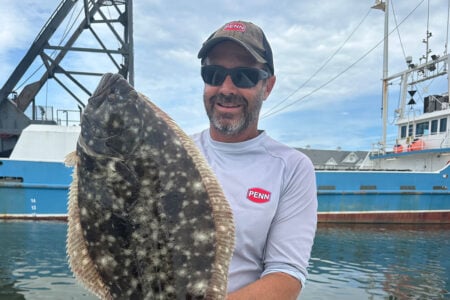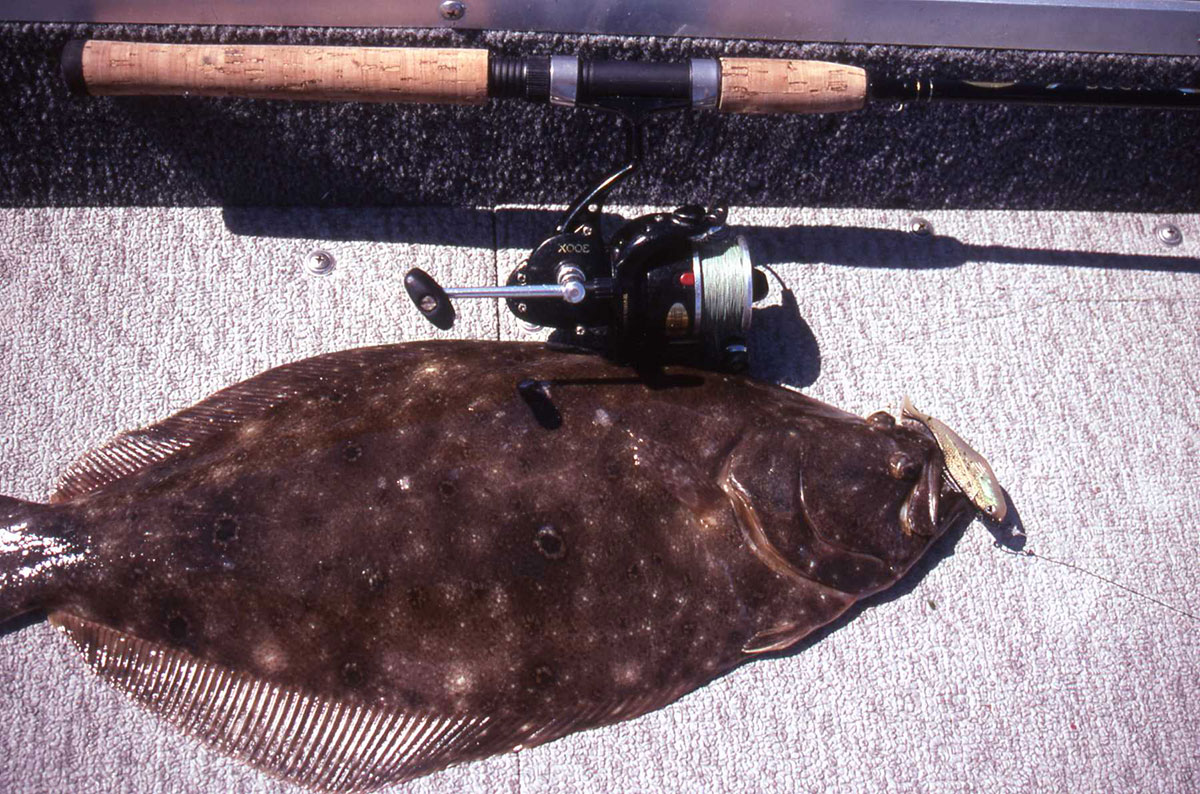
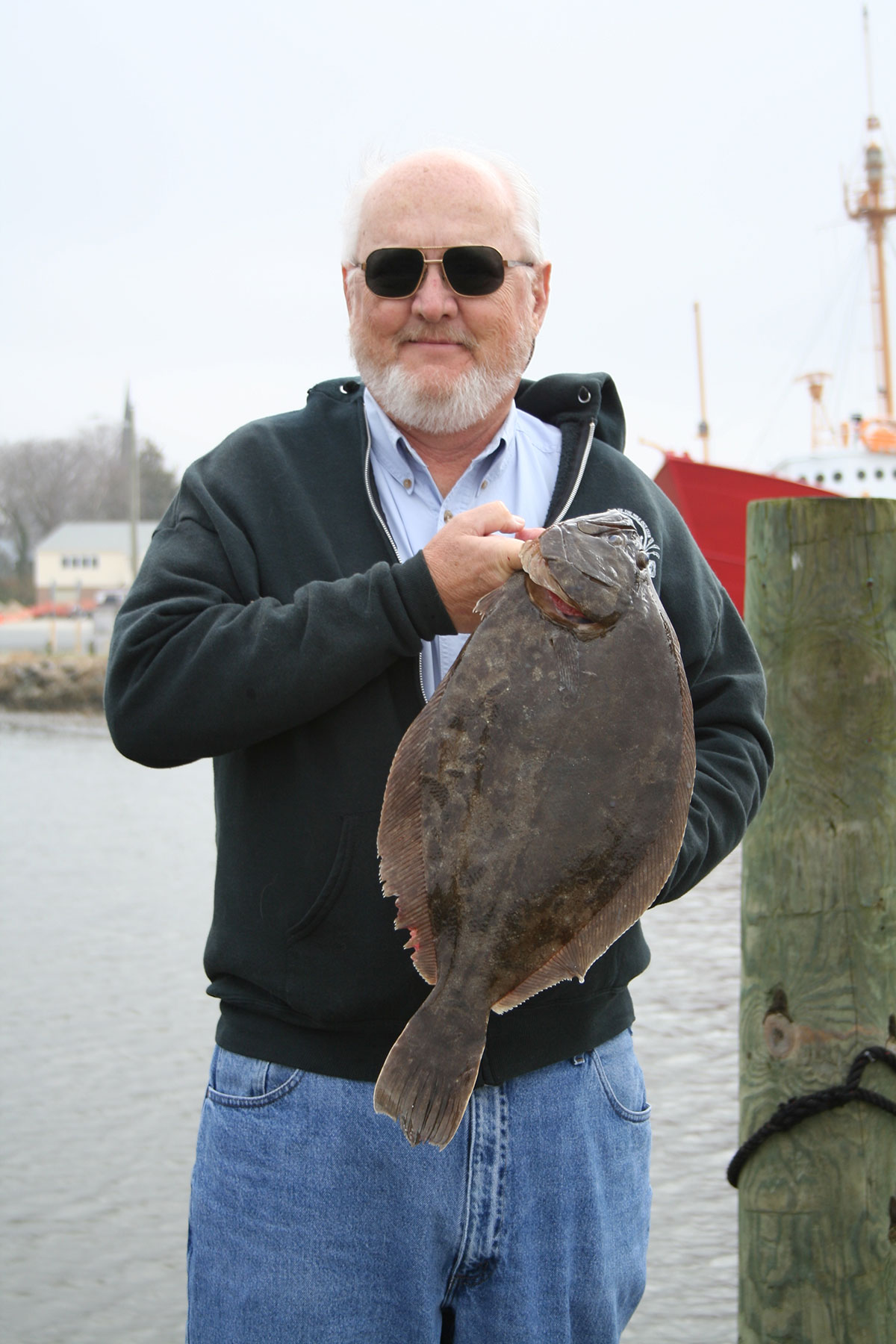
Delaware Bay holds flatties all summer, if you know where to find them.
Back in the days of yore, we fished structure such as Brandywine Shoal, the Eights and the Shears. I am sure there are summer flounder on that structure today, but with all the artificial reefs available with fish-attracting structure, most of us target those pieces of structure now when looking for flatfish.
Depending on how much rain we get, summer flounder may move as far up the bay as reef sites 1 and 2. In fact, the first flounder reported for 2026 was caught way up the Bay at the Woodland Beach Fishing Pier on April 2 by an angler fishing for white perch using a bloodworm. I don’t think that would be a pattern for flounder fishing this summer, but if the salt wedge moves far enough up that it could happen again.
One Through Eight
Reef sites 1, 2 and 3 don’t have a great deal of structure. Just some concrete culverts piled on the bottom and Site 1 does have a 40-foot steel hull pilot boat. Then we get to sites 4, 6 and 7. The Army Corps of Engineers was looking for a location to dispose of the spoils from their dredging operation of the Delaware River. It seems that this material was not the usual sand and mud, but were big rocks. Delaware heard about the Army Corps problem and came up with a solution; deposit those rocks on Delaware’s reef sites 4, 6 and 7. And that’s exactly what they did. While concrete and metal ships make good bottom structure, rocks that have already spent a long time on the bottom of the Delaware River are perfect candidates for reef structure.
Site 4 is a short run from Bowers Beach and just a bit longer from Slaughter Beach. Site 6 did not get quite as many rocks as site 4. However, since the area of Site 6 is smaller than Site 4 and since Site 4 has a considerable amount of concrete deployed from a moving barge, plus a 120×40 steel barge the bottom is pretty well covered.
Site 5 is a short run from Slaughter Beach and a long run from Lewes. It has nine deployments of concrete over the bottom. Site 7 has plenty of rocks that pretty much cover the entire area. It also has concrete deployed from a moving barge plus a 35 and a 42-foot vessel. It is a good run from both Lewes and Slaughter Beach.
Site 8 is pretty close to Lewes and attracts the head boats that work out of there. It also attracts me in my 16-foot tin boat. There is some concrete and steel donated by STAR Enterprises. That is why this location was called the STAR Site Reef for many years. The rest of the reef is made up of concrete and the 70-foot tug boat Golden Eagle.
Work The Structure
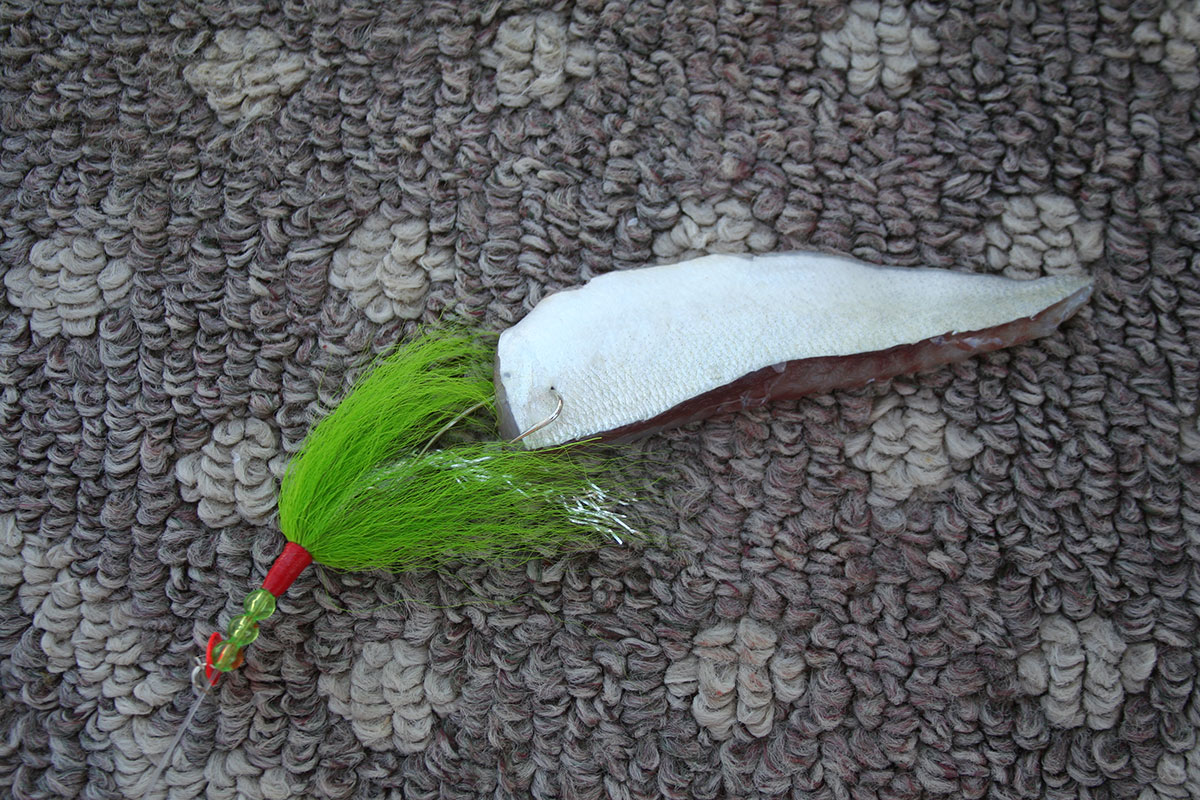
I have found the best way to fish these reef sites is to drift over the structure while working a bucktail with a Gulp Crawfish attached. Sounds simple, until you factor in the wind and the current. It has been a rare day on Delaware Bay when the wind does not blow. Add to that the current that wants to take your boat in a direction that you don’t want to go. This is where your SONAR (depth finder) becomes critical.
| DELAWARE BAY REGS |
| In Delaware state waters, there’s a four-fish bag limit and 16-inch minimum size limit on summer flounder until May 31, when the size limit increases as of June 1 to 17.5 inches.
On the fluke side of the Delaware Bay, New Jersey anglers are allowed three fish with a special 17-inch size limit when fishing west of COLREGS. Remember, anglers must abide by whatever state regulations are in place within the state they are in at that time. When traversing back and forth across the line, whatever summer flounder are in the box must be legal in both waters. |
Navigate by reading the SONAR along with your GPS to keep working the downside of whatever structure you are over. Flounder are ambush feeders who lie in wait on the down-current side of structure for a meal to pass by. Then they lift up from their hiding spot and grab whatever looks good to them. Hopefully, it will be your presentation.
Fishing over hard structure has its dangers. You want to be close to the bottom, but not on the bottom. This requires a selection of weights that accomplish this delicate goal. It will also require changing weights as conditions change. The current will increase and decrease as the tide will rise and fall. The wind will also change increasing or decreasing the speed of your boat. An electric trolling motor can be a big help in maintaining a steady speed and course.
It is impossible to say which piece of structure a flounder may be laying by. If you keep trying all of them at a reef site you should have success. Also, should you catch a keeper at one piece of structure go back and hit that spot again. Quite often more than one flounder will take up station at the same location.
Other Than Reefs
There are more locations to fish for summer flounder in Delaware Bay than just the reef sites. Although, if you work those real well, you should have plenty of flounder. The rips at the mouth of the Bay also hold flounder for the same reason they attract striped bass in the fall. Lots of bait flushing out of the Bay and getting mixed up in the turbulent water.
Speaking of that turbulent water, if the wind is against the current the standing waves at the mouth of the bay can be dangerous. This is especially true when the wind is northwest and the current is going in. Back when we fished for striped bass on the rips, we also caught flounder. I heard of some caught on live eels, but the few I caught came on large bucktails sweetened with squid or Gulp. That would have been in the fall and those fish should have been on their way offshore.
| BY THE NUMBERS |
| The DNREC Division of Fish and Wildlife puts out a book with all the reef sites listed by latitude and longitude. To find out where you can pick one up call the Division of Fish and Wildlife at 302-739-9910.
If you are going to fish on the Delaware side of Delaware Bay you will need a Delaware General Fishing License which costs $8.50 for Delaware residents and $20 for non-residents. If you have a boat of 20 feet or less and you are a Delaware Resident you can license the boat and all aboard for $40. A non-resident can do the same for $50. Either way, all onboard must have a Delaware FIN number in addition to a New Jersey one. Get your Delaware fishing license at epermitting.dnrec.delaware.gov, while anglers fishing in New Jersey waters must register online for free at saltwaterregistry.nj.gov. |
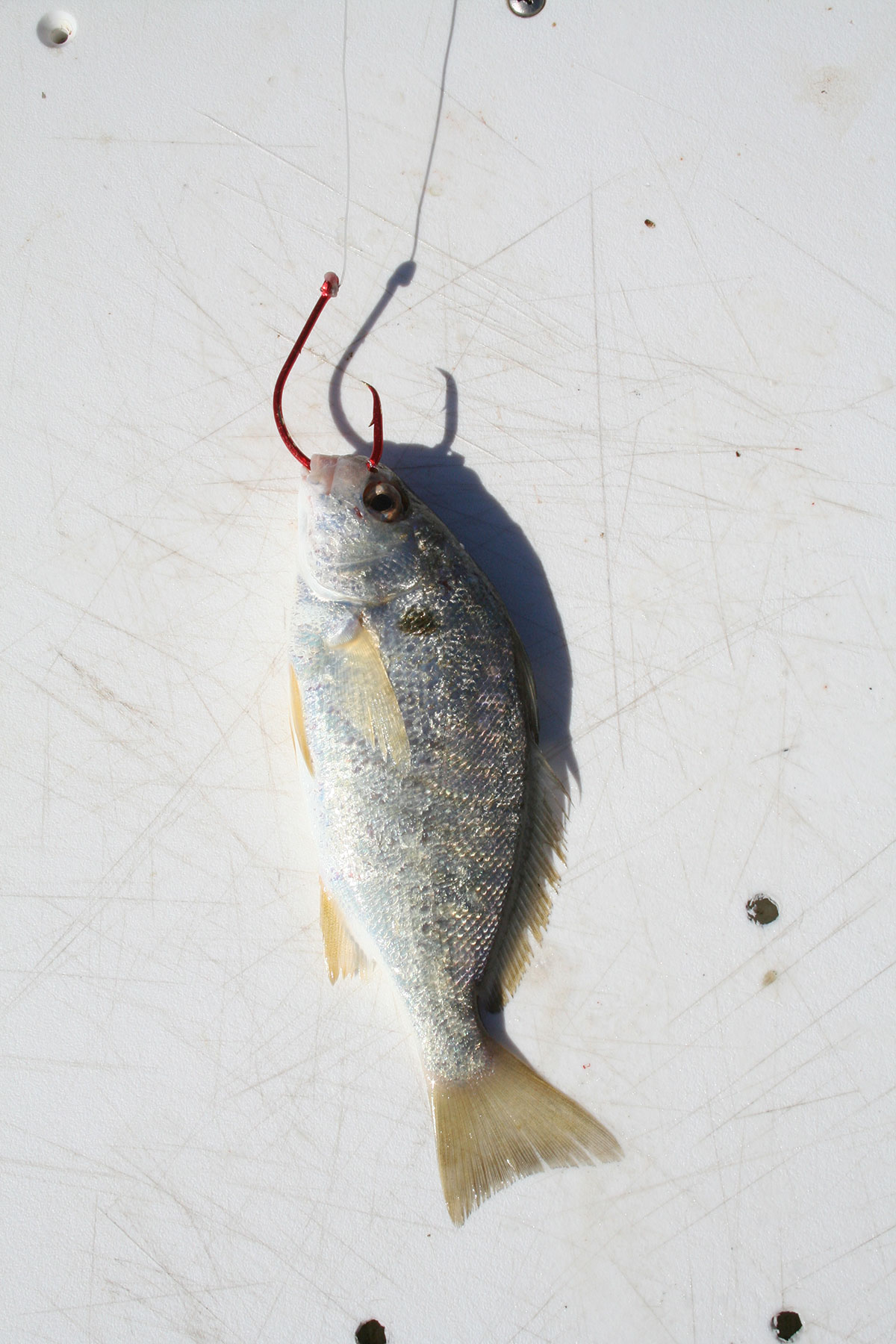
In the summer, the summer flounder would be in the rips because it is good structure. I find drifting across the rips and either bouncing a bucktail with a teaser on the bottom or using a top bottom rig with a minnow on the bottom hook and a nice squid strip on the top hook should work. I am a great believer in circle hooks and they work great with flounder who will grab a bait then move off which allows the circle the time to do its job.
There is also a smaller rip at the north end of the Outer Wall that should be worked for flounder. It makes up best on incoming water. Drift across it a few times from several locations until you have covered all aspects of the structure.
The Outer Wall will also hold flounder, but getting them out of the rocks can be expensive. You have to present your lure, usually a bucktail or bait, usually a minnow, into the base of the jetty without getting it snagged on the rocks. That takes a very calm day and a very cool hand. Both are very rare.
I find an unweighted minnow cast to the rocks can draw the attention of a flounder lurking there. If a weight is required to get the minnow down to the fish, consider a slip-on sinker beginning with as small as possible and working your way up until you get the bait down to the flounder.
You can drift away from the base of the Ice Breakers, or as some call them, the Hay Stacks. They provide good structure where flounder can settle in and wait for all sorts of stuff to wash out to them. There will baitfish, crabs and shellfish and who knows what carried by the incoming current.
Many years ago, my Uncle Arthur would fish the jetty that guarded Roosevelt Inlet. He would use his 14-foot tin boat with a small outboard and move slowly down the jetty fishing the down current side with a bucktail. He caught plenty of trout (weakfish) and also a fair number of flounder.
I have had reasonable luck with flounder fishing the jetty that runs alongside the channel to the Cape May-Lewes Ferry. I only fish the outside of the jetty and I do so by casting an unweighted minnow into the rocks. It is surprising how may keeper flounder I have caught just by doing this.