Conquering your spoon game means taking it far beyond ‘drop and reel!’
I found myself standing in one of those “big box” stores, staring at a $25 mass-produced flutter spoon. It was the industry standard, the lure everyone said you had to have, but holding it in my hand, I just knew it wasn’t right. It felt too heavy and lacked the soul I wanted for the way I fish.
Being a metal fabricator for over 25 years, the solution was clear: I was going home to make my own from scratch. I knew I could create something that captured the exact flash and profile of a dying bunker or porgy—some of the undeniable favorite foods of a trophy striped bass. Five years later, I’m a total spoon fanatic. And it is the first thing I grab every single day I’m on the water.
That First Hit
For me it was the first fish that had me convinced. I had been working out my own spoon design for a couple months, I’d make one, take it to the local pier, test it, tweak… honestly, most were duds. But after all that trial and error, I finally had one I liked. I went out the next morning to give it a shot, pedaling out to a favorite spot (I fish mostly from a kayak), with the hope that I might catch a fish. I dropped the spoon in the water, still checking it out, noticing it had a nice side to side swing.
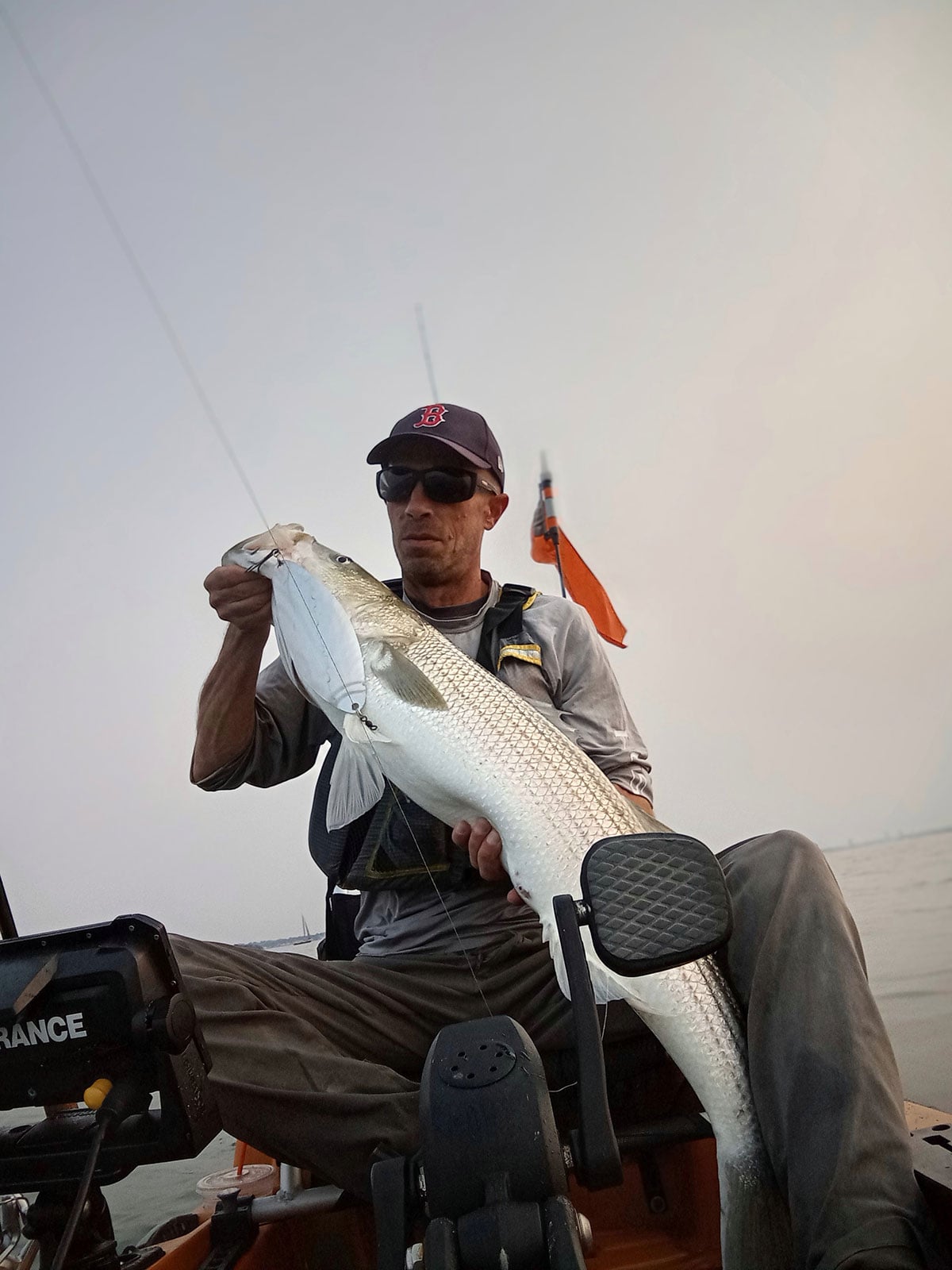
I was not using electronics yet and with the kayak its “troll everywhere you go”. I made my way out to a channel edge where I like to fish and started slow-trolling the spoon. Ten minutes into it, I got one of the most aggressive and violent strikes that I had felt in a while. I landed the fish, and it wasn’t anything special, cookie cutter, maybe 35 inches, but that fish will be hard to beat on the list of top personal catches. It wasn’t just because I had made the spoon, it was the way it hit it. When I got that fish in my hand, it was like a “time stop”, one of those mind-numbing moments. I caught a few more fish on it that day, but was still falling back on my old standards, still building confidence.

Convinced!
Over the next three trips, I went from mixing the spoon in with my other favorites to planning a trip where I would only fish the spoon. My catch rate was increasing and I was learning a lot, too. I was starting to pay closer attention to working the spoon and watching it when I reeled it close to the boat, the number of follows I was getting was blowing my mind. Then I had my first really great day, lots of fish – nothing huge – but lots of action and lots fun.
The following day the bite died off. It was around 10:30 a.m., I had been on the water about 5 hours, I caught a couple and decided to start making my way in when I made the call to stop at one more spot where I like to fish. This was a high-percentage spot, a rocky point with a nearby drop off. I pitched the spoon out, it was an outgoing tide and getting hot out. I let the spoon do its thing, fluttering down, I was only in about 15 feet of water. I ripped the spoon up off the bottom, let it flutter down, ripped the spoon up, let it flutter down. Next rip and it was like laying into a boulder, then the boulder took off! With all the adrenaline and excitement, my memory of the fight is a bit of a blur now. I landed that fish, looked up there was no one around except one center console. I swam the fish over and they snapped a quick photo for me, I didn’t measure or weigh it, but I might be chasing that one for a long time.
Flutter Mechanics
As it turns out big spoons are way more versatile than just being flutter spoons. My friends and I have caught fish on them in a multitude of ways. They can be trolled, jigged, cast, dead-sticked and used as a fish attractor. They are big, loud and flashy, and I am convinced the sound has a lot to do with it. The magic of a flutter spoon is all in the “dead” time. When you rip a spoon upward, it spirals and throws off a massive amount of vibration, but the strike almost always happens on the fall. As the spoon descends on a slack line, it has a side-to-side swing—a “flutter”—that mimics a wounded baitfish perfectly.
If you’re jigging, you need to pitch that spoon out and let it settle to the bottom third of the water column. As soon as you come tight, rip that thing up as hard as you can, giving it a little snap at the end to make it “jump”. Then—and this is the most important part—let it flutter down on slack line. You have to be a line-watcher here. Watch for that little “tick” in the braid or a sudden hesitation in the descent. That’s a fish grabbing hold. Because there is slack in the line, you have to reel down as fast as you possibly can to pick up that belly before you bury the hook. Hit them like you’re mad at it.
The “Slack Line” Secret
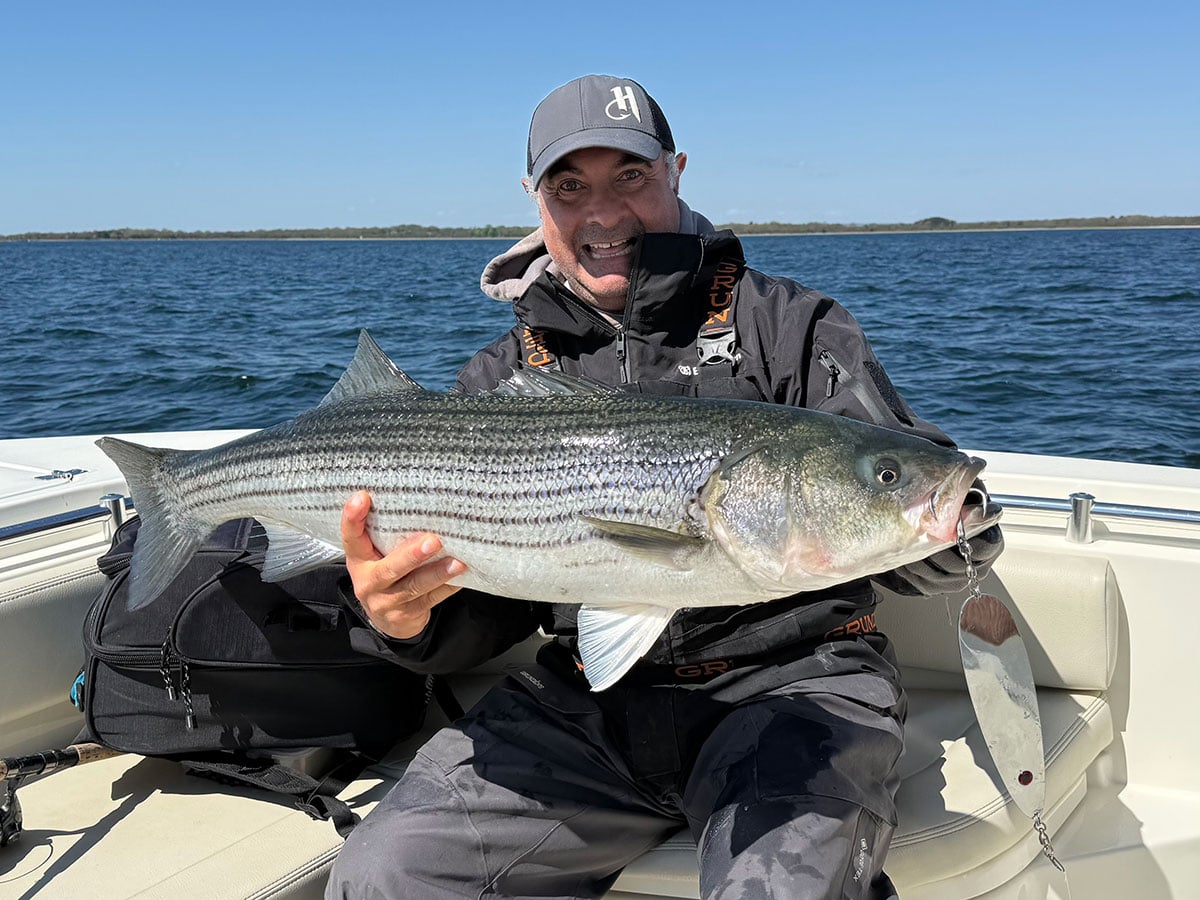
Jigging the spoon is, in my opinion, the most fun you can have with a rod in your hand. When I’m marking stripers near schools of big bait, I know I’m looking at active fish. I like to pitch the spoon out, fishing it a bit like a freshwater bass fisherman would. Often, you’ll get hit on the initial drop. If not, let it settle to the bottom third of the water column. As soon as the line goes tight, rip that thing up as hard as you can, giving it a little extra “snap” at the top of the lift to make it jump. Then—and this is the crucial part—let it flutter down on a completely slack line.
This is when you have to pay the most attention. You need to watch two things: first check your rod tip after each rip to ensure your line hasn’t wrapped around it. Then as the spoon flutters, watch you line for a little “tick” or pause, or any sudden movement; these are signs that a fish has picked up the spoon. You have to reel down as fast as you possibly can to pick up that slack and bury the hook, hit that fish like you’re mad at it! Seeing your line burn across the surface as you try to catch up to a big bass is a rush that never gets old.
Trolling & “Active” Presentations
Trolling is a highly effective way to locate transient stripers. If I’m moving between spots or zig-zagging in open water looking for bait balls, I always have a spoon out the back. Even with modern side-scan electronics, having a lure in the water while searching is just smart fishing. Those stripers that are out in open water chasing schools of bait move around a ton and having a spoon out on the troll just adds another search function to those times when you’re actively on the hunt.
However, there’s a difference between “lazy” trolling and “active” trolling. If the fish are there but won’t commit to a steady pull, I’ve learned that they likely want a horizontal presentation with more life. To do this, I cast the spoon out behind the boat, get it trolling up to speed, with a tight line, and then use two hands on the rod to rip it forward as hard and far as I can. Immediately after the rip, I let the spoon fall back on a slack line while I keep moving.
When you rip it, the spoon spirals, throwing off a massive amount of flash and vibration. When it stops and flutters, the bass often react instinctively by crushing it. It’s a lot of physical work, but the violent hookups make every sore muscle worth it.
“Ringing The Dinner Bell”
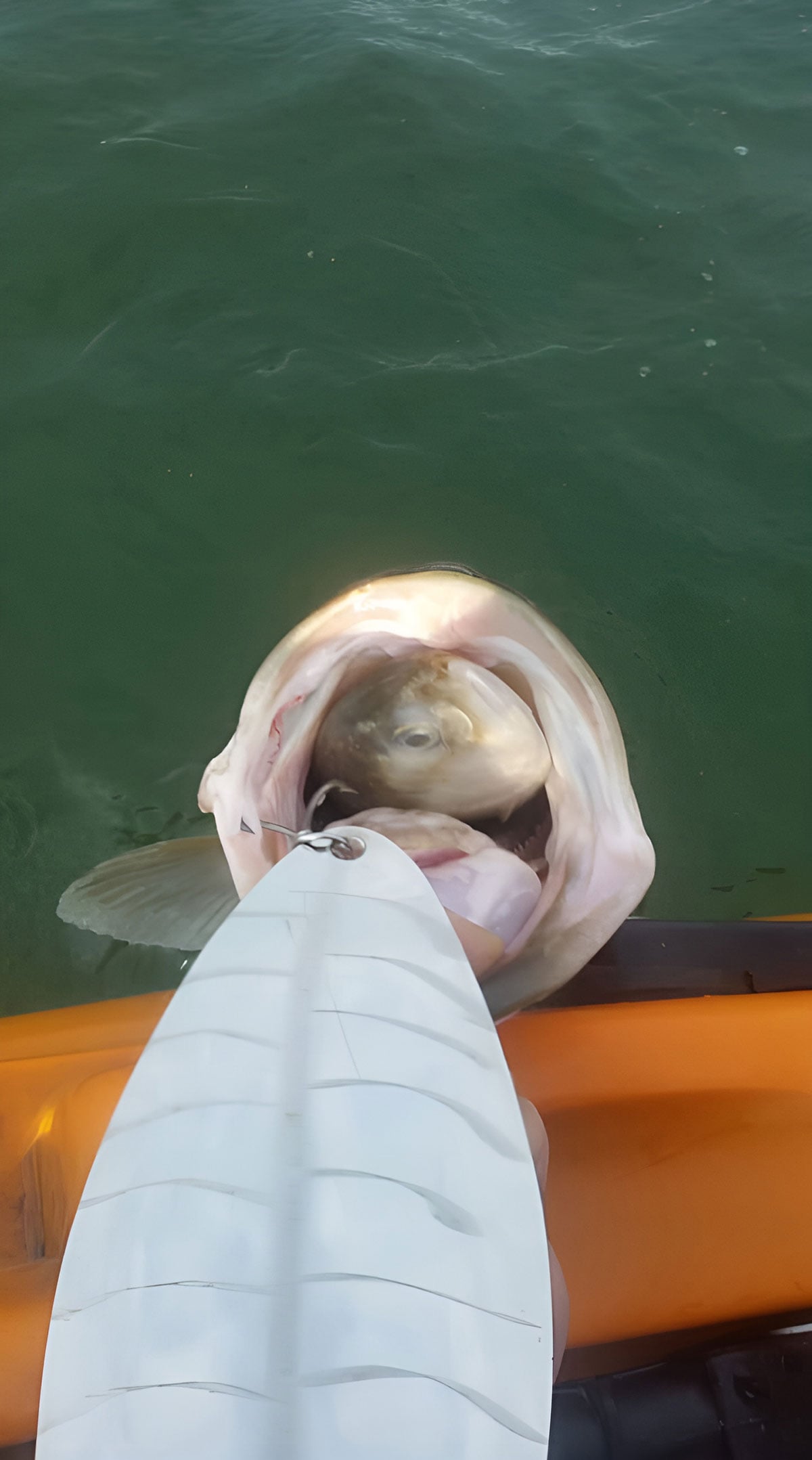
One of my favorite “tricks” came from watching a video of a scuba diver tapping a rock with a class ring to call in smallmouth bass. Knowing stripers are curious, I decided to try it on a slow day. I marked a few fish about 20 or 30 feet out on my side-scan and started tapping the spoon on the rocky bottom.
Twenty seconds later, the fish were directly under me. I lifted the spoon once and got bit immediately. This has become a technique I use regularly that I call, “ringing the dinner bell.” Whether the fish are inactive and you’re trying to annoy them into a strike, or they are feeding but picky, tapping the spoon on the bottom is surprisingly effective and it cracks me up, every time I get a fish using it.
For inactive fish, I don’t think they hit it because they’re hungry; I think they hit it to kill it and make the noise stop! These bites are subtle—just a little “tick.” You have to be incredibly quick on the hookset because they will drop it the second they realize it isn’t organic.
Closing Thoughts
| SPLAT CAST |
| If I find myself in a situation where there are the big fish crashing bait on the surface, it might be a single or just a small pod of big fish, I’m telling you, I can’t throw the spoon fast enough! I just lob it up in the air, like a 3-pointer, and let the spoon splat down on the water, it’s usually crushed within seconds. This is another situation that I believe really highlights how the sound of the spoon draws interest, from the loud smack of it landing to the rhythmic whooshing of it falling, big stripers hone in and then line up for the kill shot! |
I am at the point now where I have gained so much confidence in spoons there isn’t a situation I won’t use it. I am definitely biased, but it is always going to be the first thing I do no matter what bait they are on. The fish will tell you real quick if it is a good spoon bite.
Getting the chance to write this and share a little of my own personal experiences, I am very humbled, I don’t even consider myself a great fisherman, perhaps more of a hack that puts in the time and works hard for every bite. I hope everyone out there stays safe and has as much fun with this as I am. Put these tactics to the test and – whether you’re kayak guy like me or dropping spoons from the deck of a center console – it won’t be long before you’re spoon fanatic, like me!