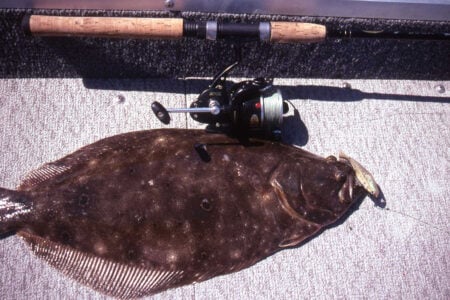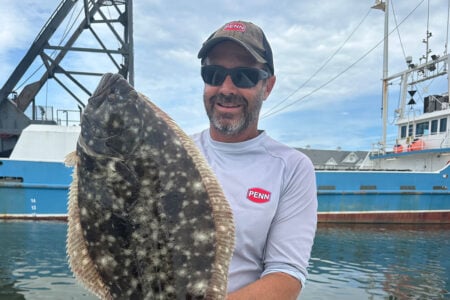
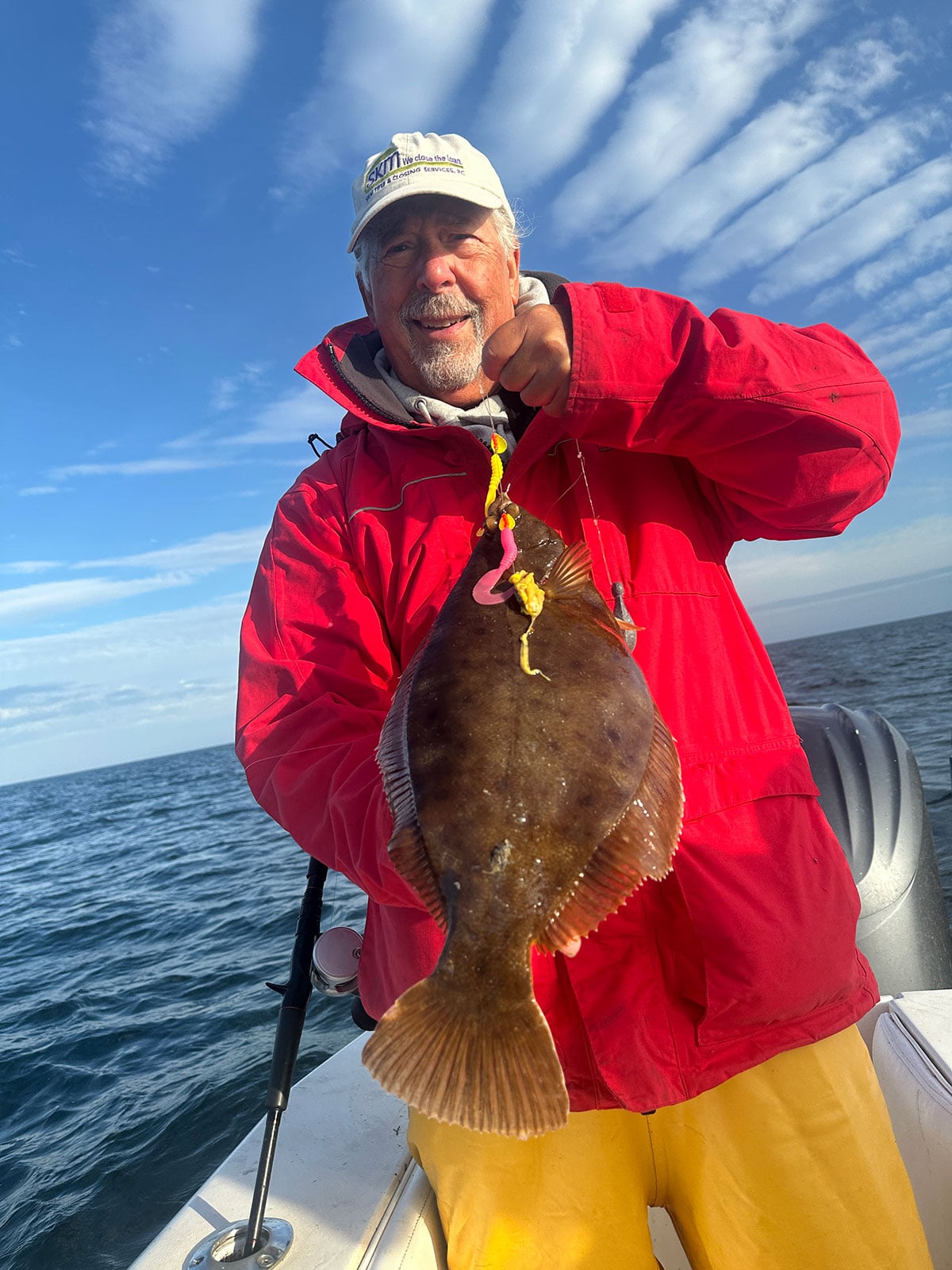
Head to the Cape for the kind of flounder fishing you won’t find anywhere else!
By 2012, I had spent 15 years fishing for winter flounder out of Quincy, Massachusetts and seeing consistent improvements in the fishery year after year. However, that year’s stock assessment revealed that Gulf of Maine cod biomass had dropped to 4% of healthy levels. In response, management implemented a 77% reduction in cod quotas for 2013 while simultaneously doubling the quotas for flounder; you don’t have to be a member of Mensa to see the flaw here. Because the commercial fleet needed to pivot to stay viable, they shifted their efforts to flounder. The resulting increase in focused pressure took a serious toll on the flounder fishery; I watched flounder numbers in Boston Harbor decline steadily by 10 to 15% annually. By 2020, the population was a fraction of what it had once been, highlighting how sensitive these species are to sudden shifts in fleet focus.
To keep my boat going, in 2016 I found good numbers of large haddock only a couple of miles east of Boston Harbor and limit catches of excellent fish only 45 minutes out was a very compelling alternative to the diminishing flounder population. We would limit out early on haddock and then anchor with the chum pots down and fish for flounder while I filleted haddock for a few hours. But then, to start off the 2020 calendar year, Mass Marine Fisheries got a new director, and one of his first actions was to grant the draggers “unlimited haddock” in state waters. Needless to say, the haddock vanished rapidly and without flounder or cod, all the boats that fish Boston Harbor had little to do until the striped bass showed up.
Off To Sesuit
During those years of losing the flounder, many of my clients from New York, Connecticut and New Jersey, along with many locals, started finding their flounder fix by travelling to Sesuit Harbor where a very popular boat called Bad Dog with Captain Mike Fowler had been still going steady catching flounder, just outside Dennis Harbor in Cape Cod Bay. The fishing was good, the ride was short and the fish were big. What more can you ask for?
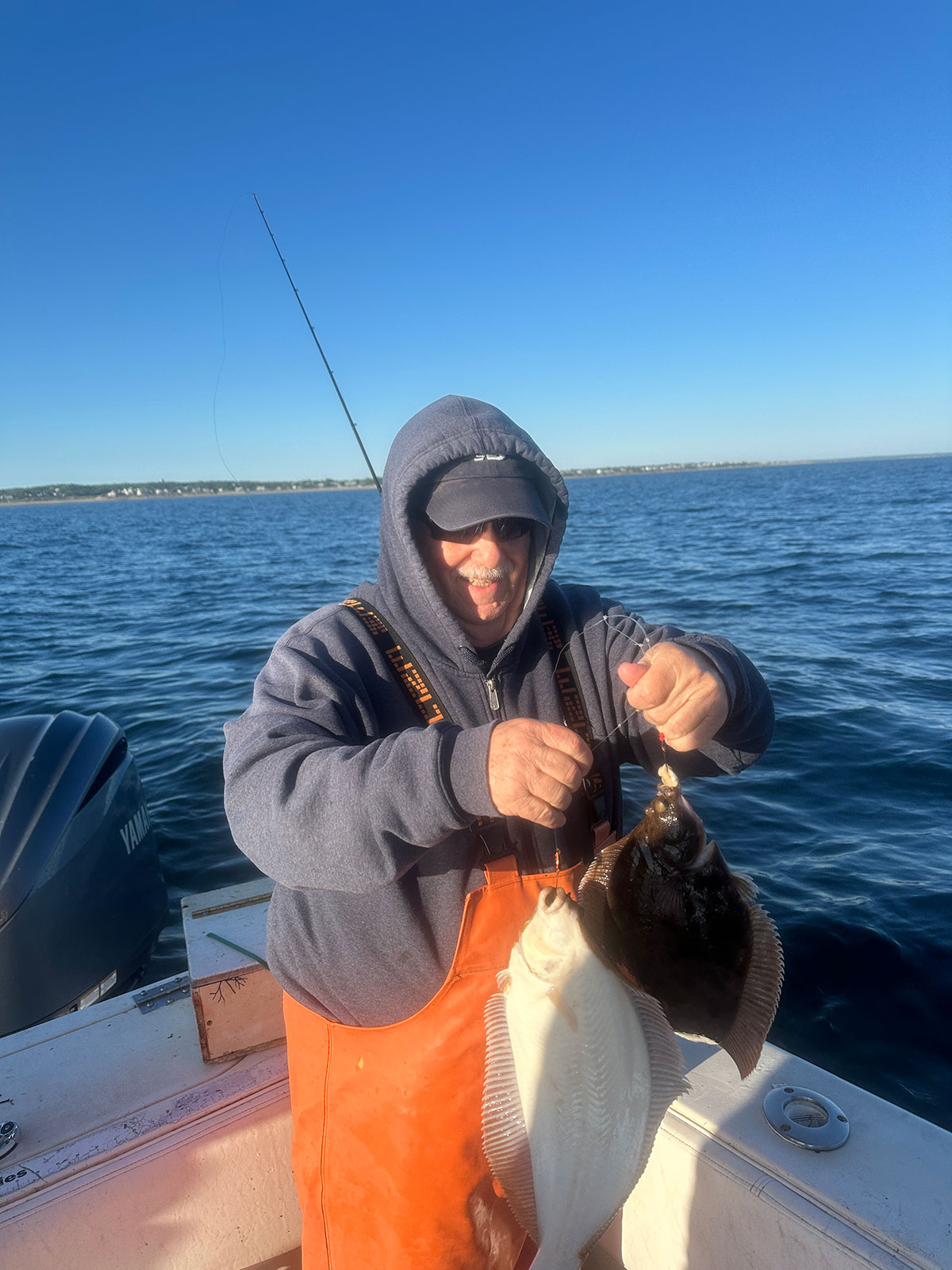
I finally broke down and took the boat to Sesuit in May of 2023 and on the very first drift, just a couple of hundred yards from the inlet we started catching big flounder. Also interesting was it seemed the fish were just as likely to eat clams as they would mussels or worms. With the prices of worms over the past few seasons, this was pretty refreshing! I have been going back there each May since and this will be my fourth year fishing there.
The Process
The flounder fishing out of Sesuit is a little different than Boston/Quincy as the fish are not just sitting on the mud flats, but rather they are “hunting”. The draggers do not hit the area but there are always several commercial shellfish boats in sight and that is what the flounder have learned to capitalize on, the broken waste of the clam boats. Once a pile of broken shellfish is discarded, large numbers of flounder from the immediate area will concentrate on that material. Mark it on your GPS because that spot will be productive for several days.
The idea is to set up-start your drift up wind/up tide of the spot and to drift over it, as long as the conditions allow. Winds in excess of 15 knots will slow your bites but countering the wind with a drift sock (or two) can make all the difference. When the water is colder, around 50 degrees, in early May you will want your drift to be at 0.4 knots, tops. As the water warms to past 54 you can get away with 0.6 to 0.8 and if you are later in the season with 57 to 61-degree water then the flounder will still track you down moving at up to 1.1 knots on your GPS.
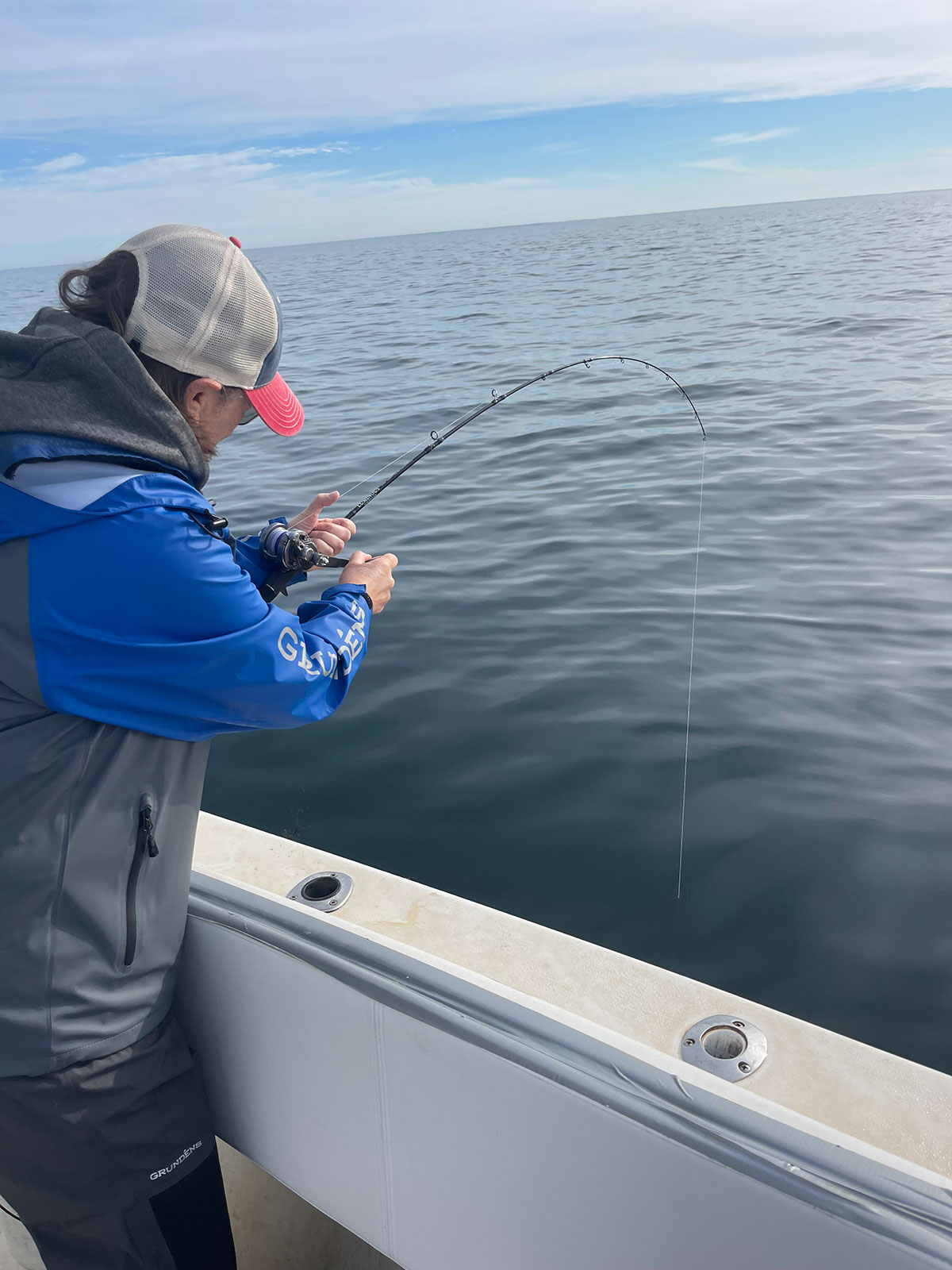
Keep the sinker “hopping” lightly on the bottom (try very hard to keep the hops under 4 inches) as you drift along and treat every contact as a bite by lowering the rod tip for a second or two (stretch your arms out so the sinker does not move) to allow the fish to ingest the bait, then lift. If the fish is there set the hook and if it isn’t then go right back to hopping the sinker along. Often a missed fish will keep coming back until he gets hooked or gets your bait.
Adapted Traditions
Growing up flounder fishing, as a kid and then as a young adult on Long Island, then Montauk, my preferred method of flounder fishing was always “anchor and chum”. That method served me well in Boston Harbor particularly because there were two things always present there: crabs and current. I would station the chum pots off either forward side of the boat (Yes, two of them, one for each side. If you only have one then some people will be left out of the chum line and they will not do as well.)
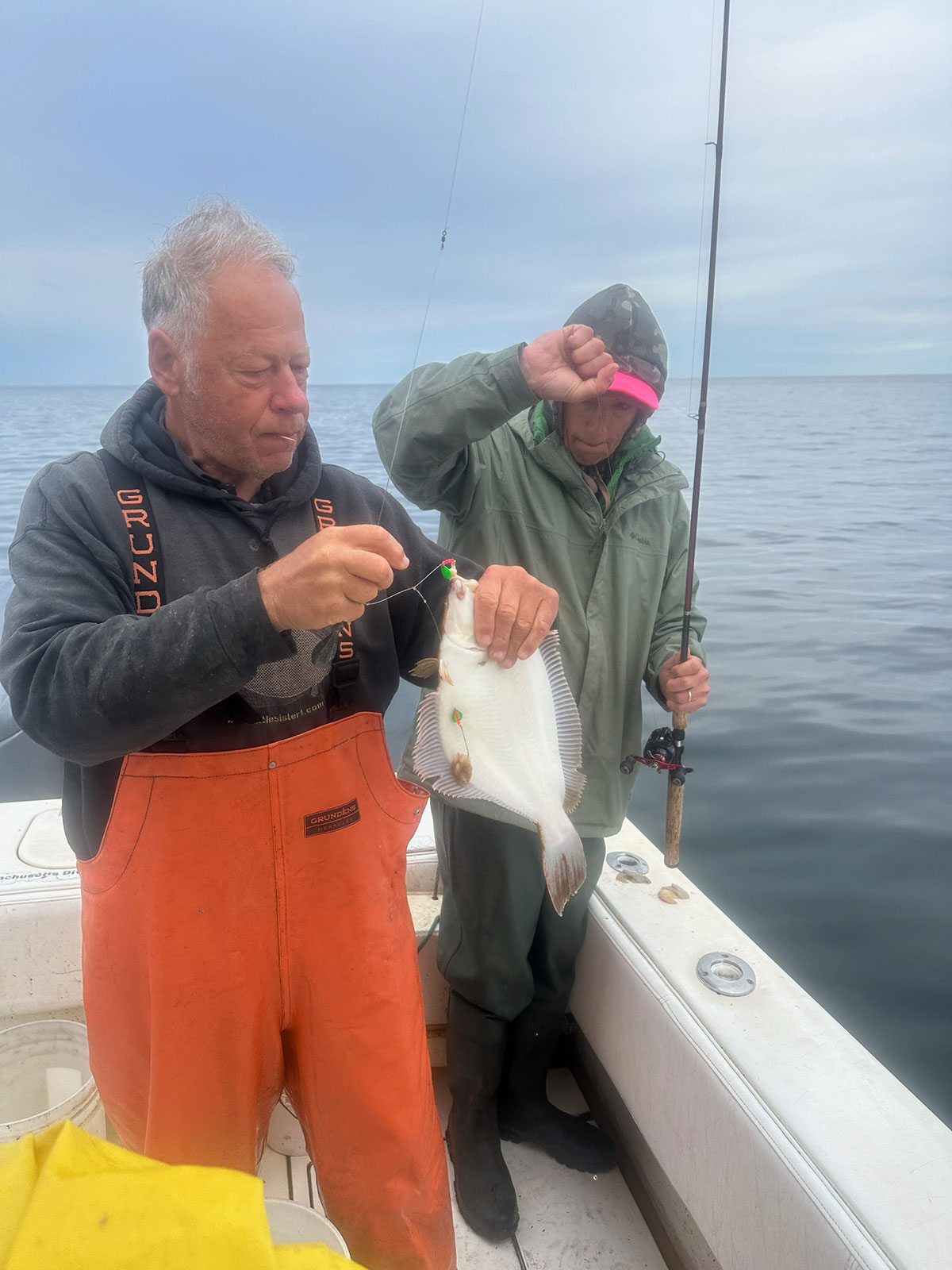
The key was keeping them on the bottom with sash weights held by 1/8-inch poly line. I clip on a lobster bait bag filled with clams and when crabs are present, they congregate on the bait bags and chew. That creates a steady stream of clam “dust” and fills the water with their scent that moves down current from the boat and every flounder that smells it moves toward the boat. It is very efficient but if there are no crabs and you still have current, as is often the case around Sesuit, then a mesh chum pot with ground clam chum is the way to go. Always be prepared to both drift and anchor, depending on the conditions you are dealing with.
Hook, Line & Sinker
Rigging does not have to be complicated as long as you have good quality hooks. Many people use Chesterton Flounder Hooks, these are the long-shank, soft metal hooks that have a very small bend so the fish suck them deep down and are often gut hooked. Old timers grew up tossing every flounder into their bucket or cooler so ripping the hook out of a gut hooked fish was not an issue. These days we do a lot of catch and release and the intent of releasing fish is to let them live. Which is why I use size 2 Mustad R73 forged Bronze Streamer hooks. The fish are much more likely to be hooked in the mouth allowing them to be released safely.
Two snelled hooks tied in tandem so both hooks stay close to the bottom is the way I tie all my rigs. I also add a spinner blade and some glow beads (8 mm is good) for added visual attraction. Note that there is a guy that fishes with me a lot who does catch quite a few very large flounder on a hook that he rigs about a foot off the bottom. That guy, we call him “RP”, has caught fish over 4 pounds for many years in a row including the biggest one I’ve ever seen caught which was 5 pounds, 9 ounces weighed on official scales.
When it comes to rods and reels, don’t complicate things: 20- to 30-pound braid on a 300-size conventional reel (Like a Penn Squall or a Piscifun Alijoz) works great matched with a rod like a Tsunami TSSPJ-C661 MH. Whatever you do, do not fish too light! There are mussel beds all over the place around Sesuit and hang ups do happen. With good tackle you can usually pull your way out, but if you are not properly rigged for the structure you will lose a lot of gear. Even more important is there are some big blackfish (and later in May, big stripers show up too) on the mussel beds. Bad Dog also has some wrecks and rockpiles where he targets tog in the spring before or after his charter gets their flounder limit. Those spots are very limited so I do not advertise tog fishing in the spring. I don’t like to kill them anyway because at that time, all the females are full of eggs. Besides, I have a lifetime of tog in Westport where I am every fall!
Flounder Finding
To be clear, the flounder fishing is not limited to “just around Sesuit” but rather that whole area south of Billingsgate Shoals from Wellfleet to just east of The Cape Cod Canal. You can fish out of Plymouth, The Canal, Barnstable Harbor, Dennis Harbor (Sesuit) or Wellfleet and be within range of good numbers of flounder. Pick your weather! A lot depends on the size of your boat and your comfort/safety level in various conditions. While south winds tend to blow off the land and make things flatter, winds out of the north can make it quite sloppy, if not downright dangerous! Always know your limitations if you are fishing your own boat!
| LOOK AT LITTLE SISTER |
| If you want to get in on this fishery with a captain who knows how to get it done, look no further than the author of this story. Capt. Jason has a made a living as a charter captain and his results speak for themselves…
– D.Anderson Little Sister Charters |
If you do not have a boat and you generally fish charters there is Grey Dolphin, Bad Dog, Reel Grit and, of course, my boat, Little Sister. For party boats there are a couple options to choose from like The Albatross out of Sesuit and The Starfish (part of The Helen H Fleet) out of Barnstable. I’m sad to say that shore fishing around Sesuit, for flounder at least does not seem to be “a thing”. I’ve tried…
Whether you go on your own boat, or jump on charter with me, or any of the other boats that fish the area, you may be treated to the kind of flounder fishing that’s is just a memory for places in Boston Harbor, Rhode Island and Long Island Sound. And if you have the touch that our friend RP has, you could tie into the flounder of a lifetime.