Ten species in a day along New England’s most diverse waterway!
The name “Connecticut” is the Anglicization of a Mohegan word that supposedly meant “long river”, and indeed it is by Northeast standards, flowing all the way from the Connecticut Lakes near the Canadian border down to its terminus in Old Saybrook, a length of about 410 miles. In that 410 miles is a diversity of fishes that rivals the number of species many anglers could probably say they’ve caught in their life, and nowhere is the diversity more notable than the bottom third.
From Holyoke Dam in Massachusetts down to the mouth exists just about every fish species that can be found in the northern reaches, with a seasonal abundance of anadromous fish making the diversity even more dramatic. To add to the complex dynamic, from about Hartford down there are tidal influences. This makes it a deeply engaging and enjoyable fishery. It happens to be my favorite, and as a guide in Connecticut with a broad focus and ample interest in variety, the Connecticut puts a lot on the table.
To showcase just what a remarkable fishery it is and highlight some of its species, we’re going to take a hypothetical day-long mission to seek out ten of its species. Ambitious, perhaps, but achievable with a bit of self-torture and some gas burning.

Wake Up Call
The alarm buzzes a bit before midnight on a night in early summer. A dark start is key for this mission, as some of our species are photophobic and prefer to feed under cover of dark. Most of the preparation is already done, the canoe racked up and gear all in the car. It’s a broad assortment, from ultra-light spinning rods to 12-weight fly rods. There’s terminal tackle like pre-tied fish finder rigs, all sorts of leader material, assortments of plugs, and fly boxes packed with a variety of patterns. Each species demands a different approach and varied tackle. Often, decisions need to be made on the fly as conditions change. You never know what the Connecticut might throw at you.
To keep things interesting, we’re going to start off rather strangely. Our first target is the American eel. Eels are catadromous, meaning they spawn in the ocean and grow to adulthood in river. At mere inches long, juvenile eels – called glass eels while they’re transparent and knife-shaped and yellow eels as they attain their recognizable eel appearance – swim up the Connecticut each spring after traveling from the Sargasso Sea where their parents spawned. They grow to size in the river, some reaching over three feet long. They also happen to be my personal favorite freshwater fish to eat.
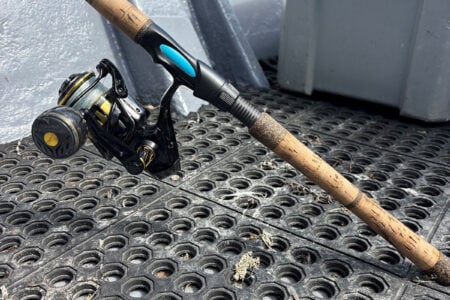
On the water just as the clock strikes twelve, we’re armed with an ultra-light spinning rod rigged with a simple rig: two large split shot above an 8-pound mono leader tied to a size 6 octopus hook, with a large night crawler threaded on. The chosen spot is 6 feet deep just off the shore with sluggish current. There is broken rock nearby, but a fairly clean bottom that isn’t too “snaggy”. A short flick and the bait is deposited on this clean bottom. It doesn’t take more than a minute or two for the rod to start twitching. Eels can be peckish feeders and letting the rod sit until the eel is pulling the lead around, is necessary. Though most are small, a big one can give a righteous tussle.
The least appealing thing about eels is handling them, and I forgive anyone that doesn’t want to. Their slime is gnarly and sticks to everything. A towel is recommended. Eels are prone to swallowing deep and are a nightmare to unhook, so many die with a hook in their guts. Fishing barbless saves the difficulty, even if the intent is to take the eel home for a meal or as bait.
With that neatly wrapped up, the next query is in the crosshairs. This demands heading a little ways north and looking for species doing the opposite reproductive strategy of eels. River herring enter the river each spring to spawn. They’re illegal to target or take, but nobody told that to the striped bass. The further north you go the more frequent rocky, fast flowing stretches become. These form choke points that bass can use to ambush herring that are on their way back out of the river. This may be one of the more demanding species on the docket, especially because we’re doing it with a fly rod.
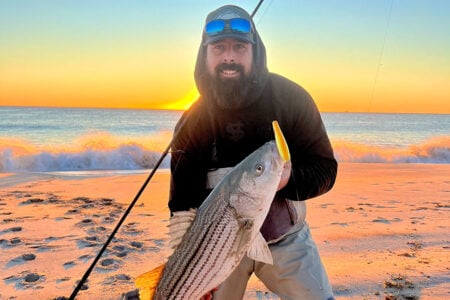
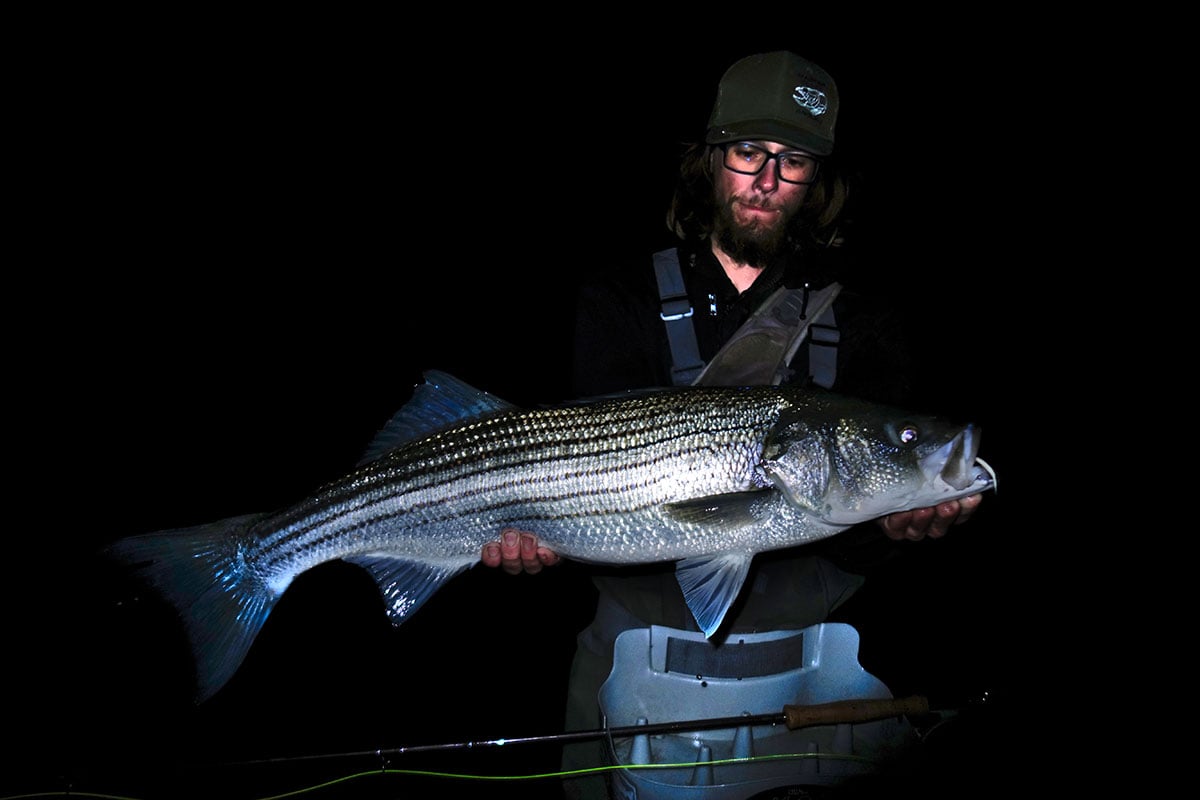
Herring-keyed bass often single out the injured, sluggish, and sometimes even dead individuals. Drifting and swinging a long fly called a Sedotti Slammer with a floating line is my go-to strategy. Having multiple choke points within close proximity helps, as a lot of the time these fish are fairly static and will eat on the first few casts. Eventually there are some signs of life: herring flicking here and there then a suspiciously large boil. The fly drifts into the zone where a boulder breaks the current and is taken violently. At 36 inches with a stomach packed to the brim, this is a very good riverine striper. Two casts after the striper was released, a surprise 6-pound largemouth bass comes up and inhales the fly. As I said, you never know what the Connecticut is going to throw at you. That’s one fish we don’t need to focus on later now!

With The Sun
The light is coming up soon, and we’re only three species in. It’s time to get a move on. The next target is another anadromous species, and icon of the east coast: American shad. They’ve long been an important source of food when the rivers run silver with them in the spring, as evidenced by bone dumps loaded with shad remnants left long ago by the indigenous peoples. Though most shad runs are very depleted today, the Connecticut River still has a strong and fishable run.
Up toward Holyoke is where we’ll go. Often there’s a flurry of activity right at dawn. In the fast runs near the dam, shad pile up and preserve energy before continuing their run. Armed with a light spinning rod and a tandem rig of a small flutter spoon and brightly colored shad dart, we work the water, casting down and across, getting down deep, and drawing the lures across the current. It doesn’t take long and the take is a solid one. Shad have soft mouth structure and it can be easy to pull a hook free, so battling the fish gently is imperative. With careful pressure, a thick, silver fish with lavender and blue iridescent hues slides up into the shallows. This is what is known as a roe shad, the egg filled females that will carry on the legacy of this keystone species. They fight deep and long while their smaller male counterparts are more acrobatic and showy.
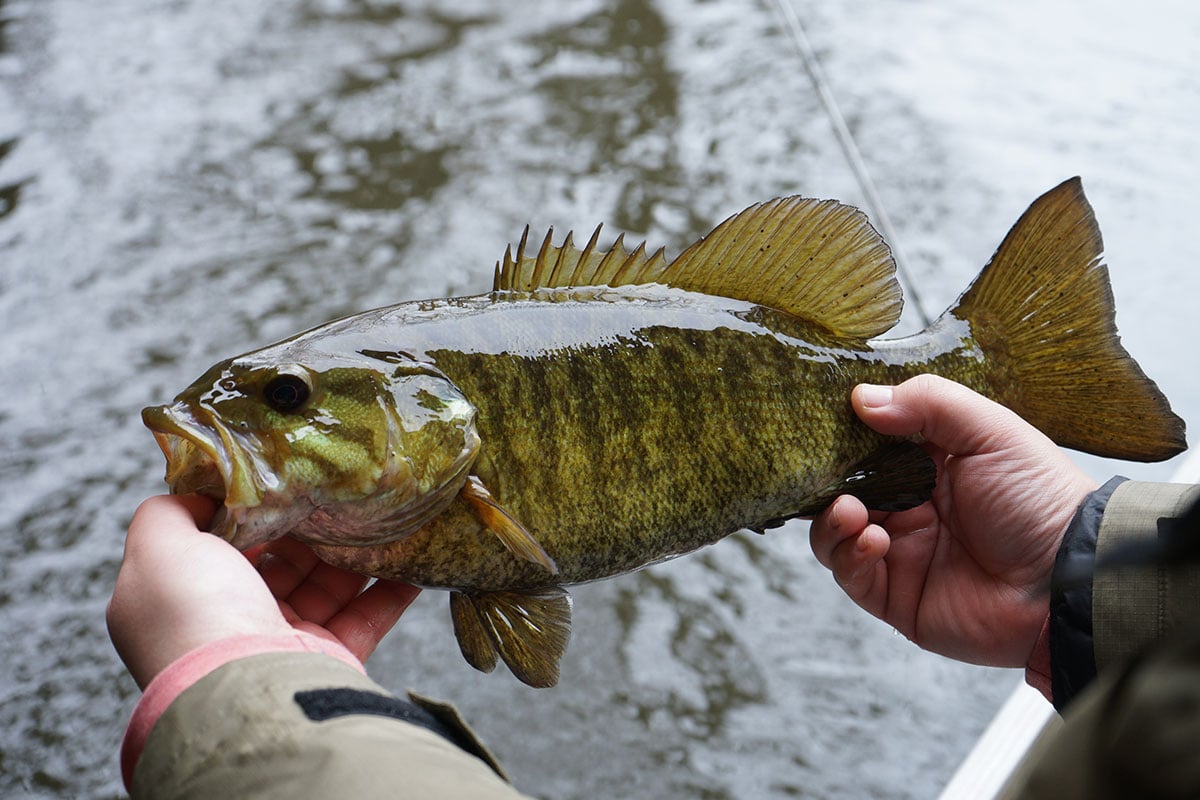
Keen to get onto the next fish, we can see a back eddy just downstream. The sluggish water with foamy bubbles collecting on top is the perfect cover for a smallmouth bass. Off comes the shad rig and on goes a black 1/8-ounce marabou jig. The eddy is about 50 feet square, and covering it by fan casting is the best move. Right square in the middle of the eddy a fish picks up the jig gently. The ensuing fight is anything but, and the 4-pound bronzeback jumps three times.
Weird Ones
With good light in the sky now, it’s time to head south again. The Connecticut has a number of great coves and backwaters hosting a variety of species. Common carp were introduced to this country in the 1800s as an easy food source, but quickly fell out of favor as the wild carp that took over many murky, industrialized rivers don’t taste as good as cultivated ones. They make great sport though, and targeting them by sight is perhaps the most fun way to do it. Looking for waving tails, mud clouds, and bubbles on a shallow mud flat, we spot many. It can take a few targets to get a player though, and approaching close in a canoe takes care and slowness.
With a medium action rod we flick single hooks loaded with corn in front of the rooting fish, and eventually one takes. Normally I’d fish a 6-weight fly rod and a variety of larval and worm fly patterns for them, but we’re on a time crunch and this is unquestionably easier. Still hard, carp are clever fish, but easier. As soon as the carp picks up this free lined corn, the bail should be opened for a moment or two to allow it to pull freely. Once the bail is shut and the hook set with a firm jab, we’re in for the best fight so far as the brute screams off across the mud flat.
| AQUATIC INVASIVE SPECIES |
| In modern time one of the more notable threats to the Connecticut River is aquatic plants that don’t belong there. The two primary species of concern are milfoil and water chestnuts or water caltrop. Both are highly prone to choking out backwaters, channels and coves, making them impassable to vessels and deteriorating from the fishing opportunities for significant chunks of the season in the summer and early fall. It has also displaced the native plants that make the Connecticut River such good, productive habitat. CT DEEP has instated an AIS stamp for boaters that makes funds available via a grant process, which groups like Connecticut River Conservancy and others have already used to fund physical removal efforts and other research. It is key to make sure your vessel is cleaned, drained and dried before moving from one part of the river to another or to another water body to stop the spread of these harmful aquatic invasive species. |
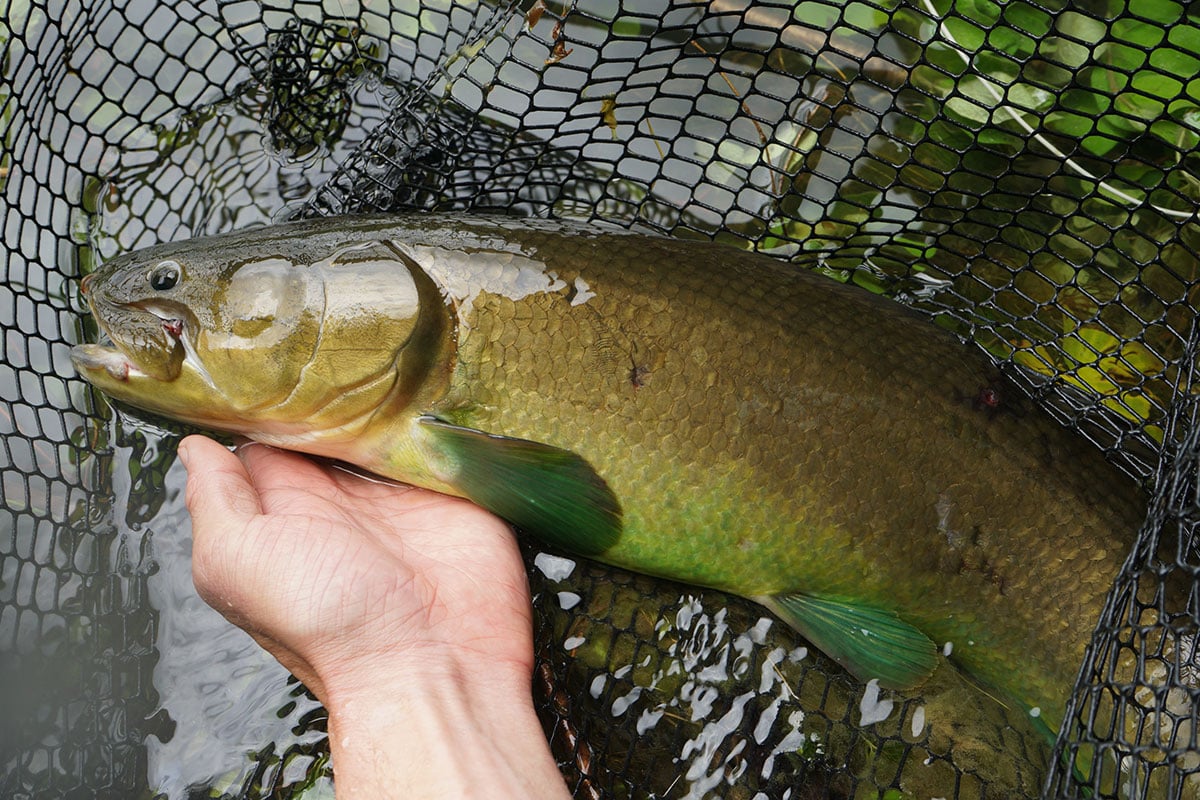
Not far away, on the edges of the mud flat where some grass and milfoil is growing, is the next target: bowfin. There isn’t a defined first occurrence of bowfin in the Connecticut River, and I’ve heard rumors of them being present in Massachusetts as early as the 60s. They were well established by the mid to late 2000s and fit in quite well as the habitat the Connecticut offers is nearly identical to most of their native range. They’re a good sight target too, and for them we will use a fly rod.
Dapping describes a tactic of getting close to your target and simply dropping the fly right in front of the fish. Bowfin hide well in the shallow vegetation, so the best approach is slow and methodical. When one is spotted, make sure not to make any abrupt motions or loud noises, then simply lower a heavy-hooked, natural colored streamer in front of the fish and pulsate it. Bowfin hit hard, and when the 25-inch long male we’ve located takes it makes a “thump” sound underwater. The hook set must be sharp and firm, and having a net handy is key. Bowfin have very bony mouths and oftentimes the hook is just barely penetrating. Keep pressure on them and guide them to the net as quickly as possible.
Panfishing
With that done, the next mission is twofold: catch a bluegill to get our eighth species, but also to use it to get our tenth. The humble bluegill occupies a wide array of water types throughout the Connecticut River, but they’re setting up to spawn in the very sorts of backwaters we’ve just caught our bowfin and carp from. These sunfish set up along shorelines with a modest drop off and build bowl shape nests that they guard intently. With a simple modification to the eel rod, adding a small stick float, they should be a synch. With a couple dozen bluegills wheeling around nests and some other intermingling, it doesn’t take long to get three to hand and that should be more than enough to make bait.
Not far down the bank though is a lay-down, a tree that came down some years back but still has nice, complex branches arching deep into the water. There should reside another panfish species, the black crappie. Also prolific in many backwaters, these more predatory panfish can grow as long as 29 inches. The hook and worm are traded for a Chartreuse marabou jig. The float sits nicely balanced under the weight of the jig and that can be key if crappies are fickle, because they often eat coming upwards and instead of the float dropping under it will tip onto its side to signify the bite. This time though, a fat crappie drops the float with authority right next to the laydown.
Darkness Falls Again
The final target waits until dark. With a couple of rod holders and heavy conventional outfits, the bluegill chunks are set out on fish finder rigs with 20-pound test leader, 2-ounce pyramid sinkers, and 2/0 octopus hooks. The spot is a deep cut with sand and gravel bottom as well as a good current. This should be where big channel cats live. While we sit on our buckets waiting for a run, it’s worth reflecting on the opportunity the Connecticut River just afforded us.
There are many very diverse fisheries around the world, and to boast that the Connecticut is better than any other is a stretch. But it is absolutely phenomenal. After decades of industrial misuse, development, and wastewater discharges that continue to this day, it manages to boast a litany of fisheries that can produce world class specimens. The Connecticut has smallmouth bass as big as anywhere and a shad run that rivals every other East Coast river. The carp fishing is good enough to draw anglers from around the world. The striped bass bite can be tremendous at times, and just feet away may be a slough of trophy panfish.
The Connecticut River is a tremendous fishery and should continue to be so long as we treat her right. Suddenly, one of the rods is bending over, not ticking or tapping. Channel catfish, especially the big ones, just pick up and go. With a firm hook set, the battle is on. Though they may not be an especially big fish, it’s hard to beat the way they pull. A channel catfish is a great way to cap off catching ten species in 24 hours. It’s always good to end on a high note.