Head southeast of Block Island this November for jumbo sea bass and porgies, with the right tackle, techniques and preparation for late-season bottom fishing.
Granted, for Tri-State anglers, November spells peak season for blackfish around the waters of Long Island. In Long Island Sound, the blackfish bite typically peaks when water temperatures reach 55 degrees, then shuts down around 50 degrees, which usually occurs by late November or early December. On the other side of the coin, ocean waters, including those around Block Island, also see a solid tog bite at 55 degrees. Strangely enough, these fish will remain active and feeding until water temperatures reach the 45-degree mark before entering hibernation mode.
In areas such as Southwest Ledge and the North Grounds, where blackfish congregate, the curtain doesn’t usually come down until late December or sometime in January, if it shuts down at all.
In the meantime, veteran sinker bouncers anxiously await November to fish the southeastern waters of Block Island, where monster black sea bass and jumbo porgies hold on the grounds for a good part of the winter. With the holidays approaching, now is the time to throw on the long johns and put some delicious fillets on the table for the holiday season.
Black Sea Bass And Friends
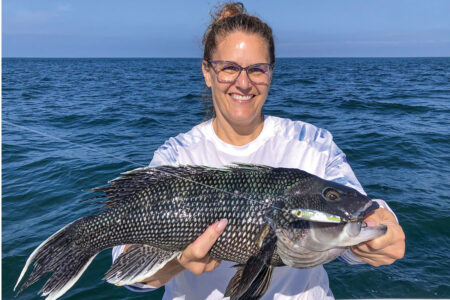
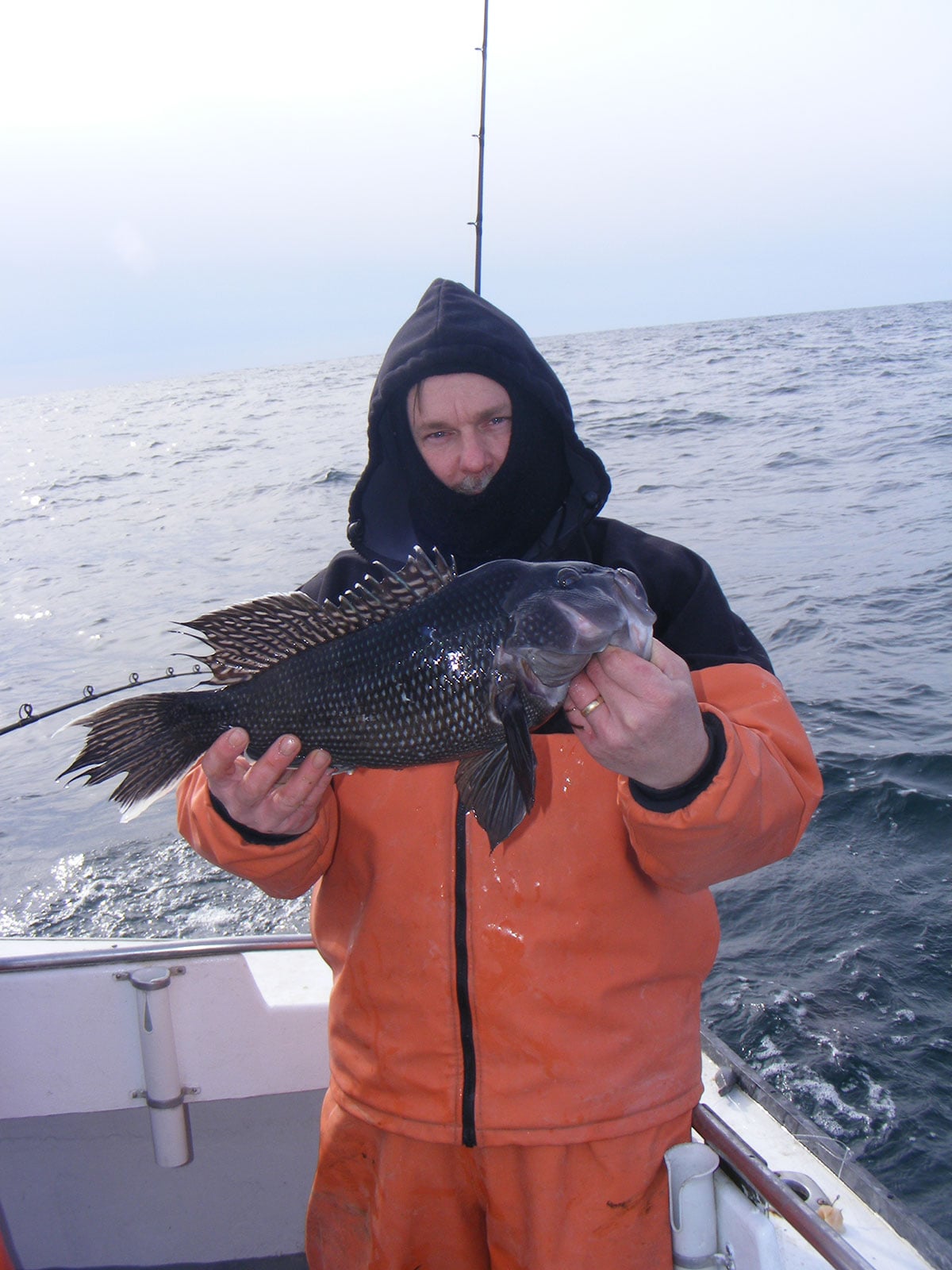
Black sea bass pretty much hold the fort southeast of Block Island throughout late fall and well into winter. Besides being excellent table fare, black sea bass are spirited battlers, especially when you encounter fish weighing 3 pounds or more, with some reaching upwards of 8 pounds. As ocean water temperatures begin to drop significantly, sea bass migrate from inshore waters to offshore grounds south of Block Island, spreading anywhere from 10 to 30 miles offshore among the numerous wrecks scattered along the 20- to 30-fathom lines.
What makes the region surrounding Block Island a winter aquarium is the influence of the Labrador Current, which brings cold water from the North Atlantic, and the warmer waters associated with the Gulf Stream. These currents help make the region home to a wide variety of species. A prime example of the Labrador Current’s influence can be found in the waters southeast of Block Island, including Coxes Ledge, where water temperatures remain relatively stable throughout the year.
With the exception of Rhode Island and Massachusetts, Montauk offers some of the closest access to these fertile grounds. During November and December, open, charter, and private boats from Montauk, Orient Point, and Greenport make the 15- to 20-mile run to depths of 145 to 160 feet south and southeast of Block Island. Here, miles of rocky bottom attract incredible numbers of groundfish, including jumbo porgies, green codfish, an occasional slob tog, and, of course, giant sea bass weighing 3 to 5 pounds, with an occasional 6- or 7-pounder. As winter progresses, these groundfish, with the exception of codfish, move farther offshore toward the warmer waters associated with the Gulf Stream near the continental shelf and wrecks lying in 250 to 300 feet of water.
Tackle For The Elements
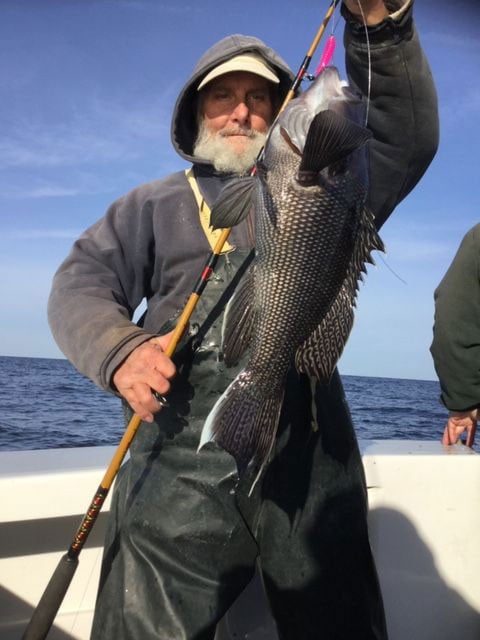
To start, your tackle needs to match the conditions you’ll encounter. Fast-tapered graphite rods in the 6- to 7-foot range, equipped with conventional reels in the 3/0 to 4/0 class and filled with 30- or 40-pound braided line, are well suited for these conditions. Braided line is essential over monofilament due to its sensitivity and strength. In addition, you may encounter strong currents, making the thin diameter of braid especially beneficial. It helps cut through the current, allowing you to reduce the weight of sinkers or jigs and making it easier to detect even the most subtle hits in deep water. The bottom line is that increased sensitivity leads to more hookups rather than missed strikes.
While braided line has many advantages over monofilament, the material is highly visible, which can be a disadvantage when pursuing groundfish. Their eyesight is extremely sharp, and at times they can be quite line-shy. Therefore, an 8-foot length of 30- or 40-pound fluorocarbon leader tied to the braided main line with an Albright knot should help eliminate some of that hesitation.
For some reason I can’t explain, I’ve found that an 8-foot shock leader of 30-pound pink monofilament of fluorocarbon often produces better. It’s something worth considering and can make a significant difference. It has to be pink. All I know is that this combination has worked well for me over the years.
Rigging And Baiting
Since I’ll assume your boat is now winterized and shrink-wrapped until next season, your venture will likely come aboard an open or charter boat. Therefore, the choice between employing rigs or jigs will depend on whether the captain decides to drift or anchor over a productive spot. The tried-and-true hi-lo rig has stood the test of time and consists of a pair of super-sharp 5/0 Gamakatsu octopus hooks positioned 3 feet and 1 foot above the sinker using dropper loop knots. This allows the bait to lie naturally while minimizing line twist.
When using this style of rig, keep your bait on the smaller side, which will help you detect even the lightest taps. As for bait, fresh, unsalted skimmer clams are commonly supplied aboard party boats and are favored by most bottom dwellers. Fish baits, such as freshly cut strips of cunner or whiting, which are making a significant comeback, will also satisfy the gluttonous appetite of black sea bass.
Sea bass also love Berkley Gulp, and I’ve done very well using Gulp Shrimp, Grubs, and Minnows. Simply impale them on the hook, and you’ll often catch numerous bottom dwellers on the same bait before having to replace it. If, for some strange reason, Gulp isn’t getting the job done, you can always fall back on natural bait.
True And Trusted Magical Jigs
Many lures have come and gone over the years. Some are long forgotten, while others have stood the test of time and remain as popular today as they were 50 years ago. Modifications and technological advancements have improved the balance and appearance of these lures, making them increasingly lifelike. Others feature unique characteristics that grab the attention and curiosity of predators, especially jumbo sea bass and scup.
One of the most common and widely used lures, with incredible results, is the plain and simple diamond jig. When conditions permit, such as during a slow drift, 2- to 8-ounce AVA jigs worked along the bottom produce well and are cost-effective should one or two fall victim to the rocky structure. The Marathon Diamond Jig from Bimini Bay Outfitters is another wise choice. It features a sleek, aquadynamic design with durable triple-chrome plating that provides a long-lasting, bright silver finish. A holographic finish is also available. Quality Mustad hooks round out these jigs, which range from 2 to 8 ounces.
If you enjoy shaking, rattling, and rolling, consider the Raging Rattler bucktail from S&S Bucktails. The Raging Rattler features a full-glow head and skirt, along with an internal rattle. Curiosity often gets the best of sea bass, and the rattling sound can draw their attention. Also in the S&S lineup are the Octopi and Flutter Jigs, which have become popular among anglers who take jigging for sea bass seriously.
Let’s not forget Shimano’s lineup, which includes the Butterfly Flat-Side Jig, designed to produce effective action while vertical jigging from a drifting boat. Its rear/center weight-balance design allows the jig to fall quickly to the bottom with a swinging motion. The offset eye position provides options for hook placement to improve hookup ratios. These jigs come in a variety of colors and sizes up to 7 ounces.
Designed for deep-water fishing around rocks, reefs, and wrecks, these jigs have repeatedly proven effective on jumbo sea bass and giant porgies, including many pool-winning fish. When it comes to working your jig, there are times when a simple snap of the wrist will be just as productive as a slow or fast retrieve. However, over the long run, the snap-jigging technique, which involves a more exaggerated, forceful jigging motion, will often outfish other retrieves.
Staying Warm And Cozy
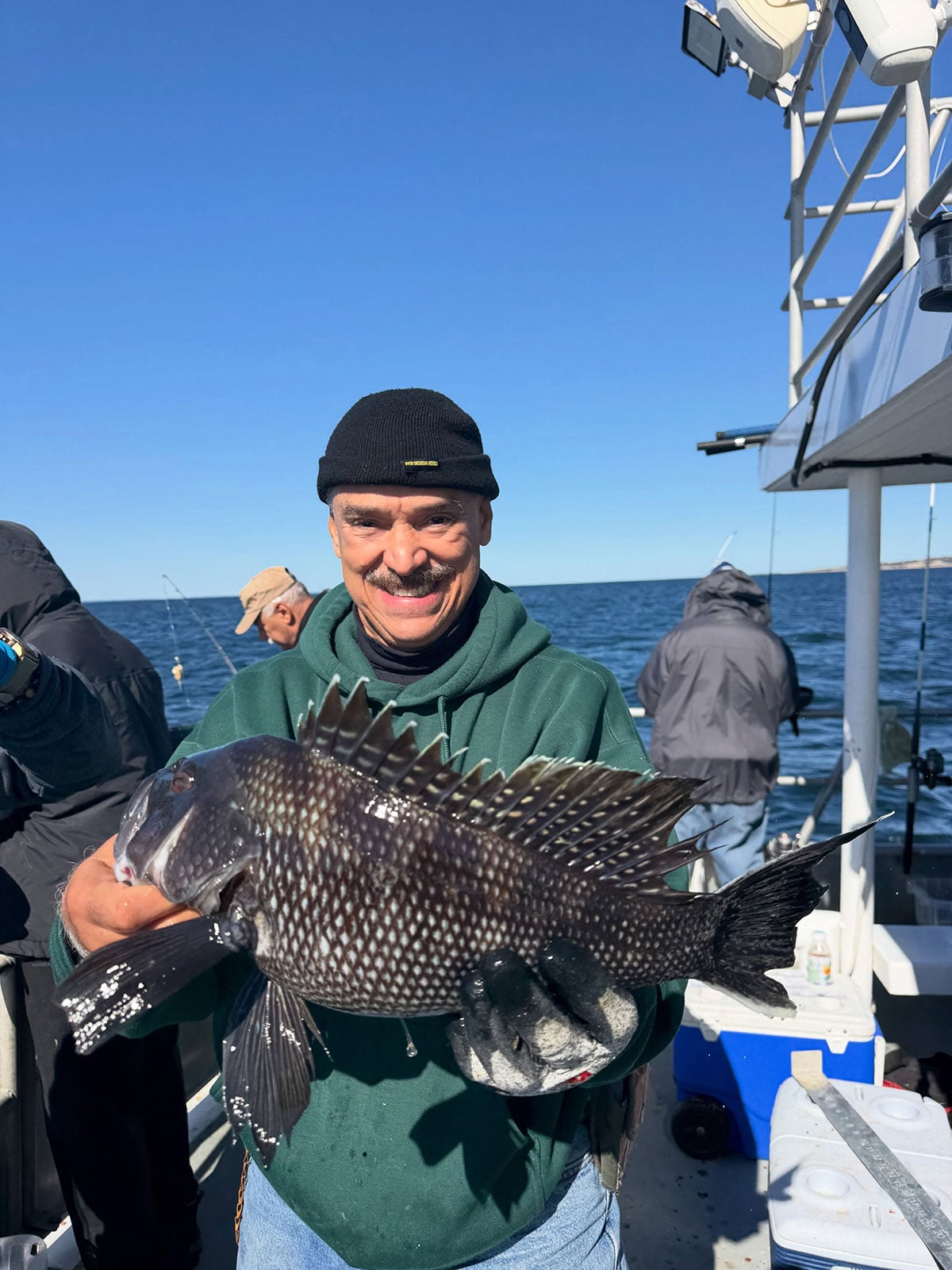
Lastly, November can produce some warm, mild days reminiscent of an Indian summer. Then again, it can also bring frigid temperatures and harsh conditions. Staying warm is paramount to maintaining concentration when fishing in cold or inclement weather. Dressing properly will keep your mind focused on hooking and battling big sea bass and porgies rather than shivering.
Your base layer is the first level of clothing and serves two purposes. The first is to insulate your body’s natural heat and prevent it from escaping. The second is to wick moisture away from your skin to the outside of the fabric, where it can evaporate. This moisture-wicking process is important because sweat that remains against your skin or saturates your clothing can severely hinder your ability to stay warm. Thermal underwear and a good pair of insulated socks make for an effective base layer.
Speaking of socks, since your feet don’t move much while fishing, they can get quite cold. As with your base layer, moisture-wicking capability is essential. A good option is to wear a thin liner sock that draws moisture away, followed by a thicker sock to insulate your feet. The middle layer is meant to retain your body’s natural warmth while keeping the cold out. For me, this usually consists of a hooded sweatshirt and jeans. I prefer polyester sweatshirts over cotton because polyester offers better moisture resistance. Finally, the outer layer’s main purpose is to block wind, cold, and water, which is where a good set of waterproof PVC rain gear comes into play.
As the days grow shorter and the temperatures begin to drop, the waters southeast of Block Island offer some of the finest bottom fishing opportunities of the season. With jumbo sea bass and hefty porgies waiting on the offshore grounds, there’s no reason to put the rods away just yet. Dress for the conditions, bring along the right tackle, and be prepared to work for your catch. A cooler full of fresh fillets for the holiday table is a great reward, and with the right weather window, November can deliver some of the most memorable bottom fishing of the year.