Late spring and early summer tips for knotheads.
In past articles, we’ve covered the mid-season, fall and late season outbound migration of black sea bass, where to find them and how to catch them. For this month’s focus, we’re going to start at the very beginning and track these tasty bottom dwellers from their wintering grounds near the edge of the continental shelf, as they make their way inshore to shallow water reefs, rock piles and estuary systems to spawn and begin the great circle process anew.
The black sea bass fishery operates from Maine to Florida. Black sea bass are found in association with structured habitats. They migrate offshore and south in the fall, returning north and inshore to coastal areas and bays in spring. According to a recent NOAA FishWatch survey, there are two groups of black sea bass, the Mid-Atlantic and South Atlantic stocks. According to the most recent 2021 stock assessments, the Mid-Atlantic stock is not overfished and is not subject to overfishing. A 2018 stock assessment determined that the South Atlantic stock is not overfished and is not subject to overfishing based on 2021 catch data.
The Mid-Atlantic stock group covers the area roughly from Capt Hatteras up to the Gulf of Maine. The South Atlantic stock territory ranges from south of Cape Hatteras and down to Florida and the Keys.
Where & Why
Black sea bass undertake seasonal temperature-driven migrations. In the springtime, they travel northward and inshore toward coastal bays, estuaries and shallow reefs, which essentially is the reverse course of their typical autumn retreat, when cold weather drives them offshore to winter near the edge of the continental shelf. The spring migration triggers as offshore bottom water temperatures climb above 45 degrees and the fish move in a staggered wave from south to north. According to Google’s all-knowing AI, the timing of these staggered migrations typically follows a predictable model, based on weather and rising water temps:
Late April: The migration begins in southern offshore wintering grounds. Schools start pushing toward the mid-Atlantic coast near North Carolina and Virginia.
Early May: Fish arrive in nearshore waters off New Jersey, New York and western Long Island Sound.
Mid to Late May: Mass arrivals reach southern New England. Heavy concentrations fill Buzzards Bay, Narragansett Bay, Nantucket Sound, Block Island Sound, Eastern Long Island Sound and Vineyard Sound.
June: Populations extend fully into their northernmost boundaries. Due to warming ocean trends tracked by NOAA Fisheries, this range now includes coastal New Hampshire and the Gulf of Maine.
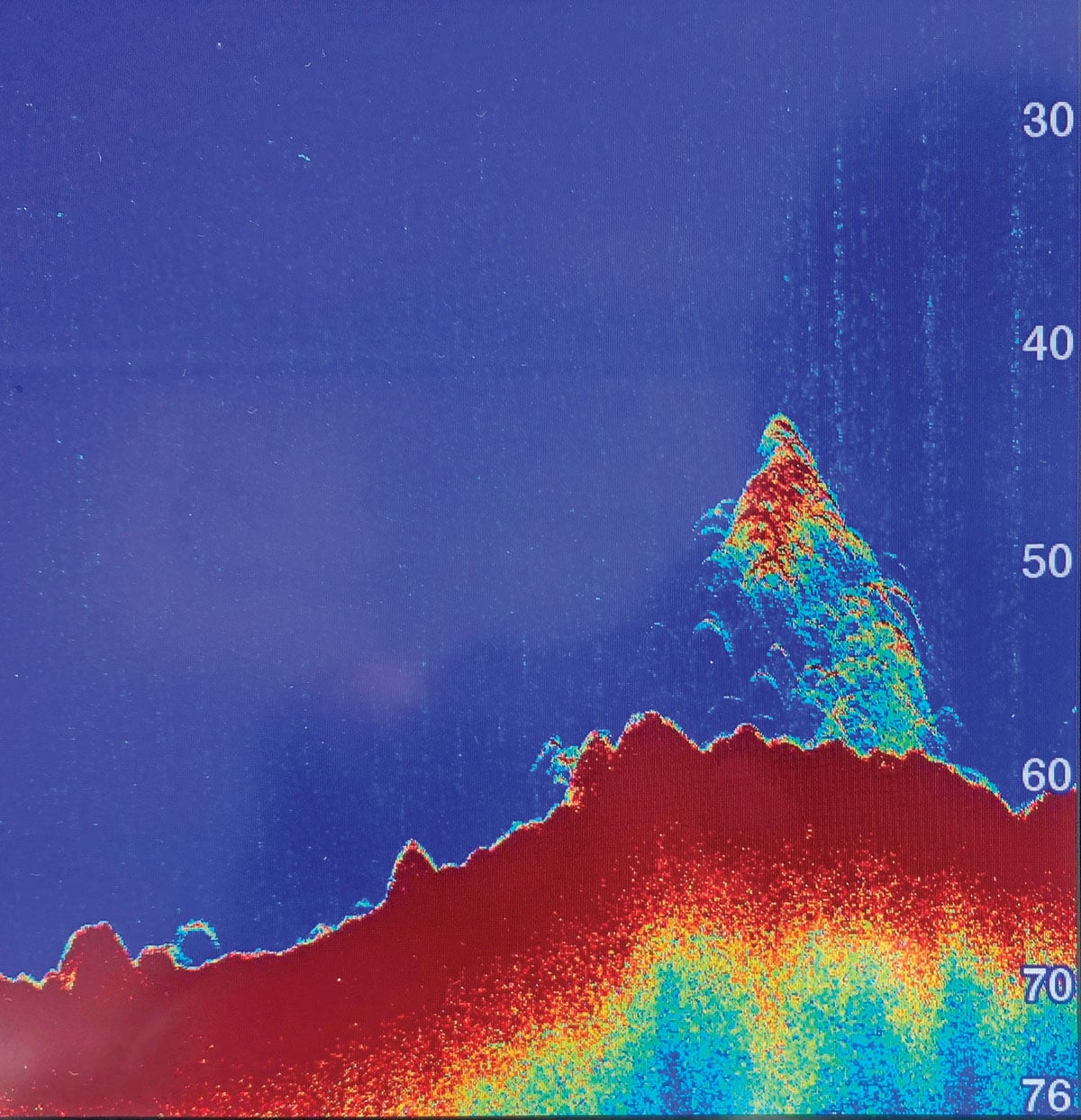
The primary driver for the spring migration is reproduction, triggered by rising water temps. Spawning peaks from May through the end of June in shallow coastal waters. Typically, the arriving adult schools settle heavily into shallow zones between 20 to 40 feet in depth. Black sea bass of course are structure-dependent. Upon arrival, they fiercely claim real estate around rocky bottoms, reefs, shipwrecks and jetty pilings.
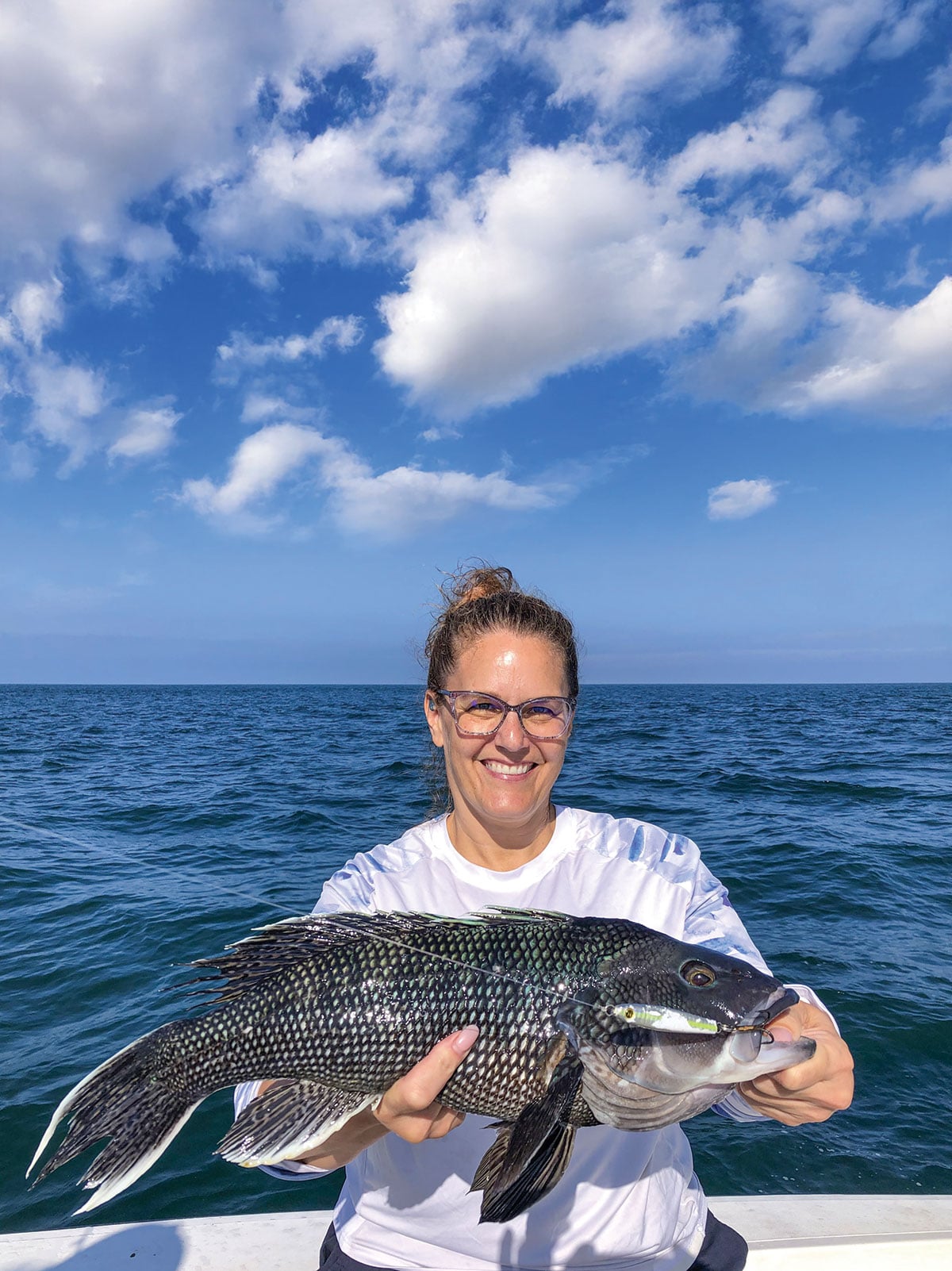
During the spring spawn, black sea bass are known for being highly aggressive. Male sea bass will undergo visual changes, developing a striking blue head hump and putting on a vibrant display to attract females.
I’ve noticed over the years that early run black sea bass will typically settle in on the numerous inshore reefs that dot the New Jersey coastline and the south shore of Long Island. The depths of these preferred underwater structures will range anywhere from 35 to 80 feet and the sea bass can sometimes be stacked up in huge biomasses that can be 10 to 20 feet thick, with concentrations of many thousands of fish. In eastern Long Island Sound, eastern Connecticut and Rhode Island, rocky bottom in 35 to 65 feet of water is a great place to start your search. Bigger fish typically lead the migration march into shallow inshore areas, followed by juvenile members of the clan. Once the initial wave of fish has entered their usual inshore haunts to spawn, they typically scatter and settle in on deeper wrecks, ridges and rocky drop-offs in the 80- to 140-foot range during the heat of the summer, where the bottom water temps are cooler and more to their liking.
Bait ‘Em Up
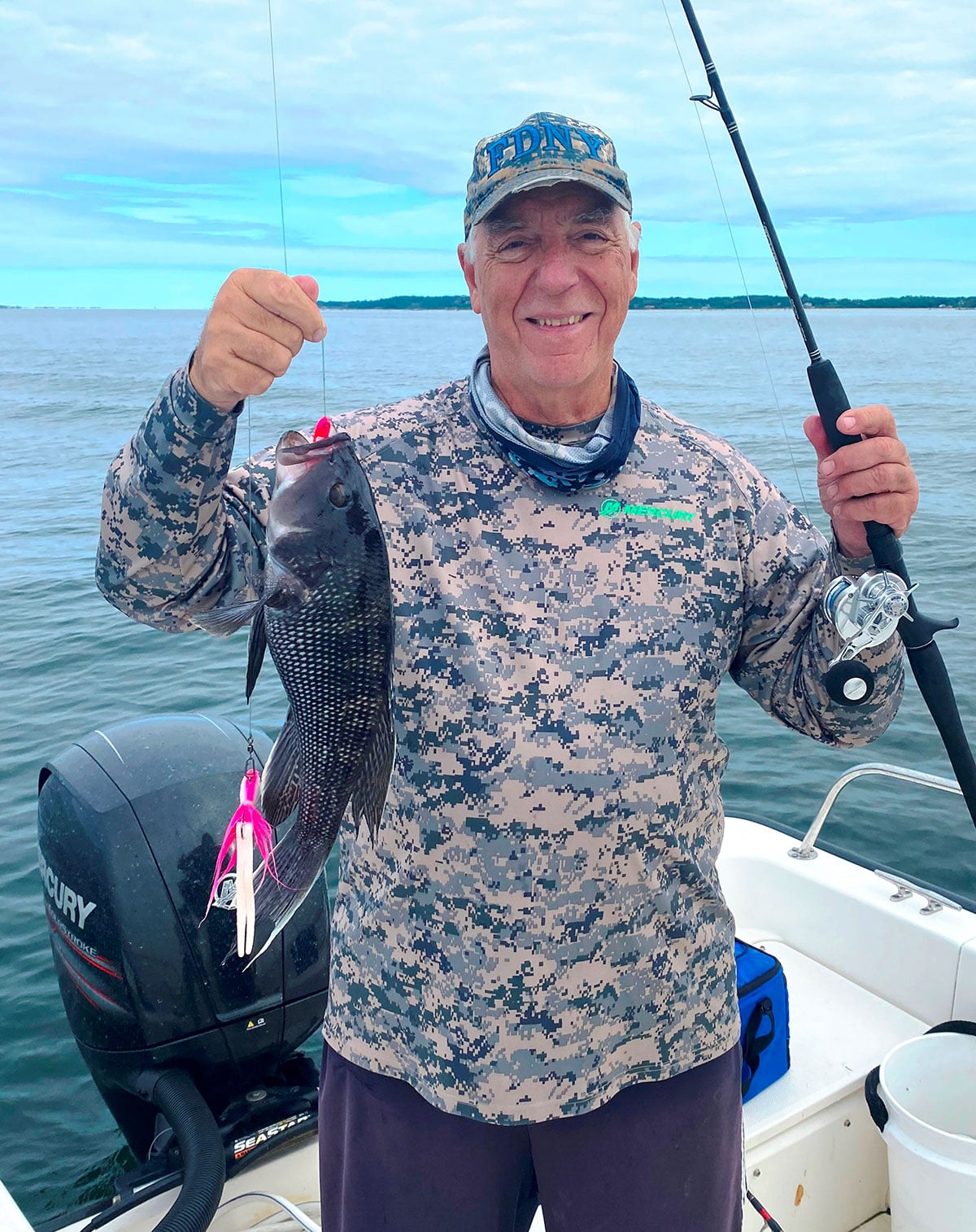
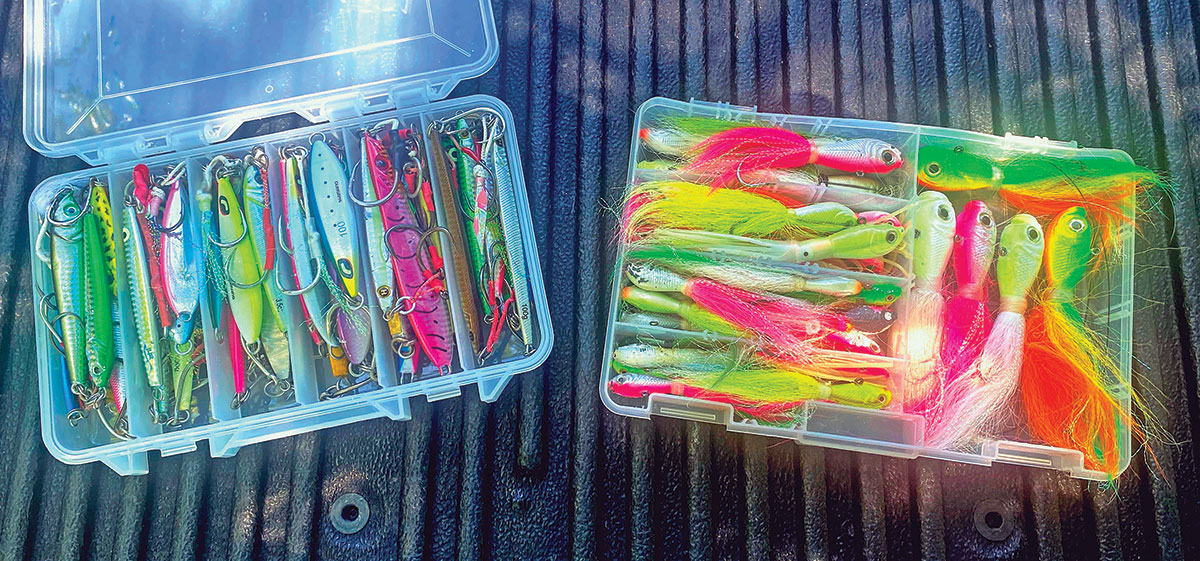
The two most proven methods of catching spring and summer black sea bass are using either fresh or fresh-frozen bait like clams and squid, or by employing jigs like bucktails and/or metals like sand eel imitators, butterfly, flat fall or basic diamond jigs. Gulp and FishBites will also work, either by themselves on a hook, or attached to the backside of a bucktail jig or teaser hook setup. I’ve found that going with jigs – especially the deadly jig and teaser setup – will typically attract larger fish compared to bait, which the juveniles will attack with a vengeance. On my home and away charters, my black sea bass jigs will typically outfish my customers using bait by a significant factor.
If the bait route is your choice of engagement, your best shot at success is the classic two-hook bottom rig setup. This consists of a high/low hook placement, with a loop at the bottom for your sinker and a loop at the top to attach it to a snap/swivel, swivel, clip or whatever piece of hardware you select for the bitter end of your outfit’s main line. I’ve seen some anglers go with a triple-hook bottom rig for black sea bass, but if you’re in an area with a “sticky bottom”, that’s three chances to snag your rig and lose all your terminal tackle.
Bottom rig setups can be as simple or as elaborate as your imagination and fishing budget dictates. The KISS method works great for this early season, relatively inshore fishery, with standard 5- to 6-inch long dropper loops spaced 12 to 18 inches apart from each other on the leader, with a simple single overhand knot about 8 to 10 inches below the lower-most hook for the sinker and a double/triple overhand knot or perfection loop about 12 inches north of the upper-most hook, which then gets attached to the main line. The entire length of the finished leader can range between 3 to 4 feet, depending on how disciplined and consistent you do your loop spacing.
If the dropper loop is too much of a challenge, you can substitute a three-turn overhand knot, aka a short Spider Hitch, as a viable alternative for the two hook-sections of your bottom rig. Some anglers adorn these hook loops with mini squid skirts, feathered hooks, glow beads, etc., the choices are infinite. I use the tag ends of mono spools in either 30- or 40-pound test to make these two-hook bottom rig leaders for my charters. With a little practice, you should be able to finish one in less than a minute.
For hooks, you can employ either bait holder or the octopus style in the smaller #1, 1/0, 2/0 and 3/0 varieties, depending on the size of the fish you find on any given day. It’s advisable to thread the clam or squid baits a few times up the hook shank, where the baitholder barbs can do their thing and protect you from getting immediately stripped from aggressive swarms of juveniles. When attaching your hook to the two loops on the classic bottom rig, most anglers will use a simple loop knot. The only problem with this approach is if you come across a fish with teeth and it clips either one of the two leader strands, the hook will slip and pull through the other remaining section and you’ll lose the fish. If you take an extra 15 seconds and attach the hook via the proven Palomar knot, the second strand of line will hold fast if the opposite strand is compromised.
The size of your sinker will vary, based on the speed of the current, but will typically be anywhere from 3 to 8 ounces, depending on the test and type of your running line (mono or braid). Choose a sinker size to keep your baits as vertical as possible for maximum feel of what’s going on down below. I’ve found that light-to-medium spinning and conventional outfits spooled with super-braid line ranging from 15- to 30-pound test will stand up to most early black sea bass opportunities, even from double headers of large fish…just set your reel’s drag accordingly.
Jigs & Rigs
The size of the jig you use is dictated by the depth of water, the diameter and water resistance of your fishing line, the current speed and whether you are drifting, spot-locked with an electric trolling motor or anchored (does anyone really do that anymore?) over a reef or wreck. Bucktails and shaped lead jigs from 1 to 6 ounces might be required, depending on the conditions. Whatever jigs you decide to deploy for that day’s fishing, I strongly recommend that you go with the proven jig and teaser setup. This approach positions your jig of choice on the bottom of your leader (connected via a clip, snap swivel or clip/swivel combo).
Next step in the leader assembly is to tie a 6-inch long dropper loop about 12 to 15 inches above the jig, to which you add either a pre-made teaser (like a feathered hook, epoxy fly, etc.) or just a plain 3/0 short shank tuna or octopus hook via a Palomar knot. I like to add a mini glow squid skirt over the hook, or if sticking with the plain vanilla style bare hook, I’ll add a 4-inch Gulp or FishBites grub tail or minnow to it for added attraction and scent.
| BSB BASICS |
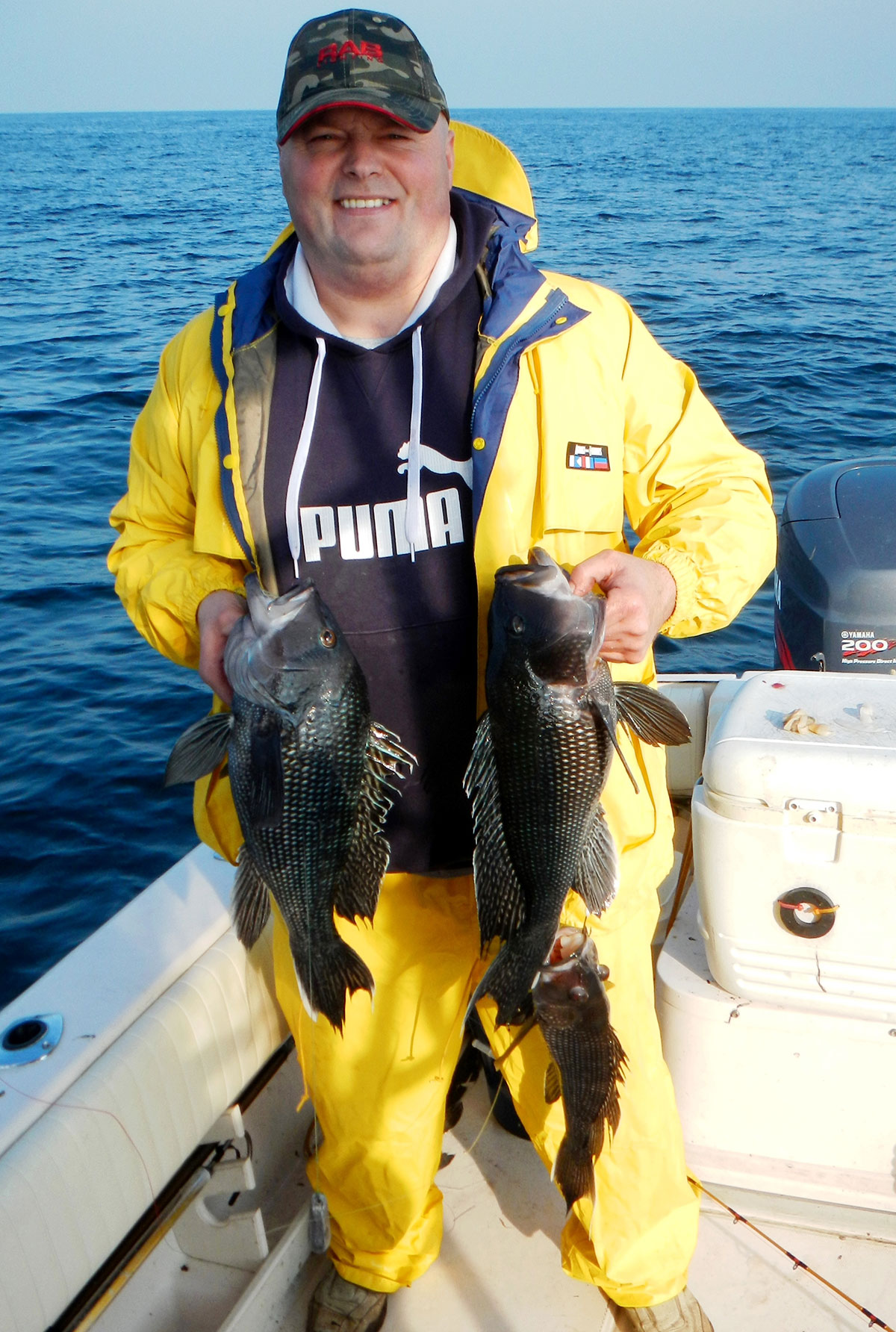
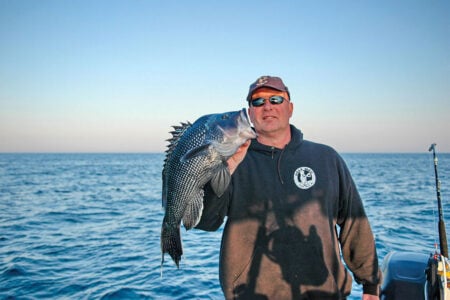
| Black sea bass are usually black, but smaller ones are more of a dusky brown. The belly is slightly paler than the sides, while the fins are dark with dusky spots. The dorsal fin is marked with a series of white spots and bands. During spawning, dominant males turn bright blue and have a blue hump on their heads.
Black sea bass grow slowly, up to 2 feet or more and 8 to 9 pounds. They are able to reproduce when they reach 1 to 3 years old. They are protogynous hermaphrodites – most black sea bass start out as females and as they mature and grow, they become males. Researchers aren’t sure why this happens, but one hypothesis suggests the relative scarcity of males in a spawning group may be the stimulus for a female to switch sex. Black sea bass spawn in coastal areas from January (southern stock) through late June (northern stock). Males gather a group of females to mate with and aggressively defend their territory and can be distinguished by their bright blue coloration and “knot heads” (conspicuous bumps on their foreheads). Depending on their size, females can produce between 30,000 and 500,000 eggs in a spawning season. Females can live up to 8 years; males live up to 12. |
There are three reasons this rig works as advertised: first, you have two hooks in the water vs one for a plain jig; second, you trigger that “switch” in the sea bass as a predator that is observing your rig, prompting a solid strike. It looks like one fish is throwing caution to the wind to chase a smaller baitfish and then that fish is prompted to strike the unsuspecting target; third, you also trigger a competitive urge for that nearby sea bass to race the “other fish” (your jig) to the bait it’s chasing and getting it to strike the teaser. For whatever reason is the reality of the moment, this rig just works.
Some of my preferred jigs to employ as the lower component for the jig and teaser combo are SPRO’s Prime bucktail jig in white glow, pink and pumpkin as my three most productive colors. Looking at the shaped lead side of the equation, Hogy’s Squinnow jig (so named because it looks like a half squid/half minnow), sand eel jigs and heavy minnows have worked extremely well for me historically, as have Shimano Butterfly and flat fall jigs, Crippled Herring jigs, Braid Slammer jigs and plain Jane diamond jigs, with or without colored surgical tube tails.
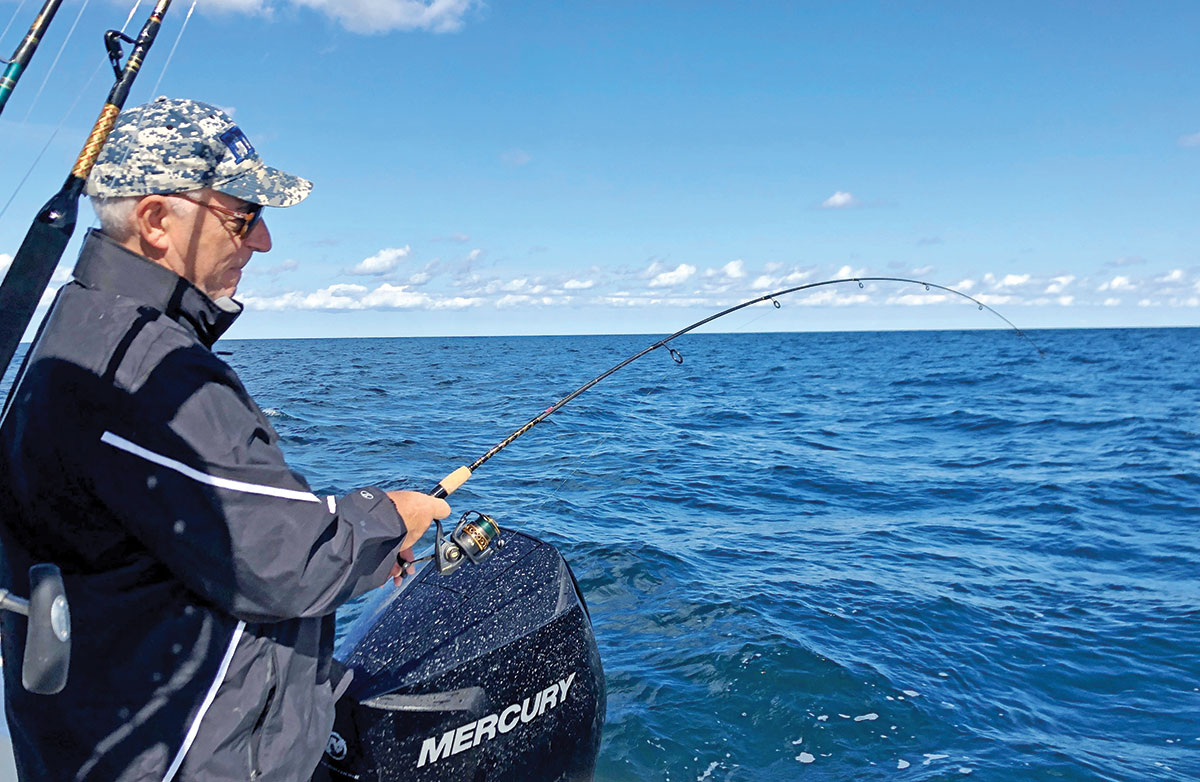
My favorite summer jigging outfits include a Penn Slammer III/IV 4000 series DX reel spooled with 15-pound braid; an Avet SX lever drag reel spooled with 30-pound braid; and a mini Avet SXJ lever drag reel spooled with 20-pound braid. All three of these are mated to relatively affordable Shimano Talavera Slow-J jigging rods from 6 to 6-1/2 feet in length, featuring a moderate parabolic action and rated for 30- to 50-pound braid.
Effective jigging techniques include the classic yo-yo rise and fall off the bottom, the more aggressive style “snap-jigging” (my favorite approach), slow-pitch jigging, plus slow squidding in the bottom of the water column from the seabed floor and up to 15 to 20 feet above it, where you drop it back to the bottom and repeat.
Each approach has its moments. If one is not working for you, try a different style until you score, especially if you are reading fish on your echo sounder. Depending on the bottom you are covering and the location of the fish, you might try to localize over a specific hotspot via anchoring, spot-locking, short-drifting or “stemming the tide” using your boat’s engine(s). If the fish are scattered over a wider area, drifting with the tide and marking the areas of heavy fishing concentrations on your sounder for repeat drifts can pay dividends.