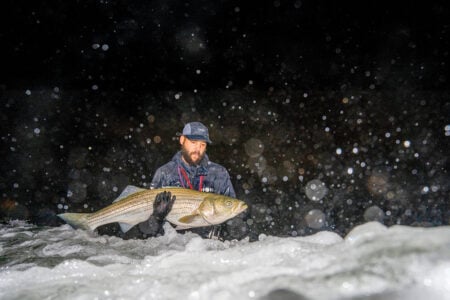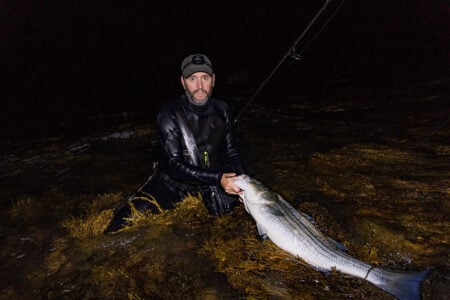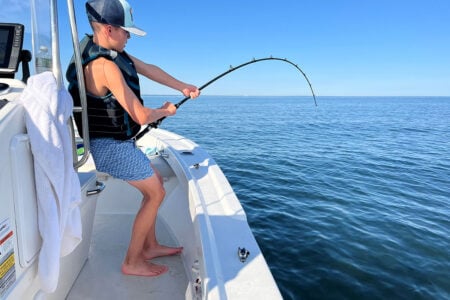
From daytime jigging and trolling to drifting clams and live eels after dark, here’s how to stay on Long Island’s migrating stripers as the fall run gets underway.
As cooler autumn water replaces the warmth of summer, striped bass fishing around Long Island typically kicks into high gear. Over the past several years, the fall run has produced excellent fishing along both shores of the Island, fueled largely by abundant schools of bait. When sand eels and other forage gather in large numbers, migrating stripers are rarely far behind.
For anglers looking to get in on the action, the key is following the migration. Montauk and the North Fork often see some of the first consistent fishing before the action progresses west toward Captree, Freeport and eventually the western reaches of Long Island. Party, charter and private boats all have opportunities to intercept these migrating schools as they work their way along the coast.
One of the easiest ways to locate fish is by watching for diving birds. Gulls, terns and gannets working over concentrated bait can be a dead giveaway that bass are feeding underneath. When approaching a school, however, resist the urge to charge directly into the action. Instead, drift toward the fish and allow them to come within casting range. Keeping the school together can mean a longer and more productive bite for everyone.
Understanding The Slot
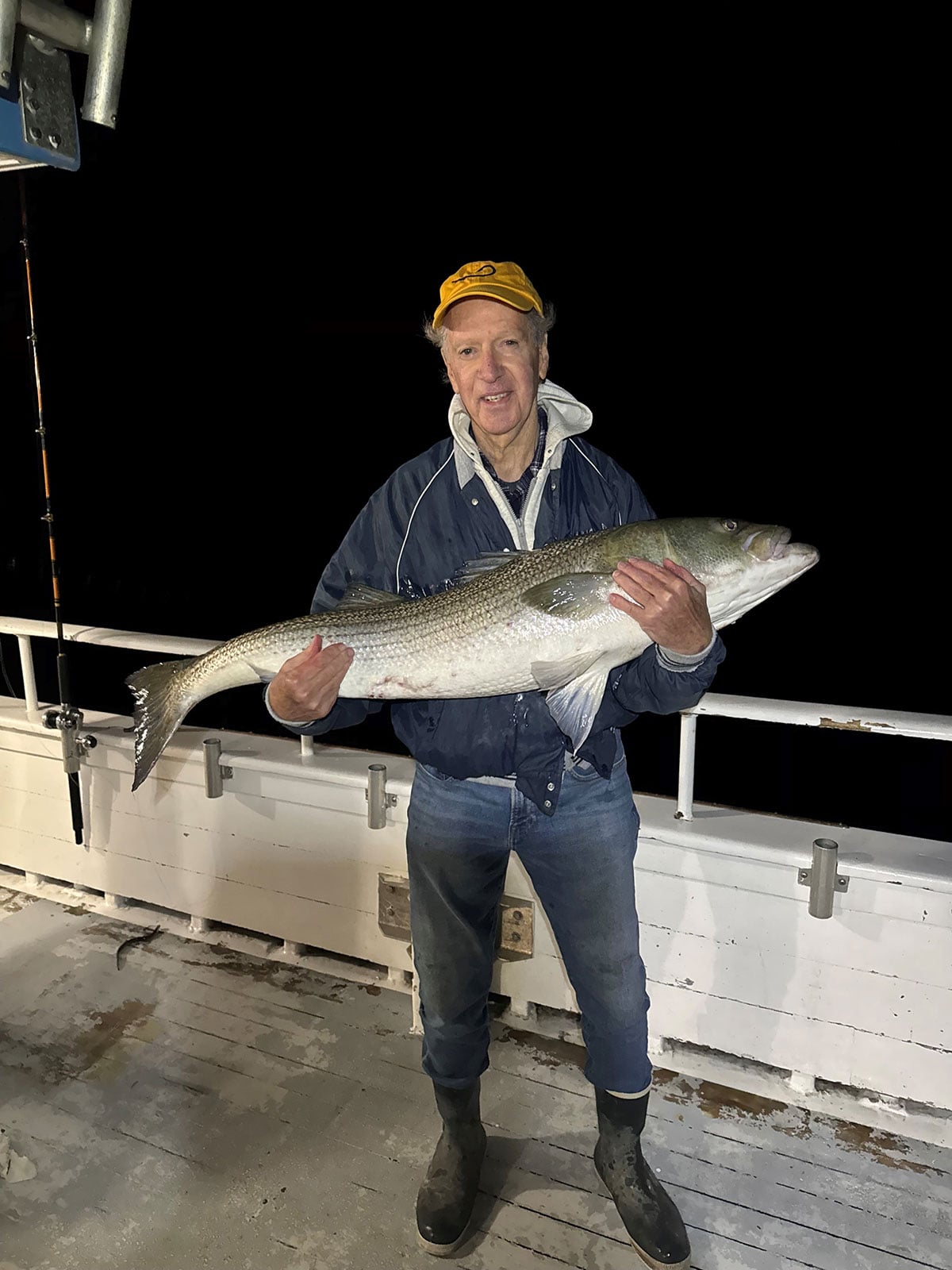
Current striped bass regulations make proper fish handling especially important. Anglers are permitted to retain one striped bass between 28 and 31 inches per day. Any fish falling below or exceeding that slot must be released.
During past autumn trips aboard boats such as the Montauk-based Ebb Tide, Viking Fleet and Captree-based Fishfinder II, I have seen an abundance of bass exceeding the upper end of the slot, along with plenty of legal-sized fish mixed in. That makes having a landing net and proper release practices important throughout the fall season.
Large bass should be handled carefully and returned to the water as quickly as possible. Single-hook lures are particularly useful during fast jigging action because they make releasing fish easier and safer for both the angler and the bass.
Jigging The Daytime Bite
There are several productive ways to catch fall stripers, but daytime jigging remains one of the most popular. Both spinning and conventional outfits will get the job done. I personally prefer conventional tackle because many of today’s reels cast nearly as well as spinning reels while offering plenty of control and power.
My conventional setup consists of an Accurate BX-400 spooled with 50-pound-test braid connected to 6 to 8 feet of fluorocarbon leader with an Albright knot. I pair it with a 7-foot, medium-action Shimano Terez rod. I particularly like the Accurate’s 4-to-1 gear ratio because it allows for the slower retrieve that bass often prefer when feeding on sand eels.
Light spinning tackle can also make this fishing a lot of fun. I sometimes carry a Shimano Stradic 3000 spooled with 30-pound braid and matched to a 6-1/2-foot Ugly Stik. Just remember that a jumbo bass can show up at any time. You can land a big striper on lighter gear, but the battle will take longer. On a crowded boat, be prepared to follow your fish around the rail to avoid tangling other anglers.
Choosing And Working Jigs
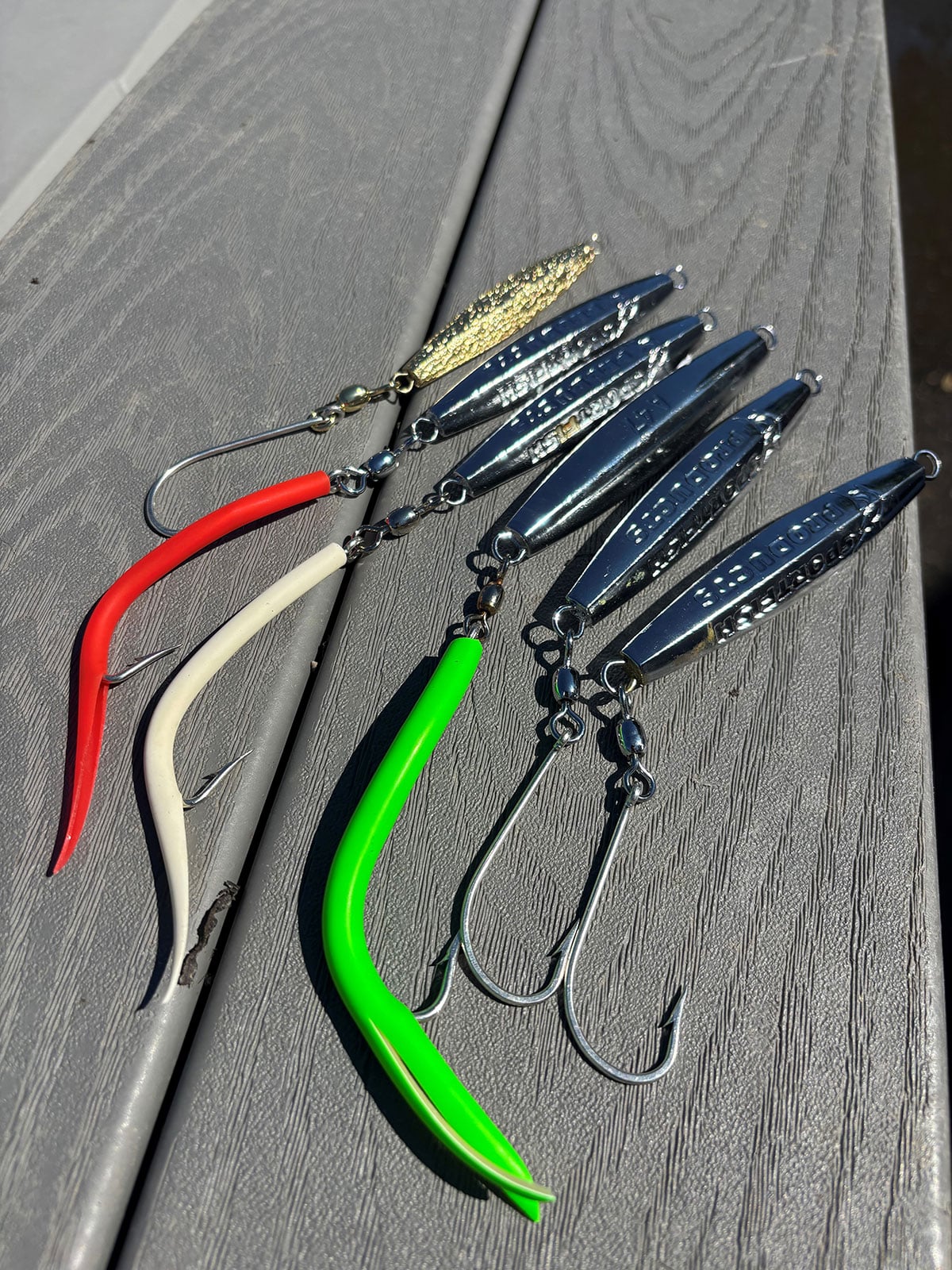
There is no shortage of productive jigs for autumn bass. On many days, a plain silver 4- to 5-ounce diamond or Ava-style jig is all that’s necessary. At other times, a hammered silver or gold finish can make a noticeable difference. Soft-plastic sand eel imitations can also be extremely productive.
Pay attention to what is working. The mates on party and charter boats usually know what the bass have been eating and which lures have been producing. It also doesn’t hurt to keep an eye on the anglers hooking up consistently. Match the size, color and retrieve of their lure as closely as possible.
Presentation is just as important as lure selection. When bass are feeding heavily on sand eels, you want your jig to resemble that forage. Drop the jig straight to the bottom or make an underhand cast away from the boat. Once it reaches bottom, slowly reel it upward approximately 10 to 15 cranks before dropping it back down and repeating the process.
Avoid simply pumping the rod tip up and down. A steady retrieve allows the lure to better imitate a sand eel moving through the water column. When fishing soft plastics, remain alert as the lure sinks. Bass frequently strike on the drop, so a line that suddenly goes slack could mean a fish has picked up the bait.
Clams, Eels And Nighttime Bass
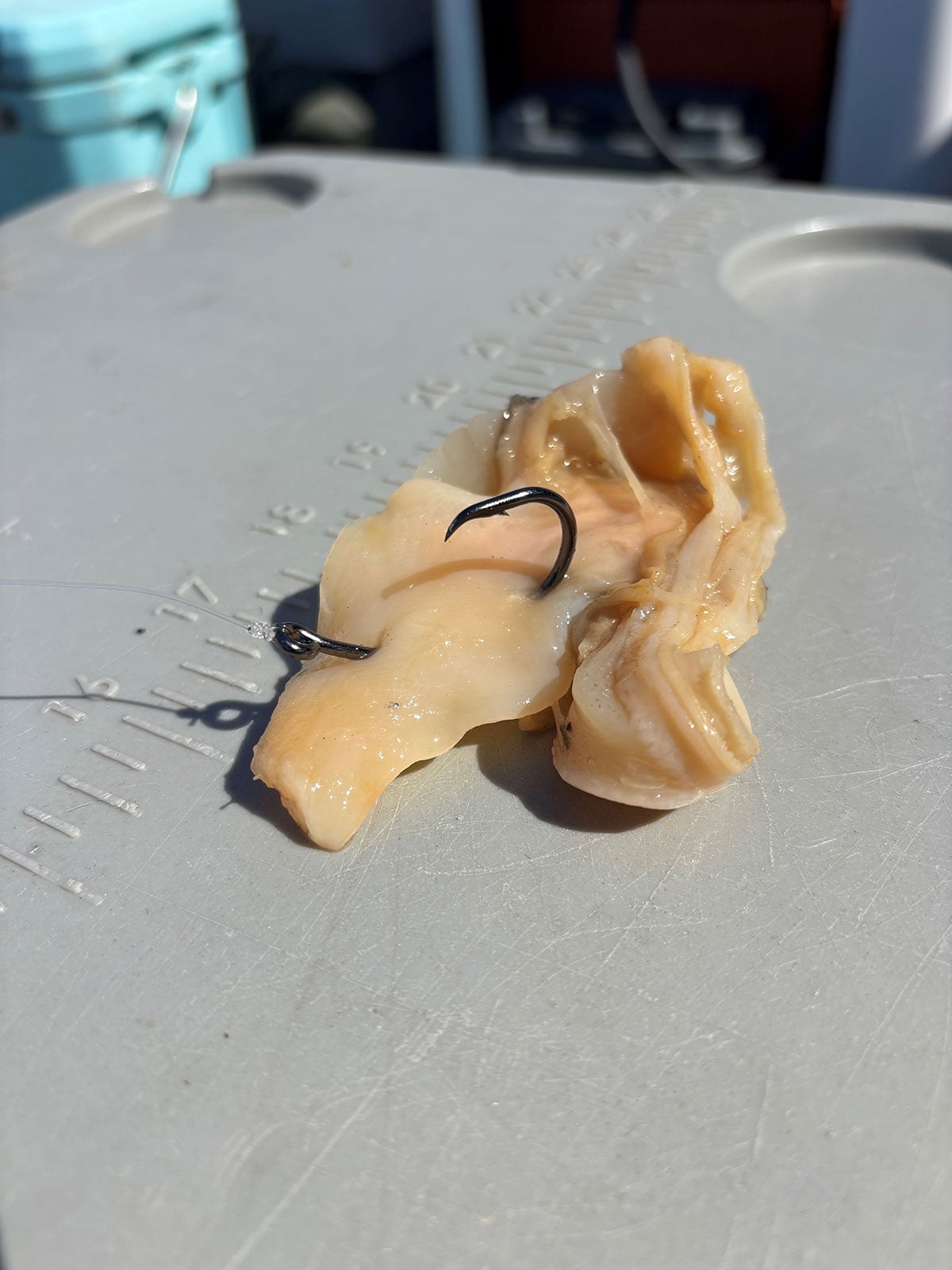
Clam fishing provides another productive option when bass settle into shallower water. The boat will generally anchor and deploy a chum pot to establish a scent trail. A light spinning outfit with a fishfinder rig and minimal weight works well in this situation.
Lower the clam to the bottom or make an underhand cast away from the boat, then gradually feed line so the bait moves naturally with the chum. Since circle hooks are required when targeting striped bass with natural bait, don’t make a traditional hard hookset. When a bass picks up the clam and the line comes tight, simply begin reeling and allow the circle hook to do its job.
Nighttime fishing with live eels can produce some of the largest bass of the fall. Eels are commonly presented on either a three-way swivel or fishfinder rig. In deeper water, lower the sinker to bottom and then reel up a few turns. Continue checking your depth as the boat drifts because the bottom can change quickly.
Again, let the circle hook work. Once the line comes tight, reel steadily rather than swinging the rod.
Another popular nighttime option around Captree is casting soft-plastic lures such as Bass Assassins around South Shore bridges. A spinning outfit makes it easier to underhand-cast toward and beneath the structure. Once the lure reaches the desired depth, retrieve it slowly through the current where stripers are likely waiting to ambush passing bait.
Trolling The Migration
Jigging and bait fishing aren’t the only ways to connect with autumn stripers. Private and charter boats regularly troll for bass, sometimes while combining the trip with other available species.
Mojos and umbrella rigs remain two dependable trolling options and can be particularly effective when bass are scattered over a broad area rather than concentrated beneath birds. Braided line provides the sensitivity and strength needed to effectively work these heavier presentations.
Trolling also allows anglers to cover water and locate schools that aren’t showing on the surface. Once fish are found, anglers can continue trolling or switch over to jigs and other lighter presentations.
Be Ready For The Run
What will the 2026 autumn season bring? Hopefully, striped bass will once again follow their traditional migration and provide good fishing from Montauk to Sheepshead Bay and everywhere in between. Whether the fish want jigs, live bait, clams or trolled offerings, being prepared to change techniques can make the difference between simply going for a boat ride and experiencing one of those memorable fall blitzes.
You don’t necessarily need to own specialized equipment to participate. Party and charter boats generally have suitable rods and reels available for anglers who need them, making the fall run accessible even to those who don’t have their own striped bass setups.
Reservations are a good idea, especially during periods of excellent fishing when boats can fill quickly. Check The Fisherman for advertisements and sailing schedules from boats operating throughout the region.
Private boat anglers should also make sure they are properly registered for New York’s recreational marine fishing registry and carry the required safety equipment aboard their vessels.
Finally, don’t underestimate autumn weather. A comfortable afternoon can turn into a cold evening very quickly once the sun disappears. Dress in layers, bring waterproof boots and carry more warm clothing than you think you’ll need. You can always remove a layer if you’re warm, but there’s no substitute for having the right clothing when the temperature drops.
The fall striped bass migration remains one of Long Island’s great seasonal fishing opportunities. Watch the birds, follow the bait, stay flexible with your techniques and be ready when the bass arrive.