To find the biggest chainsides, it’s best to cover a lot of water, and with proper control.
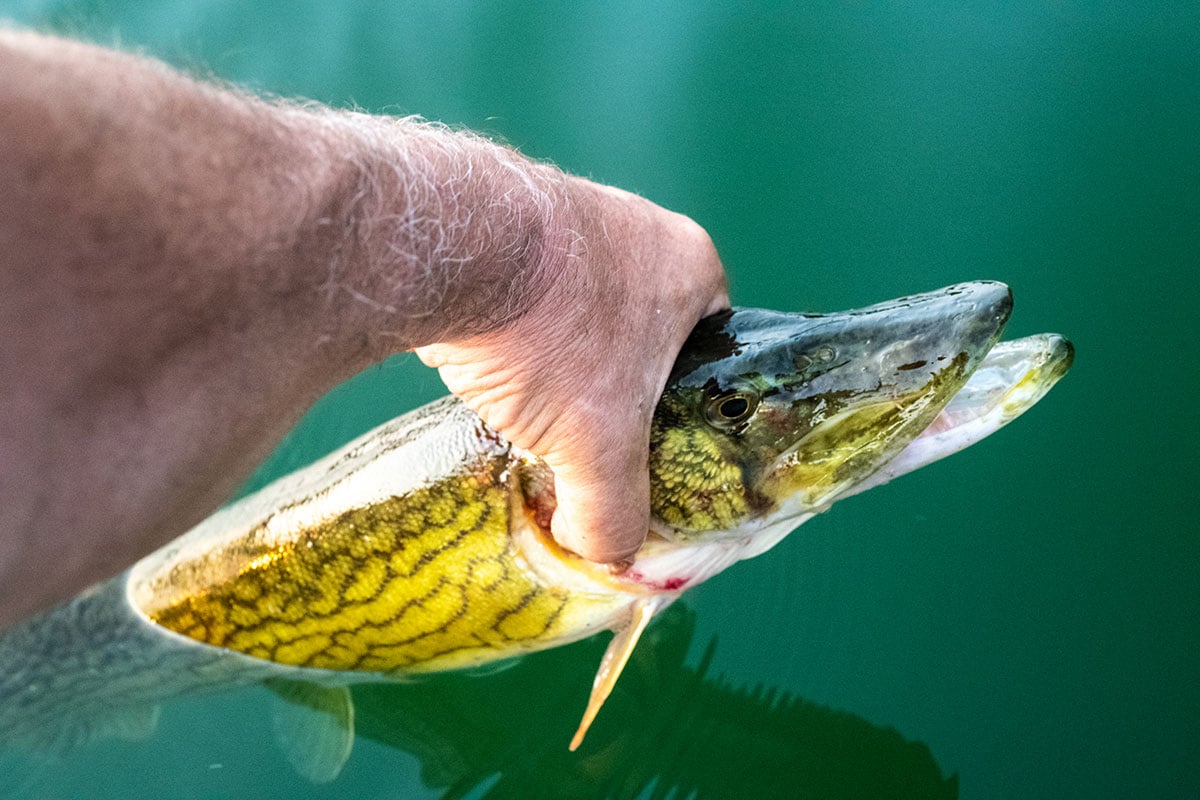
“Big pickerel” will mean different things to different people, but to me it’s 22 inches or better. I recently got news that a fishing buddy of Brian Cronk, Chuck O’Neal, caught a 27- and a 28-inch pickerel on Cronk’s boat. But O’Neal’s two all-time best, fishing the same reservoir, are 30 and 32 inches.
I’ve never even seen pickerel like that. I’ve witnessed a couple of 26-inchers caught, and a 25-incher for my son and another that size for Cronk. I’ve caught numerous 24-inchers. So, why pickerel 2 feet long are common, but 25-inchers are all but nonexistent—that must be a quirk of my own existence. The discrepancy seems out of whack with all the rest.
What qualifies me to write this is that Cronk and I catch plenty of pickerel over 22 inches from June onward through the summer. I’ve caught one fishing with Oliver Round too. Whichever body of water yields them—we catch them in four lakes and a reservoir—we catch them on plugs that dive 15 feet or more if enough braid line is let out. The exception is a shallow lake, where we get them in 7 feet of water. Otherwise, we troll deep at about half speed of the electric motor.
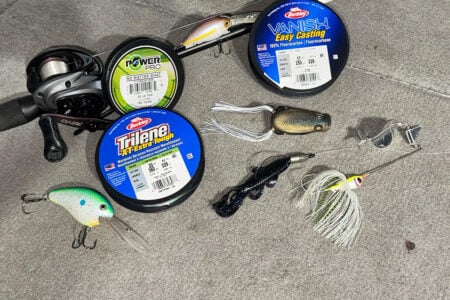
Time and again, I use a Storm Hot ‘n Tot. But other deep divers, like the Berkley Flicker Shad, Rapala X-Rap Magnum 15, Norman DD22, and a host of others also go deep. I long ago favored the Hot ‘n Tot with a chrome finish, and I stick with that, though I have trolled other diving plugs and caught fish on them. But especially where the water’s clear, pickerel strike flashy plugs. Even 15 feet down, that chrome paint is attractive.
You have to be careful when attempting maximum depth. Too much line let out means drag on that line lifts the plug, rather than allows it to dive further down. You can experiment and pay attention to how the rod tip conveys vibration. If the beat is inconsistent or the tip’s not beating at all, and if the rod tip isn’t bending at all under the force of the plug’s downward dig, you need to reel in some line.
Another thing to keep in mind is control. Luckily, if you choose to get the plug down to its deepest range, you’re more likely to position your trolling lane out further from shore, which means precise control in relation to weeds and blowdowns isn’t quite as important, but obstructions will probably still present some problems.
I’m thinking of an exception, though. The reservoir we fish has a shoreline that slopes out into 15-foot depths slowly, and that makes trolling a cinch. Trolling about 12 feet deep is easy there, too, where we always seem to catch pickerel. And yet most spots have weeds and blowdowns to contend with. With a relatively short amount of line out, I dodge and burn as we avoid blowdowns (and avoid hitting them with the prop) and rip the plug through weeds by a slashing pull of the rod.
Spots exist that consistently produce pickerel. You will cover a lot more ground—while you seek out fish—than actually proves to be any good, but you’ll probably remember where you do catch fish. That allows you to focus efforts on subsequent outings in certain places. But it doesn’t mean an appealing spot you’ve tried before to no result can’t change its mind, so to speak. You’ll have plenty of time to try it along the way to hitting the known producers.
Trolling isn’t the only way to catch summer pickerel, but especially, it’s a way to locate fish. Consider those spots I was just talking about. Why not motor into position and cast a deep-diver? I can’t say you shouldn’t, but I like the feel of a good trolling pass that seems to avoid by a millimeter a plug’s grabbing the edge of weeds.
“Whap!” the pickerel strikes, and you have no doubt it’s because the boat was maneuvered well. You either need to be in control of the boat yourself or fish with someone else who is. Otherwise, maybe you need to fish alone.