Read the wind and the water before plopping a cast into a fishy situation.
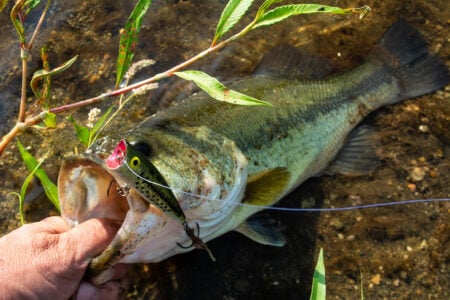
Walking down the shore of a drought-lowered lake, a Bull Shad Bull Wake swinging from line. My friend Ben was just along for the walk and he heard me mutter, “Even though this cast makes no sense with this wind, I’m making it anyway.” Ben chimed in and asked, “Do you really consider your presentation that deeply for every cast?” Ultimately, my answer was “no” – but I was quick to add that, “When I’m at my best, I consider the angle of the cast, the wind and how I believe a baitfish would swim through the scene in front of me.
The thing that was ‘wrong’ with the cast I was about to make was that the wind was coming from behind me, pushing a lot of water through a small gap that joined two larger bodies of water. A wakebait is supposed to represent a compromised baitfish and a bait on its last leg is not going to be powering along against a stiff wind. Might I be overthinking this? Sure, but I also truly believe that when it comes to the biggest bass in the lake, who have seen a lure or two, making your bait perform as a live baitfish likely would is the best way to hook one.
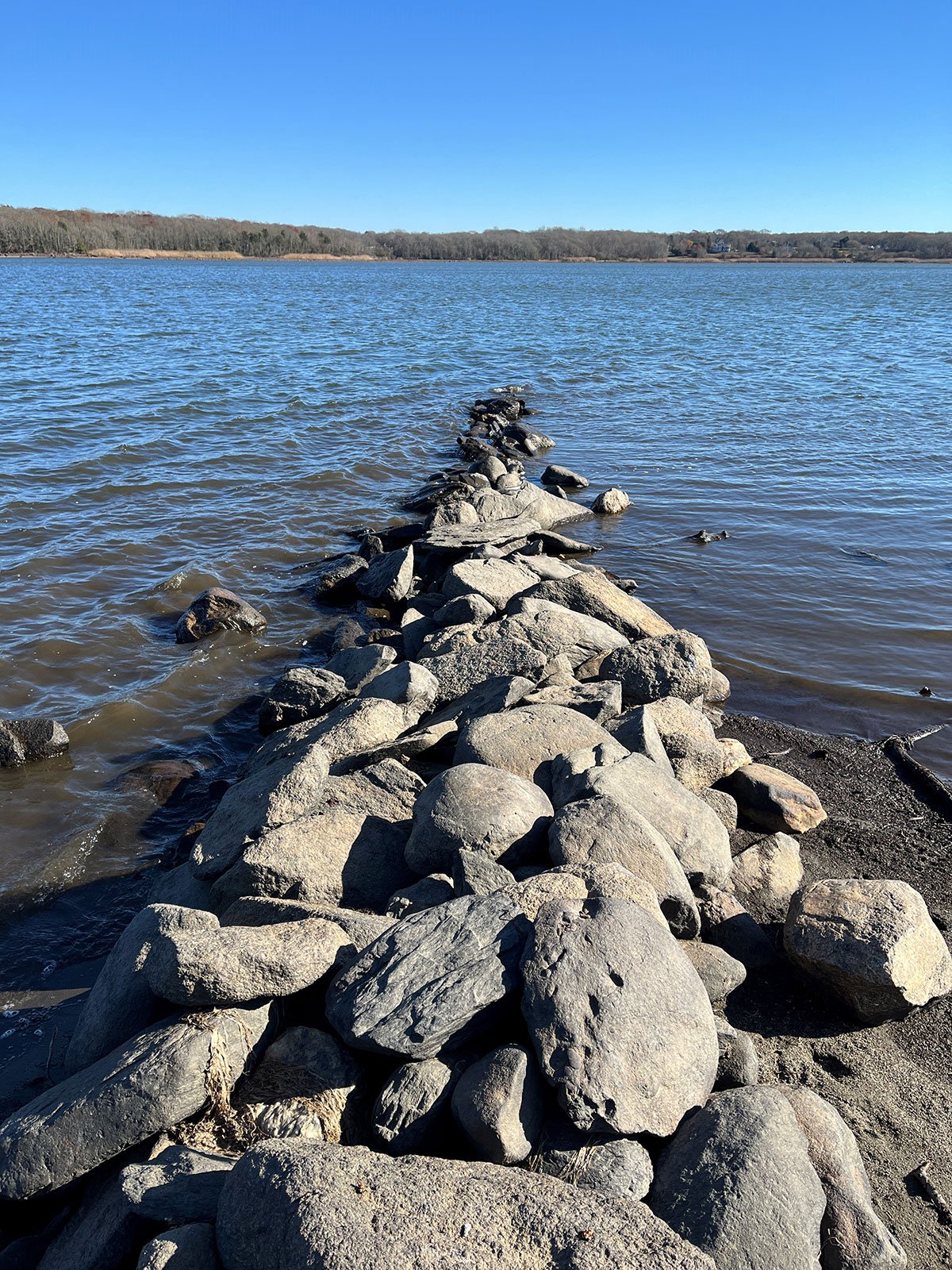
A few days later, I found myself walking the shore of the same lake. This time the wind was blowing hard, parallel to the shore. Because I have spent so much time surfcasting for striped bass, I fish the wind as if it were tide. I fished hundreds of yards of shoreline without a single swirl, just covering water. As I came to a stone wall that disappeared into the water, I knew I had to think.
I stood 50 yards upwind of the wall and watched the water, pushing along the shore and then out and around the exposed rocks. The small waves were surging by at a good clip. If you need proof that a stiff wind can build a current, there was a mud line forming off the last exposed rocks of the wall, brown, murky water inside the line and a deeper grassy green beyond.

There were many things to consider before casting. First, what made the most sense for a baitfish that was drifting and swimming along just under the surface? To me, I wanted the bait to swim across the wind, but in a way that allowed the wind to carry it left to right. Then I had to think about where I believed the bass would be. Would they be hunkered down behind the wall or would they be more eager, staging upwind? Then, what about that mudline? Would they hide in the murk and peer out into the green water? I’ve seen stripers do it, I’ve also seen smallmouth do it.
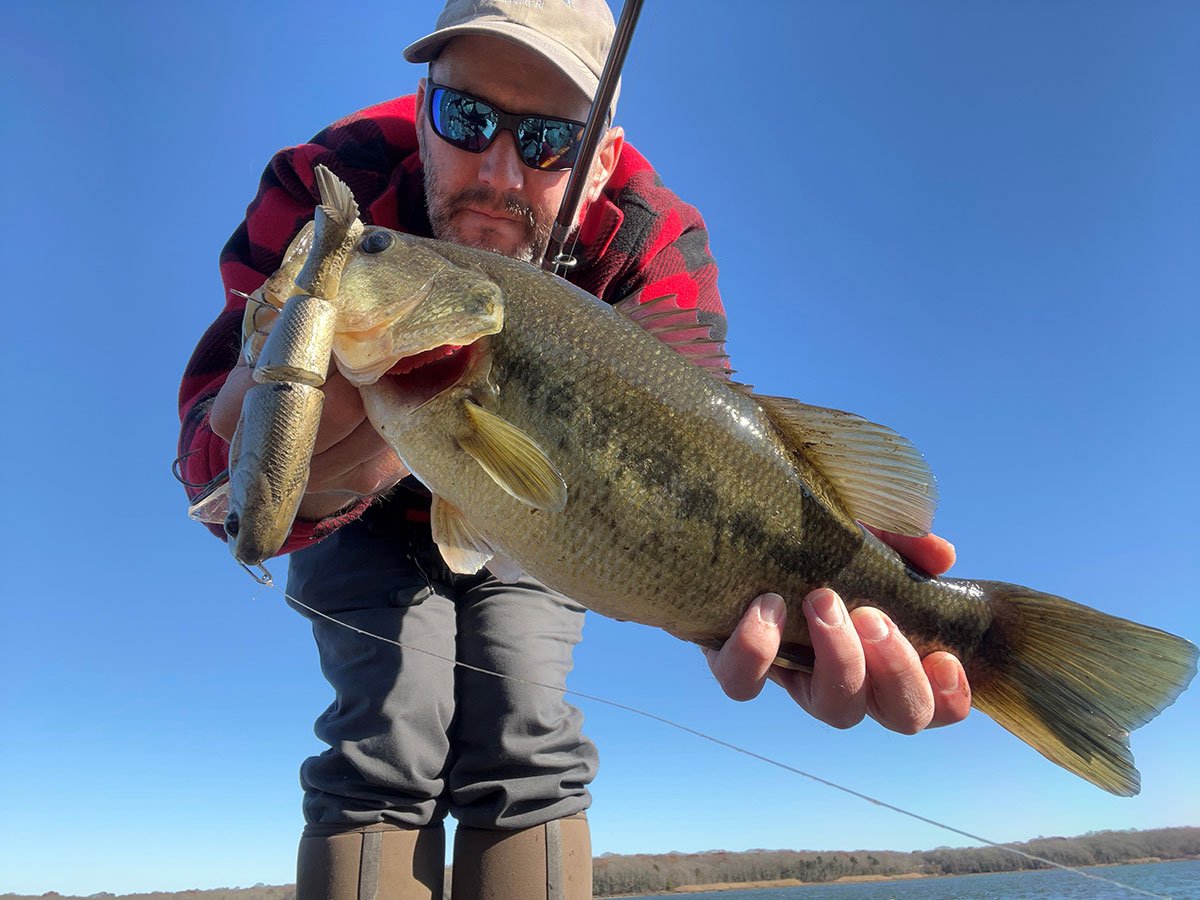
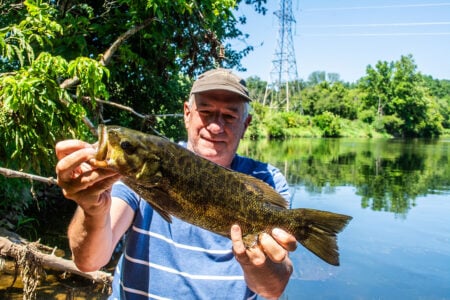
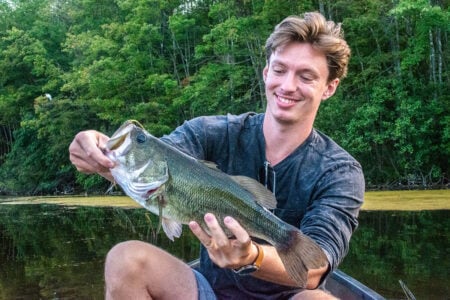
I was standing upwind and I elected to walk all the way down past the wall, setting up about 20 feet downwind of it and casting across the wall and upwind to about 10 o’clock. Looking for an eager bass I felt that I should get hit within the first couple casts. I hooked up right away with a portly 3-pounder. Within two casts I found another one that was willing to play.
At this point I moved to stand on the wall, so that I could swing my bait over it at various distances. It took about five casts, before I had a powerful hit that blew the bait clear of the surface, the fish didn’t stick! Four or five casts later I hooked another 3-pounder. After that, I had three timid hits in a row. So I decided to try and get a reaction strike, my method was to cast the bait upwind and crank it slowly until I could see it clearly, then I started working it hard and fast with short pauses. That method caught me three more bass between 2 and 3.5 pounds. After that, the bite was done. But the pattern held, as I caught another five bass on a windswept hump that rose up out of a river channel.
While I didn’t get a monster on this trip, the methods I used and the thought that went into my presentation was like practicing for my next 6-pounder. The fish proved that my technique was sound, and if we had a strong front moving in that night, it may have resulted in a much bigger and more memorable catch. Mindset is everything when you’re hunting big fish, and practicing sound technique is the fastest route to going large.