A plan for tactically focusing in on these quiet waterways during the month of April.
April is a month of transition across the Northeast, and nowhere is that more evident than in the inshore backwaters. While most anglers are focused on open bays, beaches, and the first real push of migratory fish, some of the most consistent early-season action is quietly unfolding in small rivers and tidal creeks. These tucked-away systems warm faster, attract bait sooner, and offer a level of predictability that can be hard to find elsewhere this time of year—especially if you’re fishing from a small boat. This is not a run-and-gun fishery. It’s a calculated approach built around reading water, understanding tide movement, and making precise presentations in tight quarters.
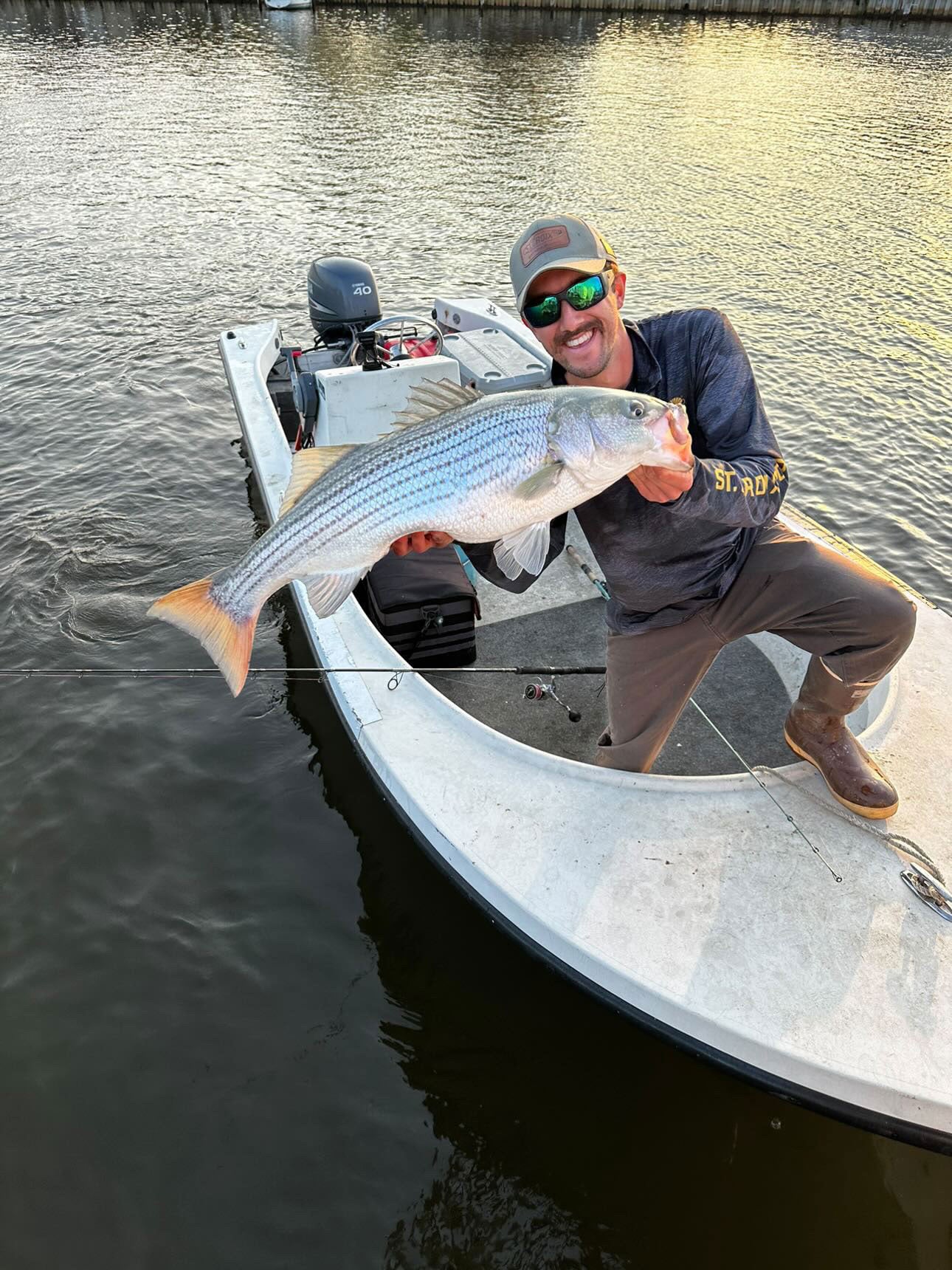
In April, water temperature is the driving force behind everything. Small rivers and creeks—particularly those with dark mud bottoms and limited exposure to wind—absorb heat quickly on sunny days. Even a difference of 1 or 2 degrees compared to surrounding bays can be enough to attract bait like grass shrimp, spearing, and small worms. Once that life shows up, striped bass won’t be far behind. The key is identifying where within these systems that warmer water is collecting. Shallow flats in the upper reaches, protected bends out of the wind, and marsh-lined edges that soak up sunlight are all prime starting points. But it’s not just about finding warm water—it’s about understanding how that water moves with the tide.
A dropping tide is typically the most productive phase in these environments. As water drains off the flats and marshes, it funnels through defined channels, bends, and pinch points, concentrating bait into predictable lanes. That’s where you want to set up. Instead of drifting aimlessly, position your boat up-current of these zones and work your way through them methodically.
Boat control is everything in this style of fishing. Whether you’re using a trolling motor, push pole, or simply working with the current, stealth and positioning are critical. These are shallow, often clear, systems where fish can spook easily. Keep noise to a minimum, avoid unnecessary movement, and think ahead about where your next cast needs to land before you even pick up the rod.
Casting distance takes a back seat to accuracy. You’re targeting specific features—undercut banks, marsh edges, current seams, and the mouths of small feeder creeks. A well-placed cast tight to structure will outproduce a long cast into open water every time. This is about putting your lure where the fish are positioned, not just covering ground.
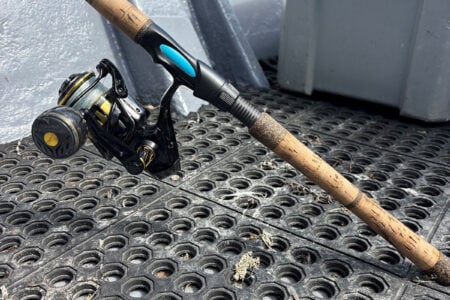
When it comes to tackle, this is a light and subtle game. A 6-1/2- to 7-1/2-foot spinning rod paired with a small reel and light braid gives you the control and sensitivity needed to fish effectively in tight quarters. You’re not overpowering fish here—you’re matching the environment.
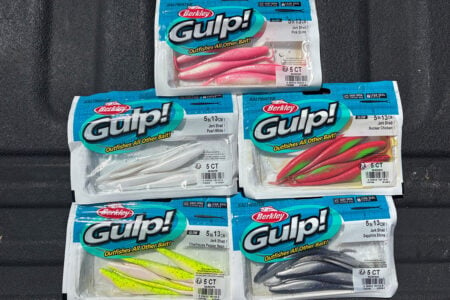
Lure selection should reflect the size of the forage. Small soft plastics are the go-to. A 3- to 4-inch paddletail on a light jighead can be fished a number of ways—slowly swimming it through deeper bends, hopping it along the bottom in current, or simply letting it drift naturally with the tide. The goal is to keep your presentation in the strike zone for as long as possible. Straight-tail plastics and small minnow-style plugs also have their place, especially when fish are keyed in on smaller bait. These allow for slower, more controlled retrieves that match the behavior of early-season forage. In most cases, less action is more. Subtle movements, long pauses, and a natural drift will out-produce aggressive retrieves.
Bites in April aren’t always obvious. Often, it’s just a light tap, a slight tick in the line, or the feeling of added weight. Staying in contact with your lure and paying attention to those subtle cues is the difference between connecting and missing opportunities. Timing plays a bigger role here than many anglers expect. Early mornings, especially after cold nights, can be slow. Give the sun time to warm the water, and things tend to improve quickly. Late morning into early afternoon is often the most productive window in these smaller systems, particularly when it coincides with a moving tide.
Wind can also influence these areas more than you might think. A light breeze pushing into a creek or shoreline can stack slightly warmer water and bait, while a hard wind in the opposite direction can pull colder water in and shut things down. Paying attention to these small environmental changes can help you stay one step ahead.
What makes fishing small rivers and creeks in April so rewarding isn’t just the potential for action—it’s the overall experience. You’re fishing quiet, protected water with minimal pressure, often surrounded by marshland and wildlife. It’s a slower, more deliberate pace that forces you to think through every move. And when it comes together—when you line up the right tide, find that slightly warmer pocket of water, and make a precise cast into a likely spot—it all makes sense. That first subtle tap turns into a hooked fish, and just like that, the season is underway.
While others are waiting for things to “get good,” this fishery proves they already are—you just have to know where to look and how to fish it.