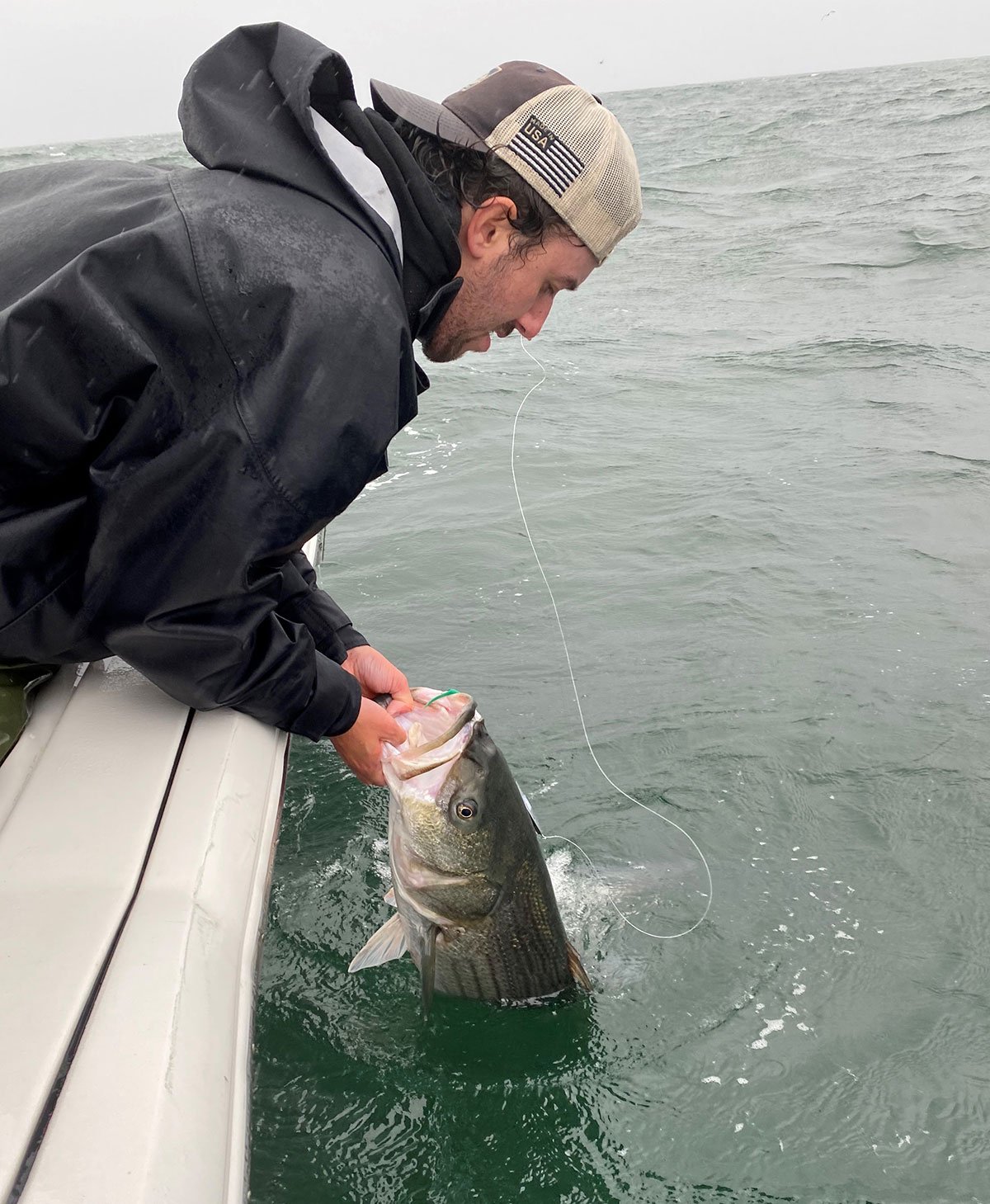
Using common angling sense to keep you in productive areas.
When the fall sand eel run lights up, it’s not just the stripers and bluefish that come alive—it’s the entire boating community. On those calm November mornings, the fleet gathers in full force, stretching across the horizon. Birds dip, bait flickers, and the sound of outboards idling in gear becomes the theme for this time of the year. The promise of bent rods draws everyone in tight, but in the midst of the frenzy, the difference between frustration and steady catching often comes down to one thing—fishing smart in a crowd.
Before dropping a jig, take a minute to assess the situation. Is the fleet drifting together, or are some boats spread apart? Are the birds staying in one area or moving with the tide? The most successful anglers are the ones who read the rhythm of the fleet and blend into it. Nothing kills a bite faster than a boat charging full speed through a working pod. Instead, idle up-current, cut the engine, and drift naturally into the zone.
If you’re running in late and see birds working, resist the temptation to plow in from downwind or behind them. Swing wide and set up a drift that carries you through the edge of the activity, not the heart of it. Striped bass feeding on sand eels often move in defined lanes, and by letting the fish come to you rather than chasing them, you’ll spend more time hooked up and less time tangled with your neighbors.
Once you’re in the zone, small adjustments in boat handling can make all the difference. In a light breeze, bumping the motor in and out of gear can help keep your bow pointed into the tide, maintaining a near-vertical presentation. If the drift is faster than 1 knot, consider bumping up to a heavier jig to stay in the strike zone rather than dragging it across the bottom.
Avoid power-drifting near other boats unless absolutely necessary. The prop wash and engine noise can scatter both bait and bass, especially in shallower rips where the water amplifies sound. Letting the boat move naturally with the current keeps your jig vertical, your line tight, and your fellow anglers happy.
It’s easy to get sucked into the crowd, but the best catches often happen on the edges. Sand eel schools are rarely uniform—they stretch in pockets and seams, sometimes just a few hundred yards apart. If you mark fish away from the mob, hold that line and work it. Not only will you avoid tangled lines and tempers, but you’ll often find less pressured, more aggressive fish.
Trust your electronics. When your sonar shows a dense bait ball with arcs moving through it, drop your jig immediately. Don’t wait for someone else’s rod to bend before acting. Once you find your rhythm and identify the right drift, you can quietly pick fish while the rest of the fleet chases surface splashes.
Etiquette goes a long way on the water. Always maintain a safe distance—at least a few cast lengths—from other boats when drifting. If someone hooks up, don’t slide right in on them. That fish could be part of a school moving with the tide, and there’s a good chance your turn will come if you stay patient and stick to your line.
Avoid vertical jigging directly astern of a boat that’s clearly working a drift line. Not only is it poor manners, but it can result in crossed lines, lost fish, and hard feelings. The unspoken rule is simple: if you wouldn’t want it done to you, don’t do it to someone else.
Light braided line (20- to 30-pound) is key for cutting through current and keeping your presentation tight. Pair it with a 30- to 40-pound fluorocarbon leader for abrasion resistance and invisibility in clear fall waters. As for jigs, diamond jigs, Ava-style tubes, and slim-profile sand eel metals in 2 to 6 ounces are the go-to choices. Add a small teaser above your main jig when the fish are keyed on smaller bait.
Work the jig with purpose—a steady lift and drop rather than wild, erratic pumping. Sand eels dart but also glide, and a smooth presentation mimics their natural movements better than constant snapping. If you see fish rising on the screen but can’t buy a hit, try downsizing to a lighter jig or switching to a natural finish like olive or silver.
Remember that everyone’s out there for the same reason—to have a good day and enjoy the fall run before it fades into winter. A friendly wave or quick nod of thanks goes a long way in maintaining good vibes among the fleet. When the bite finally dies, take a slow ride home, scanning for new life along the way. Chances are, the next cluster of birds will mark your next drift—and you’ll be ready to approach it with care and fish it smart.