The case for rattling lures versus silent presentations.
The debate over the effectiveness of rattles in fishing lures is one that has supporters on both sides of the aisle. Some anglers feel that rattles produce an unnatural sound that actually causes fish to shy away, while others believe they greatly enhance a lure’s ability to draw strikes. I did some research on the topic and combined it with my own observations (along with the experiences of other successful anglers), and the results were pretty interesting. Hopefully this column will held shed some light on the subject for undecided anglers. As with many aspects of fishing, there isn’t necessarily a right or wrong answer—only what works best under the conditions at hand.
As many fishermen know, fish rely heavily on their lateral line, a sensory organ that runs the length of both sides of their body. It is responsible for detecting vibrations, water movement and subtle changes in pressure. This remarkable organ gives fish the ability to navigate, locate food and avoid predators. It is often referred to as their “sixth sense.” It is the lateral line that enables fish to locate prey—and your lure—even in total darkness or in murky, turbulent water where visibility is extremely limited.
There are a multitude of lures on the market that incorporate rattles, ranging from topwater plugs to deep-diving swimmers. The types of rattles vary considerably from lure to lure. Some produce high-pitched sounds similar to a baby’s rattle, while others create a more pronounced knocking or low-pitched “thud.” Studies have revealed that higher-pitched sounds (above 2,000 Hz) are not within the optimal hearing—or more accurately, sensing—range of most gamefish. Lower-frequency sounds, generally around 1,000 Hz or less, fall into the range that fish detect much more effectively through both their hearing and lateral line. These deeper sounds also travel farther underwater and more closely resemble the noises made by struggling baitfish or other natural prey.
With this information, anglers can decide whether they prefer no rattle at all, a high-pitched rattle, or a low-frequency knocker. Many fishermen believe no rattle whatsoever is needed and that it can actually spook fish, particularly in clear, calm water where fish are heavily pressured. Others feel the lower knocking sounds offer the perfect amount of attraction without sounding unnatural, while still others have complete confidence in high-pitched rattles because they consistently catch fish with them.
Based on the information available, it appears that lures producing lower-frequency sounds have the greatest potential to attract fish in a realistic manner when added sound is beneficial, such as in rough water, stained water or low-light conditions. Personally, I feel that in calm water with spooky, pressured fish, a silent lure may often be the better choice. Sometimes subtlety is far more effective than calling attention to yourself.
One lure that I believe truly benefits from added sound is a topwater plug. Take the Doc spook-style lure, for instance—a proven fish catcher that incorporates a low-pitched knocker. That added sound allows the lure to call fish up from greater distances, even when surface conditions are rough. In those situations, the extra vibration may be just enough to help a striped bass locate the lure when it otherwise might have gone unnoticed.
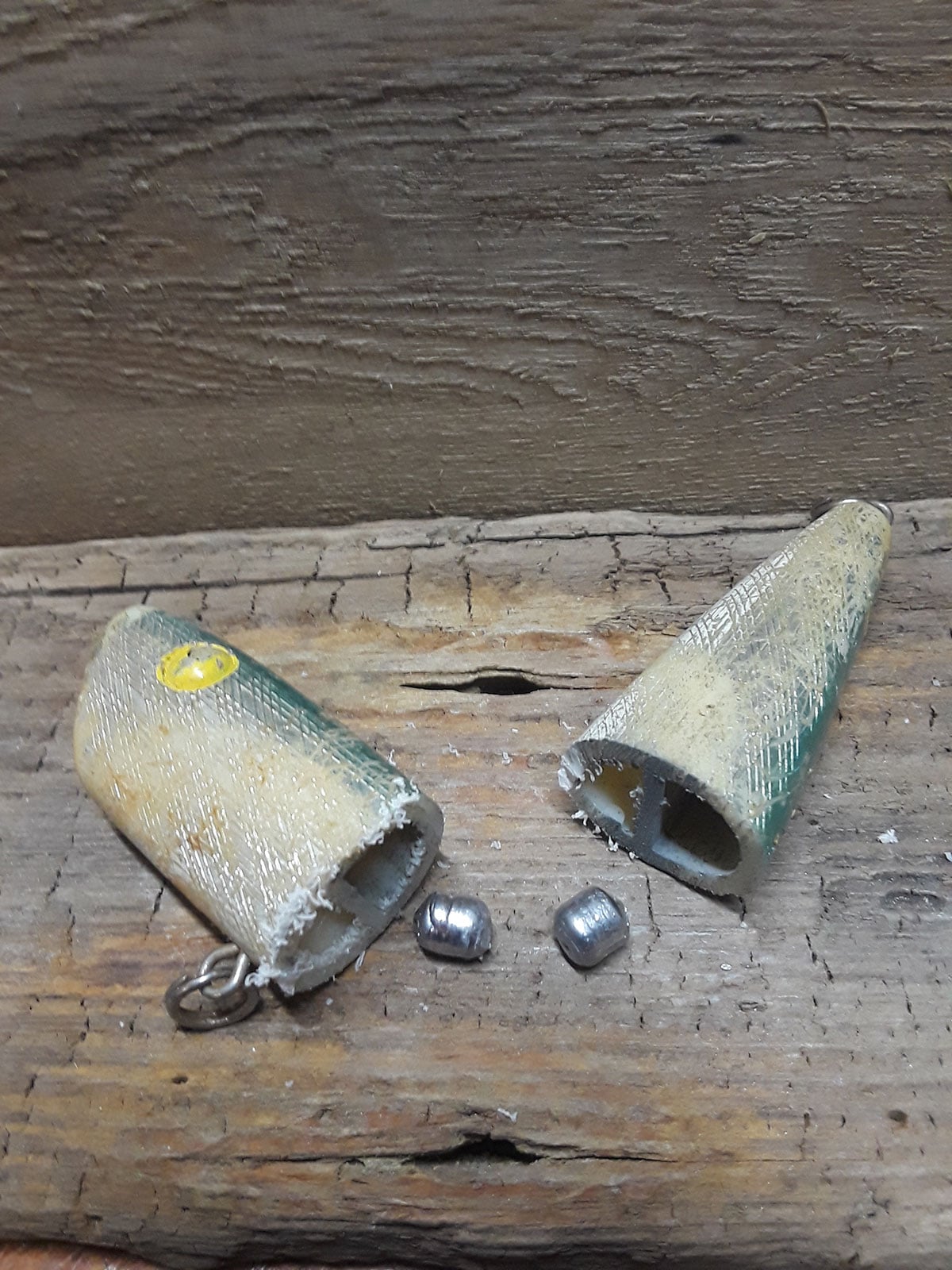
Now here’s some food for thought. Greg Myerson, who is well known for catching the current world-record 81.88-pound striped bass along with countless other trophy fish, attributes some of his success to a sinker he designed that contains a low-pitched internal rattle. He uses it while fishing live eels and believes the sound closely resembles that of a lobster crawling along the bottom, drawing large bass in to investigate. Whether that’s exactly what the fish are hearing or simply another trigger that gets their attention, it’s certainly difficult to argue with his results.
Many swimming plugs, particularly plastic minnow-style lures, are equipped with higher-pitched rattles, and they unquestionably catch their share of fish. However, some anglers strongly believe they tend to attract smaller, less experienced fish rather than larger, wiser specimens. Whether there is scientific evidence to support that theory is debatable, but it remains a common opinion among many veteran fishermen.
So, to sum up my thoughts on the subject, I am definitely a fan of rattles. Given the choice, I prefer lower-frequency knockers, but I also have no problem fishing completely silent lures when conditions call for them. Like so many things in fishing, success often comes down to matching your presentation to the conditions and keeping an open mind. Experiment with both styles, pay attention to what the fish tell you, and let experience be your guide.
That leaves only one question… to rattle, or not to rattle? That’s for you to decide.