Midsummer surfcasting doesn’t have to be a grind.
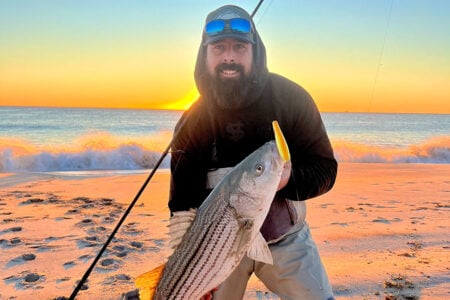
Summertime often ushers in the doldrums for surf fishermen. The air and water are warm, and that usually results in poor fishing close to shore. Additionally, any stripers that are around are fussy, and that’s if you can find them. It’s a time of the year in which surfcasters have to make adjustments if they want to catch more fish.
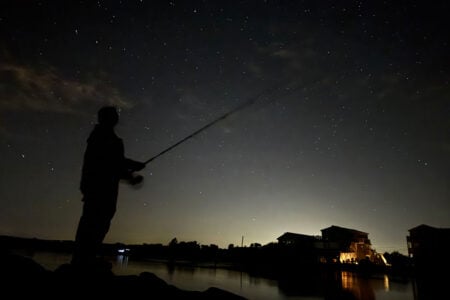
The times you fish may need to be adjusted. For the most part, stripers will seek the coolest times of the day to feed. That translates to early morning, late evening and after dark. All those times also bring low light or no light, active times in which stripers will feed close to shore.
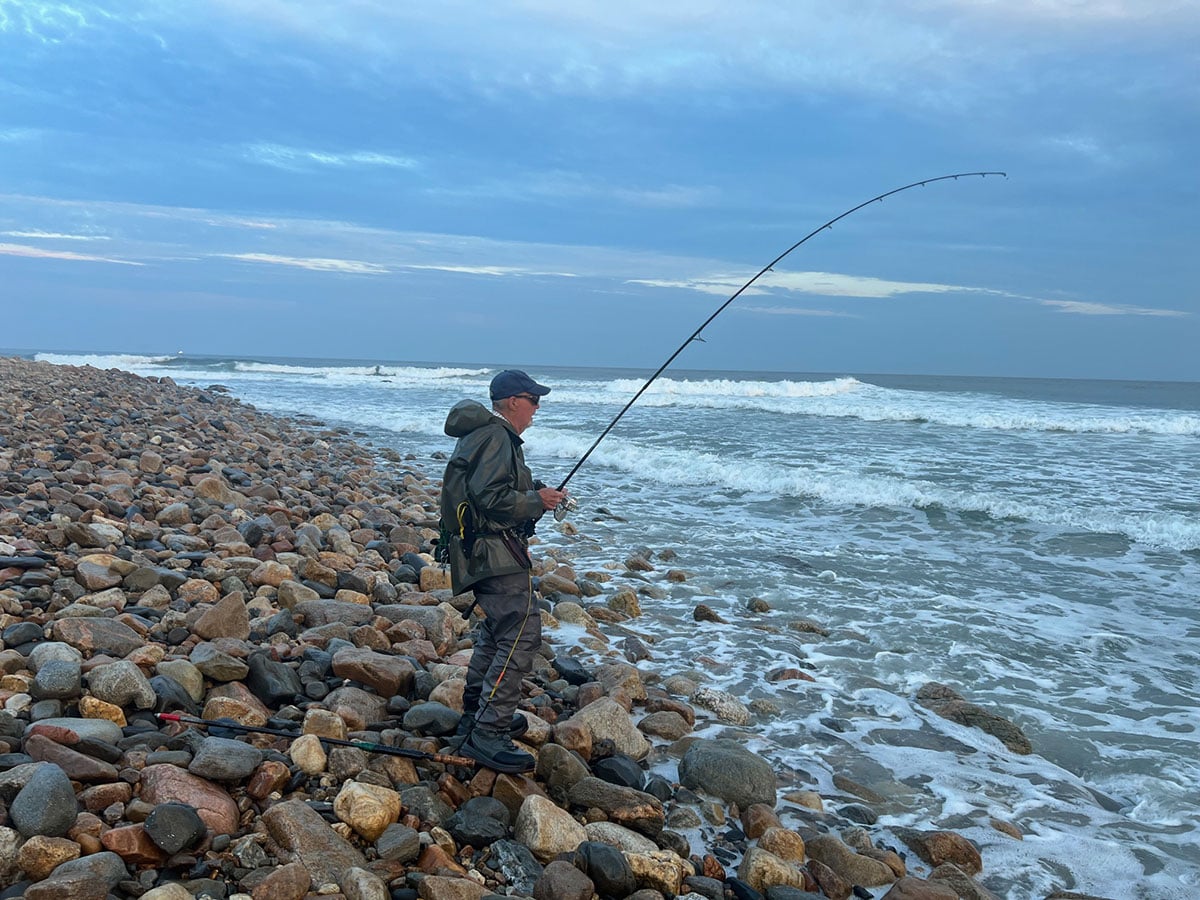
Surf fishermen can still catch stripers in the daytime, but you will have to pick your days. Stormy, rainy and overcast days will be best. Last year I was having a difficult time finding fish in the heat of July and August. It was, “a fish here and there” with a lot of effort. It all changed when a nor’easter hit in mid-August. The big blow brought cooler air, cooler water, heavy surf and white water to the shore. And, that lit up the daytime fishing. Note that rainstorms, big southwesterly blows and nor’easters are all weather and fish movers that can light up the fishing in the doldrums of summer.
Location is another key to beating the doldrums. I’ve often found good summer fishing in places where deeper and cooler water exists nearby. These might be drop-away ledges, deep troughs and jetties. Stripers will hang in the cooler water by day and venture to within a cast of shore in the darkness. We know boaters tend to do better in the summer because they can target stripers the deeper water. I often see boaters scoring two to three casts away from where I’m standing on the shore. Those same spots, dead by day, can come alive at night.
I also like to fish places with moving water. There’s always some bait flushing in and out of rivers and outflows along the coast and stripers often visit these spots on outgoing tides. These are always high percentage spots at any time of the year. Inlets and the confluences between two larger bodies of water are great spots to find moving water and summer stripers.
It’s also a good bet to stay along the wide open ocean rather than fishing the back waters and bays at this time. Those shallow backwaters will really heat up at this time, sometimes running 5 to 10 degrees warmer than the water out front. The cooler water out front is the better bet.
Many fishermen will also drive northward to seek cooler locations to fish in the dead of summer. The further north one goes, the cooler the water. Most areas north of Cape Cod tend to have much cooler water and more active fish in the summer. Every summer, I see loads of vehicle with number plates from RI, CT, NY, NJ and PA at the Cape Cod Canal where cooler water and good fishing usually continues right through the summer months.
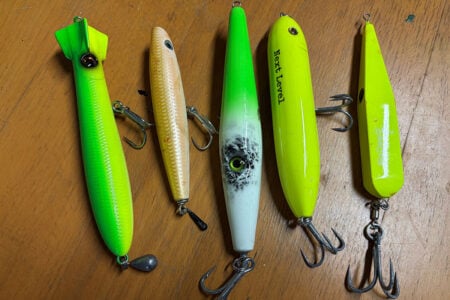
Finally, what’s at the end of your line will go a long way to determining success during the doldrums. Keep in mind that the fish will be fussy so either a live bait approach or a plug fishing finesse approach will work best. For some big fish sharpies, eels will be their ticket to success. Use them live or rigged after dark. I like to use finesse types of lures with skinny plastic at the top of my list. These include Slug-Go’s and Albie Snax. These will work well in places where a short cast will reach good water.
In places where long cast might be needed, a needlefish is a good bet. Even slow moving metal-lipped swimmers with their enticing surface wiggle might get you a decent fish. Those slow moving lures and lifelike skinny plastic will get the attention of most fussy stripers.
So, the key to summer fishing is making adjustments. Adjusting the times you target, the places you fish and the lures you use will go a long way in determining whether you catch or skunk during the doldrums of summer.