When you see that first shower of rain bait scatter across the surface, be ready.
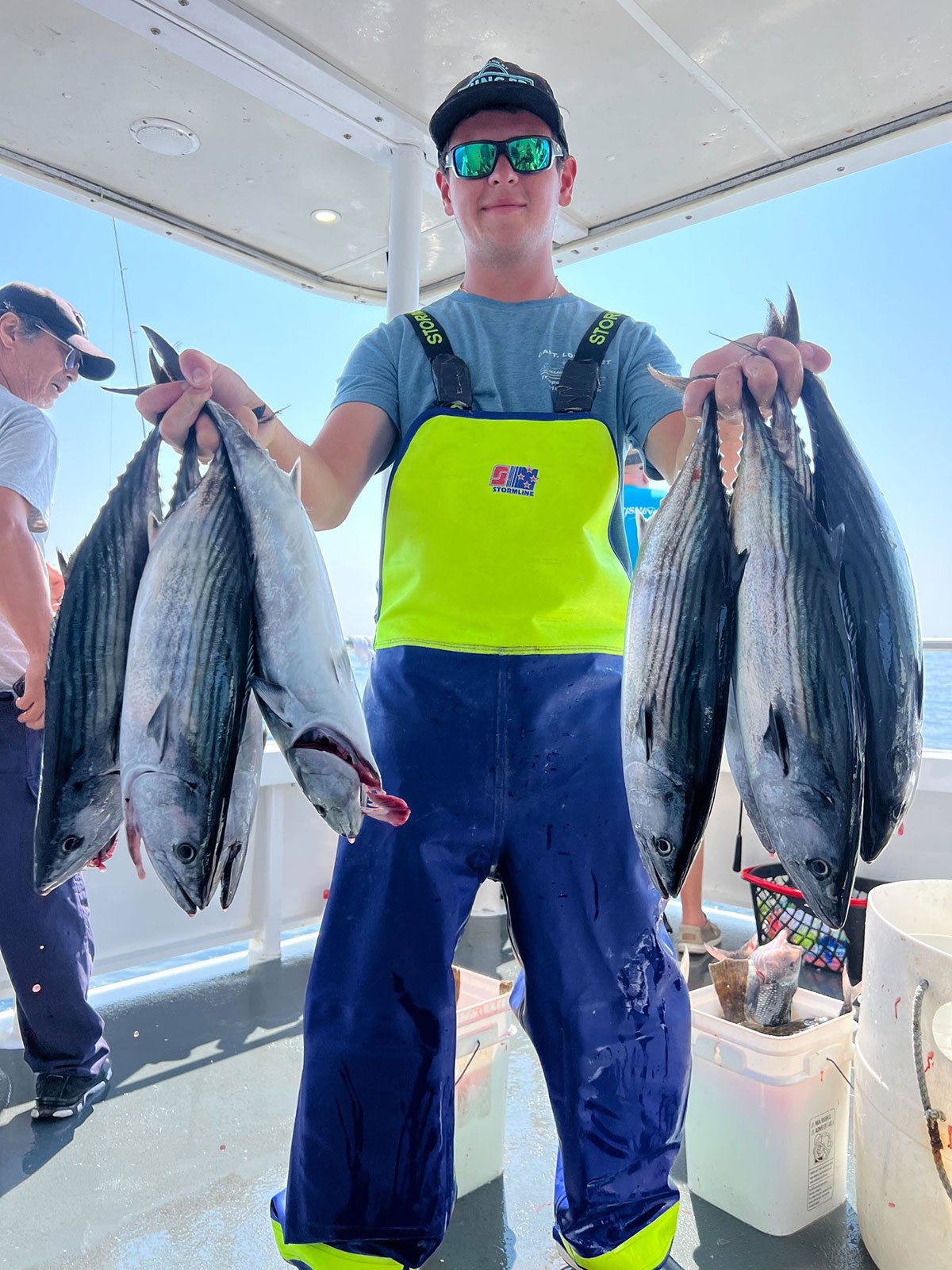
By early September, the inshore scene takes on an entirely new personality. The dog days of summer start to give way to cooler mornings, migrating bait begins to bunch up along beaches and in the bays, and with it come some of the fastest, flashiest visitors of the season—false albacore, bonito, and Spanish mackerel. These fish might not be the biggest on the block, but few species test an angler’s patience, casting accuracy, and light-tackle skill quite like they do.
The foundation for this fishery is simple: baitfish. By September, massive schools of bay anchovies, peanut bunker, and silversides flood inshore waters, often gathering in dense clouds along rips, jetties, and sandy beaches. For the casual observer, it may look like the water itself is shimmering, but for a tuned-in angler, it means game time. These predators are programmed to slash through schools with blinding speed, scattering bait in every direction. If you see nervous water, birds dipping tight to the surface, or sprays of bait erupting from the chop, you better have a rod ready.
The trick with these September speedsters is deciding whether to chase them or wait them out. From a boat, many anglers adopt a run-and-gun approach, cruising slowly and watching for surface feeds, then positioning just ahead of the blitz to deliver a cast. From shore, patience can be the key. Schools will often push bait right into the surf zone, giving surfcasters the same shot at fish that boaters enjoy offshore. Regardless of your platform, mobility and sharp eyes are crucial—these blitzes can be furious, but fleeting.
For all three species, the gear recipe stays largely the same. Medium-light to medium spinning outfits spooled with 10- to 20-pound braid provide the distance needed to reach busting fish without sacrificing finesse. A 20- to 30-pound fluorocarbon leader gives a measure of abrasion resistance while still keeping presentations clean in clear water. The drag is arguably the most important part of the setup—these fish may only weigh a few pounds, but their first run will scream line off your reel faster than most inshore targets.
Unlike stripers or fluke, which may hit a slow crawl or twitch, bonito, albies, and Spanish macks demand speed. A fast, steady retrieve is often all it takes to trigger a strike. Slim metals like Deadly Dicks, diamond jigs, or modern epoxy styles are all excellent choices for matching anchovies and silversides. When fish are higher in the water column, small swimmers or pencil poppers can deliver explosive surface strikes that stick in your memory long after the season ends.
The beauty of this fishery is in its simplicity. You don’t need a huge arsenal—just a handful of small metals and epoxies in silver, olive, and pink, and you’re armed for most conditions. The key lies not in lure selection, but in placement and speed. Landing a cast into the heart of a feed and burning it back almost always gets crushed.
While these fish can appear at any time of day, mornings and evenings often produce the most consistent activity. Flat, calm seas are prime for spotting surface feeds, but overcast conditions can extend the bite into midday. One constant is unpredictability—blitzes can erupt and vanish in minutes. Quick reflexes and being rigged and ready will mean more hookups and fewer “wish I had a rod in my hand” moments.
False albacore, bonito, and Spanish mackerel are not universally celebrated at the dinner table, but as light-tackle gamefish they are unmatched. Most anglers choose to release them, and proper handling goes a long way. Use barbless hooks where possible, keep fights short to reduce stress, and release fish quickly after a brief photo. These fish thrive in numbers, but they are also delicate when mishandled.
As we inch toward fall, the inshore calendar stacks up with big-game opportunities—striped bass, blues, and tog soon take centerstage. But September belongs to the speedsters. They’re the spark that kicks off the fall run, the fish that keep rods bent when other inshore action slows, and the ultimate test of an angler’s reflexes and tackle.
When you see that first shower of rain bait scatter across the surface this September, be ready. Bonito, Spanish mackerel, and albies don’t give you second chances—but when everything lines up, the chaos and thrill they deliver will stay with you until the next run comes around.