From net to hook, here are some tips on fishing one of the most productive September baits.
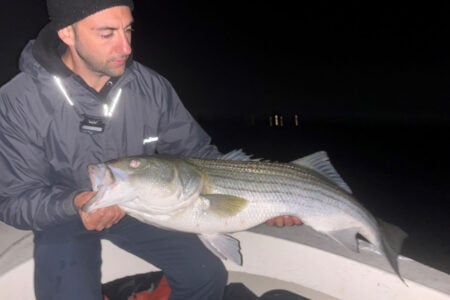
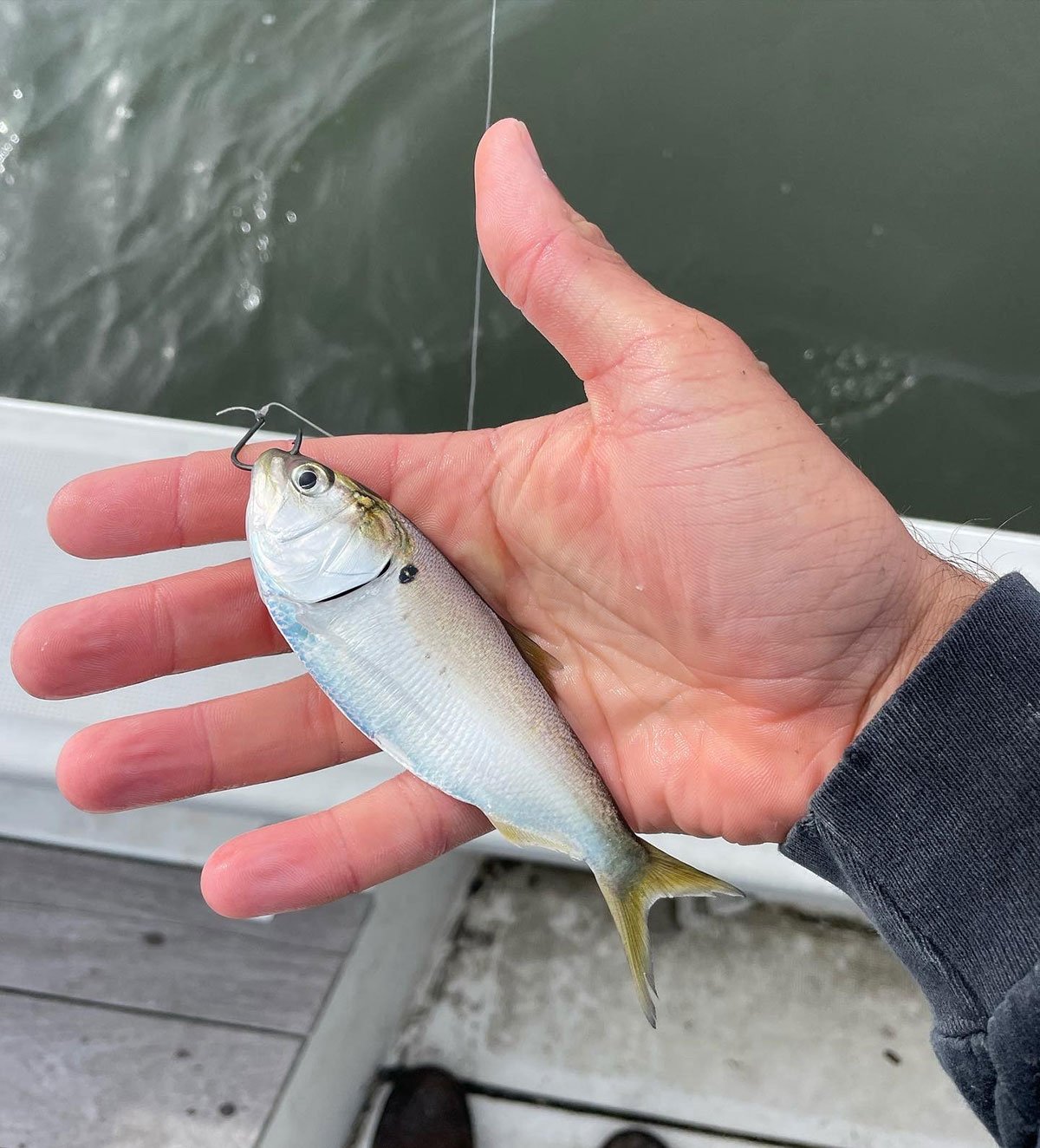
Every September, the inshore grounds come alive with a familiar sight: schools of peanut bunker flashing silver under the late-summer sun. These juvenile menhaden, only a few inches long, are among the most important forage species along the Northeast coast. They spill from the bays into inlets and nearshore waters, drawing a predator parade of striped bass, bluefish, weakfish, and even the occasional false albacore. For anglers, peanut bunker are more than just a sign of fall — they are one of the best live baits you can present when fish are keyed in on them.
The first step to fishing peanuts is catching them. A well-thrown cast net is the most efficient way to fill a livewell, especially when schools are tight against the surface in marinas, creeks, or calm back-bay corners. A 5- to 6-foot net with a fast sink rate works well, and it pays to scout on calm mornings when the schools are most visible. For those who don’t throw nets, a small seine net can work along a sandy shoreline, particularly around boat ramps and bulkheads.
Keeping peanuts alive requires some attention. They are fragile baitfish that quickly deplete oxygen. A strong livewell pump is ideal, but a simple bait bucket with a portable aerator can get the job done for short trips. It’s also smart to avoid overcrowding — 30 peanuts in a 5-gallon bucket is asking for floaters before you even reach your spot. If you’re loading up for a full day, consider carrying two buckets or investing in a round-style baitwell that reduces stress on the bait.
Fishing live peanuts is simple but deadly. The classic setup is an Octopus hook, size 1/0 to 3/0, matched to your target. Circle hooks are required when targeting striped bass, but even for other species they increase hook-up ratios and reduce deep-hooking. A light fluorocarbon leader of 20 to 30 pounds tied to a small barrel swivel completes the rig, with a split shot or small egg sinker added if current demands.
Hook placement is critical. For drifting peanuts through an inlet rip or along a bridge shadow line, hook them through the nose so they swim naturally with the current. For fishing around sod banks or calmer waters, a back-hooked peanut just behind the dorsal fin keeps it struggling and fluttering — often irresistible to waiting predators. Either way, the goal is to let the bait swim freely and naturally without spinning.
The beauty of peanuts is their versatility. In the back bays, drifting live peanuts around docks, pilings, and sod banks can produce striped bass and weakfish, especially under low-light conditions. Inlets are another prime target, where predators set up to ambush bait as the tide flushes schools out. A peanut drifted along the seam of moving water will often get hammered before it clears the rip.
Bridges are among the most reliable September peanut spots. Shadow lines on outgoing tides are natural ambush points for stripers and blues. Dropping a live peanut into the dark edge of a bridge light is as close to a guaranteed hit as you’ll find this time of year. Even open beaches can turn on when pods of peanuts move down the shoreline, with blues blitzing through them and stripers lurking just behind.
While lures and artificials have their place, nothing quite matches the appeal of a live peanut bunker. In September, predators often become laser-focused on them, ignoring larger baits or plugs. A peanut’s frantic swimming motion when hooked perfectly mimics the panic of a straggler trying to rejoin the school. That natural presentation is tough to beat, especially when fish are feeding selectively.
There’s also a nostalgic element to fishing peanuts. Many anglers cut their teeth catching them with a throw net and fishing them under a float in local creeks. They’re a bait that’s accessible to beginners yet still effective enough for seasoned pros.
September is a transitional month, with summer species lingering and the fall run beginning; peanut bunker sit at the center of it all. They’re easy to find, relatively simple to keep alive, and effective on just about every inshore predator. While chasing blitzes with tins and poppers is exciting, don’t overlook the power of a live peanut drifted into the strike zone. It’s an old-school tactic that remains one of the most consistent ways to put fish on the deck this time of year.
If you want to maximize your September fishing, spend a little time each trip filling your bucket with peanuts. They may be small, but their impact on the inshore bite is huge — and the predators waiting in our bays and inlets will remind you just how valuable these juvenile bunker really are.