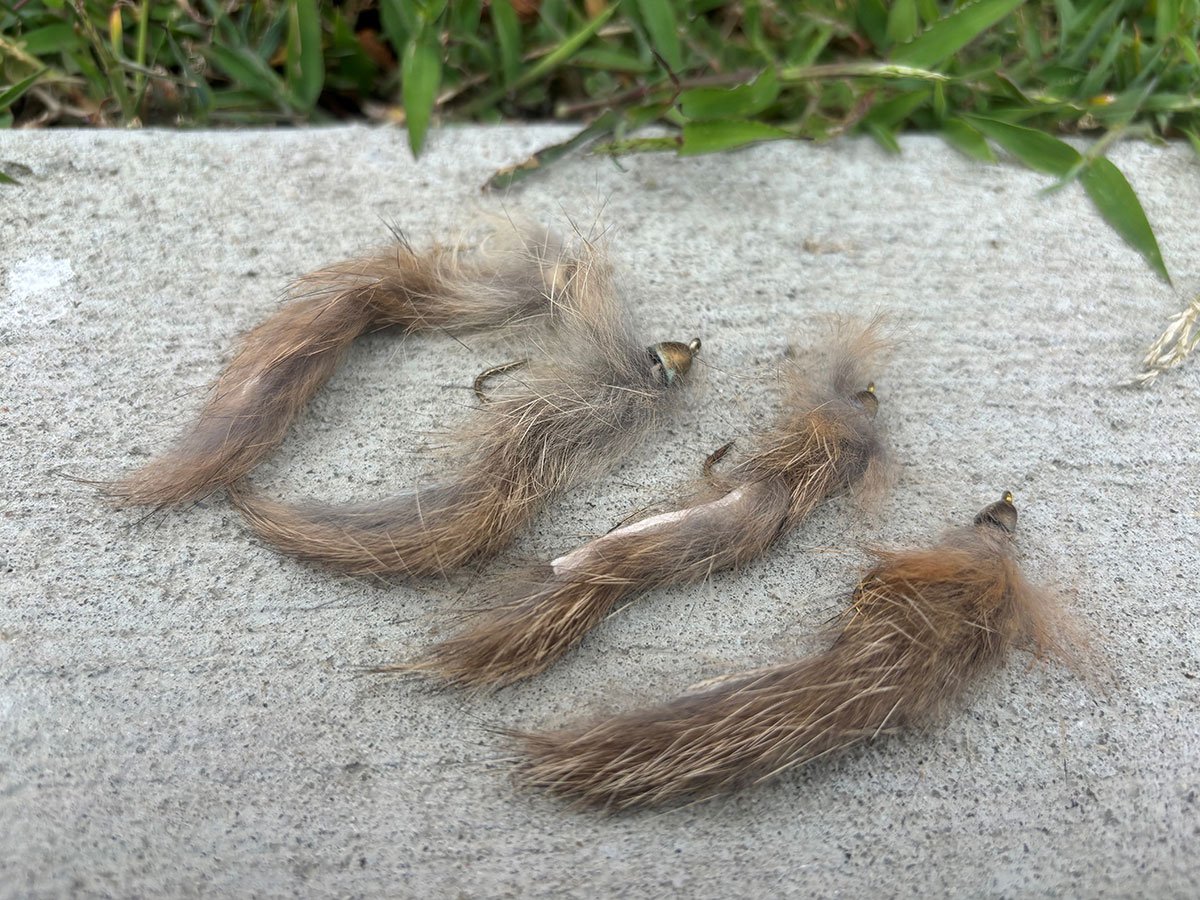
More on fishing the Rabbit Strip Jiggy.
The exception to giving the rabbit strip action is when it comes down to smallmouth and largemouth fishing. I stumbled into this while fishing a pond before it “iced up.” I wanted to catch cold-water panfish, so I tried using my small 2 1/2-inch Jiggy just off the bottom with different presentations until I got a hit. The one that worked was a very long, medium/slow, consistent strip. But to my surprise I didn’t get panfish—I got bass, and some big largemouths too, up to 7 pounds! This presentation has worked consistently for bass since, especially in cold water, and it has for panfish too. Years later I read about what had become the hottest method for bass in the country: finesse fishing with the “Ned Rig.” What you did was, with light spinning tackle, you retrieved a 2 1/2-inch small cigar-shaped soft plastic on a light jig head (the “Ned Rig”) just over the bottom on a straight, no-action, slow retrieve. ’Nuff said! By the way, the origins of Ned Rig fishing go back to the ’50s and ’60s. I’m not close to being first.
You know, I think you can out-produce the spinning/Ned Rig crowd using a fly rod and Rabbit Strip Jiggy because this fly is lighter (lighter offers better presentation) and rabbit looks “alive” in the water while a straight piece of soft plastic doesn’t.
Jiggy Under A Float/Indicator
I can’t emphasize just how deadly this simple method is: for bass, panfish, trout, white perch, and Great Lakes brown trout and steelhead. You use a small indicator, like a “trout snack” (or another type float), and adjust your float so the Jiggy will hold below it just off bottom. This works for everything—in lakes, streams, moving water. You are essentially “vertical” fishing.
All you do is cast out, or “flip out” if close, and, if fishing in a stream, let the rig just dead drift down-current, or give intermittent or even many twitches (and sometimes jerks) as it drifts. Make sure that if you have fly line on the water, the rig drifts with both fly line and leader above—up-current of—the indicator.

In lakes, cast or flip it out, and give the rig a few, or many, jerks and twitches. Mix it up. See what the fish want that day. At times, like in crappie fishing, just let it rest and do nothing. Sometimes all you need is wave action alone to give the fly enough movement for attraction.
You detect a hit by the indicator twitching, bobbing, running off, acting “funny,” or (which happens a lot) completely submerging. Historically, this is an already well-established technique using a spinning rod and float with jigs and soft plastics for all those species previously mentioned. It’s an “ancient” crappie and bluegill method as well. You’re now just doing the same thing they are, but with a fly rod and fly. Hey, we’ve gone full circle and are once again “bobber fishing,” just like we did when we started as kids!
The Rabbit Strip Jiggy is an easy-to-tie and easy-to-fish fly that is simply just about as deadly as they come. Give it a try this season, using one of the methods mentioned, and I think your fly fishing will take a step forward—or maybe even two!