So are you team jig or rig for tog?
When the middle of October rolls around, most inshore anglers from New Jersey through New England know what time it is. The cool nights, falling water temperatures, and that unmistakable crunch of crabs on the rocks mean one thing: blackfish season is here. For some, this is the most anticipated opener of the year, a chance to battle bulldog “whitechins” tight to wrecks, jetties, and rock piles. And with the season comes a question that sparks more dockside debates than almost anything else: are you fishing jigs, or rigs?
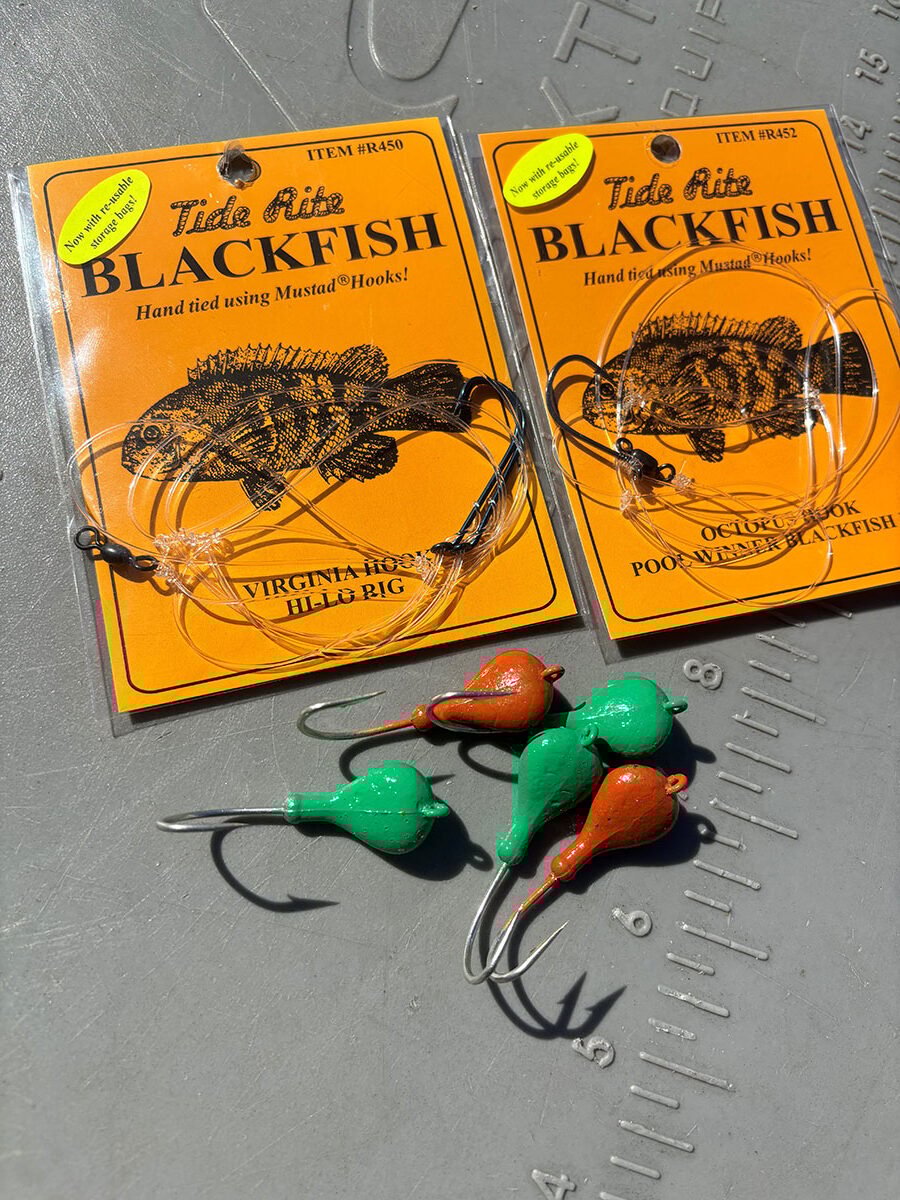
For decades, rigs have been the bread-and-butter approach to togging. Before anyone thought about dropping a painted jig head tipped with crab, party boat decks were lined with anglers fishing Snafus, single-hook Virginia rigs, and other variations. The appeal is simple — rigs work.
A well-tied rig presents a whole crab naturally and securely, something especially valuable in deeper water where the current is strong. The two-hook Snafu remains a staple because it doubles the odds of connecting when a tog picks at one leg of the crab. Rigs also shine when fishing in 40 feet of water or more. In those depths, a 6- or 8-ounce sinker will hold bottom where even the heaviest tog jigs would struggle to stay put. Add in the durability of a stout leader system, and it’s easy to see why so many old-school toggers never put their rigs down.
Still, over the past decade, the tog jig has completely changed the way many approach the fishery. As braided line, sensitive graphite rods, and compact spinning reels have become standard, jigs slipped perfectly into the modern arsenal. A half to 3-ounce tog jig, tipped with a green or white crab, allows an angler to pitch tight to structure and work the bait across the bottom with pinpoint precision.
The biggest advantage? Sensitivity. With braid-to-jig contact, every subtle chew, crunch, and tug telegraphs directly to the angler’s hand. The hook-up ratio can be higher too, since the jig presents the crab flat against the bottom in a natural posture. There’s no swinging hook or awkward leader angle to get in the way.
Jigs shine brightest in shallow water — say 10 to 30 feet — where precision trumps raw weight. Think about working along a bridge piling, probing a jetty pocket, or sliding across a shallow wreck: the jig lets you walk that bait naturally into strike zones you’d never reach with a bulky rig.
Like most debates in fishing, the smartest answer is somewhere in between. Many of the best captains encourage a split approach, with some anglers on the boat fishing jigs and others fishing rigs until a pattern emerges. On calm days with little current, jigs might dominate. On days when the tide is ripping or the drop is deep, rigs often shine.
This hybrid approach also gives you flexibility. Start a drift on a shallow rock pile with jigs, then switch to rigs when the tide speeds up and you need more lead to stay pinned. Carrying both in your tackle bag is simply the smart move.
The way you cut and hook your crab can also matter. A half-crab placed neatly on a jig will sit flush on the bottom, legs extended, looking natural. A whole crab on a Snafu can roll around with current, spreading scent and tempting a brute. The choice depends on conditions and confidence, but both methods consistently put fish in buckets.
Mid-October blackfish are hungry, aggressive, and often shallow. After their summer layoff in deeper offshore waters, they return to rocky structures close to shore and feed heavily. This is why the first couple weeks of the season can be some of the most productive. Add in typically settled fall weather, and even small boats have a shot at filling limits.
This also makes October the perfect month to experiment. If you’ve always fished rigs, now’s the time to try jigs in shallow water. If you’re a jig-only angler, tie up a Snafu and drop it on your next deeper piece. There’s no better way to expand your arsenal than during the kickoff weeks, when fish are cooperative and conditions are forgiving.
So are you team jig or rig for tog? The truth is there’s no single answer. The best toggers carry both, and they’re not afraid to switch depending on the spot, the depth, the current, or simply the mood of the fish that day. The beauty of this fishery is that it rewards both patience and adaptability.