Why three-way bucktailing still produces big bass.
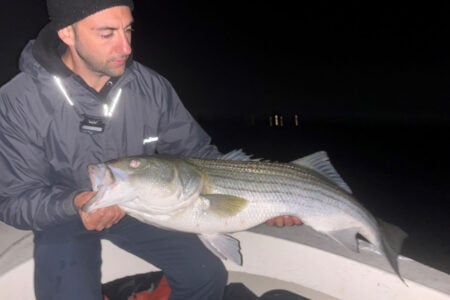
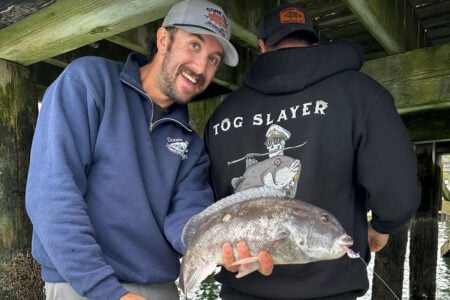
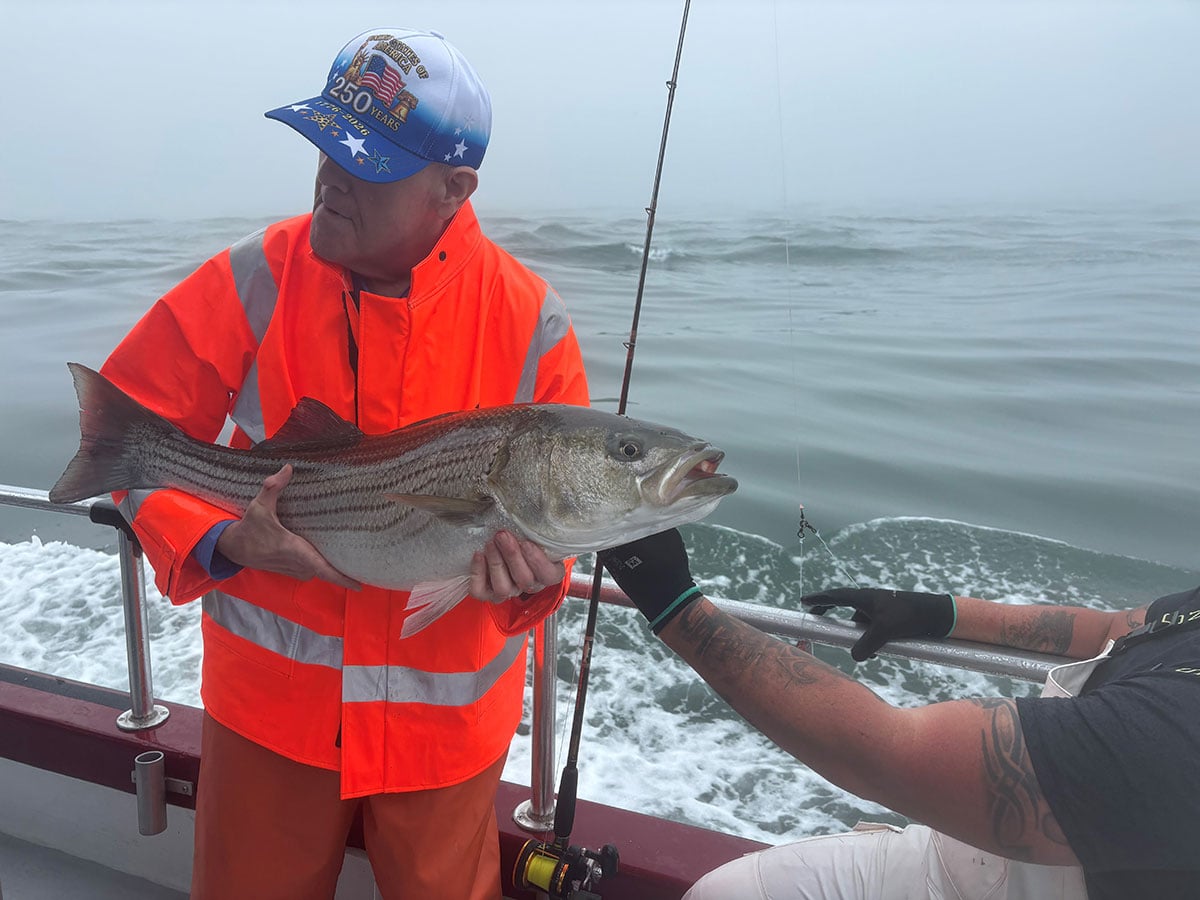
A recent trip aboard the Nancy Ann out of Orient Point reminded me that, while fishing trends come and go, some techniques never stop producing. We spent the day drifting the rips with three-way bucktail rigs, and it didn’t take long before rods started bending. There were no oversized glide baits or complicated presentations—just a simple rig, a controlled drift and a bucktail swimming naturally through feeding fish.
Although this trip took place off Orient Point, don’t think this is a tactic tailored to Long Island’s East End. Three-way bucktailing has long been a staple around Montauk, Plum Gut, The Race, Block Island and countless other areas where strong current meets structure. It can be just as effective around anywhere striped bass use moving water to ambush bait in deeper water
The reason this technique has stood the test of time is simple—it keeps your lure in the strike zone.
Striped bass are built to take advantage of current. Rather than chasing bait throughout the water column, they settle behind rocks, ledges and drop-offs where the tide delivers an easy meal. The challenge has always been presenting a lure naturally while maintaining bottom contact. That’s exactly what the three-way rig accomplishes.
A three-way swivel separates the sinker from the bucktail, allowing each to do its job. The sinker stays near the bottom while the bucktail swims several feet behind it with a free, natural action. Instead of dragging awkwardly across the bottom, the bucktail rises and glides with every lift of the rod and every push of the current, looking much like a wounded baitfish.
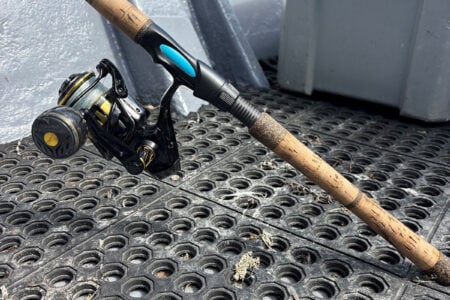
The rig itself is straightforward. Tie your braided main line to a quality three-way swivel. From one eye, attach an 8- to 12-inch dropper of 30- to 40-pound monofilament with enough lead to maintain occasional bottom contact. From the remaining eye, tie a 4- to 6-foot leader of 40- to 60-pound fluorocarbon or monofilament and finish it with a 1½- to 3-ounce bucktail.
Many veteran anglers intentionally tie the sinker dropper with lighter monofilament. If the sinker wedges into the rocks, the dropper breaks first, saving the rest of the rig.
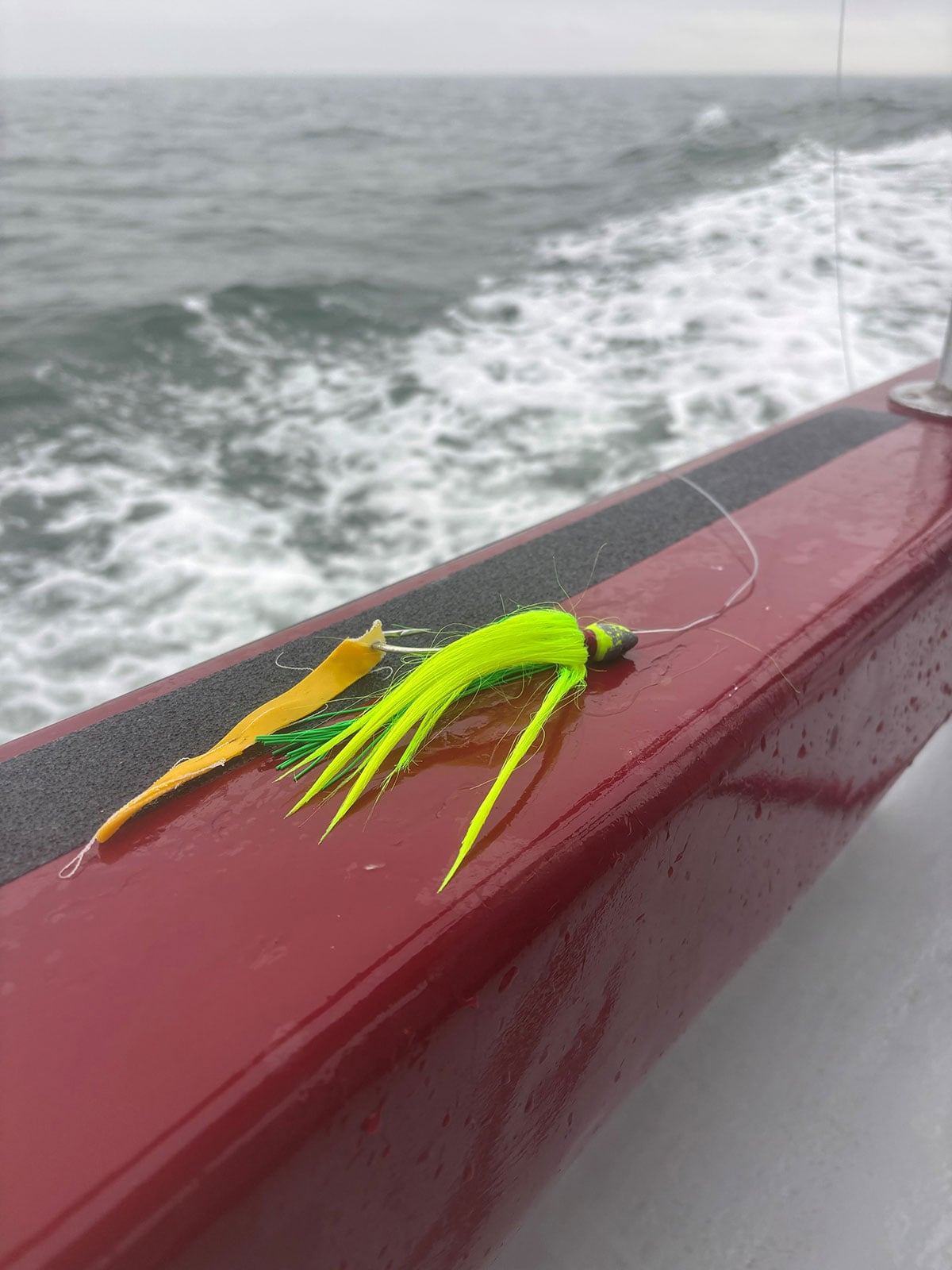
Bucktail color is often overthought. White remains the standard because it imitates nearly every common baitfish. Chartreuse shines in stained water or low-light conditions, while a white-and-chartreuse combination has accounted for countless bass. Tip the bucktail with pork rind, Fat Cow Strip or a soft-plastic trailer if you like, but presentation will always matter more than color.
Working the rig is where many anglers make mistakes. This isn’t vertical jigging. Snapping the rod aggressively usually pulls the bucktail away from feeding fish. Instead, let the current do most of the work. Allow the sinker to touch bottom every few seconds. Lift the rod smoothly about two feet, then lower it while reeling just enough to stay tight. The sinker rises first, the bucktail follows, and as the weight settles back toward the bottom the bucktail glides naturally behind it. Many strikes come during that slow fall.
Proper weight selection is equally important. Your sinker should tick the bottom without dragging continuously. Too little weight allows the current to sweep the rig above the fish. Too much weight deadens the presentation and increases snags. Don’t hesitate to change sinkers as the tide changes throughout the day.
With experience you’ll begin reading the bottom through the rod. Sand, gravel, mussel beds and rock each transmit a different feel. Those subtle changes often pinpoint the structure where bass are holding. The importance of oat control also deserves more ink than it typically gets. The best captains constantly adjust the drift to keep anglers fishing as close to vertical as possible. A straighter line provides better sensitivity, fewer tangles and a much more natural presentation.
One thing that stood out aboard the Nancy Ann was how effortless the most successful anglers made the technique look. They weren’t overworking their rods or constantly changing retrieves. Their movements were smooth, deliberate and consistent. They trusted the rig, trusted the current and let the bucktail do exactly what it was designed to do.
Every year brings another lure that’s supposed to revolutionize striped bass fishing. Some earn a place in our tackle bags, but many disappear after a season or two. Three-way bucktailing has survived because it isn’t based on hype. It’s based on presenting a lure naturally where striped bass feed. This classic technique continues to put quality fish on the deck. Sometimes the oldest methods are still the best ones.