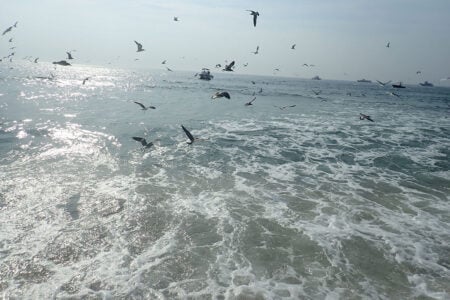
The surf fluke game has changed, and continues to do so!
Every few years the “new thing” hits the fishing airwaves and no doubt for surfcasters, catching fluke has had its moment in the bright spotlight for the past 7 years or more.
While local sharpies have been on the tip for decades, the enjoyment of catching not only shorts, but quality fluke, in the surf has brought a viable fishery for everyone, if you only have an hour to spend in pursuit.
As with any budding fishery that gains attention, it evolves into new tactics and techniques. Once you have your preferred method, it’s not a far stretch to say you can limit out on fluke in an hour’s surf outing if you play your cards right.
Where They Lay
Anywhere you can find the deeper water on outgoing, incoming, high and low tides is where fluke will stack up. Beachwalking is a must to find where the packs are hanging as when you do find one fish, you will find plenty more, so you need to cover some ground before you hit the payload.
I find on lower, incoming tides, fluke will stack on the inner side of the sandbar slough, sucking down all the forage that gets washed over the bar into the cut, so my casts try and reach the top of the sandbar, then allow it to reel and drop into the slough. Other times, fluke are right at your feet, sitting in the undertow to gobble down the mole crabs, small baitfish and crabs that get roiled and washed around on the receding waves.
A good starting place is to find the cut into a large hole is where fluke will gravitate to and hang. Point is, keep your eyes open and think like a fluke as to where they will be hanging in deeper water at any moment of the tide to avoid ospreys as well as to root down in camouflage to ambush prey.

Never Pass The Buck
When I first started surf fluking in the late 90s I simply used what I knew worked on the boats and applied it to the surf, albeit a little bit modified, and that for me, means bucktails. A vertical approach as from the deck of a boat is traded for a horizontal approach with the lure in the surf. Scaling down, my “go to” rig is a half-ounce white Andrus roundhead bucktail tied via loop knot, then a dropper loop fixed 18 inches above where a size 3/0 Octopus hook or relative sized white bucktail hair teaser is looped on. Both are tipped with a 4-inch Berkley Gulp white Swimmin’ Mullet. The connection from my 30-pound Power Pro braid running line is tied via Albright knot to a 4-foot section of 25-pound Seaguar fluorocarbon leader to which the rig is tied from.
Pick a medium power rod with moderate to fast action to be able to have some flexibility to impart a jumping action when popping the bucktail back. I use a Shimano Terramar 7-foot TMSE70M matched with a Shimano Miravel 5000. Bucktails are cast out and allowed to sink to the bottom. The method is a twitch-pause-sink-twitch every one or two seconds. If fluke are aggressive, they will absolutely hammer one of the baits on the drop. If the waters are a bit cold or if they are finicky, you’ll feel a little hanging weigh on the end of the line where they grab the bait, but not the hook.
An immediate hookset sometimes pulls it out of the mouth of the fish. As fluke are aggressive predators, simply allow the bucktail to sink again and twitch it a few times whereupon you will feel the weight again. This time, pull slightly back on the line and you’ll feel the fish commit. Then it’s time to set the hook. More often than not, a fluke will follow the lure all the way to your feet with a strike coming at your feet in the undertow.

Dragging Baits
An easy way to score with flatfish is with a traditional bait rig, consisting of a three-way swivel connected with a 24-inch section again of the 25-pound fluorocarbon leader and a snelled size 3/0 Gamakatsu octopus hook on the end. On the sinker clip of the three-way, connect a 1- to 2-ounce bank sinker for weight.
The method here is simple. Cast out into the deeper water and simply slowly drag and reel the offering back in. It will inevitably cross the path of a hungry fluke where you will feel the strike and eventual hookset.
Bait up with slender baits such as a squid strip and spearing combo for a streamlined and never a bulked, lumpy presentation so the bait appears to be naturally swimming. If you’re just deadsticking the pole, yes, even a blind squirrel will find a nut, but you have to be active in your approach, casting and reeling and moving down the beach to find the fish to make the bait work correctly.

Plug It In
The “new kid on the block” tactic is used by one of the most old school kids on the block, Shell E. Caris. On a recent trip filming a segment for my Saltwater Underground show, Shell E. broke out the swimming plugs to target fluke. It makes sense as flatfish are super aggressive predators and many times I have had fluke hit my big black Bomber plug when gunning for stripers.
Certain manufacturers have now scaled down plugs matched with thinner wire hooks to mimic and effectively target fluke specifically. Shell’s favorite plugs for fluke include the Yo-Zuri MagSpeed 100s, Lucky Craft Pointer 78DD and the Yo-Zuri 3DS Minnow 100 SP. Shell keeps his plug reeling in at a moderate pace where it skirts the sandy bottom. Fluke will pop up quickly and hit the plug as they see it coming in their frame of vision and the plugs have accounted for some of his largest surf fluke pushing upwards of 5 to 6 pounds plus.
Summer surf fluking is satisfying and can absolutely put a meal on the dinner table as you won’t be surprised to see fish pushing 3, 4 and even up to 6 or 7 pounds as we did regularly during the first half of the summer. What seems like a barren ocean only filled with a technicolor blast of tourist’s bathing suits swimming to the left and the right of you underlies flat, aggressive predators finning between them.
Fire up the grill, sunrise to sunset, fluke await in the suds.