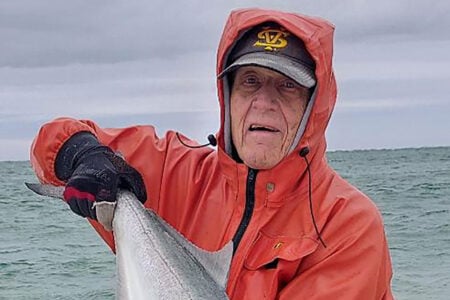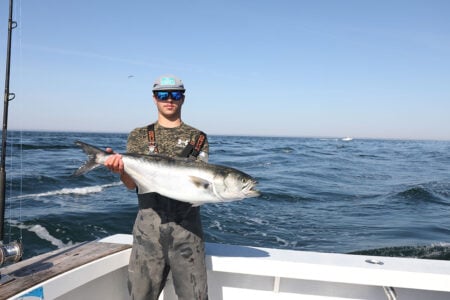
The race is on as the racers arrive.
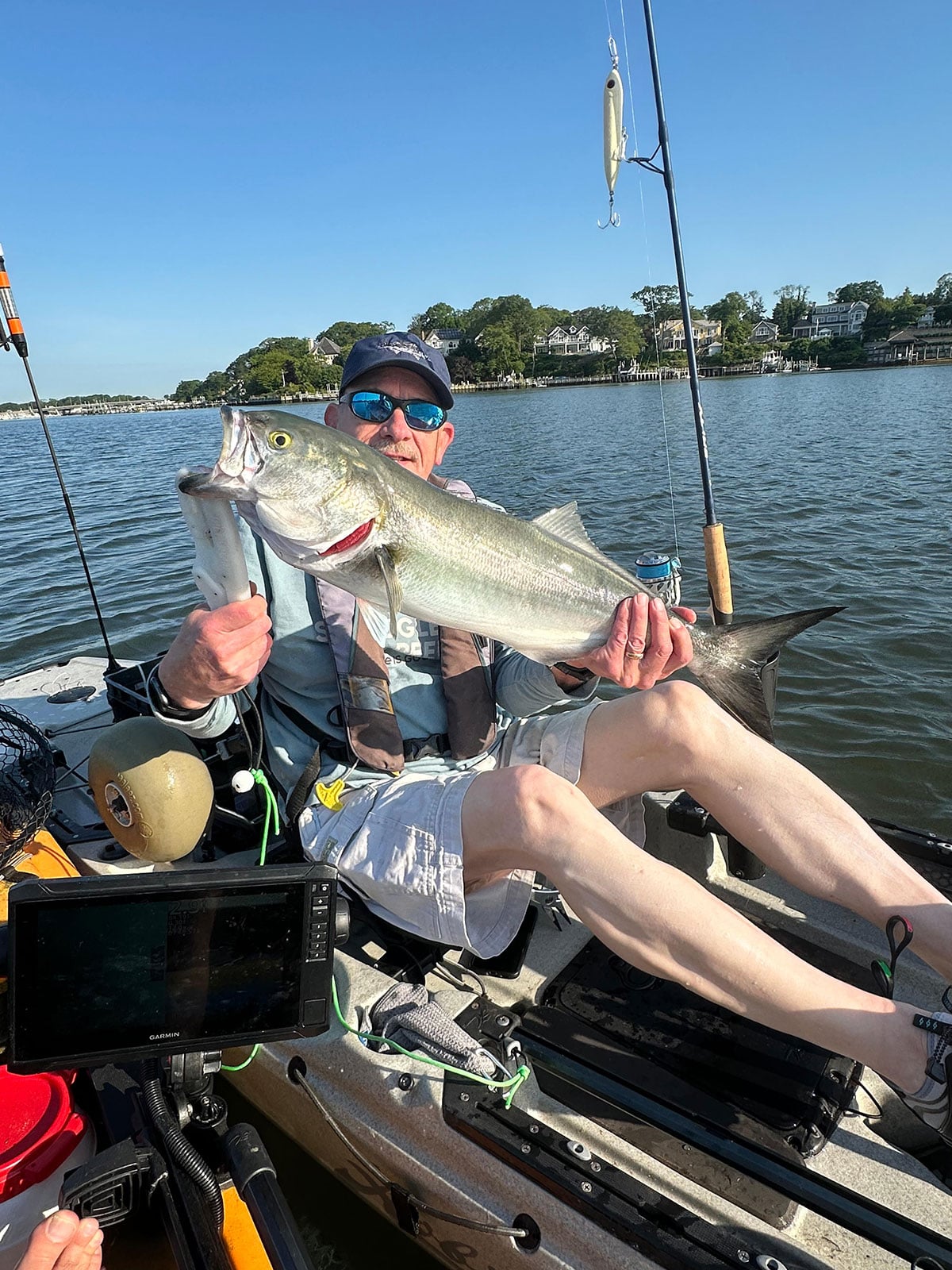
There’s something about a topwater strike from a bluefish that never gets old. It’s violent, unpredictable, and loud in a way that cuts through the quiet of a back bay morning.
When you’re sitting low in a kayak, inches above the water, that experience feels even more raw; you’re not just watching the action, but you’re actually a part of it.
In New Jersey’s backwaters, kayak anglers have a front-row seat to one of the most exciting inshore bites of the year. From late April into early summer, bluefish push into bays, rivers, and estuaries chasing bait. They’re aggressive, fast, and willing to smash a surface lure with almost reckless energy.
Fishing for them from a kayak, especially with topwater plugs, is about as fun as saltwater fishing gets.

The Yak Advantage
The back bays of New Jersey are ideal territory for kayak anglers. Shallow flats, winding channels, sod banks, and small coves create a maze of structure where baitfish gather. That’s exactly what bluefish are looking for as these fish enter the bays hungry after migrating north. They feed hard on bunker, spearing, and herring, often corralling bait into tight schools before attacking.
Unlike the open ocean, where gamefish can spread out, the backwaters concentrate both the bait and predators. For someone in a kayak, that means less water to cover and more chances to find active fish. And you don’t need to go far either. Many productive spots are within a short paddle from a launch. Rivers like the Manasquan, stretches of Barnegat Bay, all the way down through Great Bay and Great Egg Harbors and beyond, as well as smaller tidal creeks which all hold fish throughout the season.
Fishing from a kayak changes how you approach bluefish. You’re quieter, closer to the water, and able to slip into areas boats can’t reach. That stealth matters too; bluefish can be surprisingly sensitive in shallow water. Paddling over a school can spook them, especially early in the season when they’re less aggressive.
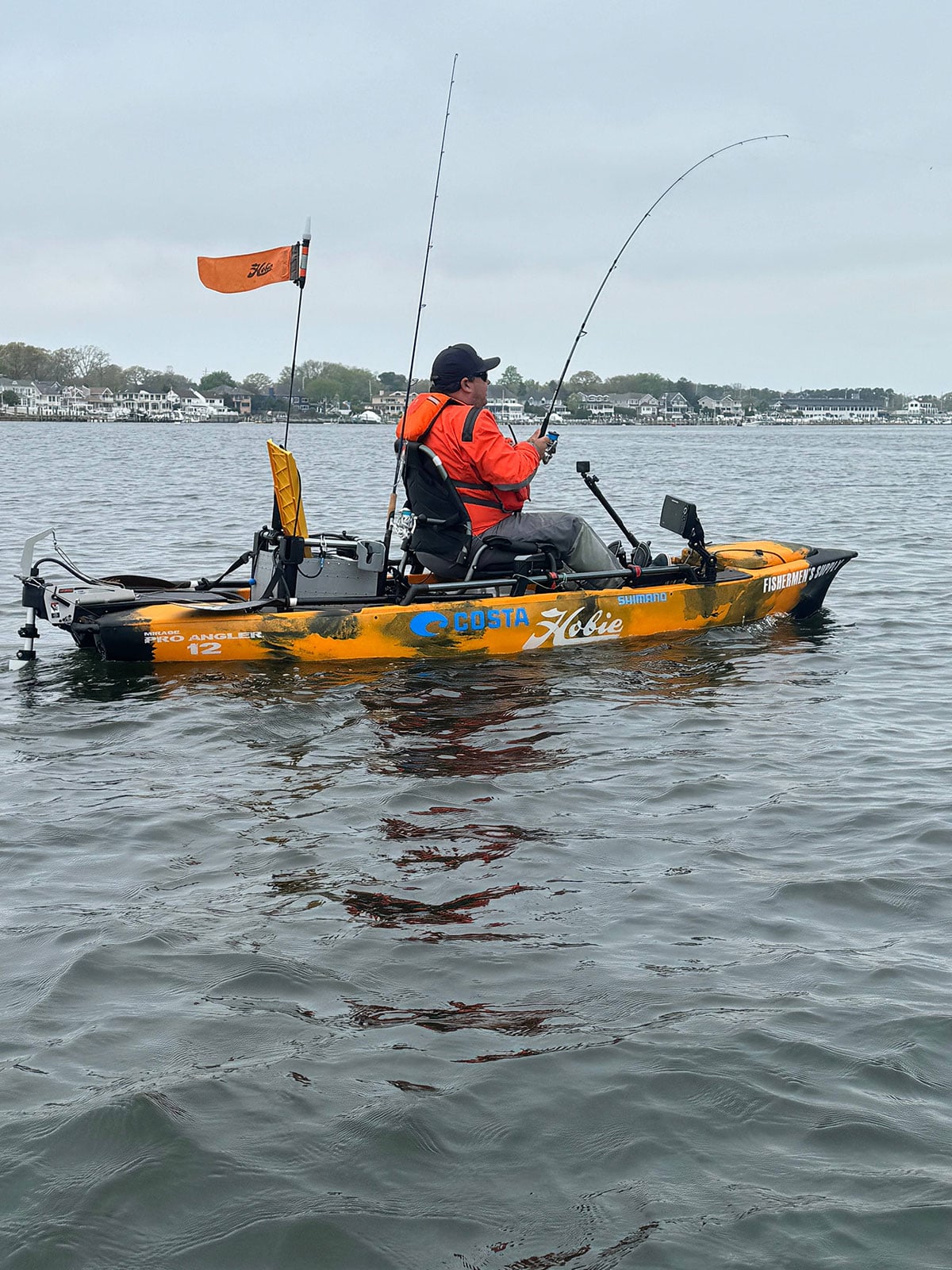
A kayak also lets you work tight to structure. You can drift along sod banks, position yourself at the edge of a channel, or hold just outside a flat where bait is staging. These are the zones where topwater strikes tend to happen. And when you hook up, things get interesting fast. A decent bluefish will tow a kayak around like it’s nothing. That sleigh ride is part of the appeal.
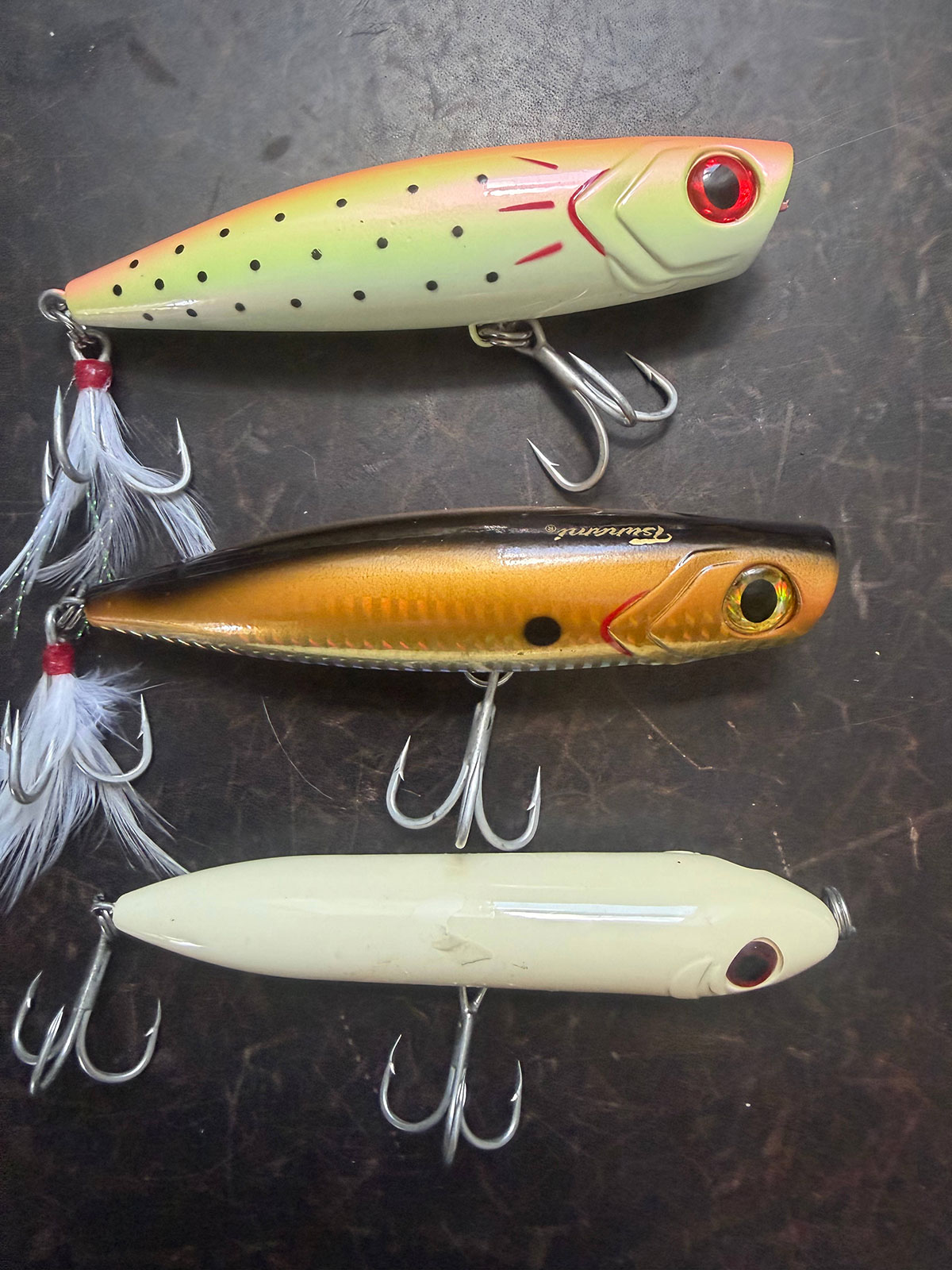
Topwater fishing for bluefish isn’t complicated, but having the right lures helps. Poppers are my go-to as they create noise and surface disturbance. My favorites are Tsunami Tidal Pro Popper, and the Jigging World 5-inch spook. A steady “pop-pop-pause” retrieve mimics a struggling baitfish and often gets immediate attention.
In New Jersey bays, anglers typically rely on a mix of poppers, and walk-the-dog style plugs. Bright colors like white, bunker, yellow, and sliver tend to be my favorite. Retrieve speed matters more than most people think. Too slow, and the lure doesn’t look alive. Too fast, and fish may swipe without connecting. A moderate, steady pace usually works best, with occasional pauses to trigger strikes.
There are days when bluefish will hit anything. Other days, they get picky about size, sound, or action. It pays to carry a few different styles and switch until something clicks.
Location Specific
Location is everything, even with a species as aggressive as bluefish. I like to start with the basics.
Sod banks: Cast parallel and tight to the edge.
Channel edges: Fish where shallow water drops off.
Flats with bait: Especially good areas on a moving tide.
Inlets and current seams: Look to where water funnels through.
| NEW LIMITS |
| For the 2026 season, the bluefish bag limit has increased to five fish for private anglers, kayakers and surfcasters; anglers fishing from a charter/party vessel, “captained by a properly credentialed operator with a valid USCG endorsement and valid Federal party/charter permit,” may keep seven bluefish. |
Bluefish often travel in schools, and those schools tend to be size-specific. If you catch one, there are usually more nearby. Sometimes they’ll give themselves away. You might see surface splashes, nervous bait, or even tails breaking the water. Other times, there’s no visible sign at all. Blind casting can still produce, especially when fish are spread out.
While bluefish can feed at any time, certain conditions improve your odds. I feel that early morning and late evening are consistent producers. Lower light levels make fish more comfortable pushing into shallow water. That said, bluefish are opportunistic and will feed in bright daylight if bait is present.
Tide plays a bigger role. Moving water is key. Incoming and outgoing tides both work, but the best action often happens when current is strongest. That movement pushes bait into predictable areas and gets predators fired up.
Lean & Mean
Spring is prime time for larger fish, often called “gators,” which can reach 10 to 20 pounds. As the season progresses, the average size usually drops, but numbers can increase.
You don’t need heavy offshore gear, but bluefish are tough on tackle. I use a Tsunami SaltX rod 7-foot heavy rated 3/4 – 2 ounces, a spinning setup with a SaltX 3000 reel. I find it’s an ideal set-up to offer great casting distance without sacrificing control in a kayak. I use 30-pound braid for casting performance, paired with 40- to 50-pound fluorocarbon leader.
| THE TOPWATER APPEAL |
| There are plenty of ways to catch bluefish. You can jig them, troll them, cast plugs, or throw metal at them. All methods work, but topwater is different. It’s visual, you see the strike. Sometimes you miss it, sometimes the fish misses the lure, and sometimes everything connects in an explosion of spray and sound.
From a kayak, that moment feels even closer. You hear the pop of the lure, the rush of water behind it, and then the hit. The rod bends, the kayak shifts, and suddenly you’re in the middle of the fight. That’s what keeps people coming back. Find the author, Inshore Outfitters Kayak Charters, at inshoreoutfittersnj.com. – K. Bolen |
One of the most important adjustments I make is switching out treble hooks for a single hook on the tail of the lure. This reduces tangles, makes unhooking safer, and still hooks fish effectively. With that being said, bring pliers, always; bluefish and bare hands are a bad combination!
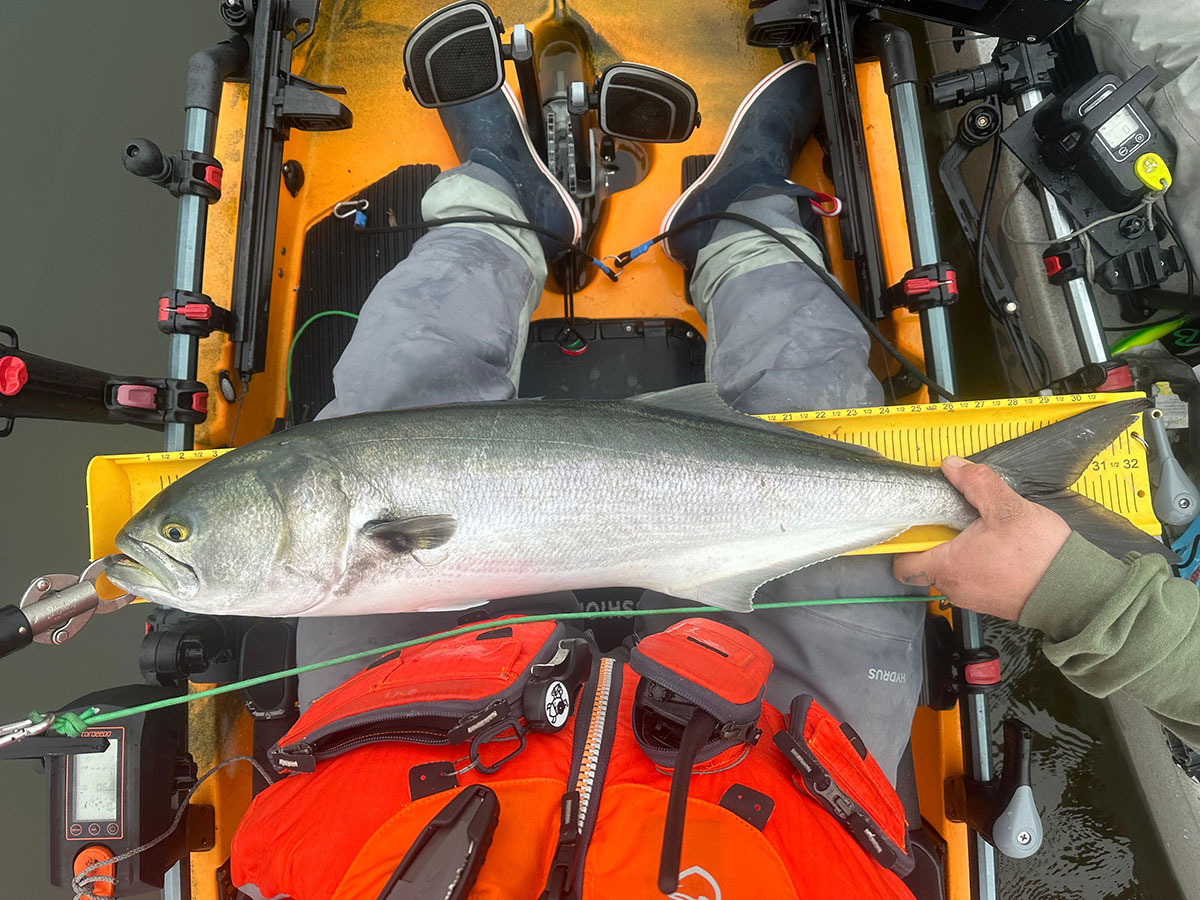
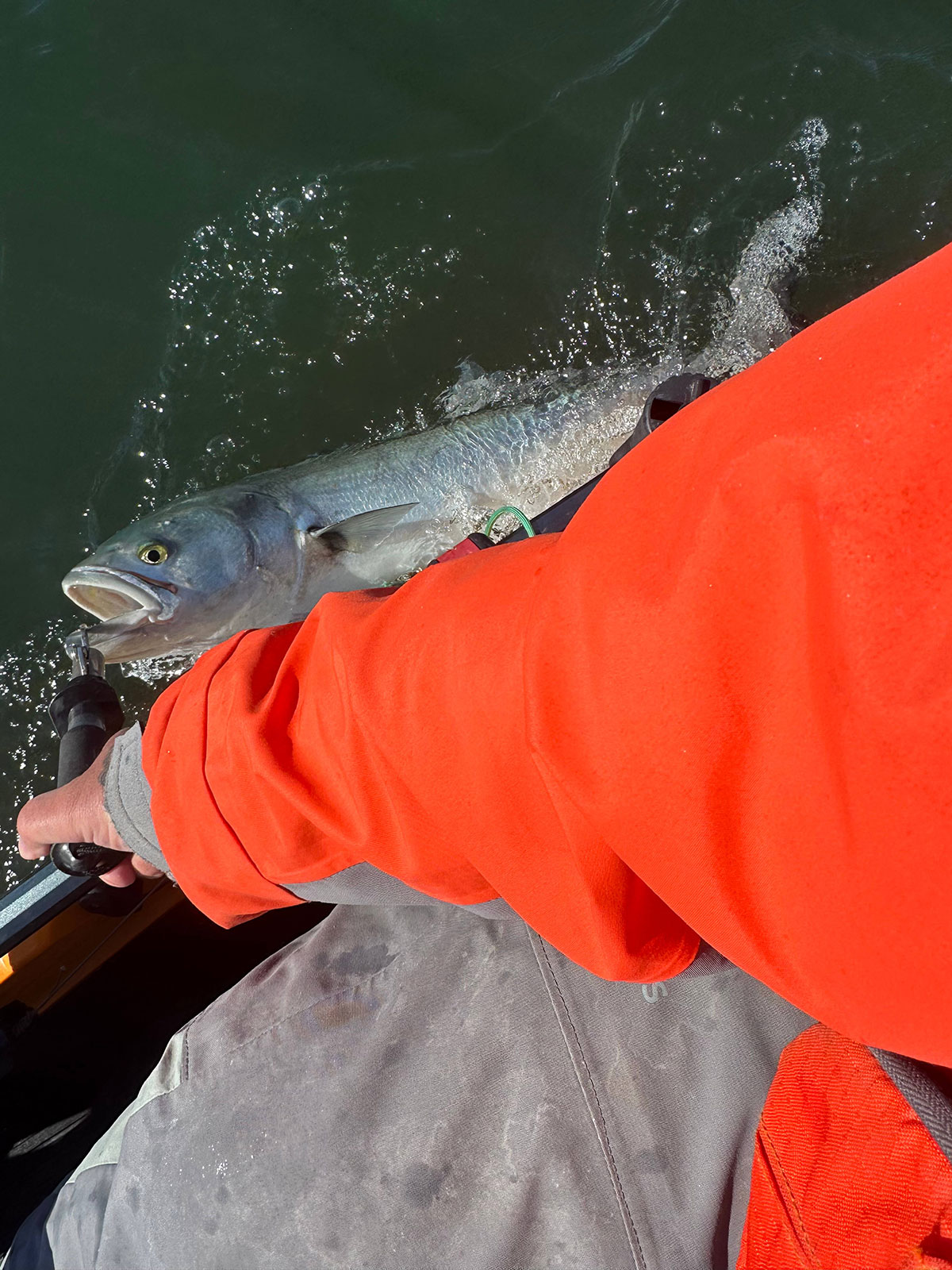
Landing a bluefish in a kayak takes a bit of care. These fish don’t calm down once hooked. They twist, shake, and snap at anything nearby. A lip gripper helps control the fish while keeping your hands away from its teeth. Once secured, use pliers to remove the hook quickly. Many kayak anglers choose not to bring larger bluefish onboard at all. Instead, they unhook them boatside and release them. It’s safer and often easier, especially when fishing alone.
Backwater fishing is heavily influenced by conditions. Wind can either help or hurt. A light chop can improve the bite by breaking up the surface and making fish less wary. Too much wind, though, makes kayak control difficult.
Water clarity also plays a role. Slightly stained water is often ideal for bluefish. It gives them cover while still allowing them to track down a noisy topwater lure. Pay close attention to bait well. If you find it you’re in the right place; even if you don’t see bluefish immediately, they’re likely nearby.
Kayak topwater fishing for bluefish in New Jersey’s backwaters is simple at its core. Find moving water, look for bait, and throw something noisy on the surface.