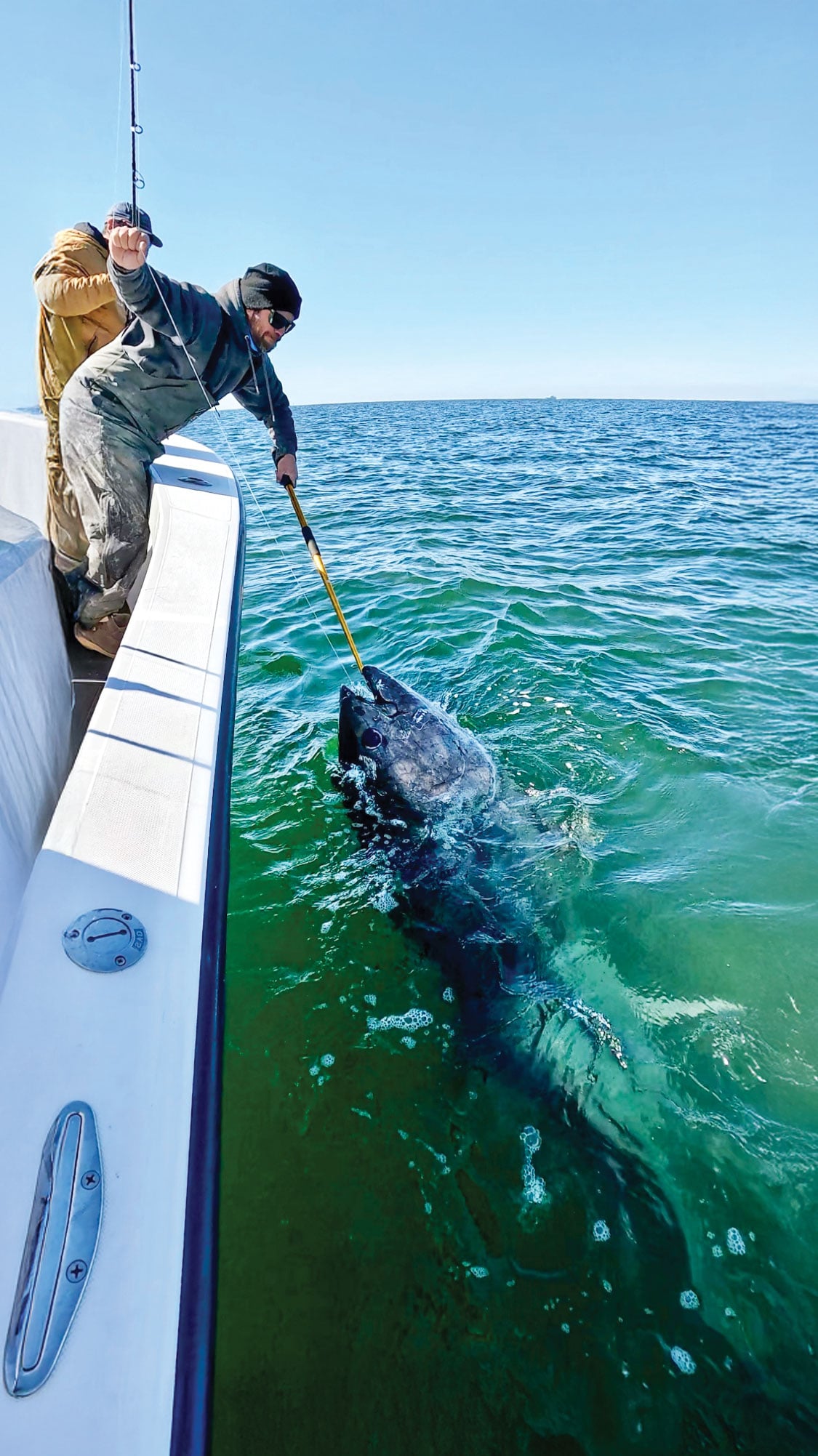
Don’t pack up that offshore gear just yet!
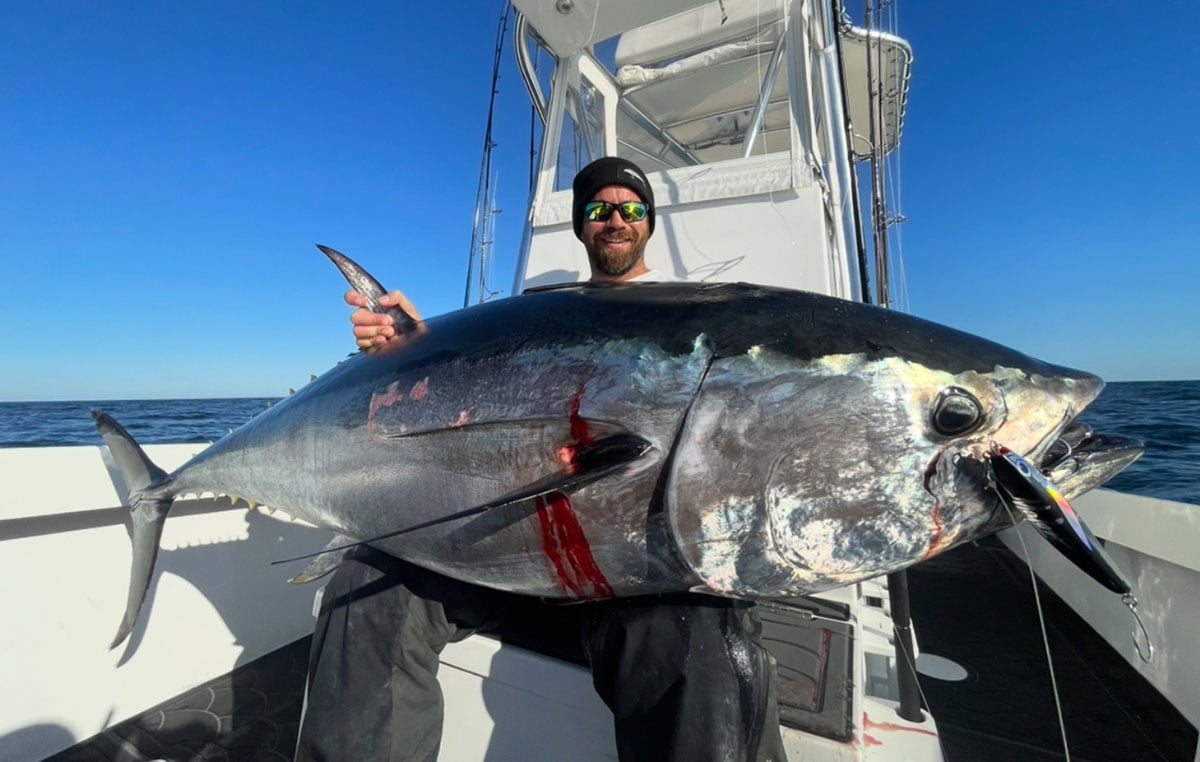
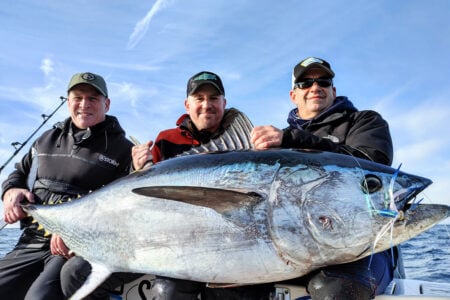
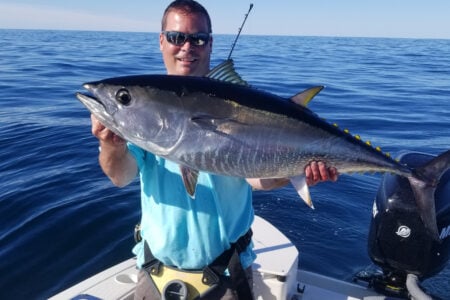
Bluefin tuna are available throughout the month of November from southern New England, down into the NY Bight, along the Jersey Coast and across the Delaware coastal region. And, so long as the recreational season is still open when as you read this, you can actually catch and keep one too.
In theory, the Angling category season for bluefin tuna ends on December 31; practically speaking, the actual closure date depends on when the federal regulators determine that quotas have been used up. It’s worth noting that the International Commission for the Conservation of Atlantic Tunas (ICCAT) convenes in Portugal from November 16-23; fingers crossed that our U.S. delegates can shake a few pounds of quota loose for the 2027 season!
Unlike other members of the tuna clan, bluefin are blessed with a unique internal physiology that can tolerate a wider range of external sea temps compared to their cousins. A bluefin’s normal comfort zone is anywhere from 50 to 72 degrees, but they have been observed feeding and migrating in waters in the mid-to-high 40s. Their unique physiology allows them to exploit rich, cold northern feeding grounds like the Gulf of Maine and the North Atlantic where other tropical tunas cannot survive.
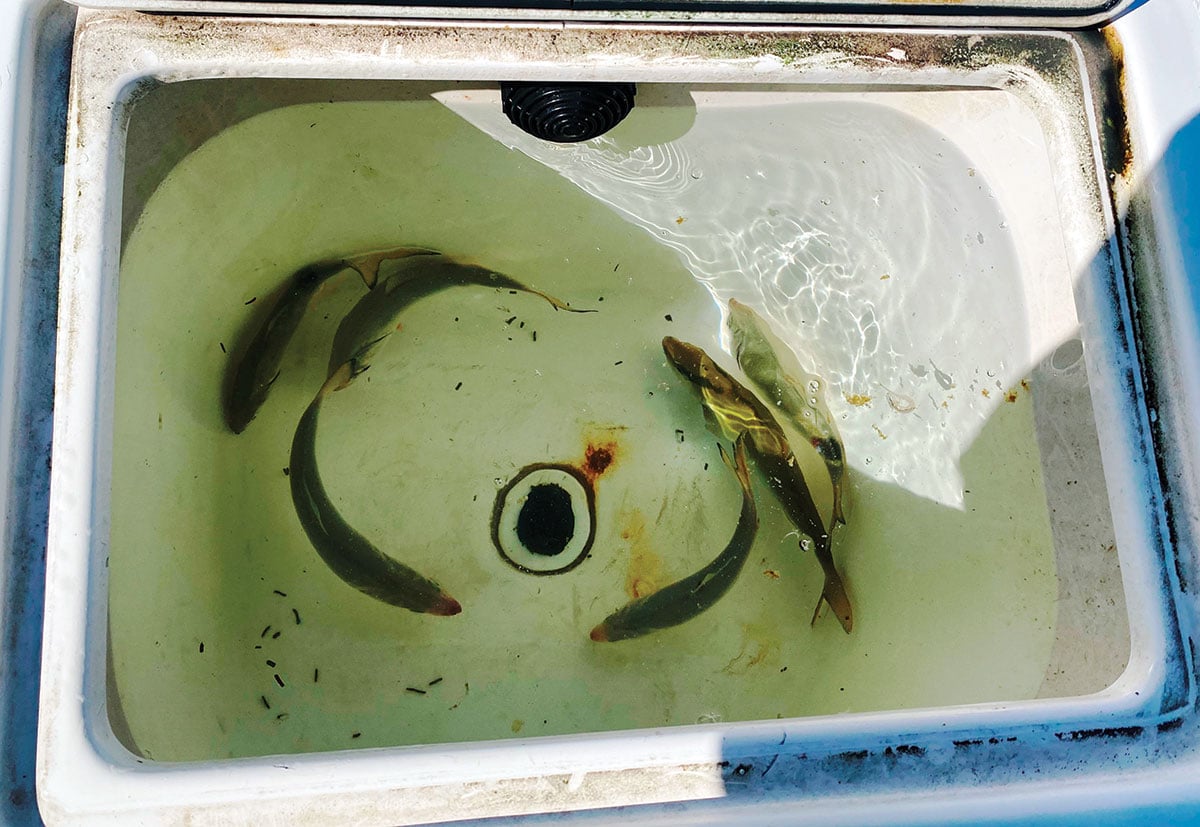
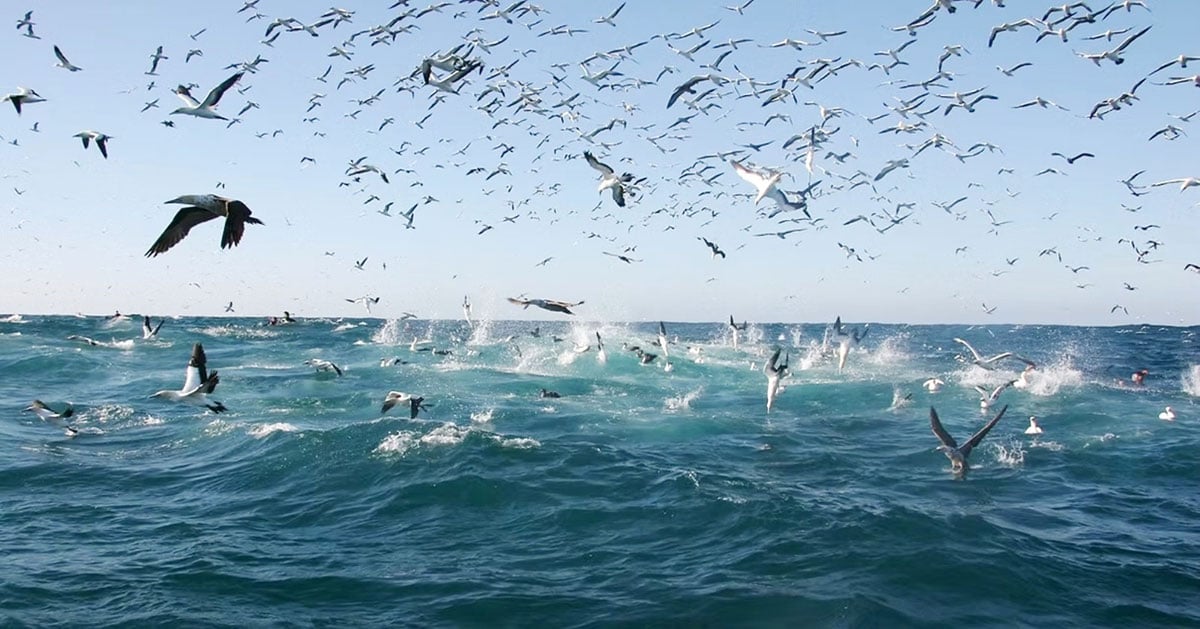
During late fall and early winter, look for circling and diving gulls, terns, shearwaters and gannets, typically dead giveaways that something special is happening down below. Don’t discount small groups of these winged creatures hanging out in one spot or another; treat each incident as a potential opportunity. Keep in mind that they have an elevated “bird’s eye view” of what’s happening under the surface. Some sea bird gatherings can be a real flight convention, with gannets and shearwaters performing their deep-diving maneuvers, and coastal gulls and terns sweeping low over the water to pick off terrified baitfish that are being attacked from below.
It’s best to approach this scene from upwind, making a 40- to 50-yard casts downwind into the fringes of the surface boils, putting some energy into the retrieve. The main problem with this approach is you’re typically not alone out there, so expect that some yahoo will eventually race into this hot bite at full throttle, cutting off whatever lines you may have in the water while spooking the fish. Sometimes it’s better to work the fringes of the fleet, finding your own flock of diving birds while hoping that the aforementioned individuals don’t see what you’re doing with their image-stabilized binoculars and whatever other e-toys they can jam onto their boats.
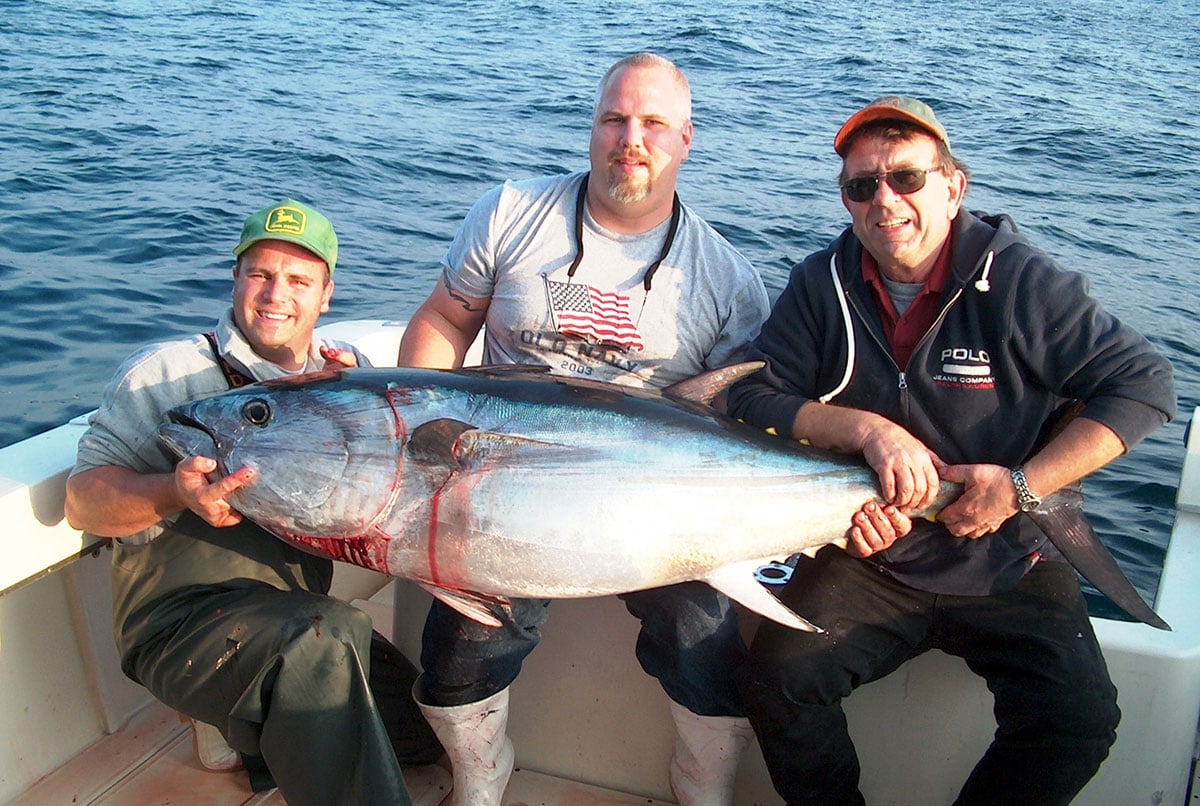
Proven BFT Techniques
When working the birds, use your echo sounder to determine the depth, size and concentration of the fish you seek. Not all of them will be hovering over pods of migrating bluefin tuna, as you may also find stripers, bluefish, false albacore and green bonito in the mix. It’s important that you first determine the identity of the predators before breaking out the heavy tackle and jumbo lures.
When approaching working sea birds, I’ll usually flip my fishfinder into dual-screen mode, using both a super-wide angle (83 kHz/53-degree cone angle) and more moderate angle (200 kHz/22-degree cone angle) transducers on my Simrad GO-12’s MFD. I can best determine where the tuna are located with the wide angle transducer, positioning my boat closer to the school with the narrow angle TD for more precise lure presentations, especially if the fish are down deep over a concentrated bait ball located at mid-depth or on the bottom.
November into December bluefin are often referred to as ghosts, offering a steady dose of “now you see them and now you don’t.” They may pop up for 30 seconds, then disappear, only to reappear 300 to 400 yards down-sea, minutes later. This is where the term “run and gun” was born. This technique requires that you speed your way to the spot where the birds are circling and/or diving, cut the engines roughly 75 yards out, and have your anglers up forward to get a few casts into the surface frenzy; rinse and repeat, a lot!
Look for some of the YouTube videos from Tuna Junkie and Sea Money; their videos are entertaining, offer good production quality, and they can also show you what to do, and oftentimes what not to do, when chasing coastal ghosts. Each boat’s layout allows a trio of anglers to line up in the bow on the starboard side, and in a well-choreographed fashion, casting into the melee one at a time and then sliding down the port side while retrieving the lure to let the next angler step up and do the same, until someone hooks up.
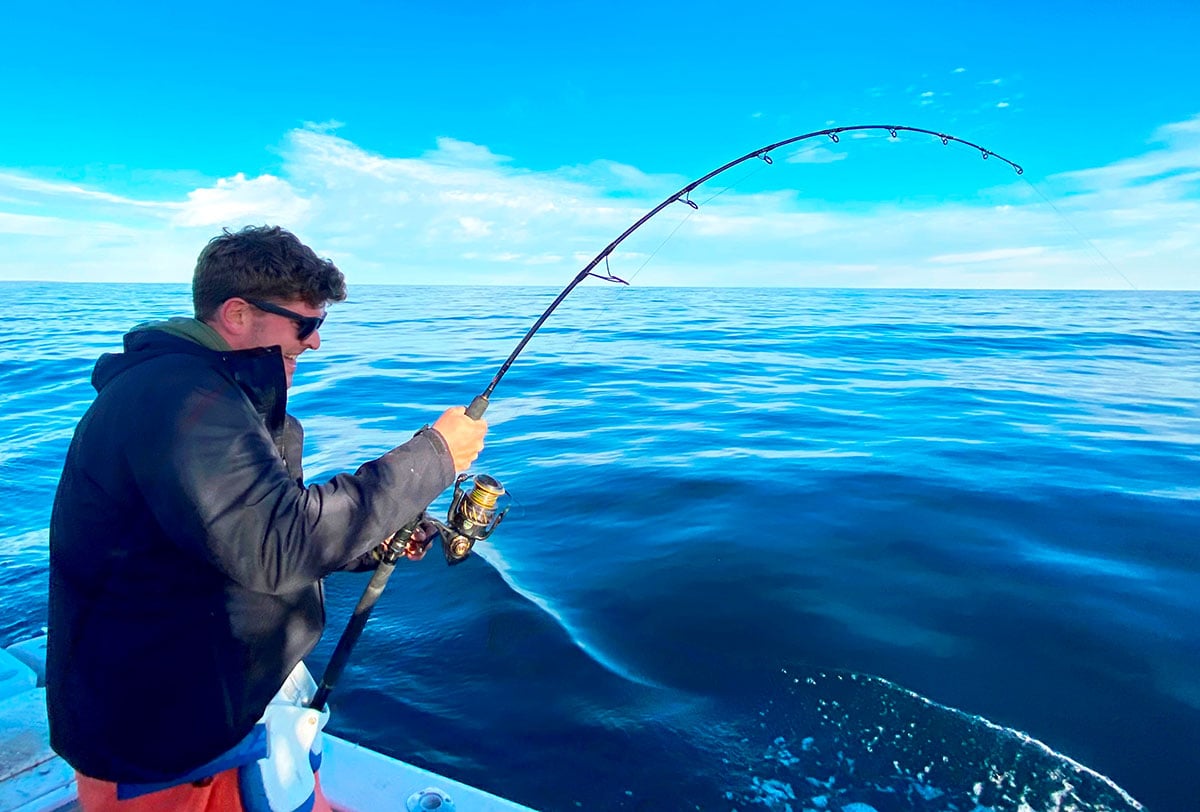
Lures That Work
If the tuna are all over the water column, the one lure that does it all are leadheaded soft baits like the RonZ, Savage sand eel jigs, Hogy Harness jigs and the NLBN heads in varied tail types like the usual smooth or fork tail 8- to 10-inch variety and the shorter/stubbier paddletails. Colors will vary on these, but it’s hard to beat white or pink. The NLBN heads are a big fan favorite, with new heavier sizes (4- and 5-ounce) and a unique connection system for the soft bait tail that twists around a corkscrew-like metal attachment. When casting NLBN leadheaded soft baits repeatedly during the course of the day, the replaceable rubber tails stay locked in solid and the strong 4X hooks will hold up to the panicked runs of a 200-pound-plus tuna. Depending on the depth of your target, let the leadhead sink to the appropriate strike zone and make things happen in a variety of retrieves, from a straight reel, pump and reel, sweep and reel, or even twitching in place.
If it’s a surface or slightly sub-surface feed, poppers like the Madd Mantis, Hogy Charter Grade poppers and chuggers, Yo-Zuri Mag Poppers and Bull Pops, Shimano Ocea Bomb Dips and others will get the job done. Again, white and pink are great colors for surface popping, but yellow and black also have their moments, depending on the type of sun or cloud cover. Sinking stickbaits like the Yo-Zuri Hydro Twitchbait, Hogy Slider, Shimano HD Orca Flash-Boost, and Nomad Riptide will get strikes when the tuna are 5 to 10 feet below the surface and not rising aggressively for the poppers. Try to match the size and color of the forage to get the most convincing strikes.
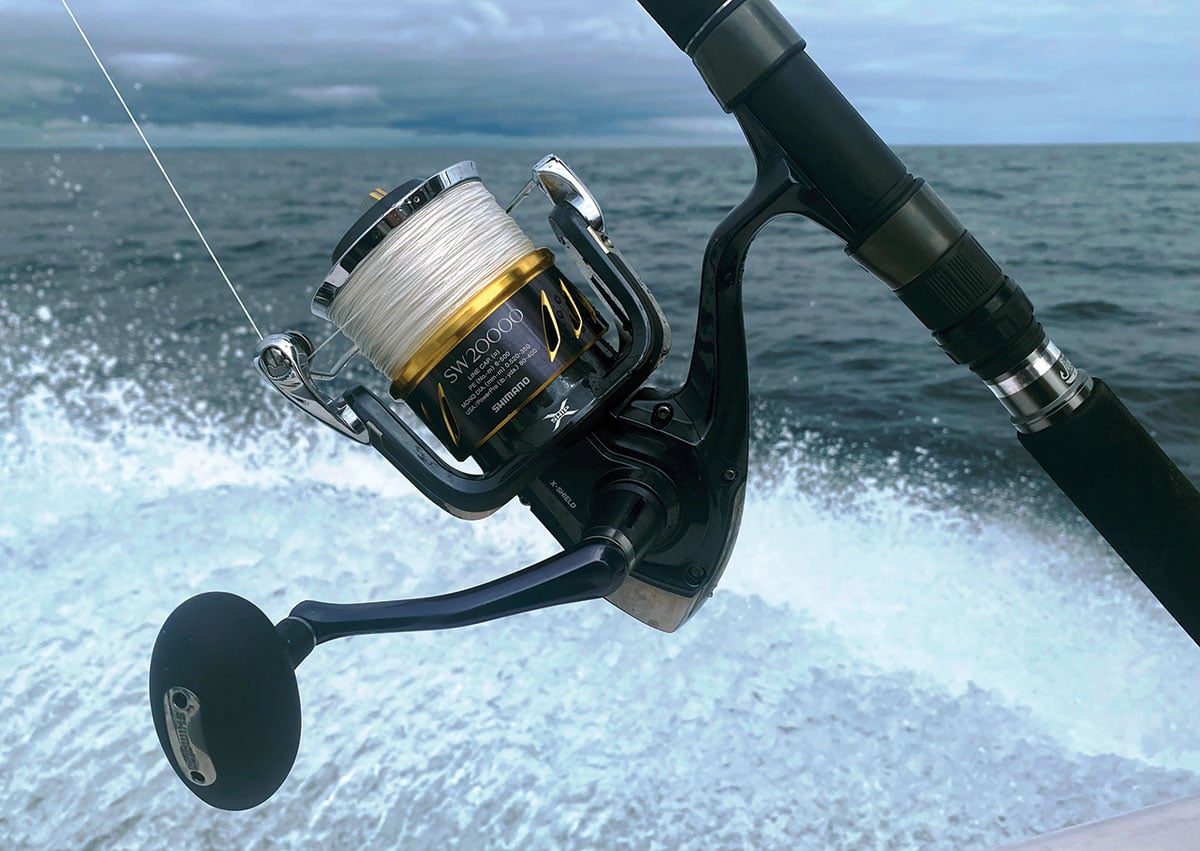
Whatever popper or stickbait you prefer for November tuna, I’d recommend that you replace the standard treble hooks with in-line hooks from Gamakatsu, BKK, VMC, Tsunami SaltX, or whoever you trust. Initial hookups are more solid with a larger, single hook, stay buttoned up during a long battle with high drag levels, plus they’re less dangerous to the crew when handling fish boatside, especially if you’re planning to release it.
While casting with heavy-duty spinning tackle is typically the primary focus of the November bluefin game, other techniques might also be successful. Live baiting and chunk baits are two alternative methods that come to mind. If the fish are constantly on the move, using bait is probably the wrong choice. However, if tuna take up temporary residence over a pod of sand eels, mullet or bunker, the bait route might just ring the dinner bell. Certainly, working live baits like bunker or bluefish on the known migratory 10, 15 and 20-fathom highways could put you into a nice fish, but it will be a long time between bites if you’re in the wrong spot or they’re not keyed into your offering.
Jigging is yet another technique that will work, especially in deeper 90- to 120-feet of water, with Hogy metal sand eel jigs, Chatter Streaker, UVT sand eel jigs, Nomad Streaker, Jigging World Maguro jigs, Shimano Shimmerfall and others. The retrieve styles will vary from speed squidding, yo-yoing, a slow rise and fall, snap jigging, etc.
Close To Home
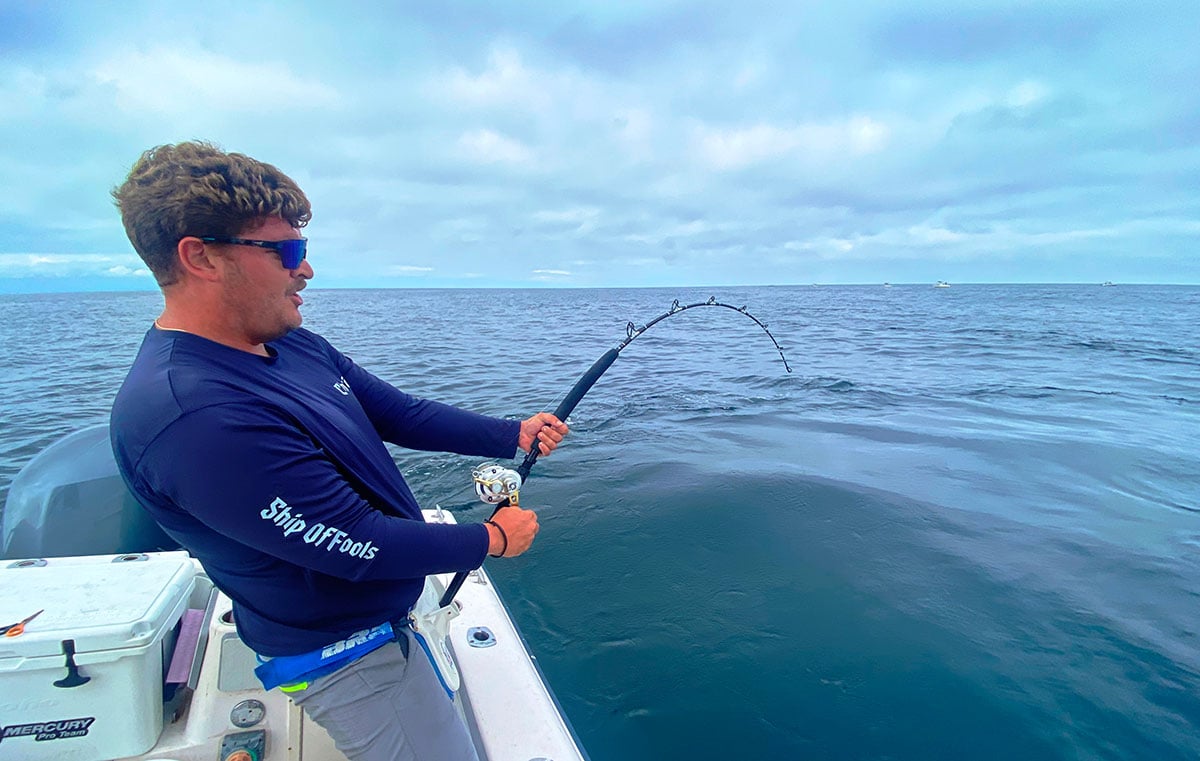
One of the most unique aspects of the November fishery for wolf packs of migrating fall bluefin is their proximity to shore. I have hooked 200-pound fish on flutter jigs meant for stripers in 45-feet of water, less than a mile off the beach. If they are raiding bunker schools, big bluefin can be in water as shallow as 20 to 30 feet, or even less, sometimes just off the beach. If I had to choose a zone to concentrate on for any given day without prior intel, the 60- to 90-foot depths would certainly be number one on my list of go-to places. Better yet, I’d buddy up with other boats and cover depths ranging from 45 to 90 feet, which puts most of those vessels within easy coastal cell phone tower range to keep unwanted eavesdropping to a minimum, compared to VHF chatter that all can hear.
My preferred tackle for the November bluefin fishery has evolved. Last year’s third week of November trip convinced me I had the wrong gear. Coming back after limiting out on a sea bass wreck trip in 30 fathoms, we hit a wreck in 100-feet of water just 3 miles off the beach for some tautog action. As we were about to set up the trolling motor, we noticed a frenetic flock of gulls and gannets working a surface flurry nearby and went over to investigate. When we saw the first 300-pound bluefin porpoise out of the water chasing a pod of terrified baitfish, we were prepared. I grabbed my Penn Slammer IV 6500 DX/Carnage III outfit spooled with 65-pound braid and flung it right into the splashes, working my Yo-Zuri Mag Popper with no results.
As cast after cast suffered a similar fate, another angler – seeing my popper totally ignored – attached an 8-inch white RonZ sand eel jig to his Penn 7500 Authority spooled with 65-pound braid with a 60-pound fluoro leader and hooked up on the first cast. We fought that fish for a good 20 minutes as it ripped off 200-yards of line in a blink and we maneuvered the boat to get some of it back on the spool. As we were starting to make progress, the bluefin suddenly charged the boat, stopped on a dime and then speed away at full throttle, snapping the leader with its tail on its way south. Lesson learned; we were set up for 50- to 100-pound fish and ran into the school of 300-pounders.
This season, my tackle choices for the November bluefin run are far simpler. I bring two spinning outfits, the first is a totally system matched Shimano Stella 18000 reel, spooled with 325 yards of 17+ element Ocea Izanas PE8 multi-color braid line with a 100-pound fluoro leader, mated to a two-piece, super duty Ocea Bluefin Tuna S73XXH jigger. This is some serious tackle and I have a belt, harness and spin clips to make the fight on a large fish more efficient.
My other outfit is a Penn Authority 8500, spooled with 375 yards of 80-pound braid, with a 20-foot topshot of 100-pound fluoro matched to a Penn Carnage III CARJGIII80200S60 stick. These both will make short work of a 50- to 75-pound fish, but will give me a fighting chance if those 200- to 300-pounders show up again. My third outfit is a Shimano Talica 20, spooled with 500 yards of 80-pound braid, which also sports a 100-pound fluoro topshot, attached to a Shimano Tallus TLC59XHRSBLA rod with a slick-butt and roller tip and stripper guides. If we are jigging or bait fishing, this outfit gets the nod and the two-speed gearbox is infinitely better than the “yank and crank” method of the spinning reels.
If the weather lets you get out, it can be a total blast, a great way to end the season. Look for the birds, chase down the schools, make a few accurate casts and go get ‘em!