Attention to detail can help stack the odds in your favor of personal best.
It’s hard to believe that another summer has passed.
Transition from our popular summertime species is in full swing, and other fish such as sea bass, stripers, and of course my favorite, blackfish will now be on deck for many anglers. Though a one-fish bag limit (15”) has been in effect since August 1, the increase to five fish as of November 16 has many tog junkies going over tackle and tips for the fall blackfish season.
One “common sense” tip that I think is of utmost importance is knot selection. In my opinion, this is overlooked by many even though it represents your connection to what could be a personal best, or PB fish! Take the time to properly tie your knot(s) of choice. There are multiple resources available for you, such as The Fisherman Magazine’s online instructions for Fishing Knots (www.thefisherman.com/fishing-knots) available under the TOPICS tab on the homepage.
Though it is not necessary, I replace my braid every year. If you decide to keep the line from last year on your reels, check its condition. I have found frayed line 40 or 50 feet up from the end of my line. If warranted, replacing worn braid is another way of putting the odds in your favor of landing that PB. Also, your mono or fluorocarbon top shot takes a beating in the rough bottom; when in doubt, change it out!
Something mostly overlooked is the condition of your rod guides. One small crack, or chip in any of the guides, and it will have a negative impact on your line. One simple way to check if your guides are good is to take a Q-Tip and run around the inside of all the guides. If any of the cotton strands remain inside the ring, this may indicate you have a cracked or chipped insert.
Reel Time Advice
Hopefully you sent any of your tog reels in for any required cleaning or service before the season is in full swing. That’s true for the fall striper run of course, but when it comes to targeting tautog there’s absolutely no room for faulty drags or reels that are not 100%. As I’ve written before in The Fisherman, I can’t stress enough the importance of the right gear for doing battle with these fish. You have plenty of options with quality gear available from many different manufacturers including Daiwa, Shimano, and Tsunami, to name a few. My personal favorite jig rod is the Daiwa Blackline 7-foot ML spinning rod.
In terms of reels, top quality spinning reels in the 4000 size range will be fine for jig fishing and will hold the proper amount of line when fishing deeper water. If purchasing new, do your research, and select gear that suits your style of fishing. If your budget allows, a custom rod is a good way to get exactly what you are looking for. There are some local builders that do incredible work and have different blanks to choose from. You may use different setups for fishing in New Jersey and Delaware than in other locations, but of course this is all dependent on depth, time of year, and water temperature.
I learned years ago (the hard way), that sharp hooks, whether fishing a jig or a rig simply catches more fish. Getting hung up on bottom structure is part of the toggin’ game, so always check the point of your hook to ensure it is not bent over or has lost its intended edge. Quality hooks from BKK, Mustad, Owner and VMC will work nicely in the appropriate size. And
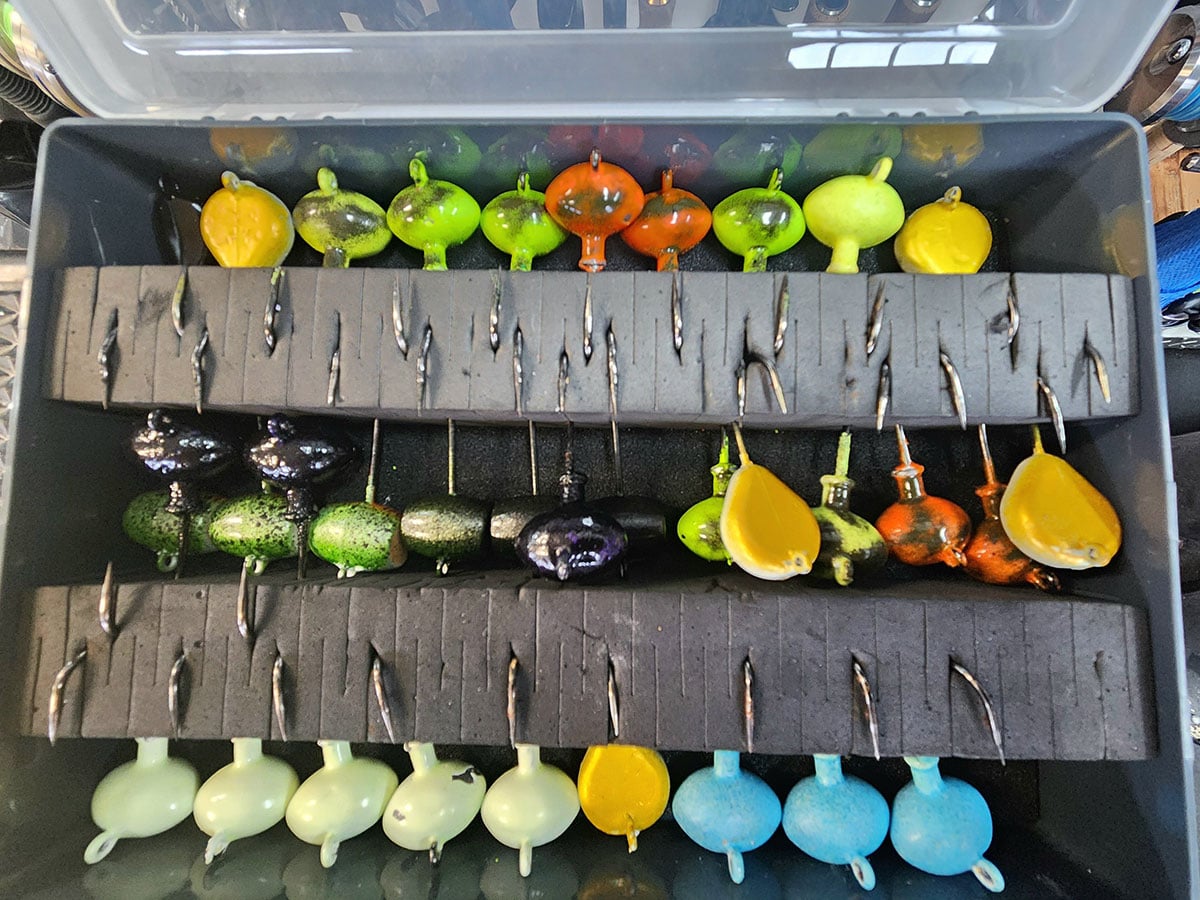
Regarding jigs, there are many jig makers out there who make great products. Most use quality hooks, which is a must. All hooks will eventually dull a bit, considering the type of structure we fish in. Always keep an eye on the sharpness, or the lack thereof, of the jig you are fishing. The same applies here. Tie on a new jig if you believe the point has been compromised. As I stated in the beginning of this article, these are common sense tips, implementing them on the water may be a different story.
Tackling Technique
If you’ve been fishing for fluke and sea bass throughout this summer season, you are already well ahead of the game. Some of the same snags, wrecks, and rocky bottom where you caught your summer flatties will also hold blackfish. Just keep in mind that water temperature is a driving factor regarding where the fish may be, and their level of activity. How mild or severe the fall or winter weather will affect the water temperature greatly.
Modern charts and electronics provide good detail of potential areas that will produce fish most any time of year. It takes some time, generally through time on the water, to “read” where the sweet spots are on any given piece of structure. I have found this to be true on a few of the wrecks &and reefs I fish. A difference of 10 feet on any piece of bottom can make a big difference.
Whether you’re fishing a jig or rig, don’t be afraid to cast around. There are times when doing this, you may find that “magical” rock or ledge that will give up a few nice tog. Rarely will you have steady action right away. “Building” the bite has been the norm on most tog outings. The scent in the water, the small pieces of your bait that are getting dislodged from the smaller fish pecking at your crab that mix with the current will cause the larger tog to come investigate the source. Generally, when the larger fish finds your bait, the small fish get” pushed “out of the way, so it may take sacrificing a few crabs to the tog gods before you get some steadier action.
Current and tide of course will play a big role in the positioning of the fish in relation to the bottom features they live in. A hard current may have the blackfish positioned tighter to the structure, or deeper into the wreck. Always pay attention to other lines in the water, and don’t cast where you could tangle multiple anglers. It will take some time for you to record the productive areas you have found and store them for future fishing trips assuming you are fishing from a private boat.
As the water cools, some of these fish will move to deeper water, where they may spend the winter months. Adjust your rod and reel selections for the depth and structure you plan on fishing on any given outing. New Jersey is blessed to have such a wide array of bottom structures available to fish. From the man-made reef sites and wrecks sunk for sportfishing, to the natural rocky bottom, blackfish can be found in all of them, even though weather and ocean conditions may limit your available locations to fish.
Baits & Rigs
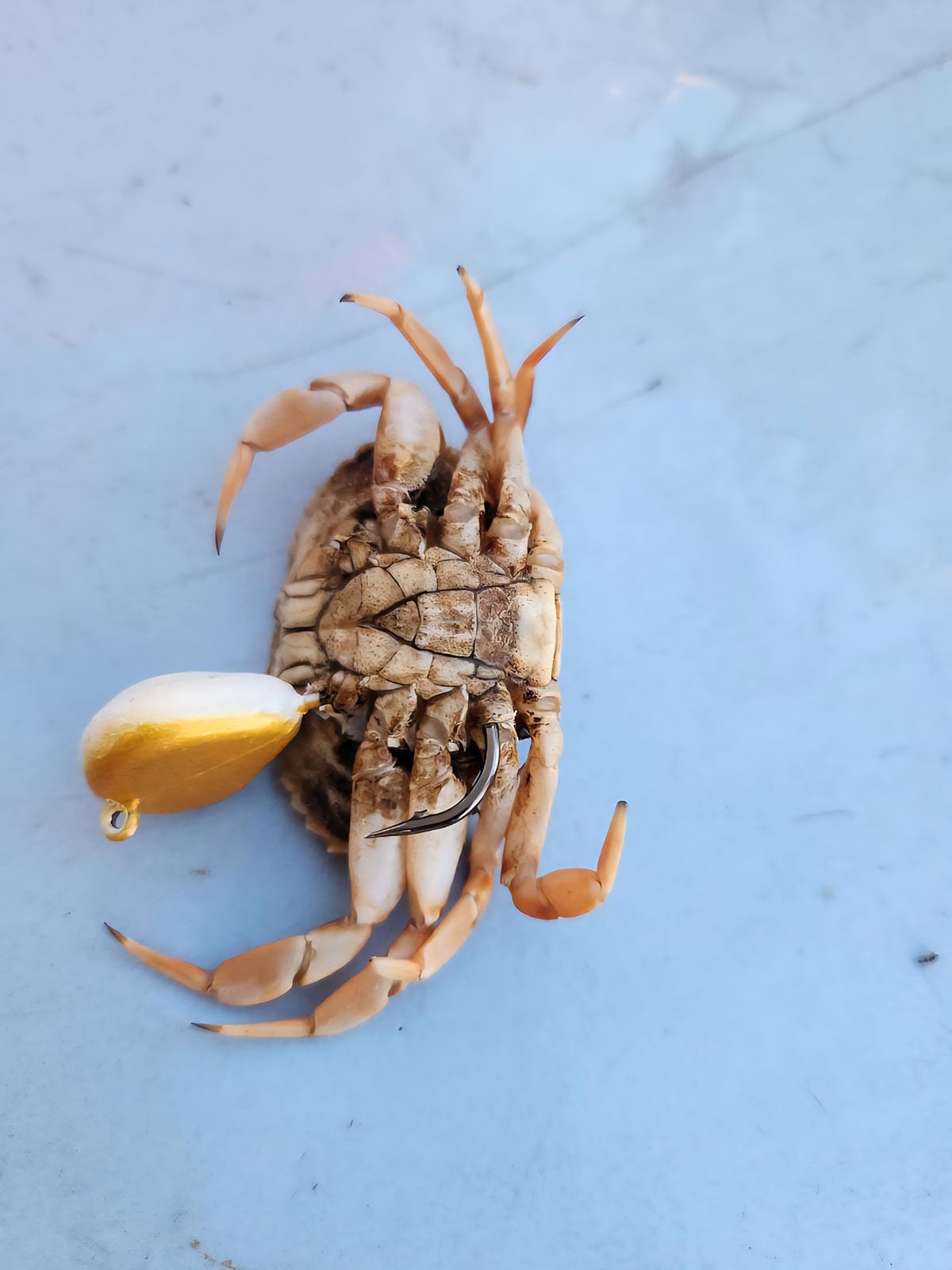
So, you have done your homework, selected a few locations to fish for the day, next up is bait selection, and which technique suits the conditions and time of year. Green crabs are the most readily available bait up and down the coast. Most all local tackle shops have them, some as early as August or beginning in September. There are also sand fleas, or Asian crabs. You may have to walk along the beach and get your own if these are your baits of choice. All will work, but you can’t go wrong with the greens. Legs on or off, half crab or whole, top shell on or off. You must try it all, until you find what the fish prefer. On any given day, making these simple adjustments to your bait can make a big difference in your success rate.
| SWING BATTER! |
| Man, if I had a dollar for every time I’ve swung on the “wrong” bite, I would be rich! When to swing, or more importantly, when not to has been debated for years in the tautog fishery. There will be days when there is no doubt it’s time to set the hook; Those, rip the rod out of your hand bites we pray for! Then, the complete opposite, the peck, peck, peck bites, or the occasional “no bite” where the fish simply swims off with your bait and you never felt anything. Whichever type of bite you get, watch your line! You may see the fish has your bait swimming up current and it’s time to set the hook.
Sometimes getting “cleaned out” might give you an indication on how the bite may be for any given day. Conditions can change quickly, and as such, so can the aggressiveness of the fish. Here again, experience will help guide you when it’s the right time to set the hook. The bites can be much different on a jig than a traditional rig. In shallower water with a jig it’s common for the fish to eat the bait and swim off, hence why you should become a line watcher. -RB |
As the season progresses, and the water cools further, white crabs, commonly called “white leggers” are the bait most seasoned tog fisherman prefer. It’s a bit harder to find these crabs during the peak of the season but calling ahead to your local tackle shop to check availability or even reserve a bushel for yourself is a smart move. Same as the green crabs, experiment rigging these different ways, and the fish will tell you how they like your offerings. There are certainly other baits that will catch tog, and every fisherman has his or her favorite.
Keep your rigs simple, with little or no hardware. I’ve have seen some “interesting” rig setups over the years. If you have your knots down, you won’t need snap swivels, and additional hardware. There are multiple styles of rigs out there, such as the snafu, slider, and of course the single hook. Whichever you choose, ensure they are tied with quality monofilament or fluorocarbon. The less potential failure points will increase your odds while battling a larger fish.
I have seen some guys use a snap swivel to attach their jig to the leader. Again, if this is something that works for you, great. But some advice – I like to tie all my rigs at home, so as not to waste fishing time while on the boat. Hooks in 3/0 to 5/0 size and 40- to 60-pound line will get the job done. Just remember, losing rigs in the habitat where these fish live is part of the game.
Social media, love it or hate it, has had both positive and negative effects on the fishing world. Following reports from your favorite charter or party boat may give you some clues regarding how the fish are biting. This is also a good way to check for potential openings on particular boat on any given day. Of course, having a group of like-minded tog fanatics sharing information doesn’t hurt either! I have been extremely fortunate to fish with some of the best captains in the business and have shared the rail with some truly skilled tog fisherman.
I ask that you always practice conservation of this precious resource when possible. Minimize handling of the fish if you plan on releasing it. A quick picture, and back in the water.