Surfcasters who only come out at night are missing more than half the run!
It’s been a recurring pattern for the last several years. The fall run of striped bass in southern New England has been mainly a daytime event. Oh, there is still some good fishing to be had for nocturnal surfcasters, but the daytime chasers have far outscored the nighttime guys as the stripers have gone on a different feeding pattern.
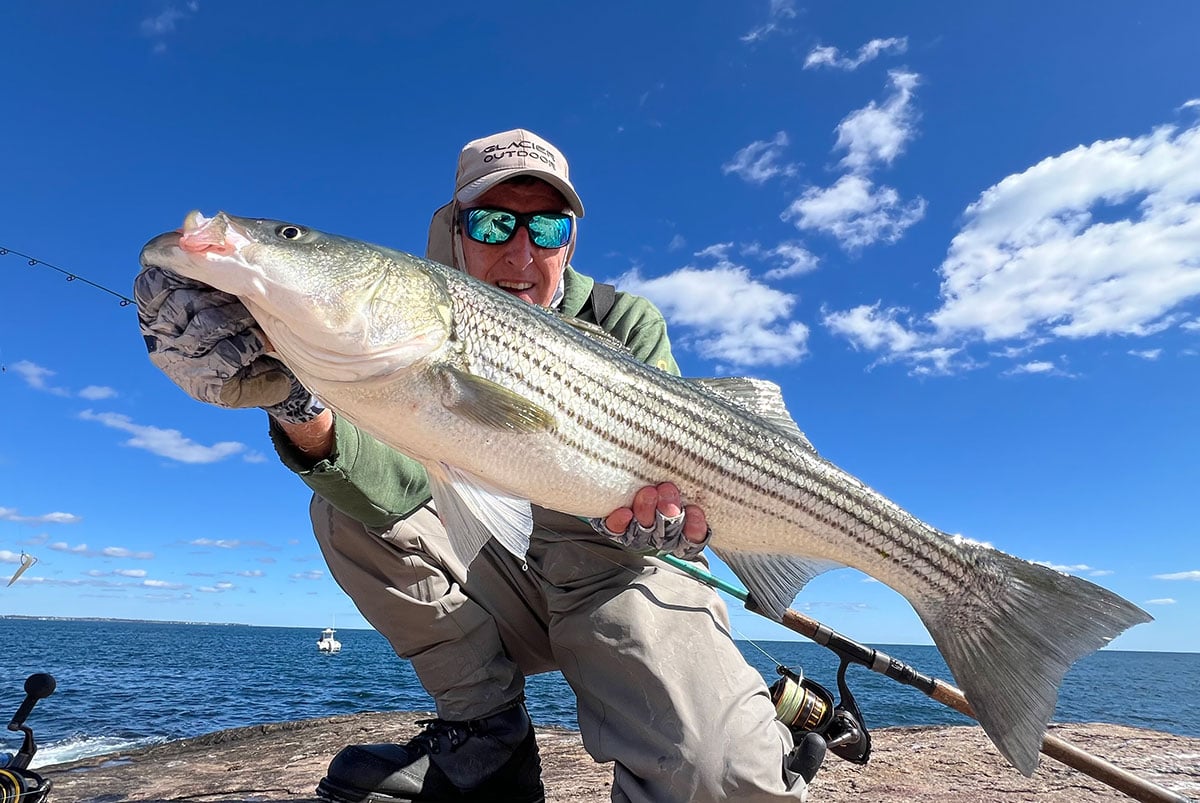
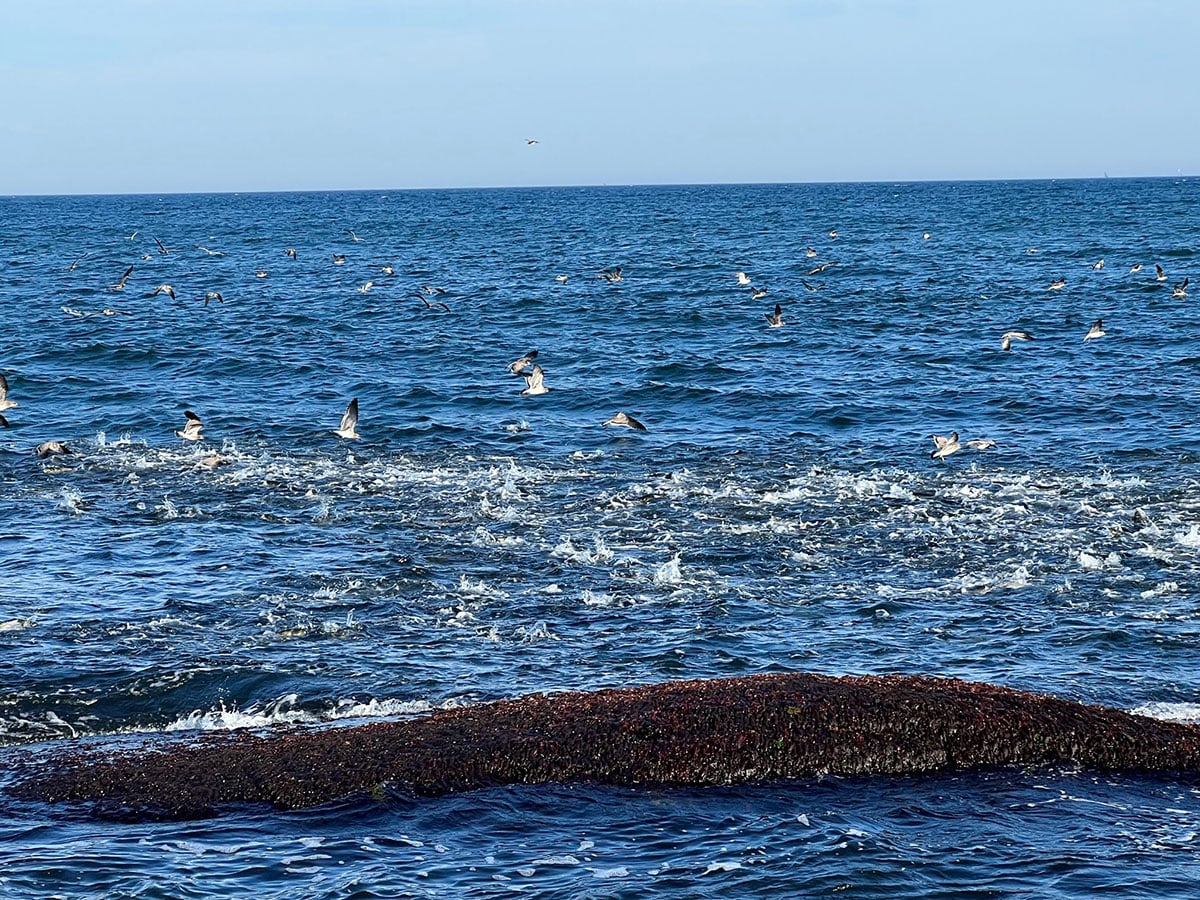
Last year I hit a pattern of blitz after blitz in the middle of the daytime here in Rhode Island. It was over a month of steady action. On some of these days I fished under bluebird skies and in dead calm water, generally poor conditions for striper fishing. Yet, on many of those days I could just look in the water and see schools of stripers in the 28- to 40-inch range cruising below acres of bay anchovies. At other times it was a wild scene of flocks of birds diving and stripers breaking as far as I could see. At the same time, I had friends who fished at night in these same locations and they would often find nothing in the dark. Most days the action died with the setting sun.
Blame In On The Rain (Bait)
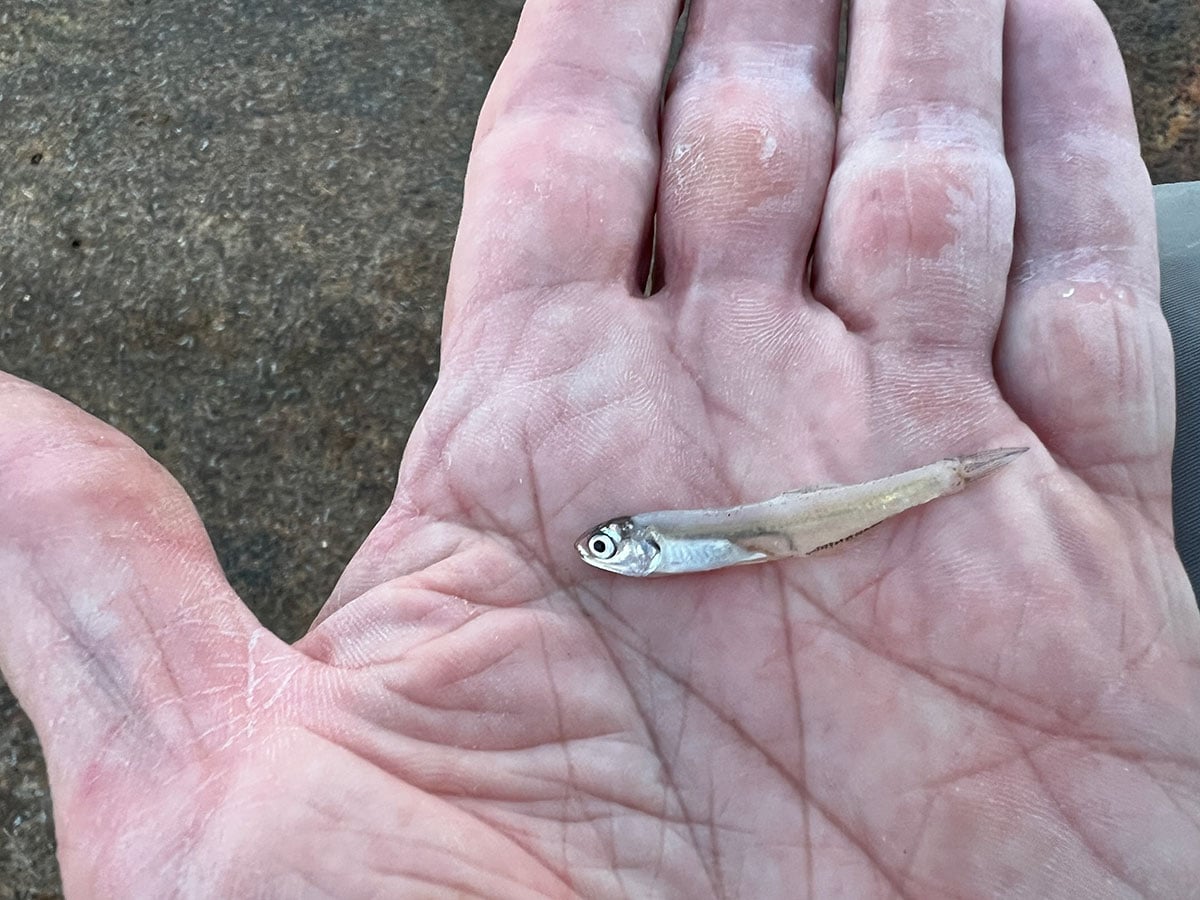
I believe it was the bait that was responsible for setting off these daytime blitzes. Times are changing, and we no longer see a lot of big bait around. Gone are the days of schools of adult menhaden, mackerel and ocean herring. Rather, the fall is now dominated by massive schools of small bay anchovies hitting the shore through the fall and well into November, in staggering numbers. This bait sets the fall striper migration in motion. Bay anchovies are small, slender translucent silvery baitfish that average 1 to 3 inches long. Many fishermen refer to them as micro bait. Occasionally, we also see small peanut bunker but the peanuts were less abundant along the oceanfront last year than in previous years.
The appearance of dense schools of bay anchovies seem to follow a daytime pattern. Huge schools will often emerge in late morning and their numbers often swell throughout the day. Their presence is often given away by massive dark patches of water slowly moving along the shore. Most of the time birds are hitting them from above while stripers are erupting from below. In some places this was an all-day event last fall. However, when late afternoon came along, the action tapered off, and by sunset it was all done. At sunset I often saw massive schools of bait heading way offshore into deeper water where I believe the bait settled for the night.
While you often see a lot of activity when this micro bait is around, catching is a different story. Blitzes of stripers on this small bait often left a lot of frustrated anglers. These daytime stripers that are keying on small bait can be mighty picky, and if often takes a finesse approach when trying to imitate the small bait in order to catch the stripers. Most fishermen see large stripers slurping up bait and their natural reaction is to go with a big plug to catch a big fish. A lot of the “big plug guys” got very frustrated last year as their offerings rarely got a look.
A Finesse Soufflé
I have a number of options in my “finesse bag of tricks” that I turn to when big stripers are on small bait. Trying to imitate those small bay anchovies is the key and small offerings that work usually will get you the most fish.
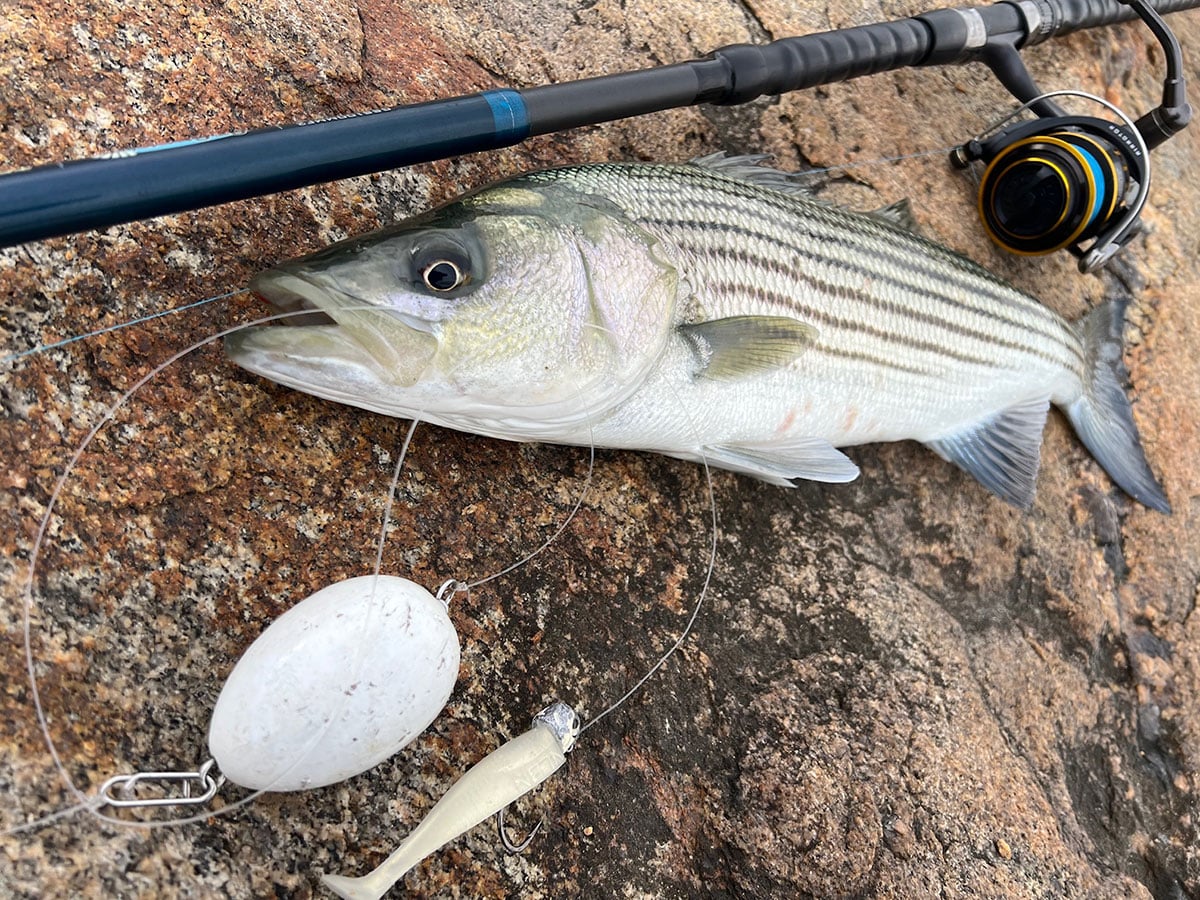
First off, I use a lot of wooden egg float combinations. At times, I will try a float and fly, often a killer when the anchovies are small like the one to two inch variety. I like to use a number of different colored Deceiver flies trailing off my float. Tie off the wooden egg float with about 2-1/2 feet of mono or fluoro. Last year I went with Varivas Shore Record Shock Leader fluoro in 30-pound test. I think the fluoro made a difference in calm, clear water. I had good luck with pink or anchovy Deceiver patterns built on size 3/0 hooks tied direct to the fluoro. This setup is simply cast out and reeled in slowly. Wave action will bring the fly to life.
You can take this egg float idea and branch out to other options. Sometimes I like to use a small, homemade bucktail jig (half-ounce) at the end of my float rig. Spice up the jig with 3-inch plastic curly tails. At other times, I might use a small paddletail such as a 3-inch NLBN paddle tail mounted on a half-ounce jighead. The float and jig seems to have the most success in rougher water. All these float and jig combos also have the added advantage of giving you a long cast if needed.
Slender Plastics
| HARD MERCHANDISE |
| If you are into hard plugs, try a Rebel Jumpin’ Minnow in the bone color. My son Jon often uses this plug when the stripers are feeding on bay anchovies. He does well using a slow retrieve and keying on white water close to shore. There are many other options for pluggers, these include…
Yo-Zuri 3D Inshore TopKnock Pencil GameOn X-Walk Tsunami Tidal Pro Spook Yo-Zuri Hyrdro Pencil |
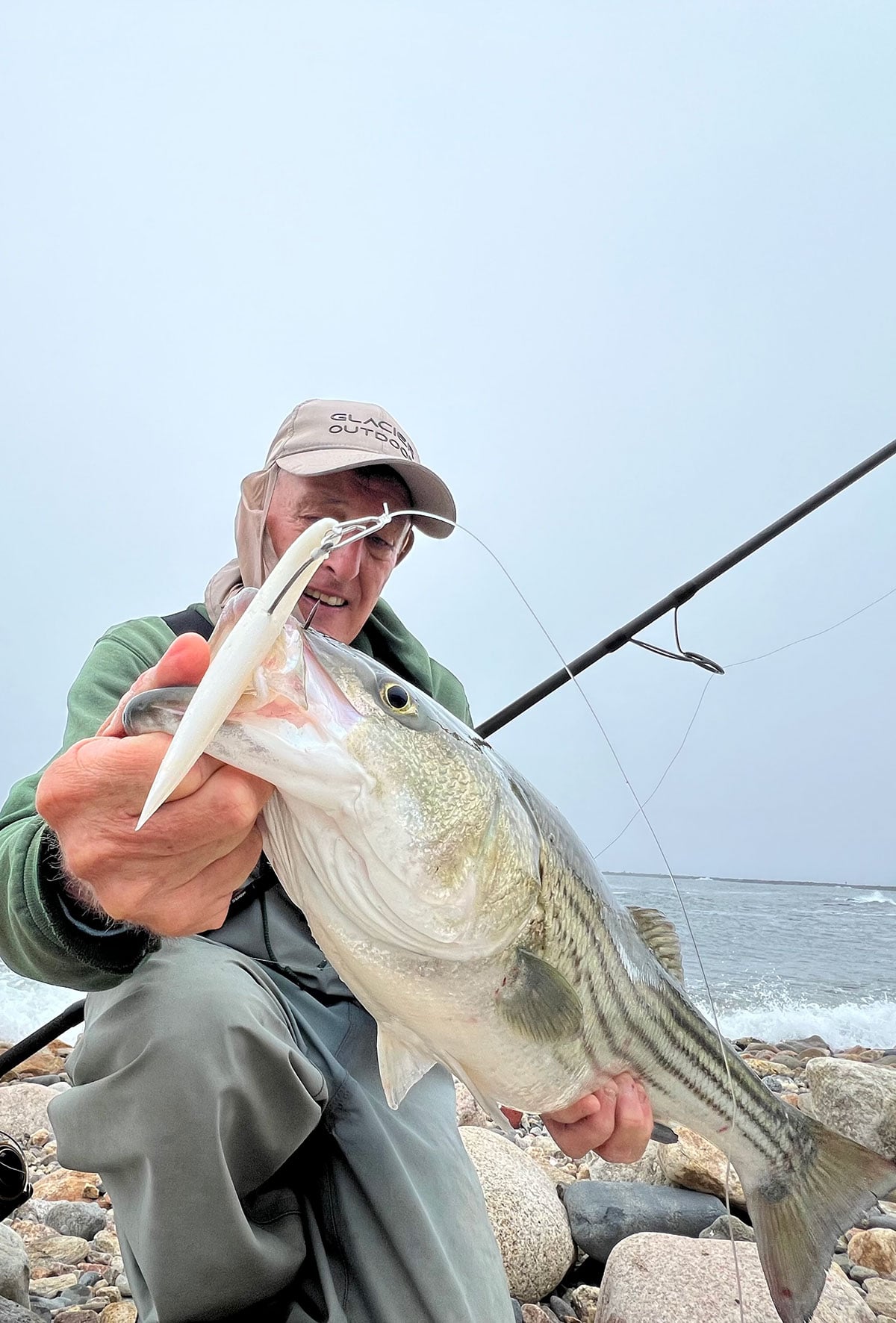
Last year I also had great luck using skinny plastic which seemed to move and swim much like the baitfish. My best producer was a white Albie Snax. While the profile of this lure was a bit bigger (5 inches) than the bay anchovies, I believe it’s realistic and enticing swimming motion is what accounted for most of the hits. I rig my Albie Snax with BKK Titan Rider hooks. These hooks, made for soft plastic, have a locking spring in the front of the hooks which holds head of the bait securely in place while the hook is impaled in the body of the bait. This worked well along drop-away shores where short casts did the trick. I would cast out, slowly reel and twitch it back to shore while occasionally pausing my retrieve. I caught a lot of my fish within 10 yards of shore. It was deadly in white, turbulent water in the wash. I will also tell you that many of the largest fish went for the Albie Snax.
November marks the end of the fall striper run, but that does not mean that the fishing winds down immediately. While I saw good daytime action all fall last year, with cooling waters and bait schools becoming more scarce, November offers some of the best blitz-hunting opportunities of the entire run. Running from beach to beach, armed with my finesse baits along with more ‘typical’ surfcasting gear like Slug-Go’s, Pencil Poppers and spooks like the Yo-Zuri Hydro Pencil, those calm, cool November days often come with great fishing and rarely more than a couple other anglers in the area.
If you are looking for the best striper action this fall in southern New England, give the daytime a try. It’s been a hot time to fish in the last few years and I see no reason why it won’t produce again this year. Finding bay anchovy schools are the key. Take a finesse approach, load up on small imitators and you should find success.