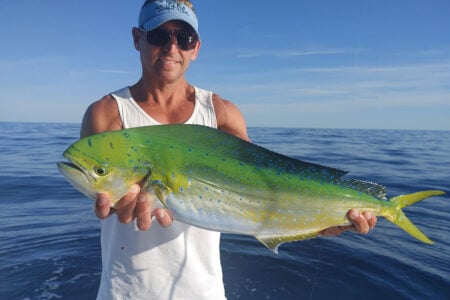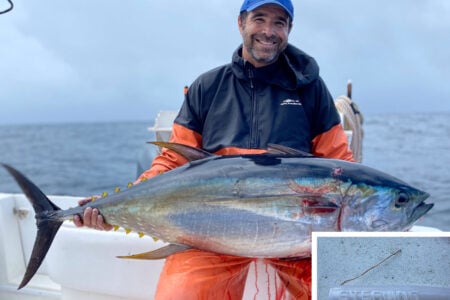
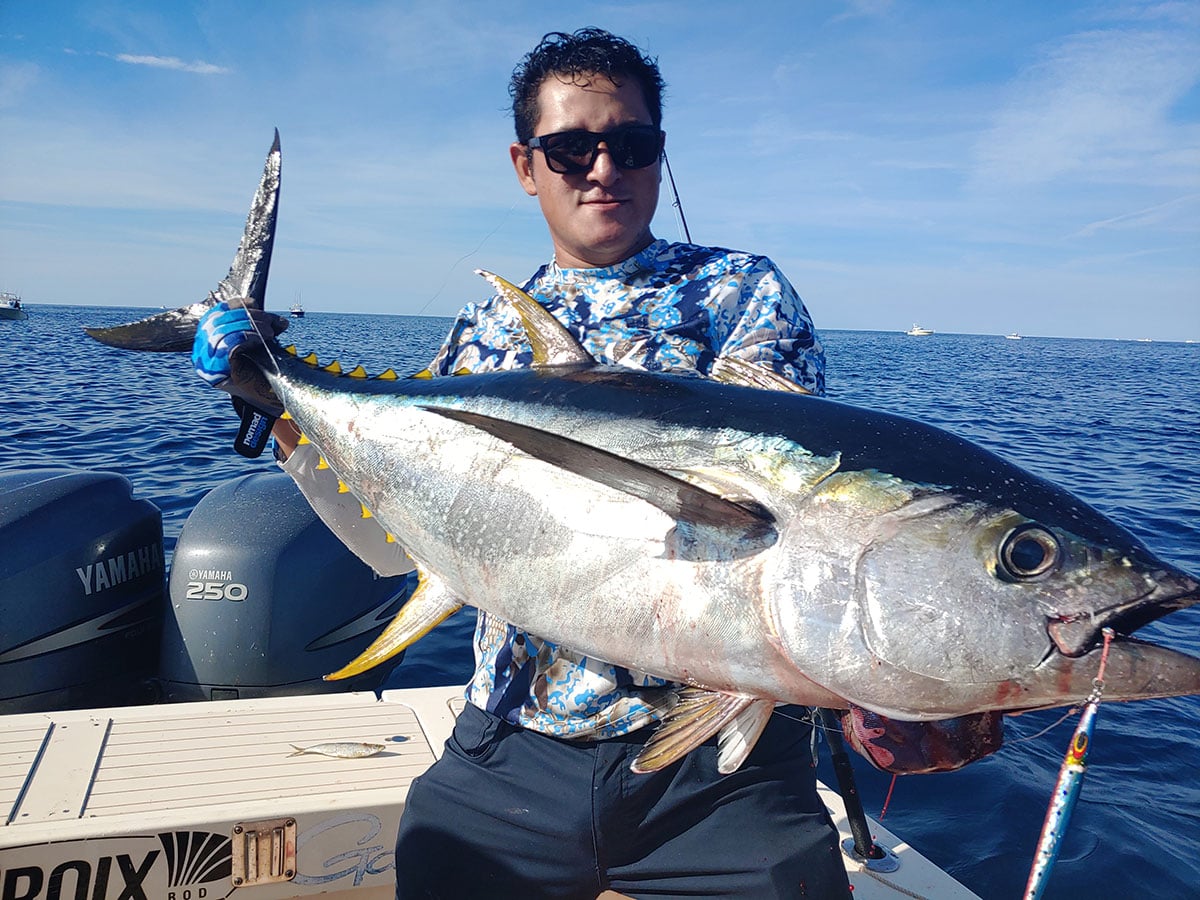
There’s a tuna festival underway on the lumps, bumps & ridges.
I’ve been to a lot of festivals in my lifetime and each one is something that I always look forward to. The excitement builds in the days leading to the event and then peaks on the ride to wherever we are going. Once we get there and the day is over it is usually filled with many fond memories.
Well the same could be said for the tuna jig bite in August and September. Just get to the location and just about every drop of the jig can have you pretzeled over the gunnel with either a nice yellowfin or bluefin tuna.
During these months bluefin and yellowfin are set up on the lumps and ridges as sand eels are rooting and nesting on these features. When sand eels take up residence on a lump you can bet the tuna will be on them each day. A consistency develops where you can expect these tuna to be present in the same locations where you found them the day before. They are not going to leave and go somewhere else to look for food.
Sand eel length can vary however as we have seen different sizes from 4 to 9 inches. When a feed is going on at the surface you will see the sand eels getting blown out of the water so you will be able to get an eyeball on them. Otherwise check the first bluefin caught as it should be spitting them up. Match your jig to the size of the sand eel you see; 60- to 100-gram jigs will work well when the sand eels are on the smaller side, while 120- to 200-gram jigs are what you want when sand eels are larger.

These jig bites basically come down to finding the tuna. Where they are located closest to home is always the best option. You can get your information based in several ways. Maybe you have intel from the day before from a friend or service you belong to where tuna were holding in whale and dolphin feeds, or slicks with chicks on them. Or you weed through many internet posts searching for any detail that may give you clues. You can also look at your logs from the year before. Either way when you get to the spot look for these signs of life and most importantly look on your fishfinder to see if you are marking the sand eels on the bottom and tuna hooks mixed in. If you are not marking fish and not catching at some point you need to decide when it is time to make a move.
When you’re on a spot and marking tuna the more jigs that you can get into the water the better as this will draw more attention. If you are running with a crew of only two or three, to put more jigs in the water you can place jigs off the tips of your outriggers and just let them lift up and down as the boat rocks slowly. Many boaters do this. I don’t like to deal with my outriggers when jigging, so what works equally as well for me is to it to just deadstick a pair of jig rods in the rod holders. To do this use a 60- to 100-gram jig and cast out as far away from the boat that you can and let it sink to the bottom. Once the jig hits bottom let out approximately 50 yards of line and just place the rod in a rod holder.
For this method to work properly there needs to be some wind so the boat gets pushed along. Days that are gently white capping work best as your boat will get pushed on the swell and then stop momentarily in the trough, causing your jig to rise and drop. When your line scope is tight your jig should be working around 50 to 60 feet down. Usually one of these rods always gets bit, and it’s always great to watch a rod double over in the gunnel with the drag screaming without doing anything. Usually the bluefin will be right along the bottom with the yellowfin higher in the water column.
You can also jig with soft plastics such as NLBN, RonZ, and Hogy, all three of which mimic sand eels very well. Again match the length of the bait to the length of the sand eels. Also make sure you are using the extra strong tuna jig heads and not the striped bass heads. Deadsticking any of these baits is also highly productive especially for the bigger bluefin that will be on the bottom.
I prefer my clients jig with spinning gear but conventional gear can also be used. The quick retrieve cadence that we employ when working our jigs favors using spinning gear especially for a beginner. Traditional snap jigging favors using conventional gear.