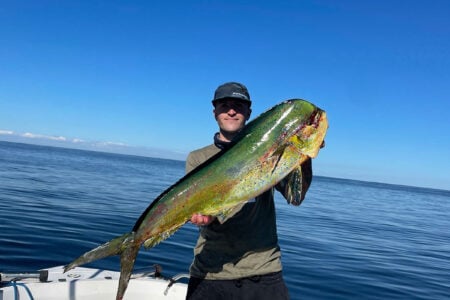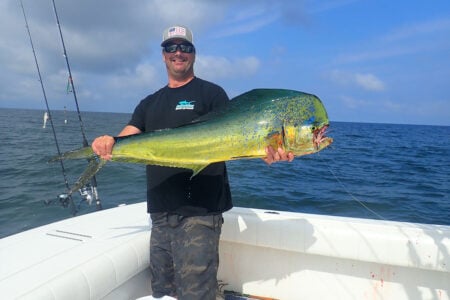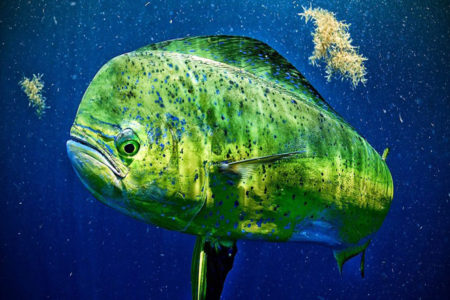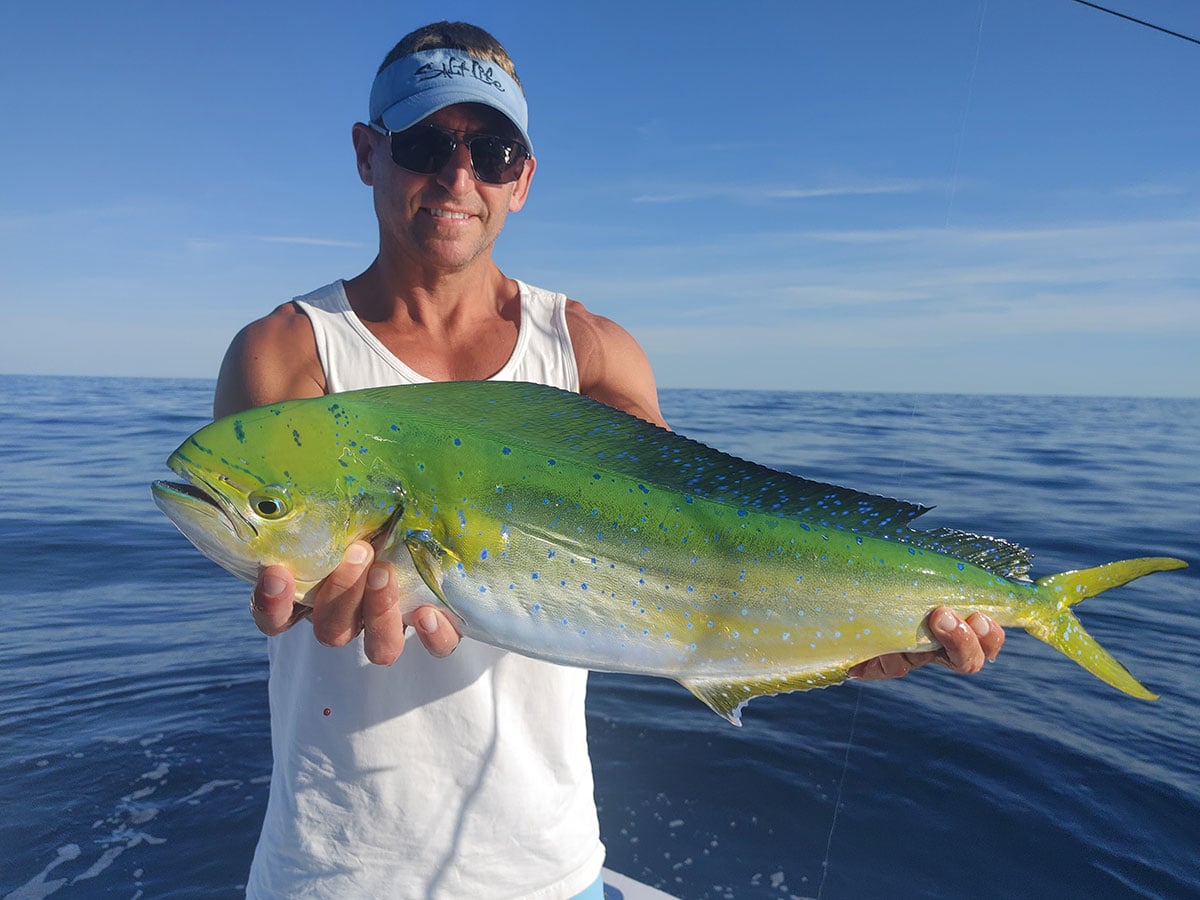
Mahi-mahi are indeed “strong-strong” and closer in than you might think.
I don’t know about where you fish, but it has been a banner late summer for inshore mahi at the Jersey Shore, as these pelagic feeding machines have been present in good numbers around any lobster pot, buoy, weed line, partially submerged pilings, floating timber, or anything other source of structure.
Mahi build up along inshore waters towards the end of July when ocean temperatures reach 74 degrees and their presence continues to increase through August. Now that September is here we have the warmest ocean temperatures of the season and the largest concentration of mahi are present.
Mahi have always fascinated me since I was a kid as I watched their dazzling appearance and acrobatic leaps on many of the Saturday morning fishing shows that took you to exotic destinations. Then when I moved to the shore in 1980 I was pleasantly surprised to learn that they took up residence right here in my backyard.
Mahi are one of the fastest growing fish in the ocean and pound for pound will give you an adrenaline rush with their drag screeching runs when hooked on light tackle or the fly rod. Their name mahi-mahi describes their fish fighting nature as in Hawaiian it means “strong-strong”. The majority of the mahi that you catch will range in size from small chickens up to about 10 pounds, but there is always a good chance that a bull of over 15 pounds can be waiting too. The trick, or many times it is just luck, to have that bull get to your bait or artificial before the smaller ones swarm on top of it.
Mahi are not finicky feeders and have a diversified diet and will feed on many different types of fish, crabs, and squid. They will hit live bait, dead bait, small artificials, and trolled lures. When casting to a target such as a buoy or pot use a stealth approach so as not to spook the mahi and drive them deep. Approach upwind and set up so your drift will take you downwind within casting range. Mahi are usually much more aggressive at first light especially if you are the first one to hit a pot and will strike out at an artificial without tossing and bait or chunks in the water.
As the sun rises higher in the sky I will then toss 1-inch sardine chunks at a target and bait a small Gamakatsu circle hook with the same tied to a 20-pound fluorocarbon leader. To cast to mahi I like to use a seven foot Okuma SRT Inshore Elite medium power rod with a Tesoro 4000 spinning reel spooled with 30-pound braid. When the chunks sink if mahi are present you will see them swarming as they pick off the baits and your hooked bait. It takes a little more work but if you can net and bring out live peanut bunker and toss and bait your hooks with these you are guaranteed success. You can expect some fast and furious action as the live baits will drive the mahi into a feeding frenzy.
If you don’t have live or dead bait mahi will also readily take small soft artificials such as NLBN’s, RonZ’s, Tsunami split tails, Hogy’s, or UVT’s. One of my favorite setups is a 4-inch pink skinny RonZ rigged on a half-ounce pink Spro Squidtail jig. Prismatic swimming plugs, small metals, and poppers can also be cast around a target. Casting flies on eight or nine weight rods can be a lot of fun but be sure to throw the chunks or peanuts in the water to get the mahi fired up. Both intermediate and sinking lines will work. I have also found that brightly colored and flashy flies work best to draw strikes. Colors such as bright orange, yellow, fluorescent green, pink, white, or a mixed blend of these colors will work well.
It’s a big ocean out there with plenty of opportunities to find mahi inshore that are in the mood for feeding so moving around from pot to pot can be a key to your success. For this reason I do not spend too much time tossing bait at any one target. If I don’t see the mahi after several drifts of tossing baits I will move on.
In my chartering area heading east out of the Manasquan Inlet mahi will build up around the lobster pots around the Oil Wreck 13 miles from shore. You will also find a good concentration of pots just north of the Shark River Reef 15 miles out. There are plenty of lobster pots in the Mud Hole 20 to 25 miles out. Mahi will also stage on the nearshore and midrange ridges particularly if any floating sargassum or other floating debris is present.