
A legendary traveler has returned to New England waters. “Old Thom,” the iconic and solitary North Atlantic killer whale, was recently spotted on Stellwagen Bank, delighting local mariners and giving scientists another brief glimpse into the life of the region’s most mysterious marine mammal. The sighting, documented by Sureshot Charters, occurred nearly two years to the day after his well-publicized 2024 visit, continuing a fascinating trend of late-spring appearances off the coast of Massachusetts.
First identified by Canadian whale-watching vessels in the Bay of Fundy back in 2006, Old Thom occupies a unique place in Atlantic marine biology. He is the only orca known to regularly frequent the Gulf of Maine and surrounding waters. An impressive bull estimated at 25 to 30 feet long and weighing roughly 8 tons, he carries a massive 6-foot dorsal fin distinguished by a prominent, jagged notch about a third of the way down its trailing edge. This distinct physical feature allows fishermen, charter captains, and researchers to immediately identify him whenever he surfaces.
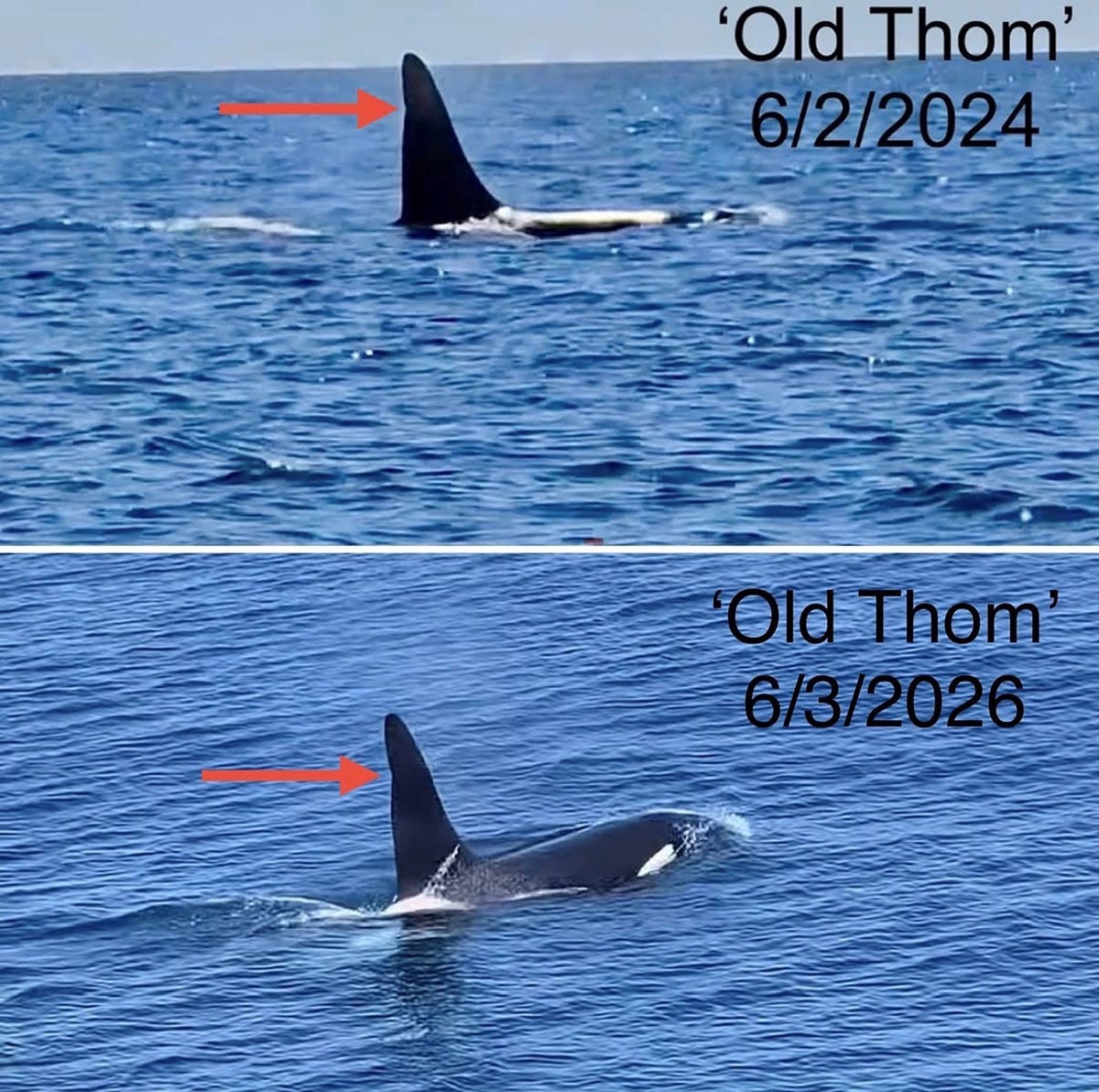
What truly sets Old Thom apart from his famously social species is his solitary lifestyle. He has never been documented traveling with other killer whales. Instead, this apex predator has formed an unusual, seemingly peaceful alliance with Atlantic white-sided dolphins. Often described as his vanguard, these large pods of dolphins are frequently seen swimming and feeding directly alongside the giant bull. Marine scientists tracking these interactions note that Old Thom appears to be a fish-eater—likely targeting species like bluefin tuna—which explains why the dolphins can hunt in his shadow without becoming prey themselves.
His periodic spring arrivals on busy New England fishing grounds like Stellwagen Bank and Cape Cod always spark intense interest, especially regarding how the presence of the ocean’s ultimate predator might influence local wildlife. While researchers closely monitor whether Old Thom’s territory overlap affects the seasonal movements of great white sharks in the area, data so far indicates his presence has no measurable impact on shark behavior.

As summer progresses, history suggests Old Thom will move north toward the deeper, colder waters of the northern Gulf of Maine and the Roseway Basin. For now, the maritime community keeps its eyes on the sea, waiting to see where this lone wolf of the North Atlantic will surface next.