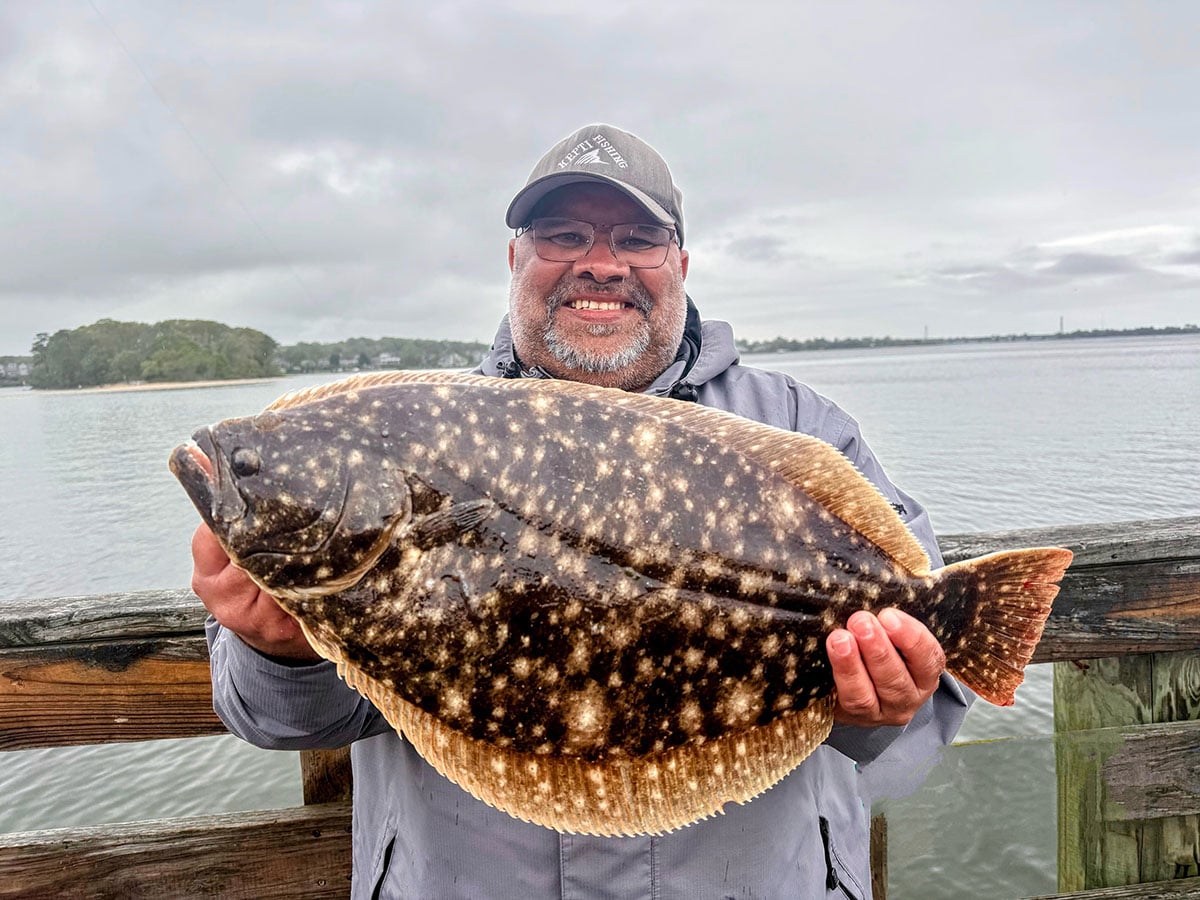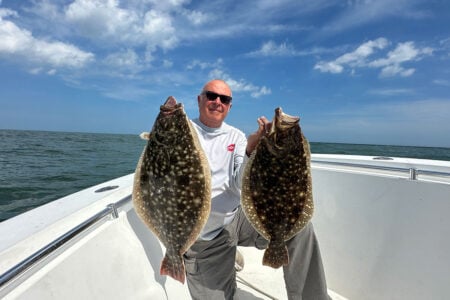
New Jersey’s summer flounder season kicks off on Monday, May 4th.
As spring unfolds along the coast, summer flounder – better known as fluke – make their dramatic return. After months spent offshore, these flatfish begin their migration in January, moving steadily through February and March, finally arriving in the back bays by April.
For anglers, early May marks the official start of fluke season – a date that signals both excitement and challenge.
Early-season fluke fishing is not for the faint of heart. The back bays are often crowded, the water is murky and cold, and baitfish are often scarce. Yet these tough conditions set the stage for something special – big, hungry fluke on the prowl for their first real meal of the year.
For those willing to adapt and embrace the challenge, the rewards can be spectacular.
Finesse Is Everything
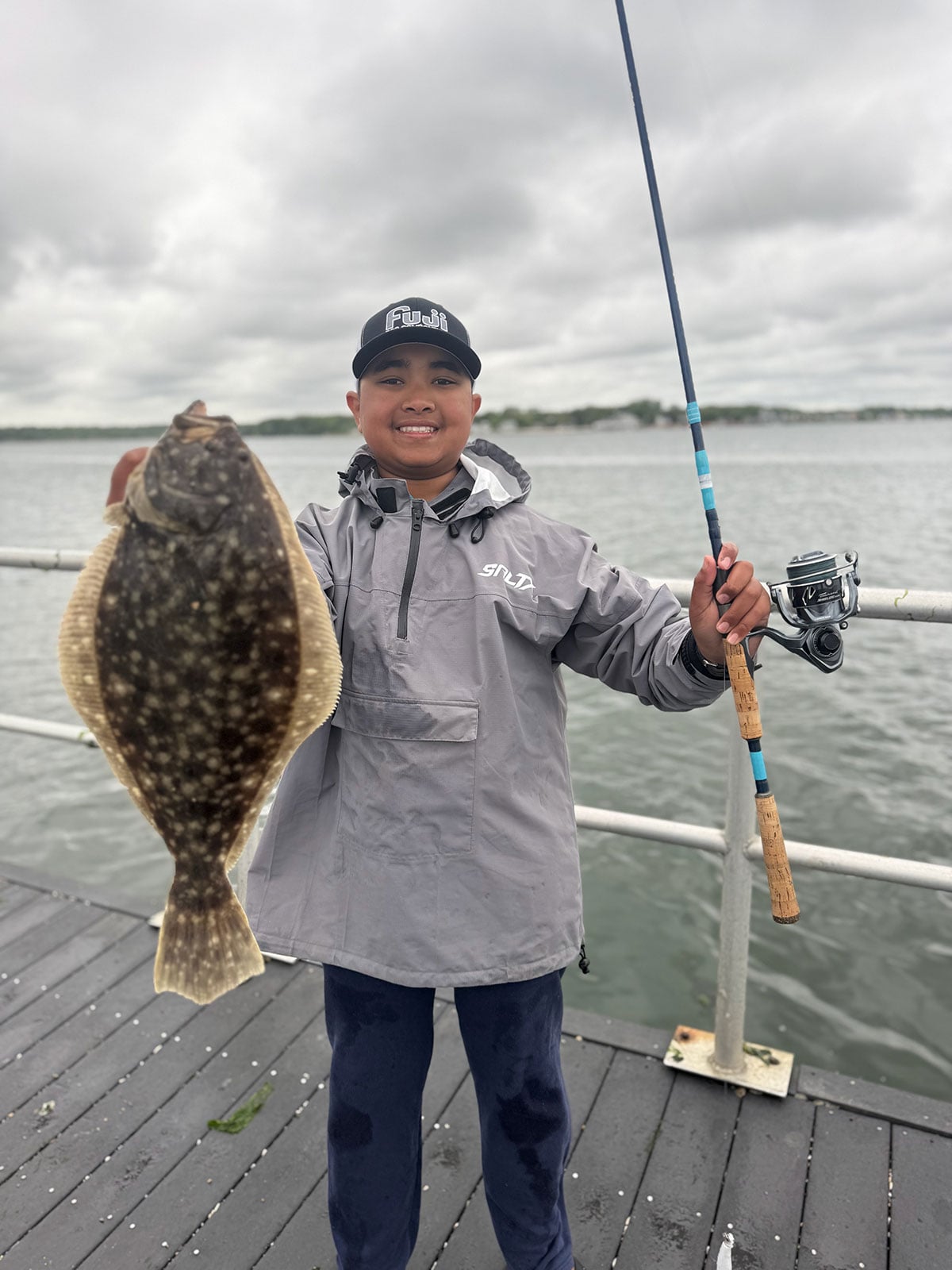
When it comes to fluke fishing, especially in the early season, finesse is the name of the game. In the back bays, subtlety can make all the difference. I recommend a spinning rod between 7 and 7-1/2 feet; my personal sweet spot is 7 feet, 2 inches with either a Medium (M) or Medium Light (ML) action. These options let you feel even the most delicate bites and improve your hook-up ratio. The key is confidence; choose a rod that feels right in your hands.
My top pick is the 7-foot, 2-inch Tsunami SaltX II Inshore Rod (Medium) which I find is textbook-perfect for finesse fishing; it’s light, parabolic, sensitive, and powerful, and I’ve landed multiple 4- to 8-pound fluke on this rod early in the season. Other top picks are the Daiwa Tatula, Major Craft Senna, Jigging World Nexus, Shimano Talavera, or Quantum Myth.
Pair your favorite rod with a 2500 or 3000 size reel. Make sure the reel is light, smooth, and feels great with your rod for the ultimate combo. The Tsunami Shield II 2500 or 3000 are great reels for back bay fluke fishing as they’re light, smooth, and powerful, ideal for the finesse approach that early-season fluke demand. Other reels in this size perfect for early season fluking include the Shimano Stradic, Daiwa Fuego, Penn Battle IV, and Okuma Avenger.
For line, lighter is better. I stick with 15-pound braid for its superior casting distance, sensitivity, and control with lighter jigs. For leader, I recommend 15- to 20-pound, just like the braid, as it offers better casting distance, sensitivity, and control for lighter jigs. Choose the braid and leader you trust, but don’t be afraid to go light.
Gulp It Down
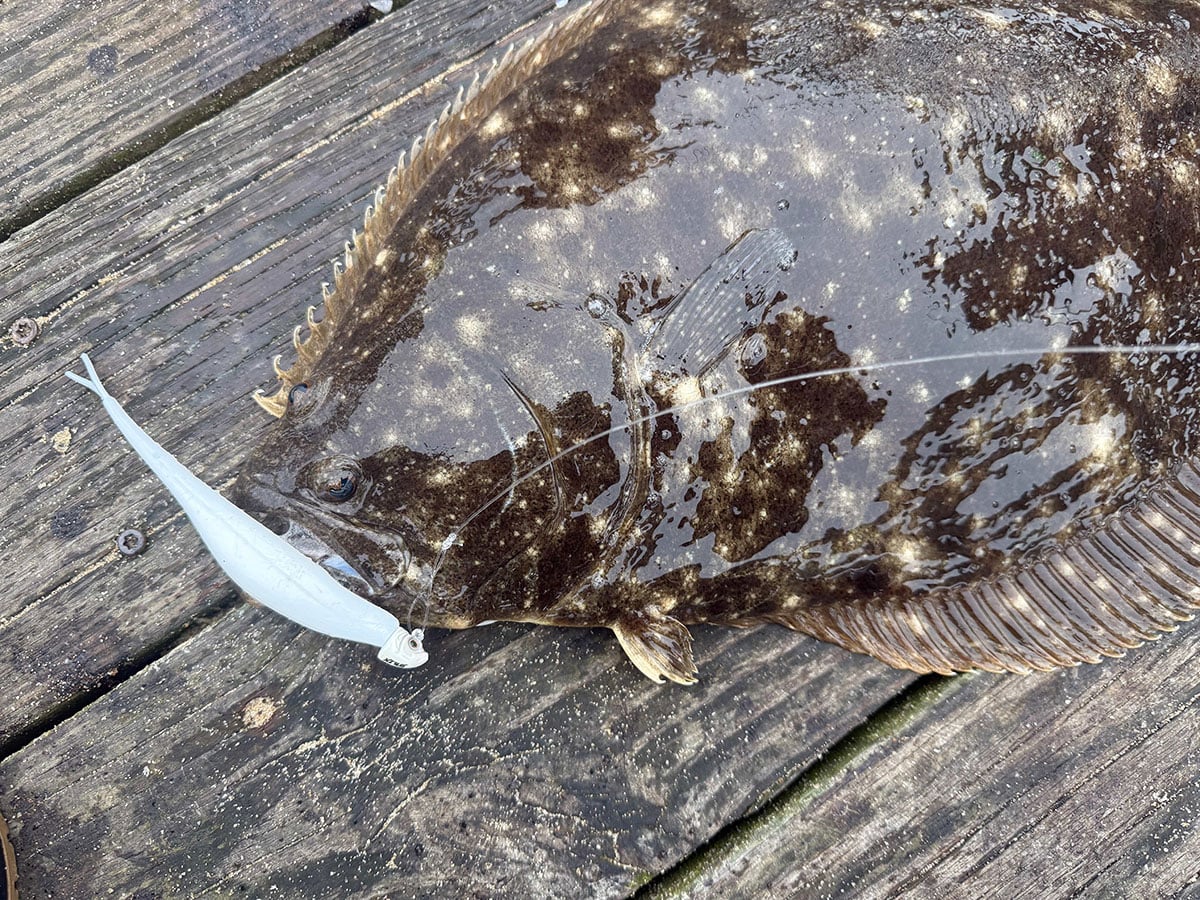
When it comes to bait, you have two options, live or artificial. Live bait is the easy route, but if you’re chasing bigger fish, go artificial. Last season, I used only Gulp – no live bait at all – and it produced plenty of big fluke, including my personal best. My top producer last season was the 6-inch Gulp Jerk Shad. Its larger profile draws in the bigger fish; but don’t worry, smaller fluke will happily inhale a 6-inch bait, too. If the local baitfish are smaller (3 to 5 inches), I’ll switch to a 5-inch Jerk Shad or a 4-inch Swimming Mullet. We also discovered the Gulp Dart 3-1/2-inch bait last season. What I like to do is rotate through all these baits and stick with whichever gets the most bites that day.
When fishing Gulp for fluke, there are two standout jigging techniques every angler should know, the teaser method and the single jig.
Teaser Method: This classic approach pairs a bucktail or jig head with a teaser, typically placed 8 to 12 inches above the main lure. It’s the most popular setup, drawing in curious fluke with a double offering and plenty of action in the water.
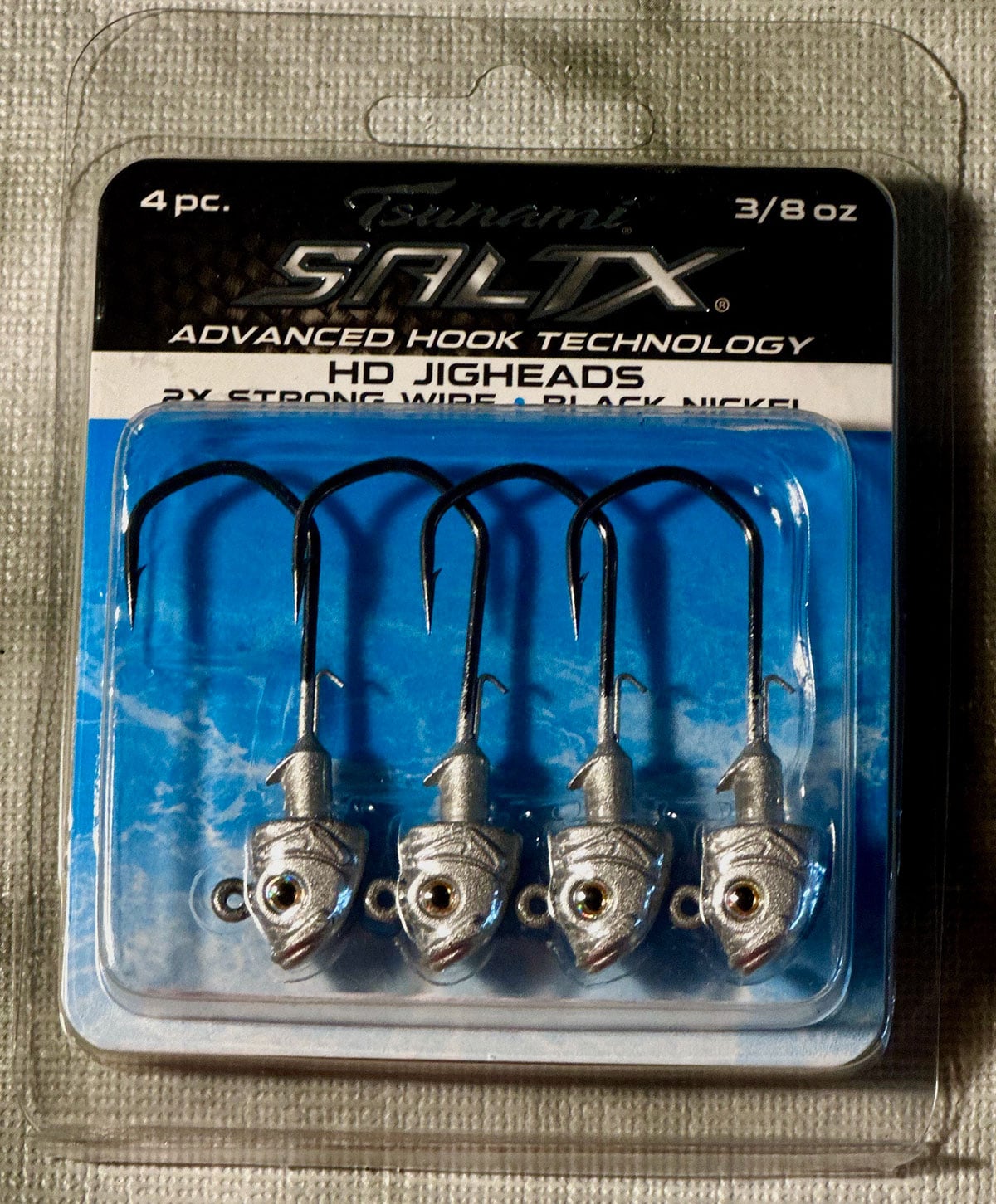
Single Jig Method: A more streamlined approach, the single jig method uses just a jighead without a teaser. I believe this technique is quickly gaining favor for its ability to produce bigger fish and more consistent limits. For this approach, you’ll want a quality jighead like the Tsunami SaltX Jig Head. Its sleek design lets your Gulp move naturally and attract aggressive strikes.
For back bay fishing, stick with lighter jigheads, like quarter-ounce, 3/8, up to a half-ounce. The lighter the jig, the more action you’ll get, and a finesse setup means longer casts and better control while working your lure.
Slow & Steady
Once your setup is dialed in, it’s time to focus on jigging cadence; essentially, the technique you use to work your jig. This is where early-season success is made or lost. If you’ve noticed the back bays running colder than usual at the start of fluke season, you’re not alone. These chilly waters can make the bite tricky, but they also present an excellent opportunity for anglers who know how to adapt. The secret? Slow everything down.
When the water temperature drops, fluke become less aggressive and more selective. This is when patience and finesse pay off. Instead of rapid jigging, adopt a slow, deliberate cadence. Give your rod a gentle “pop-pop,” then let your jig glide gracefully back to the bottom. That subtle movement is irresistible to fluke, especially when conditions are less than ideal.
| STATE REGS |
| In New Jersey, fluke season runs from May 4 through September 25 with an 18-inch minimum size and three-fish bag. Special New Jersey exclusive management zone regulations include 17-inch minimum and three fish bag west of COLREGS on Delaware Bay, and a 16-inch minimum and two per angler bag limit at Island Beach State Park.
In Delaware, summer flounder season is open all year, with a 16-inch minimum size and four-fish bag limit through May 31, with the size limit increasing to 17.5 inches from June 1 through December 31. When fishing in New York, there’s a three-fish bag limit all season, with a 19-inch minimum size from May 4 through August 1, changing over to a 19.5-inch size limit from August 2 through October 15. |
Keep in mind that most strikes happen on the fall. As your jig drifts down – moving at its slowest and most natural pace – that’s when a fluke is most likely to pounce. So, resist the urge to rush. Let your jig linger, and you’ll find that even on the coldest mornings, the bites will come.
Location is key if you want to be successful in the back bays. Find quiet water; accessible spots like piers, sod banks, and back bay beaches will work well if you’re fishing from shore. Look for areas with the least amount of people; in the early season, fluke can be overwhelmed if there are too many lines in the water. I’ve seen slow bites turn into a flurry of catches once the crowds thin out.
After you’ve picked your spot, seek out slow-moving currents. Fluke will position themselves facing into the current, waiting for baitfish to drift by. Cast up-current and work your jig naturally down-current for the best results. Channels are also prime territory. Look for sections of water that aren’t rippled, indicating a channel. Cast your jig up current and into the channel, then work it slowly. When you feel a bite and dead weight, set the hook!
Early-season fluke fishing in the back bays is all about adapting; choosing the right gear, dialing in your presentation, and picking away at the perfect spot. With finesse, patience, and a willingness to slow things down, you’ll turn challenging conditions into opportunities for big catches.
Embrace the early season, and you just might land your personal best
The young author is a Tsunami Brand Ambassador and can be found fishing with his family on social media via their KEPTI Fishing pages.