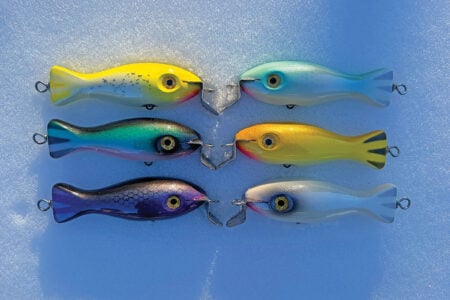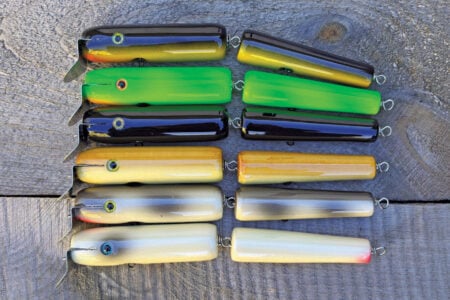
A true fish-catcher designed by the late and legendary, Bill Couch.
I’ve struggled with the thought of writing this article for several years. Most plug enthusiasts know all about Bill Couch and the amazing lineup of swimming plugs he made up until his passing in 2020. I met Bill for the first time while riding along the access roads of the Cape Cod Canal, I can’t say for certain what year it was, but I’d guess it was 2009 or 2010.
Bill was one of the nicest guys you’d ever want to meet, a gentle soul with a passion for fishing and especially for lure building. He was known for making super-clean plugs that swam with the rhythm of real life. But I’d wager he was equally well-known for being a great guy.
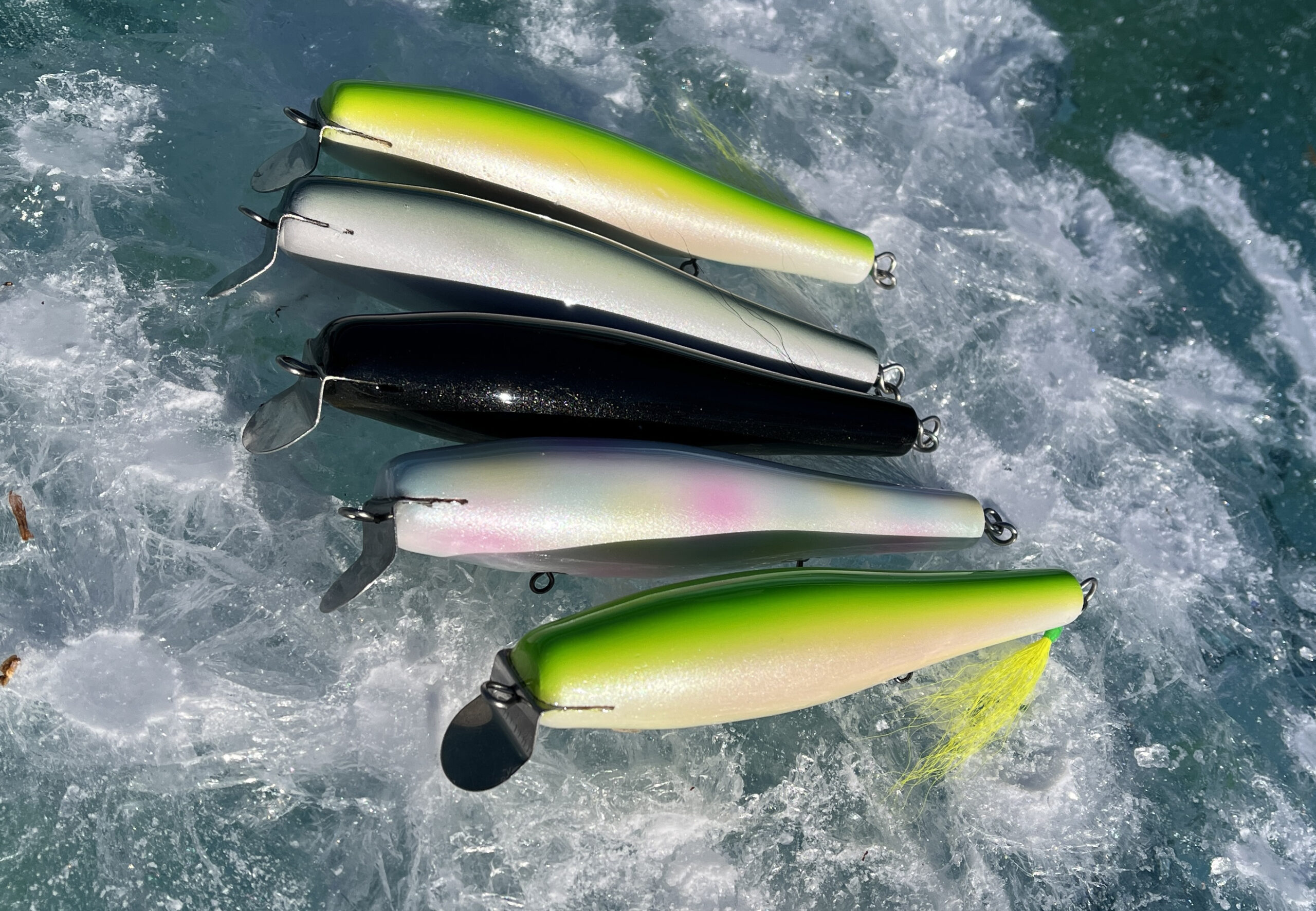
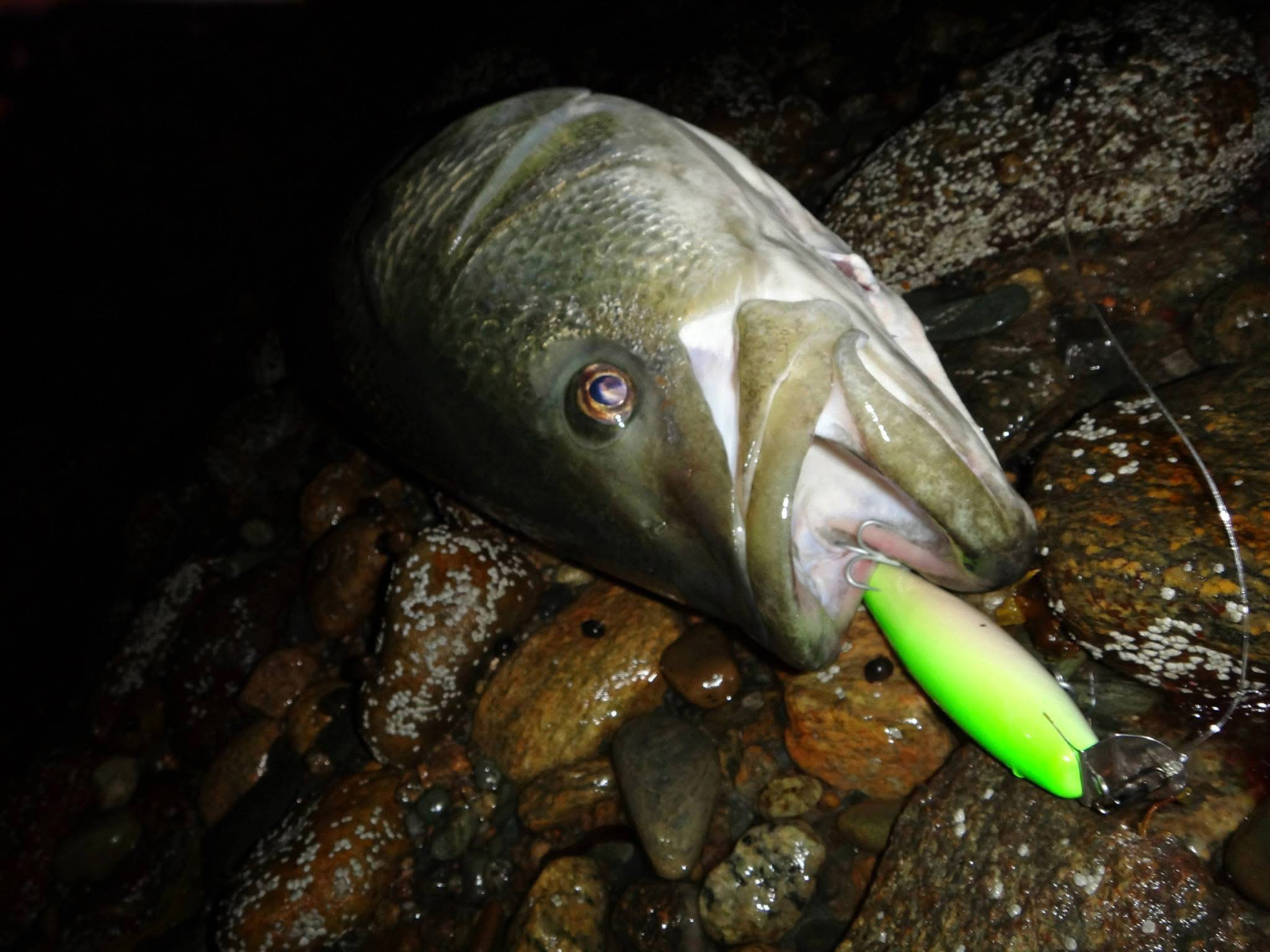
In 2013, I was running a surfcasting tournament and I asked Bill if he’d contribute some plugs to the prize pot, he obliged and when the package arrived there were a few plugs in the box that came in unlabeled bags, each had my name scrawled on it. One of those plugs was a bright green over white swimmer. It was a slender plug with a narrow lip and upon swimming it for the first time, I knew it was destined for great things.
I called Bill and told him how much I liked the plug, he informed me that it was something relatively new that he was calling the Jetty Swimmer. Just a few weeks later, I found an early run of 20-pound class fish near a backwater herring run and seeing those fish was enough to encourage me to put the wetsuit on for the first time that year and head “out front”. Something made me snap that Jetty Swimmer on first.

A Loud Introduction
On my first or second cast, I hooked up and the fish was the type that makes you second-guess your decision to make that first trip in the ‘real surf’ – she was all of 21 inches. But just a few casts later, I was working that swimmer in a broken pattern, trying to make it seem like it was struggling to get off the surface, when I felt soft but firm impact. The fish made several runs, I remember saying out loud – multiple times – “this can’t be what it feels like it is, I must have snagged it!” But when she glided into the beam of my light, she absolutely was everything that I thought she might be; all 40-something pounds of her. A better introduction to a new plug, I have not had! And she still stands as my largest fish on a metal lip.
Needless to say, I was on the phone with Bill the next day, pleading for a few more Jetty Swimmers, and somehow, I still have all of the ones I bought from him. Bruised and battered as they are, they are still catching fish 12 years later, oddly enough, the solid black one I have, shows almost no wear, makes me wonder if I actually have two!
Upon speaking with Bill about the plug, he confided in me that there were no internal weights in the design and went on to say that most of his plugs were unweighted, using the placement and weight of the hooks to balance and tune their action, a concept that I hadn’t considered until we had that conversation.
Another thing Bill added was that he preferred high-slot lips (on most plugs) and that he always bent the nose loop up, a signature tweak you’ll find on pretty much all of Bill’s designs. An upward tilt on the line tie helps the plug dig, but also tightens the action, because it pushes the pivot point of the swimming action up toward, or even above, it’s natural center.
Jetty Tips
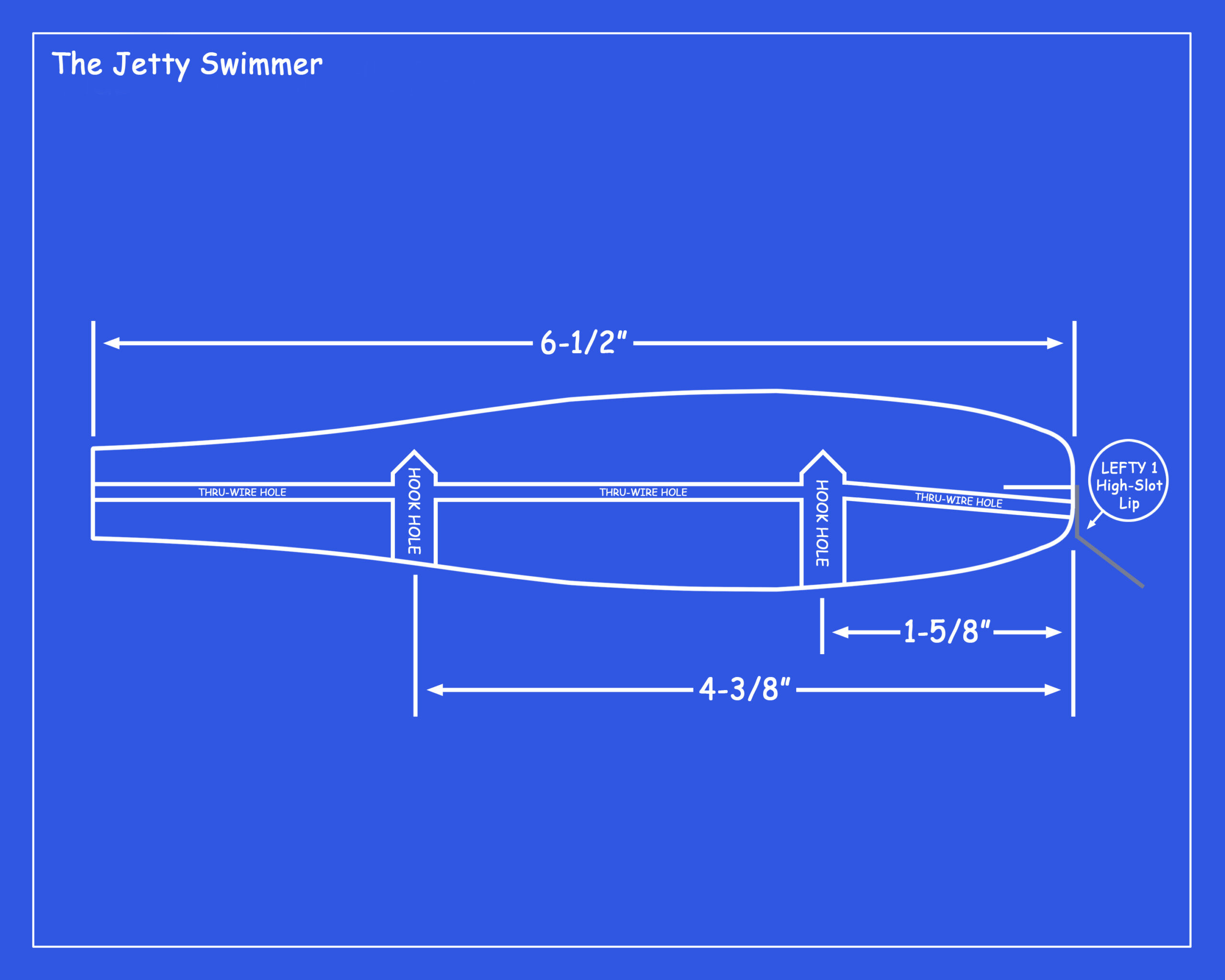
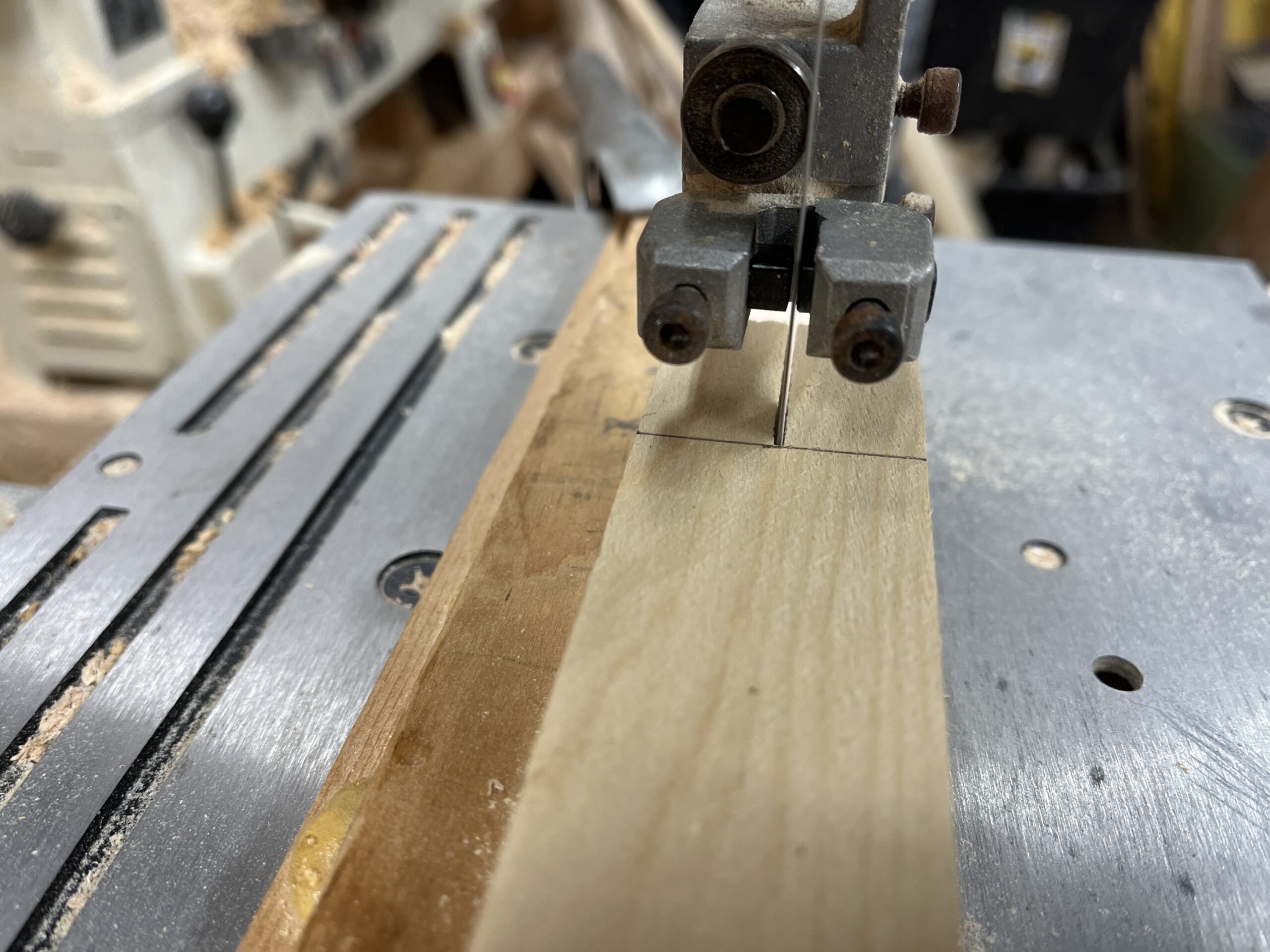
With a name like Couch’s Cedar Works, it’s probably safe to assume that he used a lot of cedar and I might wager that he only used cedar. This plug is light, but not ‘red cedar’ light, and after some experimentation, I settled on Alaskan yellow cedar (AYC), but it’s important that you use the lightest pieces you can find, since AYC fluctuates so wildly in weight from one piece to the next. The Jetty Swimmer measures 6-1/2 inches in length and sports a 1-1/4-inch waistline, so cut your squares to accommodate that diameter and chop them into 7-1/2-inch blanks. A good trick is to cut your lip slot before you turn, so use the band saw to cut a centered slot that extends about 1-1/4 inches into the head end of the blank. Now, find the center at both ends and set the block spinning in the lathe.
Use a gouge to round the blank down, leaving about a half-inch of each end square. When you have a relatively uniform cylinder, power down the lathe and lay out the following marks; begin by making marks 6-1/2 inches apart for the head and tail, now (working back from the nose) make marks at 1/4-inch, 1-1/2 inches and 3 inches, these will be your reference points and should be refreshed as needed. The 1/4-inch mark surrounds a sharp taper at the nose, at 1-1/2 inches the widest part of the body begins and it ends at the 3-inch mark, before gently and naturally tapering off toward the tail. Turn the lathe on and touch each mark with your pencil to carry them around the body. Your target diameters are as follows:
Nose: 1/2-inch
1/4-inch mark: 13/16-inch
1-1/2-inch mark: 1-1/4 inches
3-inch mark: 1-1/4 inches
Tail: 5/8-inch
You should be able to do most of the turning with a sharp skew chisel, but some may find that they have better luck with fluid contours using a slightly rounded chisel. Everything about this turn is fluid, it’s a very fishy silhouette and he even managed to hide a pretty straight cylinder in the middle of all that fluidity.
Assembly Line
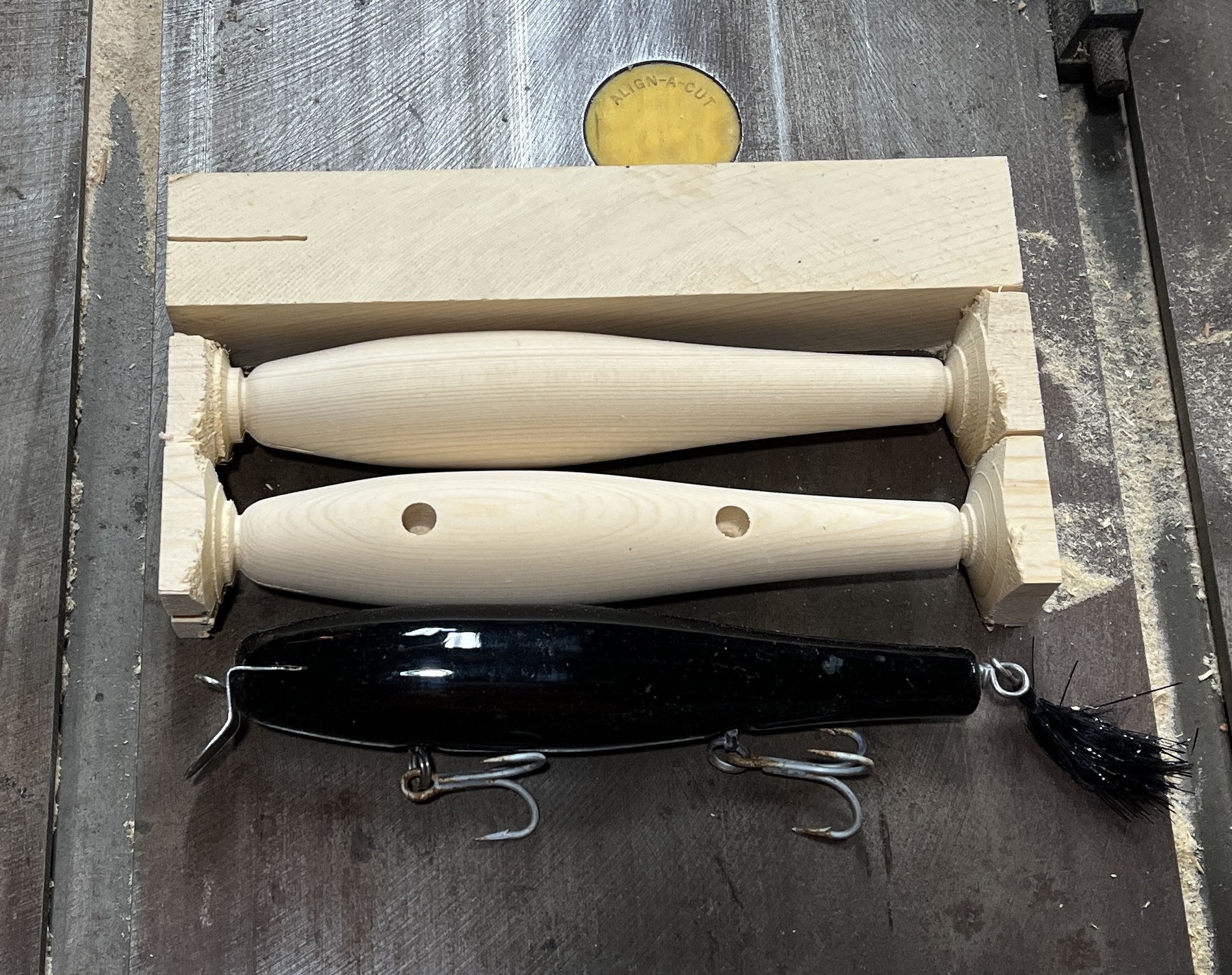
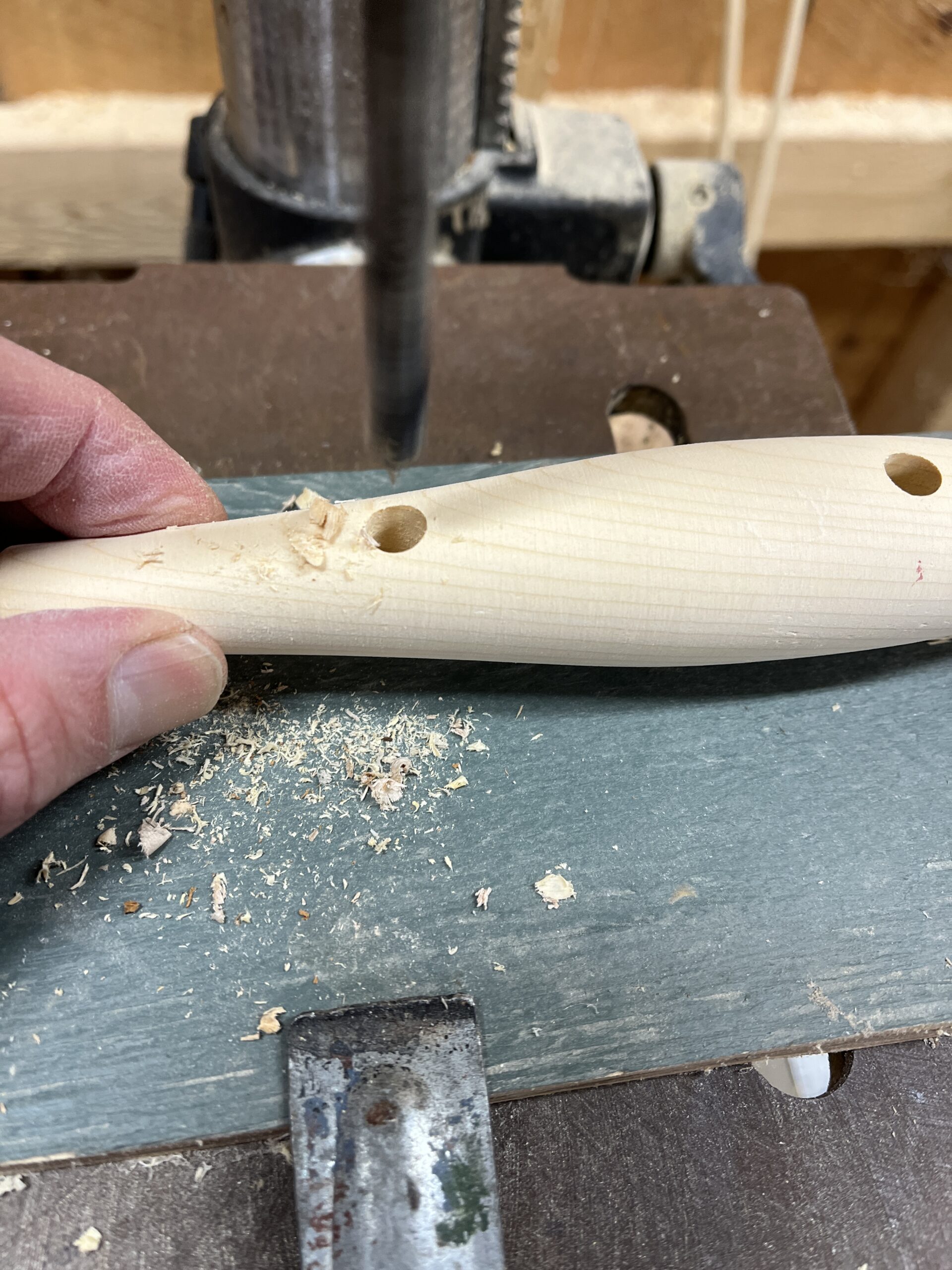
When you have your Jetty Swimmer roughed out, sand it on the lathe with strips of 100 and then 150 grit sandpaper, until it’s smooth and looking fluid. Flipping the blank on its back, you’ll need to drill two 5/16-inch diameter holes for hook hangers; one at 1-5/8 and the other at 4-3/8 inches back from the nose. I’ll remind you again that Bill used hook placement and size to tune the action, so your hooks need to be placed correctly!
When your hook holes are drilled, thru-drill the plug using a long 5/32-inch bit to drill from the tail into the forward hook hole, then cut the square ends off, and finish thru-drilling with a hand drill; put a Lefty 1 high slot lip into the slot, mark the hole with an awl, drill from the awl mark back into the forward hook hole. Now take some time to sand all the rough edges, including the hook holes, to get that super-clean finish that makes CCW plugs stand out from the pack. Then seal the plug, allow the sealer to fully cure and lightly hand-sand the plug again.
After the sealer has been sanded and the dust blown or wiped away, give the plug a couple coats of your preferred primer, since we’re using cedar, I strongly recommend using a spray can primer, because solvent-based primers will seal cedar bleed far more effectively than any acrylic primer you may like. Spray can primers should be allowed to dry for at least 36 hours before painting. It shouldn’t come as much of a surprise that I recommend painting a few of your Jetty Swimmer clones in a bright green over white pattern, but I highly recommend sticking with simple colors, I think solid and simple two-tone paintjobs lend themselves well to the action and classic look of the Jetty Swimmer. When your paint has dried, give your swimmers a coat of epoxy or the protective clear coating of your choosing, and when that has cured, it’s time to assemble.
Begin by gluing a Lefty 1 high slot lip into the lip slot. The swivels are the only deviation I’m making from the original, Bill used Spro Heavy swivels for this plug, but they can be very difficult to thread when wiring, so I use #3 Spro barrel swivels; drop one into each hole and thread your thru-wire through each swivel on the way by. Add a small tail grommet before wrapping a neat tail loop. The Jetty Swimmer carries a pair of 2/0 VMC treble hooks, attached using 5.5H split rings. On the tail is a small flag made from a 1-1/2-inch pinch of synthetic fiber.
Take my word for it, the Jetty Swimmer is a fish catcher. Its size represents a huge segment of the striper’s diet and its action is very natural. This plug is also versatile in that it can handle placid water, heavy surf and even moderate current. It can also be fished in many ways; from a straight retrieve to the broken, struggling cadence I used to hook that 40-plus pounder almost 13 years ago. If you make one, please offer up a thought of gratitude to the genius mind that invented it and if you’re someone that sells your creations, respect this design as one that should only be made for personal use. It’s too soon to be considered public domain.
There are many things I wish I’d gotten to say to Bill before he passed on. But above all those things, I’d just like have one more chance to talk to plugs with him and feed off of his enthusiasm. Anyone that knew him can relate to what I’m saying. But I suppose, that’s what we all hope for, when we cross over to the other side… that we would be remembered fondly and represented by a legacy as undeniable as Bill’s. If there is a great rocky beach in the sky and I have the chance to see him again there, I hope he’ll say I did him proud with this article. The respect and admiration I had for Bill, would be hard to put into words.