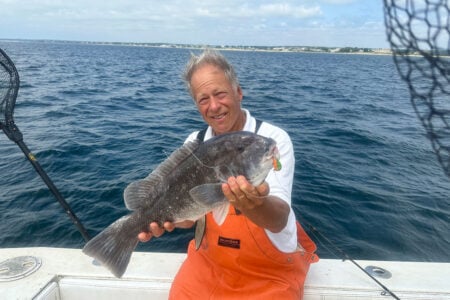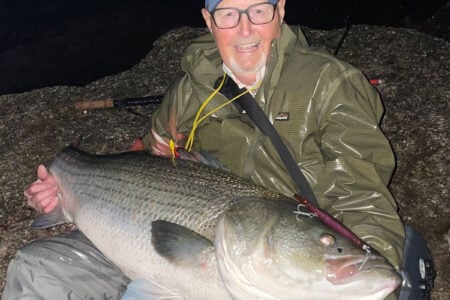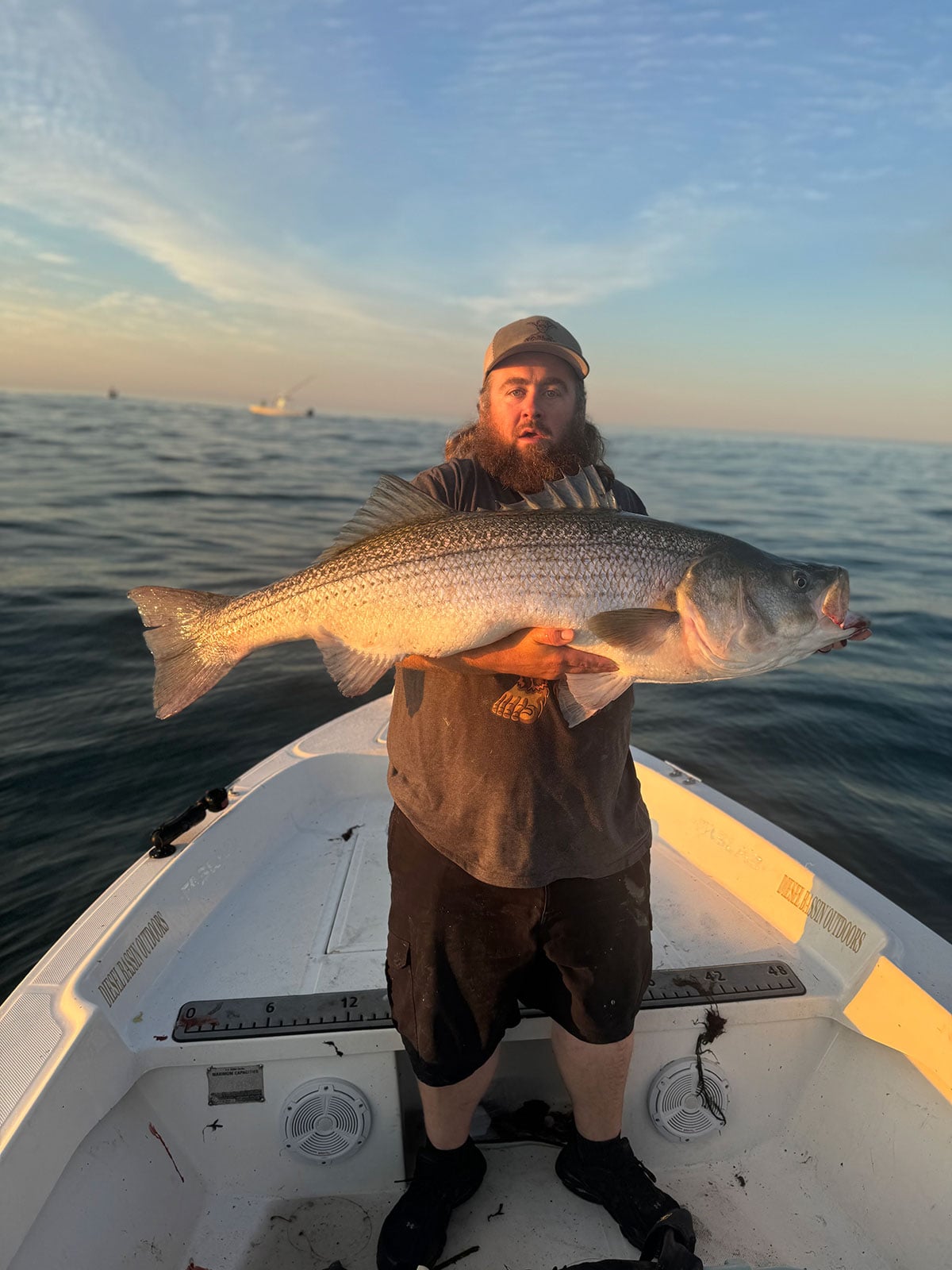
An obsessed mind carves its own path to success and the Devil is always in the details.
There are different welding methods that can be used, depending on whether on you are raising a steel framed skyscraper, building swivel rod holders or custom fabricating an exhaust system for a vintage car. Matt Perry of New Bedford, MA is an accomplished welder, who specializes in TIG (tungsten inert gas) welding on classic and custom cars for collectors throughout New England. TIG welding generates a very high quality, precise and splatter free weld in the hands of a skillful welder, but requires much more planning, prep work and dexterous eye hand coordination, than most other welding techniques.
To be a skillful TIG welder, you really need to pay attention to the details, take the time to carefully prep your job and focus while executing the weld. At 38 years old, Matt is a very good TIG welder. He brings that same focus to his bluefin and striped bass fishing. A typical bluefin tuna jigging trip on his 19-foot Key West, begins the day before in the “tackle room” at Matt and his wife Alissa’s New Bedford home. Eight to ten rod and reel combos, are checked over, line replaced if necessary and new leaders tied on with PF knots. In addition, jig boxes are re-stocked, compass courses and waypoints are entered in the notebook, the boat is fueled up and calls are made to get the most current intel.
Humble Beginnings
While he is certainly capable of fishing from the beach, Matt is primarily a boat fisherman. Growing up in Plymouth, MA, he started with a 14-foot aluminum skiff and tiller outboard, sometimes launching it from Manomet Beach. There remains some question about how many days of high school were missed to go fishing. There is even a suggestion that Matt’s good friend Cory Pietraszek, might have picked Matt up at the bus stop numerous times when Matt should have been in school and was also in cahoots with Matt’s plan to field phone calls from parents and teachers while out on the water.
Cory was fishing from a 21-foot Parker at the time and had seen signs of school-sized bluefin not more than 5 miles off the beach. A few days later, a 17-year-old Matt, in his 14-footer, found diving terns and the surface feeding swirls of 70-pound bluefin just 4 miles off Plymouth. He was successful in hooking up, but for a variety of reasons, just couldn’t get them boatside.
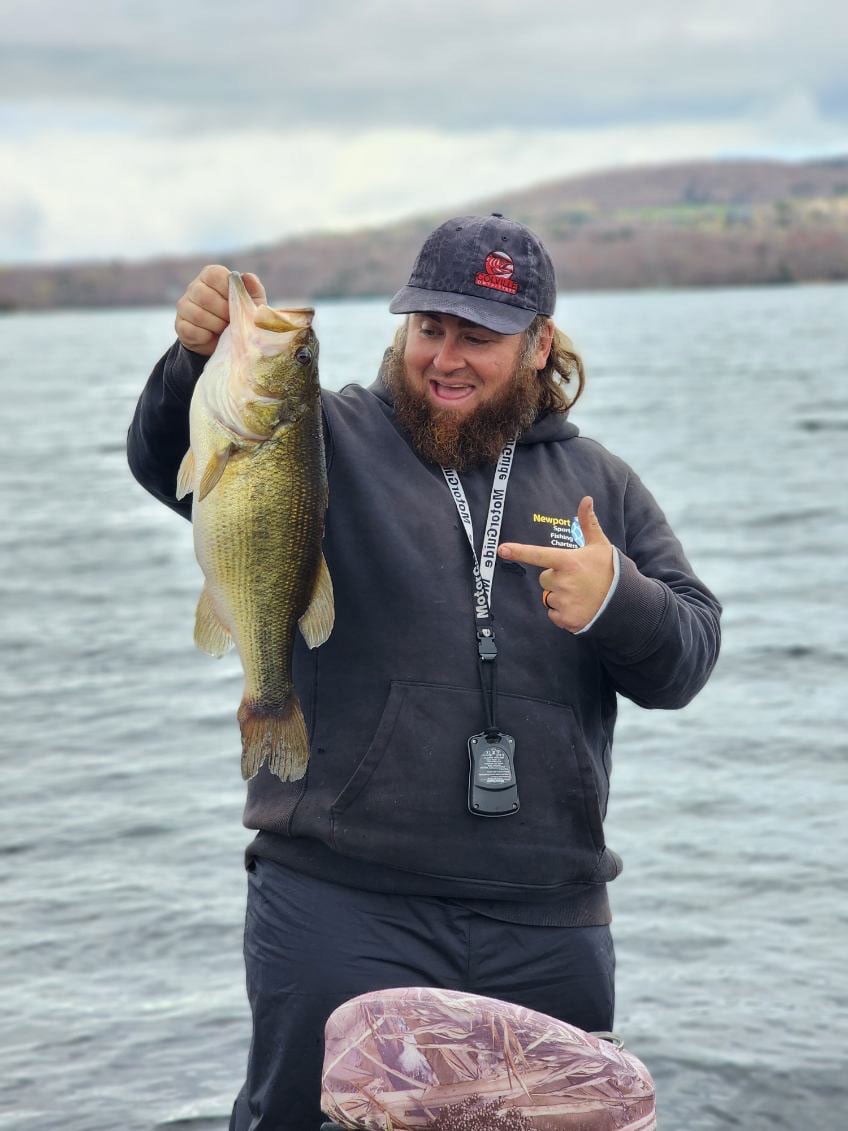
A few years later, Matt upgraded to a 16-foot fiberglass Sea Strike with a 50 horsepower outboard. “I think that 16-foot Sea Strike outboard, with its 24-degree deadrise, is one of the most versatile boats in New England”, says Matt. “It was easy to trailer and rugged enough that some days we’d put almost 100 miles underneath the hull as we travelled to find fish. We also fished freshwater with that boat, targeting largemouth, smallmouth and trout.”
A Light Touch
Matt and Alissa now fish out of a 19-foot Key West Sportsman, with its 115 horsepower outboard. “We fish it hard”, says Matt, “trailering it up and down the coast, on and off the trailer multiple times in a day, from sun up to sun down.”
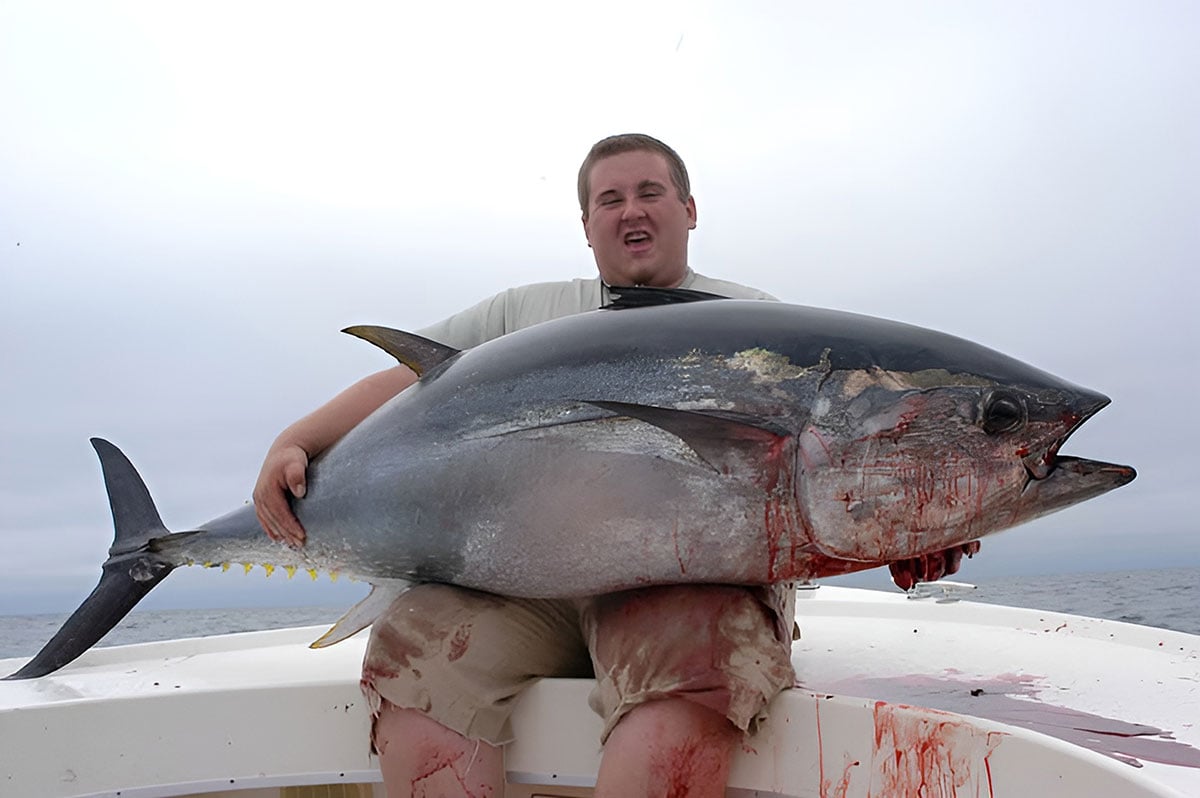
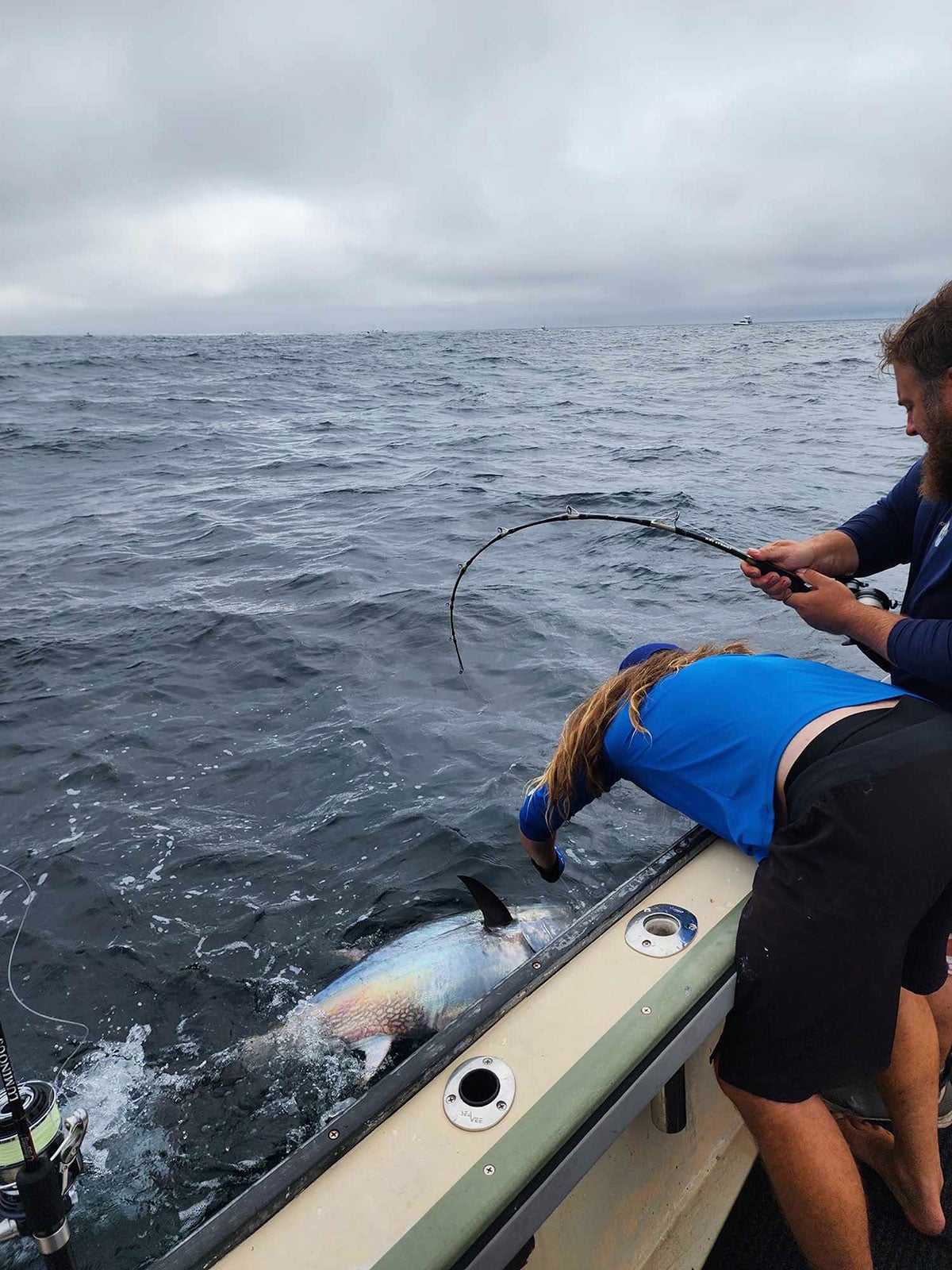
How many of us have caught a 70-inch plus bluefin on a 30-pound test jigging rod and reel set up? Matt has. He has landed over 50 bluefin over 100 pounds on a rod and reel that looks more appropriate for scup and sea bass fishing. As Matt says, “If you don’t get the bite, you are never going to catch anything”.
He goes on to say, “There is much more capability in a properly-balanced 30-pound class rod, reel and line than most realize. For one thing, a jig on 30-pound braid is going to get to the strike zone faster and stay there longer than a jig fished on heavier braid. Secondly, if I pair the right reel with the right rod and 30-pound braid, such that they all max out at the same breaking strength, I can not only get the bite, but can also put more pressure on a big tuna than most guys would think is possible.”
Matt is able to get the performance he wants from his 30-pound gear, because he is focused on the details and has taken the time to test and refine the line, reel, rod and jig until he created an almost perfectly-balanced combo where all components will break at approximately the same point.
Learning In The Network
“When I get the opportunity, I love fishing on other boats such as with Adam Nelson on the F/V Full Nelson out of Newport, RI and Dom Petraca who runs Coastal Charters Sportfishing , fishing his 29-foot SeaVee out of a number of southern MA and RI ports”, says Matt. “Adam and Dom are fishing for school bluefin throughout the season, so they are on the fish. I learn a lot from them and get to push the limits of my 30-pound gear”.
“Dom taught me the motto, ‘Pop it or stop it’ which is what I do. After the initial strike and that first big run by a bluefin, I ‘put the boots’ to the fish with so much pressure that I sometimes feel the reel seat beginning to flex. I do break some rods, but not as many as you would think and every failure is an opportunity to improve on my equipment and tactics. It’s a game of small percentages, each improvement of which gives me more advantage. Seemingly small things like using monofilament for my leader because it has more stretch than a comparable fluorocarbon leader and finding a 30-pound braid that keeps its narrow diameter, but breaks at 57 pounds, all improve my percentages of fish brought to the boat”.
It’s hard to make time for tuna fishing when the bass fishing is really good and vice versa. Fortunately, Matt’s observation is that days with strong tides are often better for bass fishing than tuna and a weaker tide during the daytime, can be better for jigging tuna.
Big Water Baits
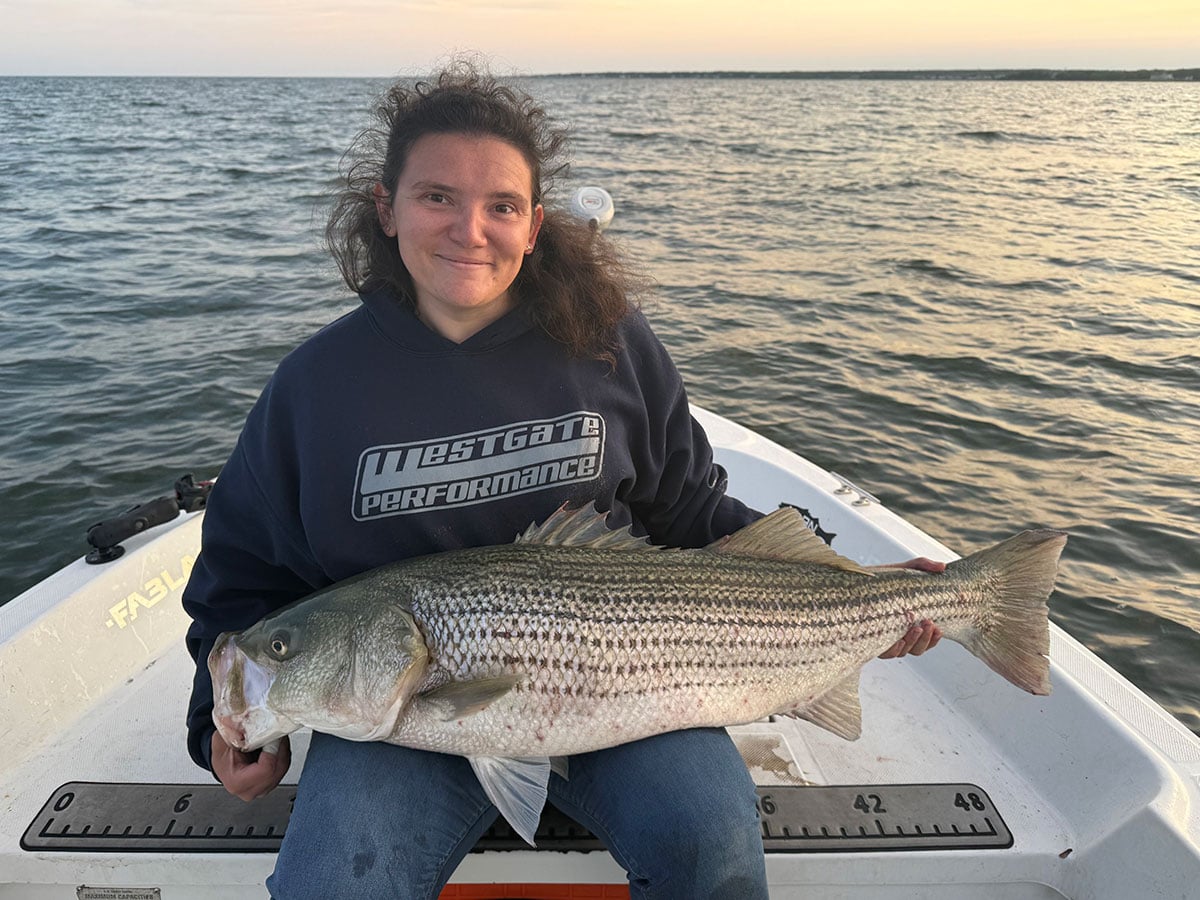
When you are spending over a thousand dollars a season on soft baits for bass fishing and you are good at “making things”, it might be natural to make your own plastic eels, straight tails and paddletails. Not only is Matt’s wife Alissa Perry, very often his fishing partner, she also runs Big Water Baits. Operating a sophisticated assembly of tanks, molds, mixing valves etc. she manages time, temperature and molten plastic to create a line of large soft plastics ranging from 8 to 14 inches that are perfect for the bass and tuna they chase together. What distinguishes this line of soft baits is how durable they are even though they are pretty limp, the thickness of the main body and that they have a wider swimming action in the water than many other soft baits.
When the Perrys go bass fishing, they go with armed with divided plastic boxes filled with pre-rigged soft baits using half- to 3-ounce jigheads, so as the current increases or decreases they can switch out to a bait that is weighted to fish just above the bottom.
“If you’re using the right weight leadhead, you can cast cross current and make one of our baits hover with minimal rod action, letting the current sweep the bait along”. That approach has worked often enough for Matt to describe it as “the dangle”, to use a term coined by Craig Sheridan, also known as @therealtroutman on social media.
The Details
When talking about soft plastics Matt underlines the importance of proper rigging. “Rig it right, round side down, with the hook centered and pointing straight up, emphasizing that being deliberate about how each soft bait is placed on the leadhead will make a significant difference to how well it fishes. He typically lines up the jighead alongside the body, marks the exit point with his finger, pokes that spot with the tip of the hook, then passes the hook through the nose of the bait, exiting – dead center – where he had marked on the flat-topped surface of the bait. “Some people like to super glue their lead heads and soft bodies, but I prefer to zip-tie them on very tightly. If the bait spins on the hook when fighting a fish, the zip tie allows you to spin it back around and make another cast”, says Matt.
“We stopped bass fishing in July because the sharks were so bad and it didn’t seem right to hook a bass and kill it because we couldn’t keep it away from the sharks,” says Matt. “We thought if we fished far to the east we wouldn’t kill any bass due to sharks, but that proved not to be the case. In some places, three or four sharks would force a hooked bass to the surface and mutilate it. Makes me a bit fearful to fall in the water!”
I was going to tell you about the 13-foot rod and center pin reel that Matt uses to catch dozens of steelhead when drifting his prototype grape-colored, trout worms on the rivers of Western New York, but that will have to wait for another time. That story is, but just another example of what happens when you combine Matt Perry’s passion for the details with his obsession for catching, as he puts it, “anything with fins”. To follow along with his obsessive lifestyle, look him up on Instagram @multi_species_matt.