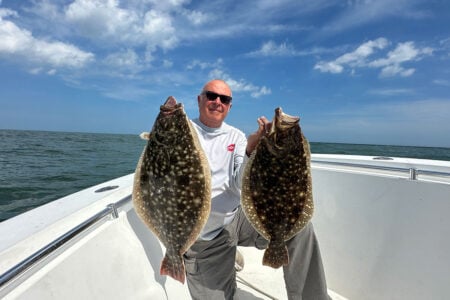
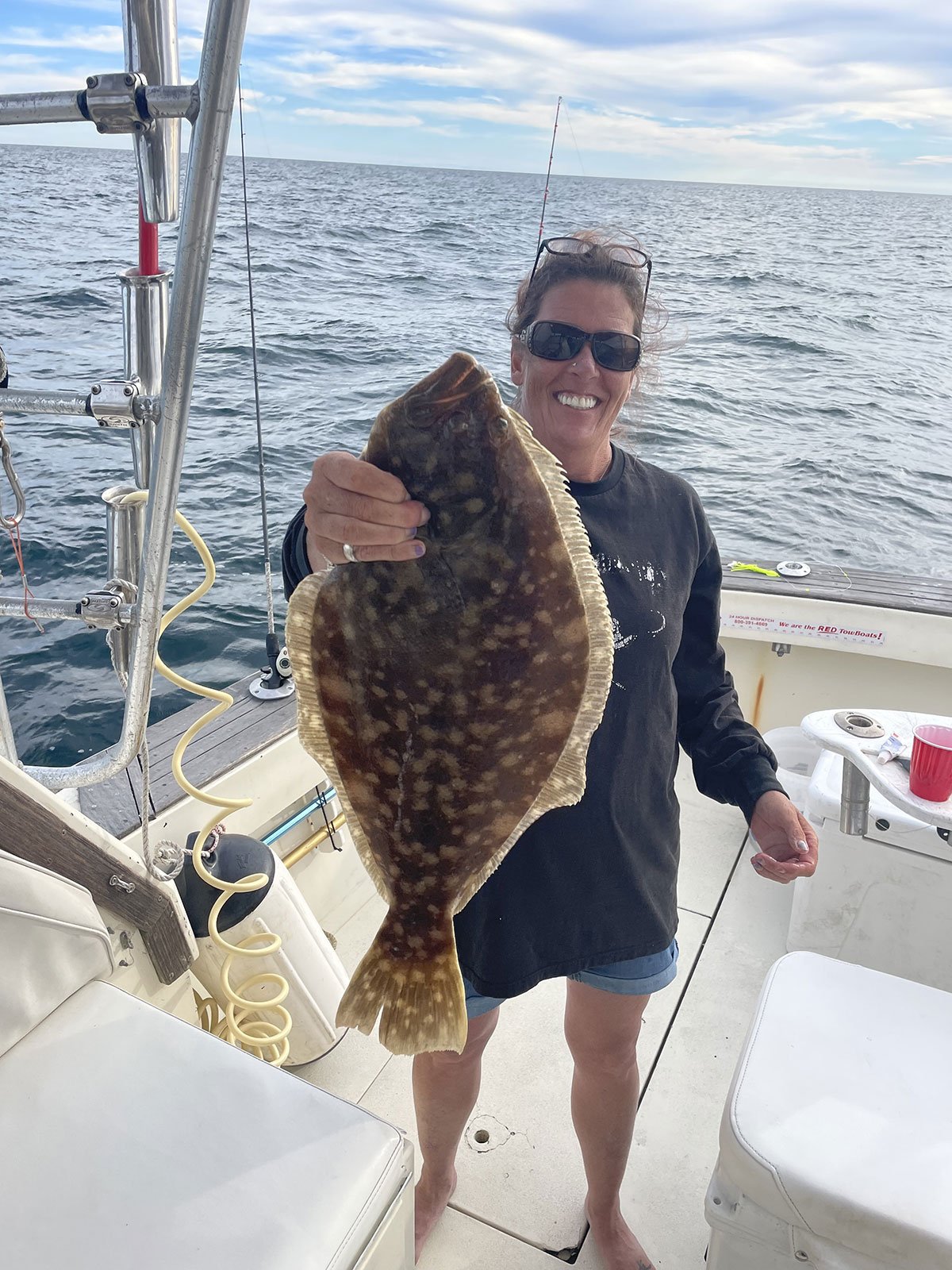
Planning out your last South Shore fluke trips of the year.
As the season winds down, (fluke season closes October 15th), those last two weeks could produce some real doormats. The fish will be fattening up for their winter trek south, and will be looking for big baits to feed on. Over the years anglers have always searched out big fluke in the spring as they enter our bays, but as the fall progresses, these predators begin leaving the bays, and run along the ocean coast. There are several strategies anglers and captains have proven to be effective. Let’s take a look and see how you can score big in late September and October. The action on doormats could happen inside the bay, or out in the ocean close to reefs, wrecks and rough bottom.
Charts…Not Just Electronics
Ambush areas are not hidden, but you have to look at charts, not your electronics, and come up with a serious game plan for doormat hunting. In the bay, channels, deep drop-offs and holes are prime candidates. Drains from the creeks are another.
Take a look at a Capt. Segull Chart of the area from the Kismet Reef to inlet. On this chart, you will find deep holes of 35 feet or more. These holes are perfect ambush areas for big fluke. I still believe these holes hold large fluke every fall, but I also believe this is one of those “secret” happenings that is kept quiet. There is no big secret how to fish them, but timing is paramount. For some reason these holes only seem to produce for a quick period, and that period is slack water and the first 30 minutes of the outgoing current. Watch the current and wind conditions, then set up just east of any hole you find.
In the fall, the edges of channels and any drains that are close to inlets will be the hot spots. Again, looking at charts will usually give you a good idea. The OBI Flat, and the drain that runs adjacent to it is always good. The Great Gun Channel in Moriches, along with the West Cut leading to Moriches Inlet are good spots too. If you can find a smaller drain/feeder creek, fish it at the start of the outgoing tide as bait makes its way into the bay.
Hit The Ocean
The ocean is an entirely different set of rules. For the ocean, I reached out to Capt. Walter Czekaj of the “Fishfinder II” out of Captree. Although Walter is on the water daily in the big boat, he knows what it takes for smaller boats to score on doormats in the fall.
Walter feels that in the fall, big fluke are along the hard bottom near any reef or structure from Moriches to Jones and beyond. As with any fishing however, each day can bring on an entirely different set of “rules.” Fish may be on the hard bottom just off a piece on Tuesday, but on Wednesday they could be gone. Bear in mind the best action is going to be in the 70 to 120-foot range as these fish on the outside are gearing up, or already in migration mode.
Structure of any kind is an important factor in the fall. Fluke will live or feed on the hard bottom near structure. Find a smaller wreck or piece less fished and chances are you could find fluke feeding.
The last issue that will come into play is current and wind. The wind is a simple one – if it’s blowing harder than 10, it is not going to be an easy day. Wind and current can cause fast drifts making bait presentation harder and snags more prevalent. Even if the wind is light however, the current may be strong. Again, strong currents mean more snags, drifting off the wreck too quickly and poor bait presentation. In the ocean, the slower the drift, the better. Lastly, avoid any ground swell conditions that may exist from passing storms.

Key Baits
Peanut bunker is one of the baits I would suggest you have at all times when fluking the fall. Learn how to throw a small cast net and it’s an easy chore at first light near most of the marinas and canals. The second live bait would be live spot, which you can buy. The way I like to fish these baits is simple. Make up a 20-pound test fluorocarbon leader of about 6 feet, with a barrel swivel at one end and a 4/0 wire circle or wide gap hook on the other. Above the hook, use a 1/4 to 1/2-ounce egg sinker and finish it off with braid in 10 to 15-pound test to the reel. The lighter line will give the best action on your bait and allow a lighter weight or bucktail in heavier currents. The areas you will be fishing are not overly loaded with rocks so cut-offs should be at a minimum. As for the lighter line and doormat style fish, utilize the rod and reel and a properly set drag to fight the fish slowly and steadily to the landing net.
| BIG FLUKE BAITS |
| There are a lot tried and true methods for enticing a large fluke, but in my opinion, nothing beats larger baits or colored teasers and Gulp Grubs. Fluke are aggressive feeders and will readily seek out larger meals. Sure they love the old stand-by spearing and squid combo, but a true doormat is probably going to come your way a lot quicker if you use larger baits.
There are a lot of larger baits I feel will all work well on the fluke front.
|
Years back, there was an incredible run of big fluke that came out of Great South Bay. There was only a handful of anglers entertaining it, and they had fish upwards of 10 plus pounds with regularity – inside Great South Bay – and all on peanut bunker. I believe this is still happening, but those select anglers are keeping it to themselves.
Next up on the bait front would be large strip baits. To me, I like the freshest strip baits I can get. That being said, fresh caught or even if you have to stop by a fish market, if you want a doormat that is a good option. Most local shops have frozen baits like whole squid or mackerel as well. As far as strip baits go, I want at least a 6-inch bait, with 8 to 10 inches the max. I like the bait to be no larger than 3/4 of an inch wide, which to me gives it the best flutter. Hook the bait once through the hook or bucktail, whatever you are using.
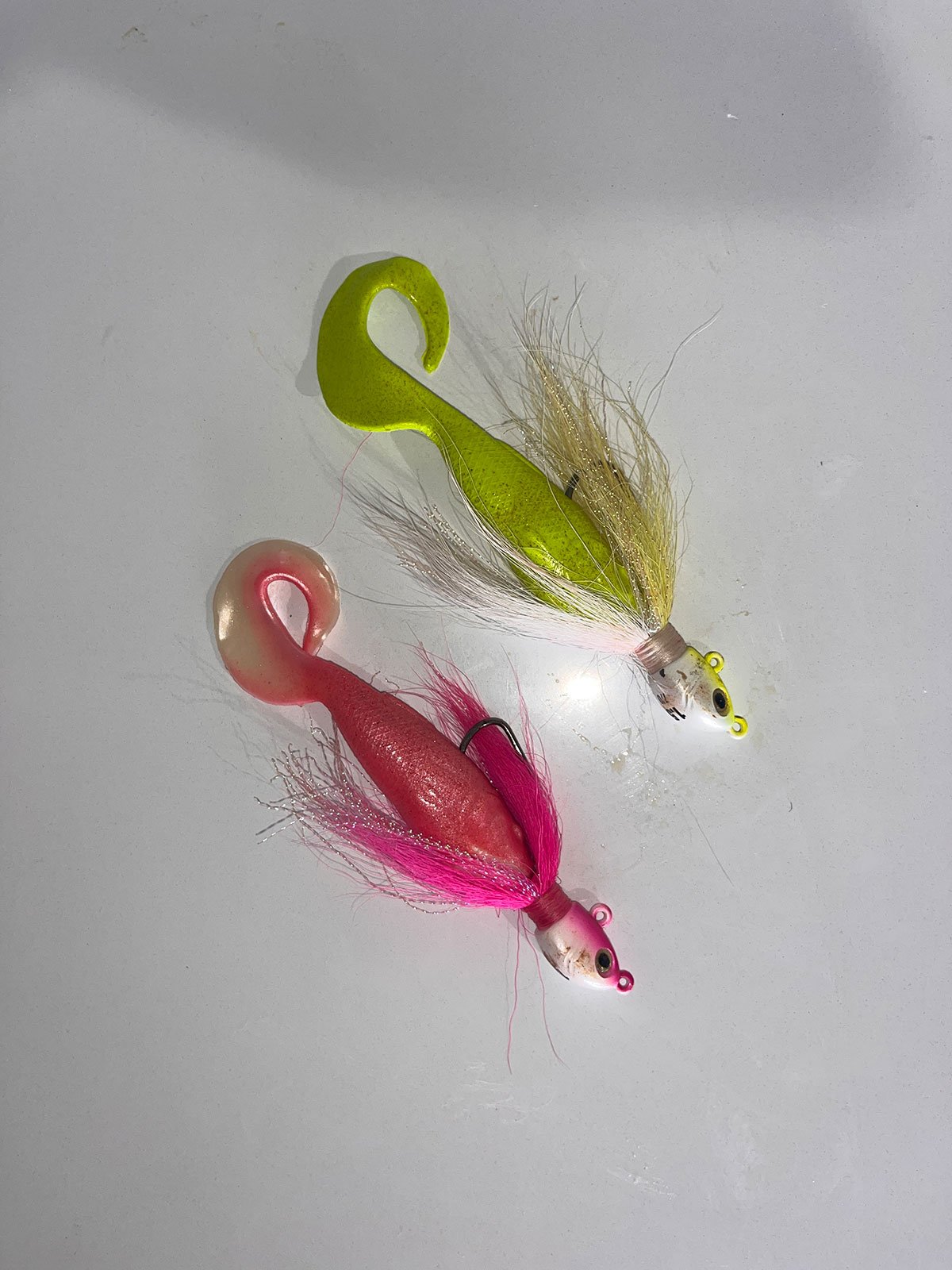
The last option is large artificial baits, with most of the time paired with a bucktail. With ocean fishing, even though you may be fishing deep, and current comes into play, use the lightest bucktail you can get away with. The larger Gulp or Fishbite bait will give the larger profile needed to induce Mr. Doormat into biting.

Go Get ‘Em
When fluke hunting, setting the hook is not needed until you feel the fish running or shaking. Fluke most times will first lie on a bait before engulfing. If you feel heavier than the normal weight of your rig, drop back 10 feet, then just slowly lift. As you slide the bait, the fluke will engage. Set the hook with a quick snap of the wrist.
The fall is a time for large fluke exiting the bays and heading to offshore wintering areas. Plotting your day, watching the tide and wind, plus the “right” baits will have you holding up your biggest fluke of the year. Hopefully these tips will help put your largest fluke in the net. With Berkley and Fishbite soft plastics, properly prepared large strip or live baits, big late season fluke are a waiting.