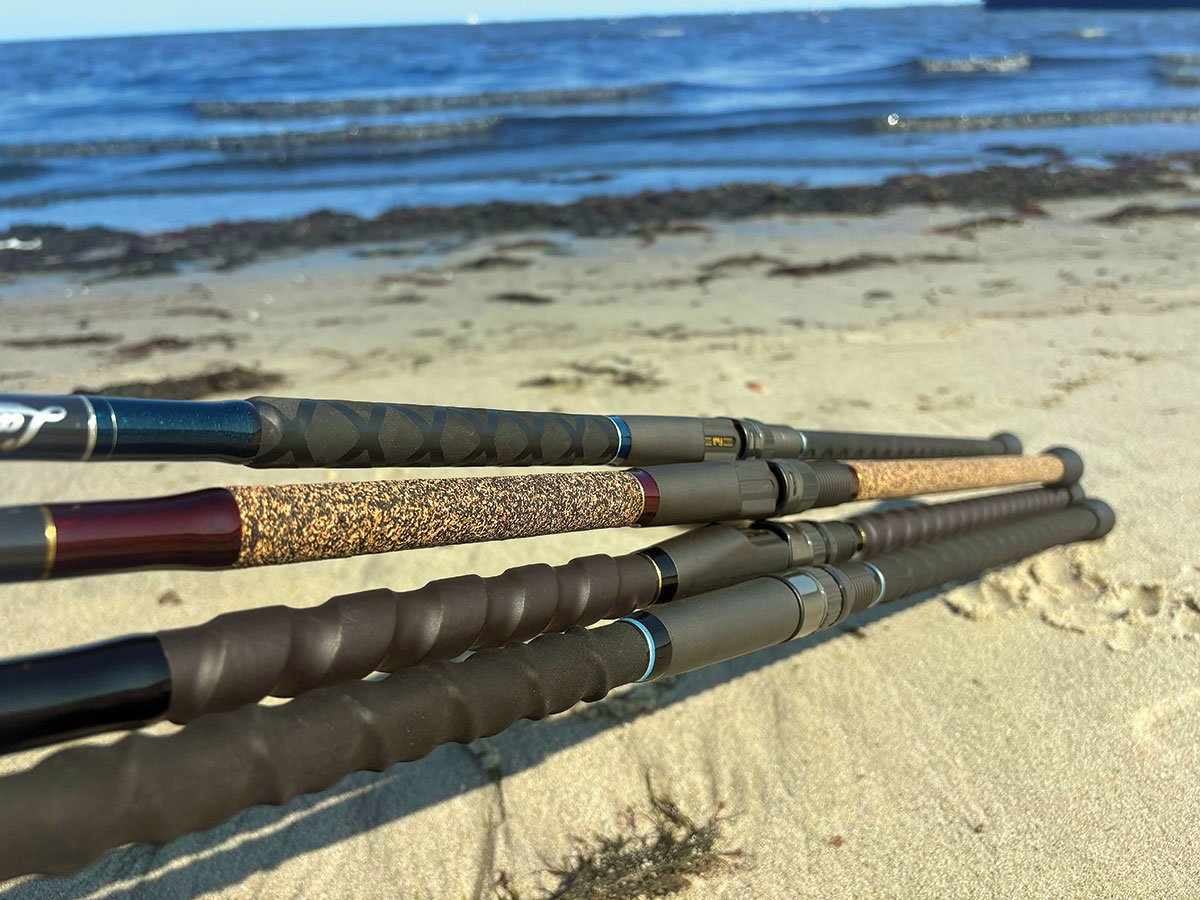
Four different surf rod grip options to consider on your next surf rod.
For the serious surfcaster, the connection between angler and rod goes far beyond the butt section. The way a rod feels in your hands—whether you’re laying into a long-distance cast, wrenching a cow bass from the boulders, or bracing against northeast chop—is all rooted in one unassuming but critical component: the grip.
Rod blanks, guide layout, tip action—these are the features that dominate conversation when picking or building a surf rod. But if you’ve ever had a grip tear mid-tide, slip in your palm during a crucial hookset, or blister your hands after a long weekend of casting, you know just how important handle design can be. It’s not just about comfort. It’s about control, feel, fatigue resistance, and even fish-fighting leverage.
Most off-the-rack rods come with EVA foam or molded rubber grips. They’re serviceable, affordable, and consistent. But once you cross into the world of custom builds—or high-performance factory sticks—you’ll run into a different conversation entirely. The grip isn’t just something you hold anymore. It’s something you choose. And among those choices, three dominant surfcasting grip styles continue to stand out: cork tape, X-Flock heat shrink over bare blank, and shrink tube over cork tape.
All three styles are functional. All three are capable of catching fish from Montauk to the Outer Banks. But the details—and how they interact with your hands—are what separate one from the next. Let’s dig into each in depth, covering how they’re built, how they perform, and why different anglers swear by them.
Traditional Cork Tape
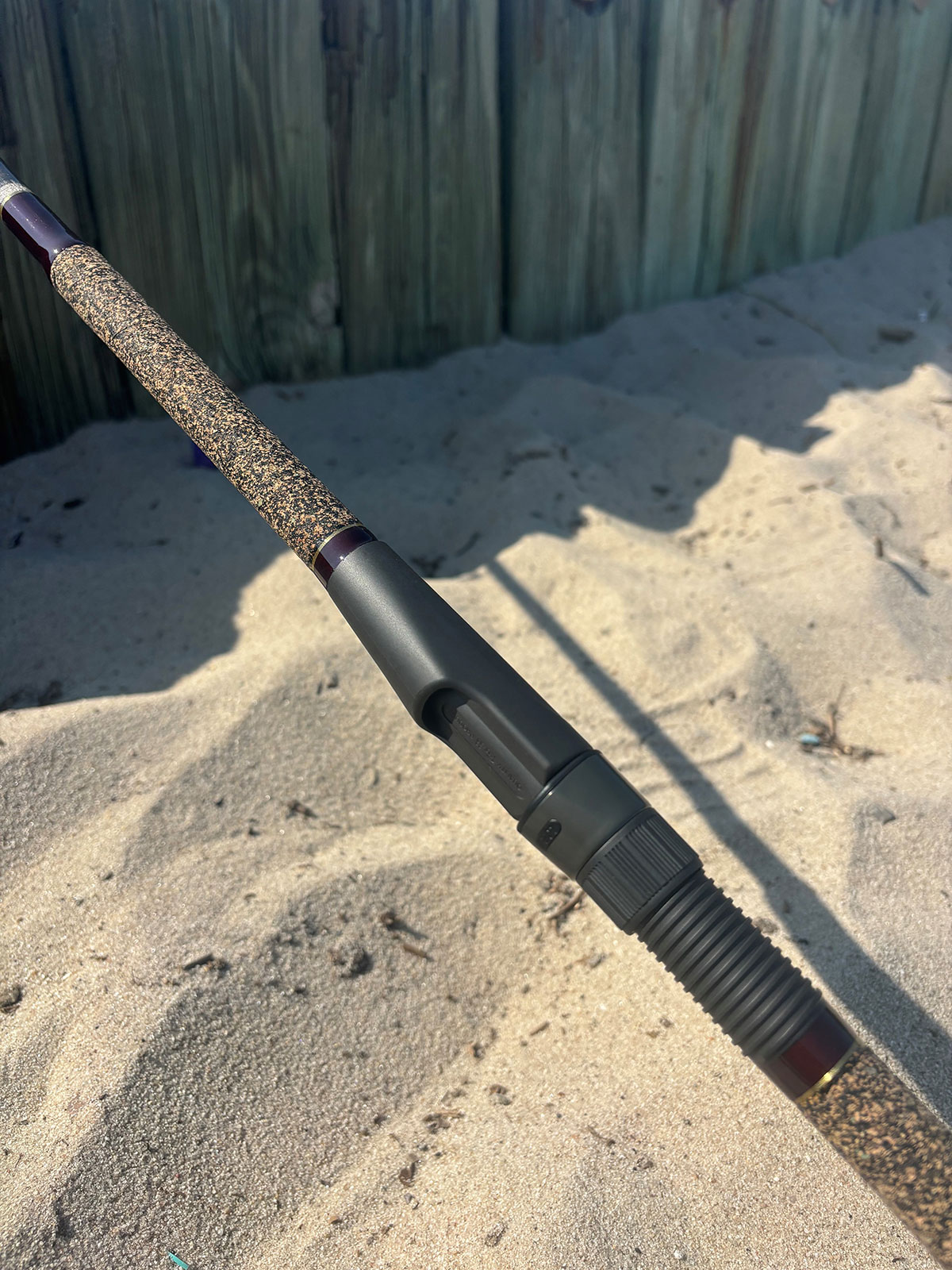
Spend a few minutes on any Northeast jetty or surf setting, and chances are you’ll see rods wrapped in cork tape. It’s a staple among custom builders and long-time surfcasters, and for good reason. Cork tape has history, texture, and a certain simplicity that continues to make it relevant—even in a world of carbon fiber everything.
What is it? Cork tape isn’t traditional cork like you’d find on a fly rod. It’s actually a flat, flexible ribbon of cork and rubber composite, sold in rolls and applied by hand, spiraled around the blank from butt to reel seat (or beyond). Once wrapped, it’s usually sealed with electrical tape or wrapped with thread and coated in a resin for longevity.
Pros:
Direct feel: Nothing transmits vibration from blank to hand like cork tape. Because there’s no padding or thick covering, every tap, bump, or headshake is communicated with startling clarity.
Lightweight: There’s virtually no bulk added to the rod, which matters when you’re chucking metal for hours on end or walking miles of beach.
Customizable: Want a flare at the butt? Prefer an elongated foregrip? Cork tape lets you shape and layer with ease.
Field serviceable: Rips, cracks, or weather damage can be rewrapped in minutes. No heat gun required.
Cons:
Limited durability: Over time, cork tape can harden, peel, or trap sand. In heavy surf or repeated dunkings, it may start to degrade faster than other options.
No cushion: While some anglers prefer the raw feel, others find it punishing after a full tide of casting, especially when using rods with heavier sinker ratings.
Grip degradation: With fish slime, sunscreen, and wet hands in the mix, cork tape can get slippery—particularly if the outer layer isn’t sealed or is worn down.
Who it’s for: Purists, power-casters, and anyone who values blank sensitivity over long-haul comfort. Cork tape is old-school, but not outdated.
X-Flock Over Bare Blank
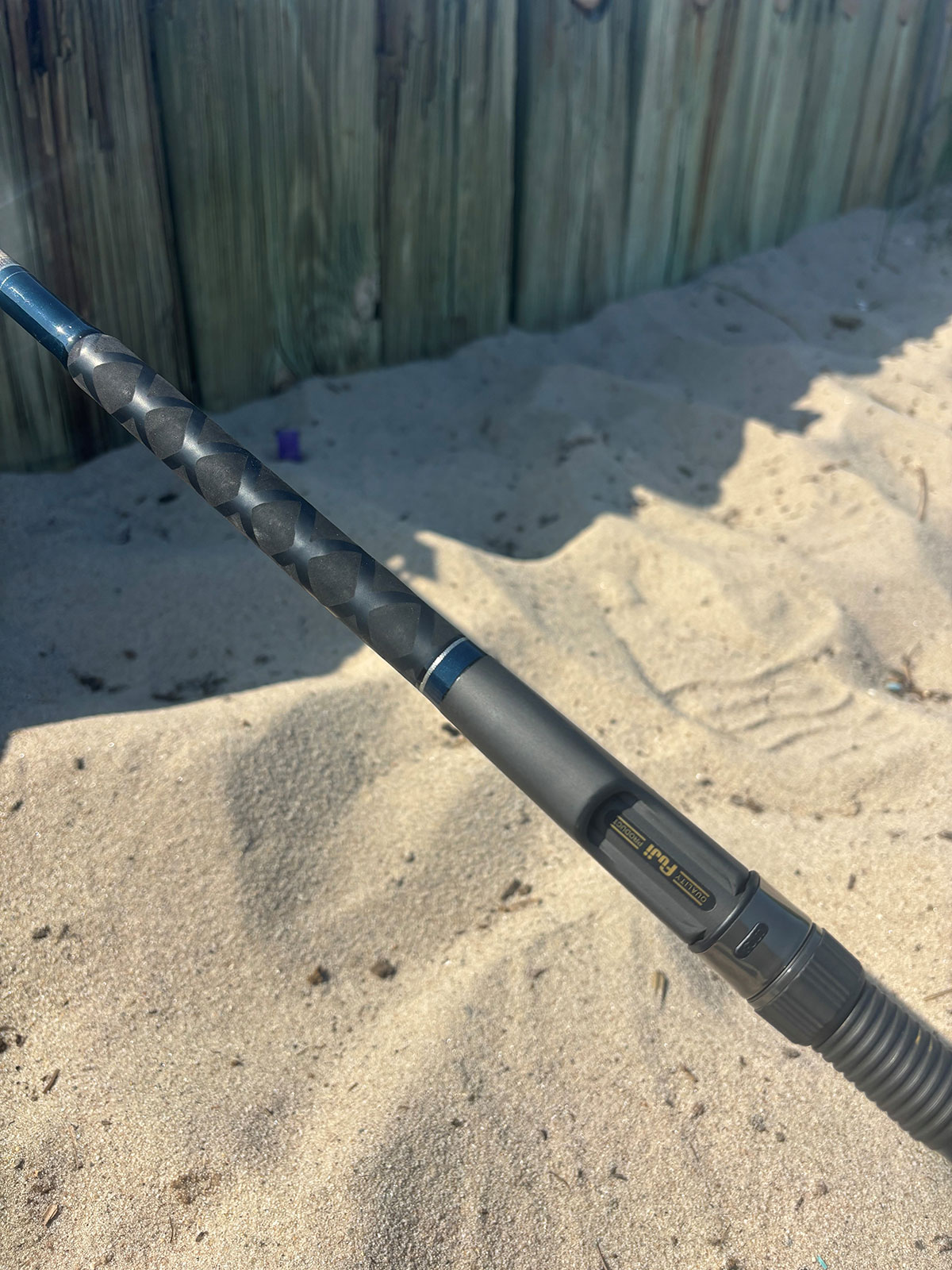
If cork tape is about feel and tradition, X-Flock over a bare blank is the grip of modern performance. This style has surged in popularity among builders and surfcasters who fish hard and demand maximum grip—especially in tough or wet conditions.
What is it? X-Flock is a textured, cross-hatched rubberized shrink tube. When heated, it contracts tightly onto the blank, forming a grippy, durable surface that’s nearly bulletproof. There’s no cork underneath—just raw blank and shrink.
Pros:
Serious grip: Wet hands? No problem. Gloves? Still sticks. The raised texture bites into your palm and won’t twist, even under torque.
Weatherproof: Rain, salt spray, UV exposure—X-Flock takes abuse and keeps going. It doesn’t absorb water, swell, or break down easily.
Minimalist: This is the lightest and thinnest way to add a true grip surface to a rod. No cushion, no fluff, no frills.
Clean look: Applied correctly, X-Flock over blank creates a sleek, professional aesthetic that appeals to custom builders and detail-oriented surfcasters.
Cons:
Hard on hands: Without any underlayer, this grip is firm. Some might even call it harsh. After a long session or repeated fights with strong fish, you’ll feel it.
Cold transfer: In late-season conditions, that bare-blank contact can turn frigid fast.
Unforgiving: Once it’s on, it’s on. Installing X-Flock is a one-shot deal. Removing it requires a razor blade—and precision.
Who it’s for: Anglers who fish hard structure, wetsuit swim into rocks, or demand traction in the worst weather. If you’re prioritizing grip over comfort, this one’s tough to beat.
Shrink Tube Over Cork Tape
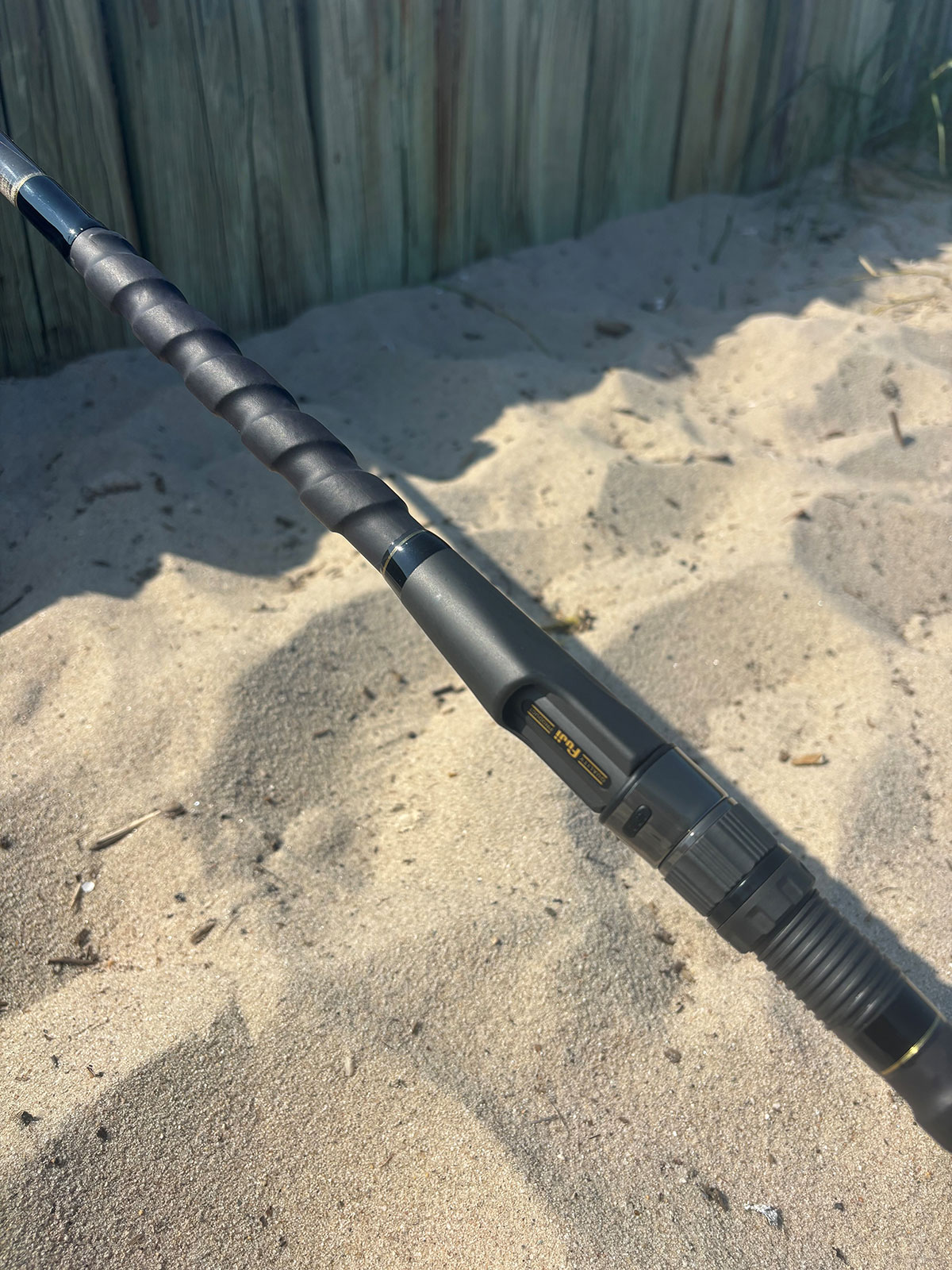
Somewhere in between the stripped-down feel of cork and the rugged durability of X-Flock lies the hybrid option: shrink tube over cork tape. This combo aims to deliver the comfort and shape of cork with the added resilience of a protective outer layer.
What is it? This grip style starts with a base layer of cork tape wrapped around the blank. Then, a smooth or textured heat-shrink tube is applied over the top and sealed in place with a heat gun. It can be done with standard shrink or X-Flock, depending on texture preference. Some prefer to space out the cork tape into a swirl going up the blank to add a uniqueness to the build.
Pros:
Cushion and comfort: The cork provides padding, which reduces hand fatigue, especially on heavier setups.
Improved durability: The shrink tube protects the cork underneath from peeling, water intrusion, and general wear.
Less slippage: Compared to bare cork tape, the added layer provides slightly better grip without being overly abrasive.
Tunable feel: Depending on the thickness of the cork and type of shrink used, you can tweak the final feel to your liking.
Cons:
Heavier: Two layers means more material, and while not excessive, it does add weight—especially on long rods.
Permanent install: Once the shrink is on, there’s no easy repair. You’ll need to cut it off and start from scratch if it’s damaged.
Bulkier diameter: Some surfcasters find the added circumference interferes with their grip, especially if they have smaller hands.
Who it’s for: Anglers looking for a more forgiving, all-day grip that still holds up to salt and sand. This is a great compromise between raw feel and long-session comfort.
Smooth Shrink Tube Over Crisscrossed Paracord
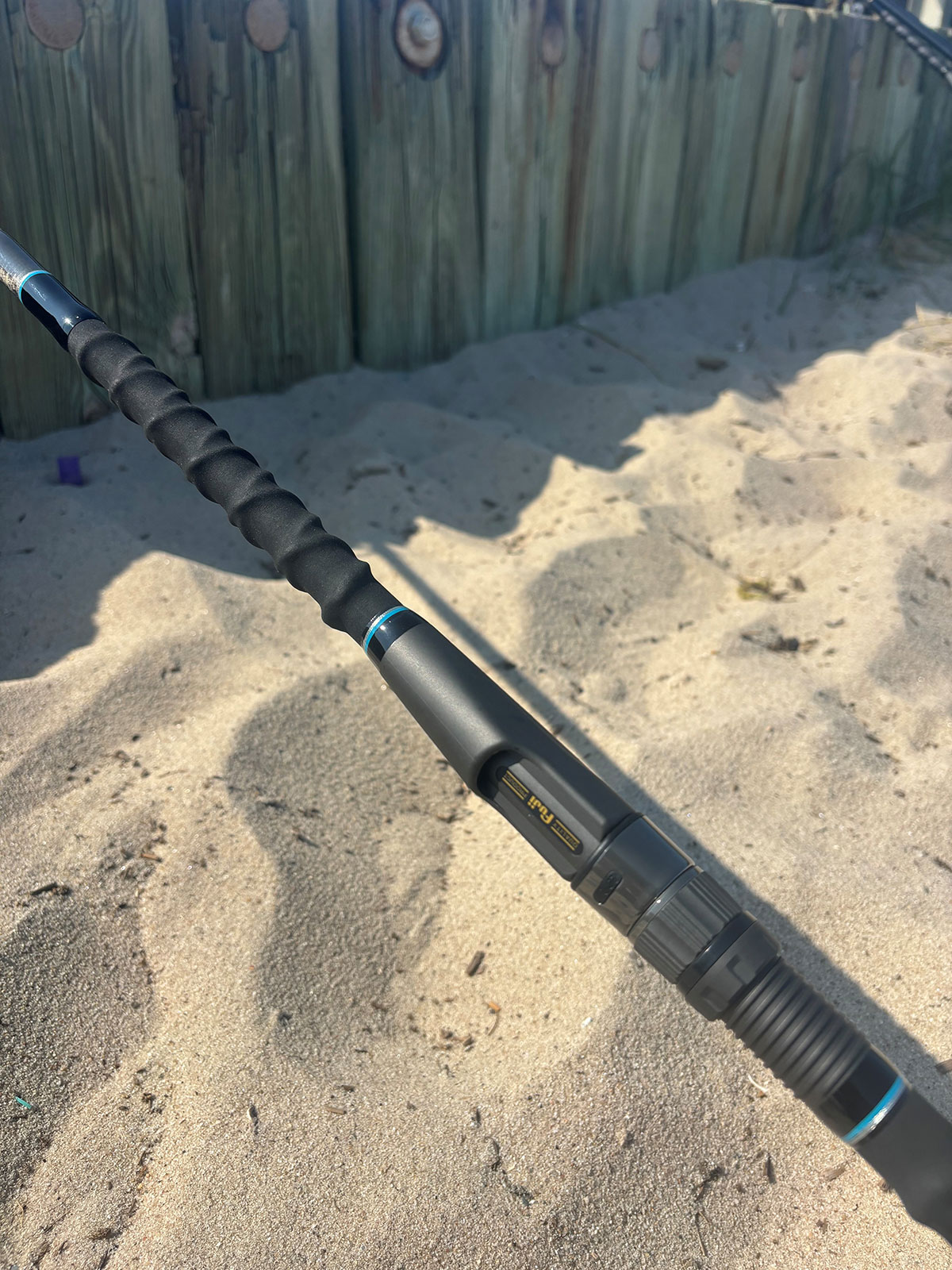
Among custom surf rods, there’s a grip style that turns heads as much for its looks as for its performance—smooth shrink tube over a crisscrossed paracord underlay. This method blends function, durability, and a bit of rod-builder artistry, giving your surf stick a grip that stands out in both feel and appearance.
What is it? This build starts by wrapping thin paracord in a tight, crisscross pattern directly onto the blank. The raised pattern adds both texture and padding. Once the pattern is complete, a smooth, solid-colored shrink tube is applied over it. When heated, the shrink conforms snugly, locking the cord in place and creating a seamless, tactile grip. The use of some adhesive on the cord before shrinking will extend the life of the grip.
Pros:
Unique texture: The cord beneath the shrink creates a subtle, raised grip pattern that offers traction without feeling abrasive.
Custom look: Color combinations are endless—builders can match wraps, trim bands, or personal taste.
Durable: The shrink layer shields the cord from wear, saltwater, and UV exposure.
Balanced feel: The paracord adds light cushioning while the smooth shrink keeps the exterior easy on bare hands.
Cons:
Weight: The added cord layer is bulkier than cork tape or bare shrink, adding a bit of heft to the rod.
Complex build: Wrapping the cord evenly takes skill and patience—this is best left to experienced builders or done slowly if you’re DIY.
Permanent choice: If the cord or shrink wears out, the whole assembly needs to be cut away and rebuilt from scratch.
Who it’s for: Anglers who want a grip that blends performance and personality. Ideal for those looking to add individuality to a custom build while still maintaining comfort and durability during long surf sessions.
Your Rod, Your Grip, Your Call
If you’re serious about dialing in your surfcasting gear, grip style shouldn’t be an afterthought—it should be a conversation starter, especially when building a custom rod. Whether you’re wrapping the blank yourself or collaborating with a local builder, grip material and layout are among the first design decisions that will affect your experience every time you fish.
Working with a local rod builder opens the door to hands-on personalization. Want a long rear grip for a two-handed cast? Prefer a short foregrip to maximize reel seat comfort? Like a textured X-Flock under your trigger finger, but smoother shrink above the reel? A builder can guide you through these tweaks, even test out different prototypes before committing to a final install.
If you’re a DIY rod builder, installing cork tape or X-Flock is well within reach for an intermediate hobbyist. With basic tools—a heat gun, razor blade, tape measure, and patience—you can try out different wraps, replace worn grips, or mix materials to suit the season or application.
The point is: grips don’t have to be one-size-fits-all, and they don’t need to come from a factory. Whether you’re wrapping an, ODM, Century, or your grandfather’s rebuilt Lamiglas, the grip is one of the few elements of the rod where form and function intersect so directly with personal preference. And once you get it right, your rod won’t just fish better—it’ll feel like an extension of your hand.
All About The Connection
There’s no perfect grip for every angler, but there is a perfect grip for you. It might be the raw feedback of cork tape, the locked-in control of bare X-Flock, or the padded comfort of shrink-over-cork. Maybe it’s something you build yourself. Maybe it’s something you trust your builder to perfect.
Because in the surf, where every cast counts and every hookup demands control, the difference between a fish lost and a fish landed may come down to the very thing you’re gripping when the rod bends deep: the handle.