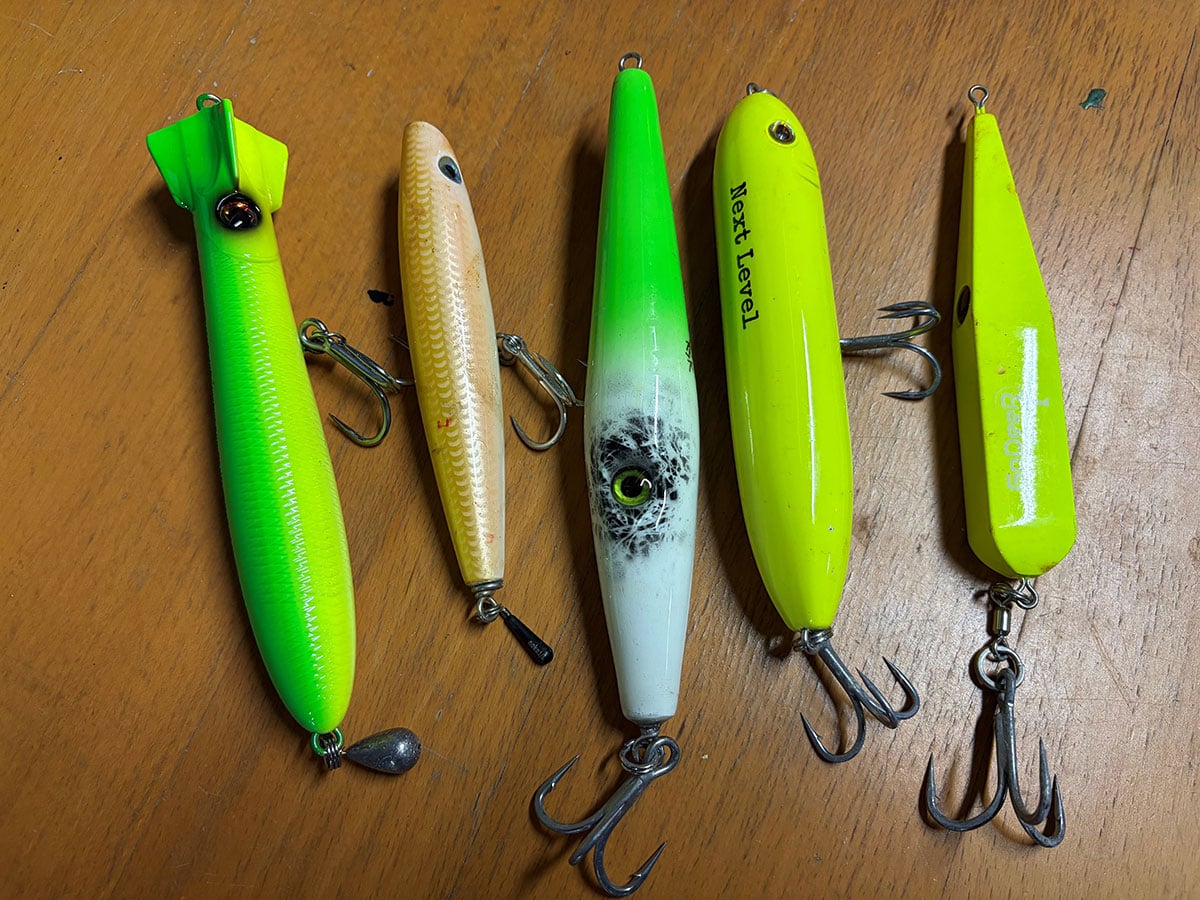
Five long-cast lures for the daytime surfcaster.
New surfcasters tend to overestimate the importance of casting distance in the surf. More experienced surfcaster assure them, (perhaps with just a touch of condescension), that the bass are often in close, downplaying the need for distance. However, distant structure or rips, and schools of fish breaking further out can mean making long casts or going fishless. Here are five daytime plugs to use when distance is required.
North Bar Flying Squid. This pencil popper was inspired by the fondly remembered, long-casting discontinued (and then reissued in plastic) Yo-Zuri Surface Cruiser. The Flying Squid was designed by Rob Koch, Larry Welcome’s former business partner, after studying the aerodynamics of airplane wings. Rob’s version was made of wood and evolved into a hard plastic lure to which Larry added fins. The fins are a unique feature of the Flying Squid and give it remarkable balance in flight and casting distance. Unlike many pencils, the Flying Squid almost never tumbles, but instead flies true and far. It casts so far that it’s almost impossible to get your line out of the water for the first 30 to 40 yards of the retrieve. Larry suggests fishing it like a spook for 30 to 40 yards with gentle pops of the rod. The lure will slide forward, but with slack in the line it will sink a bit and move backward. Many hits come during the spook-like retrieve. When it gets about two-thirds of the way in, you can switch to a more traditional “pencil popper retrieve”. As an added bonus, the fins also throw a lot more water than other pencil poppers.
RSK RPG. The RGP was designed for distance at Montauk’s False Bar—the same spot that inspired Chris Voorhies larger needle glide. The tail weighting and removal of the middle hook both allow distance and work perfectly for bluefish. While shaped like a pencil popper, I find you don’t have to work the tip to get enough action, although sometimes I will gently shake the tip to add a little action. For stripers Raj suggests using a slow retrieve, allowing the tail hook to ride under the surface. There will be misses with stripers because of the lack of a belly treble, but if you can’t reach the fish you have zero chance, anyway. The RPG will put you in water you can’t reach otherwise.
Russ Andersen Pop Dart. Russ is a plug maker who fishes a lot and consequently this plug has evolved over decades with a tweak here and a change there. There is a thicker bodied model that I tend to use and a thinner sand eel model. The unique cut-outs on the bottom of the Pop Dart provide stability and make it perhaps the easiest surface plug to work—all you need to do is shake the rod tip a bit and it dances perfectly. I’ve been in peanut bunker blitzes where guys using the pop dart pulled some good bass while I threw everything else I had with nothing to show for it. For reference, the Pop Dart casts roughly the same distance as the Super Strike 2-3/8-ounce popper.
Williamson Surface Pro. I like the larger 180 model that runs 7 inches and weighs 3 ounces. I’ve also fished the 160 model as well. Made from plastic and through wired, the Surface Pro is exceptionally sturdy and has stood up to everything from striped bass to large blacktip sharks in Florida. The 180 casts nearly as far as most pencil poppers but has more of a side to side, walk the dog action. It come with two in-line single hooks but I put a treble on the belly and a small weight on the back.
Next Level Spook. The Next Level spook was a last-minute entry. I have recently witnessed it in action in Florida at the PhaseGear Surf Lodge and came away impressed. Coming in at four ounces this spook can really fly, while still providing that vertical glide and rattle on the retrieve that make spooks particularly appealing to striped bass. Because of the amount of movement these plugs get when worked properly, they are one of the few lures I leave a tail hook on.