When a plug takes on water, bad things happen – here’s how to fix it.
Surfcasters are nostalgic and that’s something I like about us. While we do embrace cutting edge innovations, there’s still this understood affection for the classic craft of plug building and we reserve a special level of achievement for any striped bass taken on a custom made wooden plug.
Wood has its shortcomings, it’s not a consistent medium, it’s porous and takes on water if not properly treated, it can chip, dent and crack… but in some strange way, these are the things that make them special. While most well-made wooden plugs are effective, there really are singular standouts among a large batch that just have “the magic”; and that magic is only revealed in the water. Take it from someone who’s been building plugs for a long time, mojo plugs are impossible to replicate “in the lab”.
The process of sealing a wooden lure is, in itself, an imperfect process. The raw wood plug is coated on all of its surfaces, inside and out, with a sealant designed to make it impervious to water intrusion. But in the process of building and fishing a plug, that seal can become compromised. Additionally, some pieces of wood are just “thirstier” than others and more sealer is required to keep the water out, if a thirsty spot is located along the thru-wire hole, there would be no way for the builder to know. And if you’re wondering, yes, it has happened to me.
At best, a compromised seal will result in the plug’s action changing as it takes on water, becoming heavier and more sluggish, at worst, it might swell and crack. But all is not lost, even a cracked plug can usually be saved. The waiting is the hardest part, RIP Tom Petty, because the first step is letting the plug get good and dry, and I would suggest hanging it up to dry for a bare minimum of 30 days, but I’d be happier if it were three months. The reason is that any moisture left trapped in the wood will be there forever.
Before hanging it up to dry, cut the thru-wire and disassemble the plug as much as possible, meaning remove everything you reasonably can; if you can get the grommets out, do it; if you can get the lip out, do it… you get the idea. Once dry, buy yourself a tube of Devcon 2-ton Epoxy and mix up about a tablespoon or so, slather it onto the end of a pipe cleaner and use it to goop up the inside of the front half of the thru-wire hole, then re-slather it and repeat the process coming in from the rear. Use the same process to ensure that the hook hole(s) are sealed. I also recommend epoxying the lip and grommets back into place and closing the slip slot with epoxy, too.
If the wood is cracked, use toothpicks or even little strips of thin cardboard to cover the inside surfaces of the crack with epoxy or a good waterproof wood glue like Titebond III and use a clamp or vise to close the crack and glue it shut. Tip: if using a vise, wrap the plug with a thick rag so that the jaws of the vise don’t damage the paint and finish.
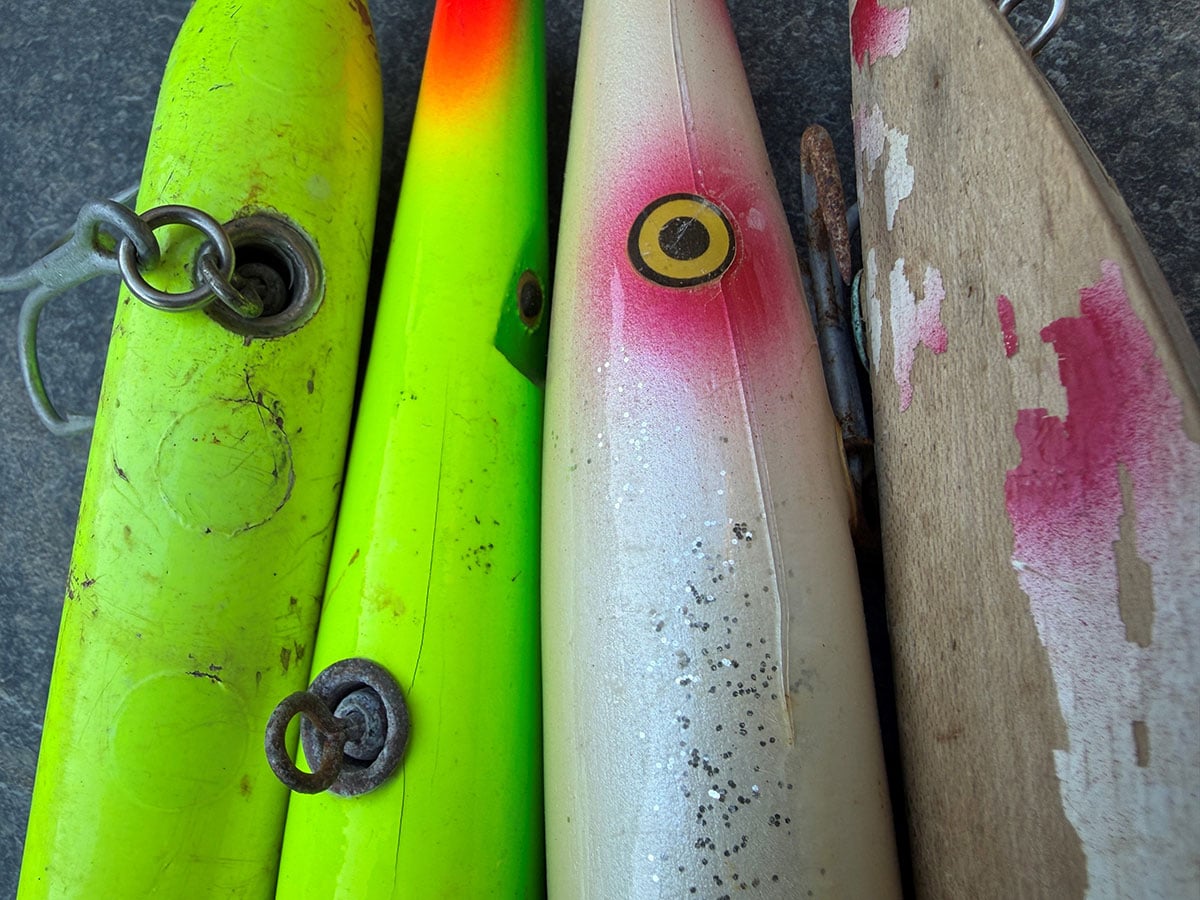
If the plug has only swollen enough to crack the epoxy, but the wood is still intact, believe it or not, this is actually worse for its long term durability and harder to fix. Typically, when this happens, the expansion/contraction of the wood will “pop” the finish, meaning it comes loose from the paint or may pull the paint loose with it, exposing the primer or sealer. Wherever this delamination happens (usually in the vicinity of the crack), the paint/epoxy is almost certain to peel or chip, and there’s nothing you can do about it. Your best bet is to use some of that 2-ton epoxy to try and fill in that crack in to the level of the rest of the clear coat. If your plug has a heavy gouge from ‘hook swing’ the final step, detailed below, will seal the exposed wood and get it back into fighting shape.
The last step is to lightly scuff the plug with something like a Scotch Brite pad, wipe it down with a barely damp rag (allow to dry) and then give the whole plug a thin coat of a bar top style epoxy, such as Envirotex. When a plug swells or cracks, there could be many reasons, and while taking the steps detailed above will not return your plug to its original look and durability, it will keep it in the lineup and catching fish for seasons to come.