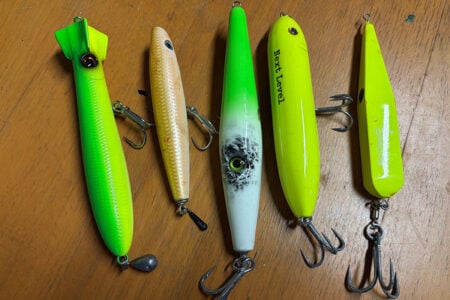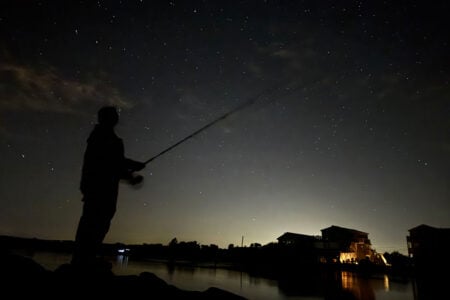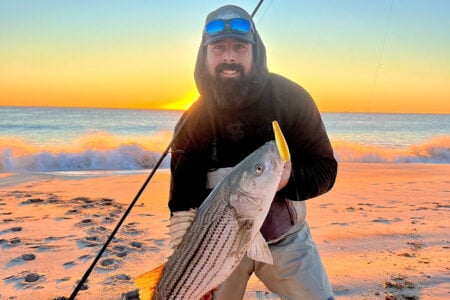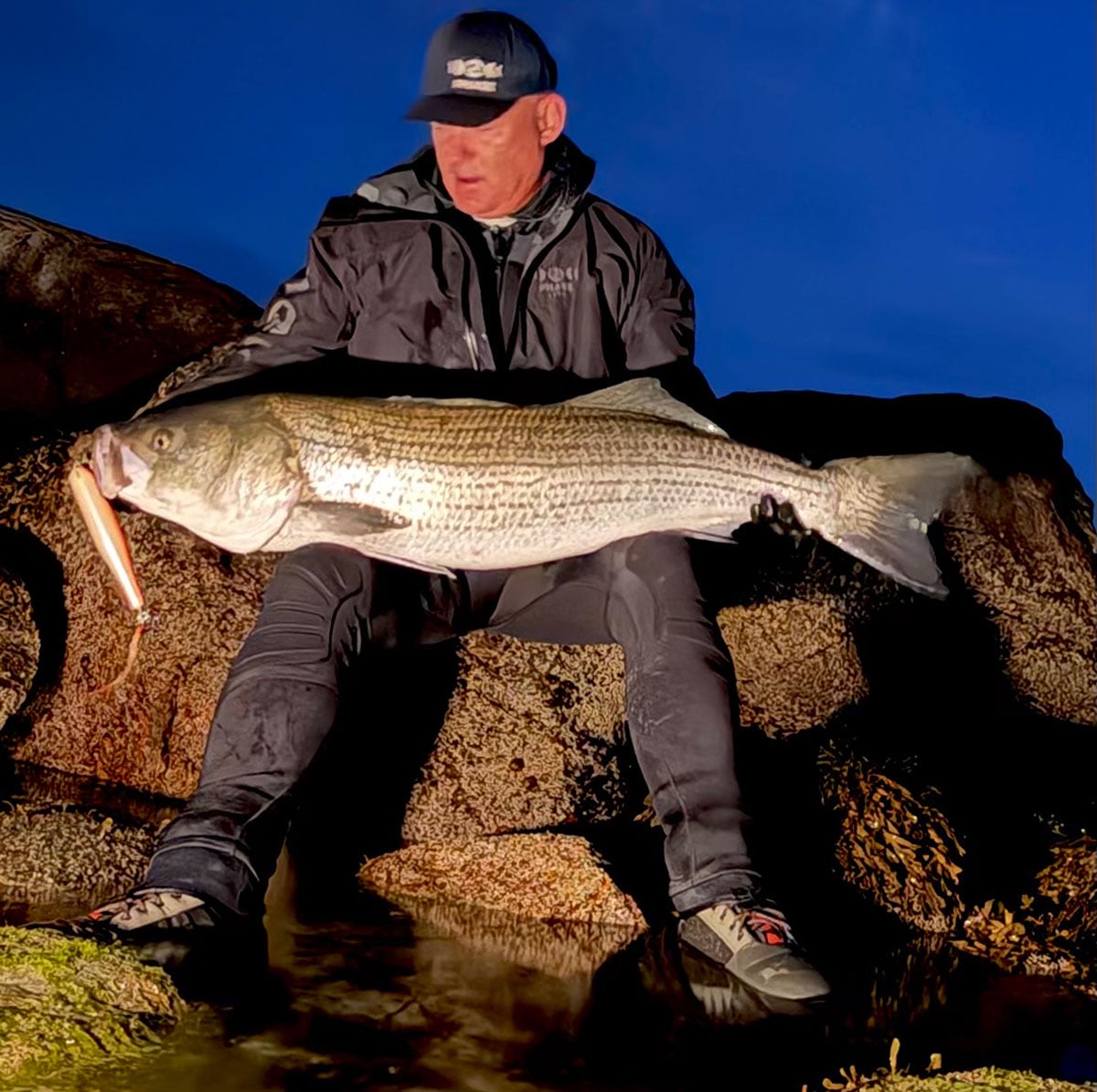
The Atom 40 has been catching stripers for more than 80 years and is still a plug bag staple, today.
Bob Pond was far more than just the creator of the iconic Atom-40. He was an innovator and a conservationist who had the foresight to advocate for striped bass long before others would recognize the importance of a healthy striped bass fishery.
As the story of the Atom-40’s creation goes, after watching another surfcaster have a very productive night, Pond grew curious about the plug being used. Several days later, he found a Creek Chub Pikie in that same area. Rather than simply copy it, he made it his own, most notably removing the cupped head of the pikie and slimming the profile down. The result was a plug that, in my opinion, was more versatile and stable. The original Atom-40 was made of wood.
Pond, being the innovator that he was, would later transition to making the plug out of plastic, which made the plug more durable and consistent.
The Atom-40’s profile and swimming action make it an ideal plug for imitating many of the larger baitfish found throughout Northeast waters. From adult and juvenile bunker to mullet and herring, its versatility shines in its ability to mimic a variety of baits that are present throughout the season. In certain situations, it can even cull out larger fish when they are feeding on spearing.
Most anglers view the Atom-40 as a plug for calm conditions, but I find it equally effective in a rough surf. In rough surf, it’s about placement of the plug, not distance. Cast just behind the wave and let the backwash of the receding wave work the plug. Often, you don’t have to reel at all, just stay tight to the plug and let the water do the work. As the wave recedes, begin a slow retrieve, just enough to stay in contact with the plug. That presentation keeps the plug in the strike zone longer, and it’s often right where the fish are holding.
I also tune the plug for the conditions. In rough water, I bend the line tie slightly upwards so the plug swims just below the surface and often keeps the plug from rolling or washing out in the faster moving water. In calm, shallow water or around boulder fields, I bend the line tie slightly down, allowing the Atom-40 to swim at the surface with that subtle V wake and signature tail wag. This slight disturbance on calm nights is often exactly what’s needed to convince a shy fish to commit.
As a plug builder, I still make my Atom 40s out of wood as a tribute to the lure’s original form. Bob Pond’s Atom-40 featured two belly hooks and a tail hook. My version is slightly different. I recently switched over to a single belly treble with a slightly larger hook that acts as ballast, helping the plug remain stable in rougher conditions. Instead of a tail hook, I use a simple flag, a light dressing of bucktail or feathers with no hook. The one hook solution also helps reduce the chance of injuring the fish, while still maintaining an excellent hookup ratio because the fish has less chance of getting leverage on the plug.
Although today’s surfcasters have countless modern plugs to choose from, Bob Pond’s Atom-40 still earns a permanent spot in my plug bag. It’s not just there out of nostalgia, the Atom-40 is a working tool that still produces very large fish, more than 80 years after Bob Pond introduced it. And that’s perhaps the greatest testament to his design and legacy. And if you ask me, no surf bag is complete without one, whether it’s an old original, a classic Beachmaster, or one made by a contemporary builder, the 40 is a weapon that catches stripers of all sizes. Most importantly, by using these plugs we’re keeping Bob Pond’s legacy alive!