The mullet run comes with a long list of benefits for the surfcaster.
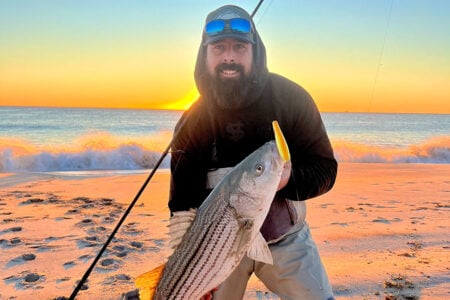
Considered to be my “most wonderful time of the year” the mullet run takes place around the end of September and can bring in the money and some early season choppers. In the tackle business, we always joke, “bass for flash, blues for cash,” and where I fish, the mullet run is almost guaranteed to have an 80/20 split of bluefish and stripers feeding on those mullet as they swiftly pass through.
Some anglers drop the rods and pick up cast nets “bagging and tagging” the mullet to sell to local tackle shops, whereas others use this time to target gator blues and the fall run stripers. Anglers fishing the run on the shores of New York or New England will likely see a different mix of bass to blues, but one thing is certain, the mullet run is worth the price of admission.
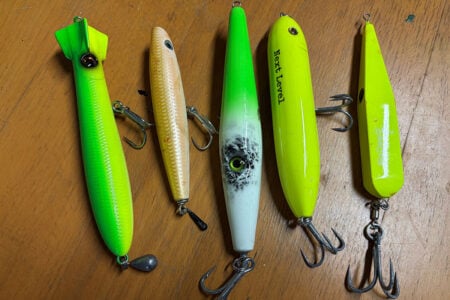
If you’re lucky and mullet come in while fluke season is still open, a fresh mullet makes an excellent bait for a chunky doormat. There have been many buzzer beater fluke caught using either a fresh, live and even frozen mullet, they just can’t resist that bite! Fresh out of fresh mullet? Try tossing out an SP Minnow or a lure that shares that same long profile of a mullet, match the hatch and the predatory fish will strike. The mullet run definitely keeps anglers busy if you’re willing to chase the bait and fish hard.
Back to how I celebrate the mullet run as a true “Mullet Lord”. Year after year, I would join my old tackle shop coworker driving along the beach to spots where the mullet fill in like coins in your back pocket. While I can throw a wicked cast net, I would choose my surf rod as the weapon of choice. Instead of blindcasting, I have a system, a clever one. When I see a school of mullet, this looks like dark “v” shaped wakes on the surface, I cast past them. But first let me spill the beans on exactly what I’m casting, I have one go-to lure I use for the mullet run. I throw a 4-½-inch Super Strike LittleNeck Popper, the one with the blue head and white body, my perfect mullet lure. Casting past the mullet can either yield a feisty bluefish or nothing at all, either or it’s a win-win situation for the cast-netter.
When I reel my lure back in, I spook those mullet closer to the shore creating a more frantic wake making them easier for the cast-netter to reach. When you hook into a bluefish, you’re in for a great fight and a huge rush of mullet – basically beaching themselves – as the bluefish pushes in. Cast-netters then have to compete with the seagulls to get all the mullet that beached themselves, and after many years of partaking in the mullet run, I can say that the seagulls have gotten smarter. They follow the cast-netters and try to plug the straggler mullet stuck in the net or the ones in the bins.
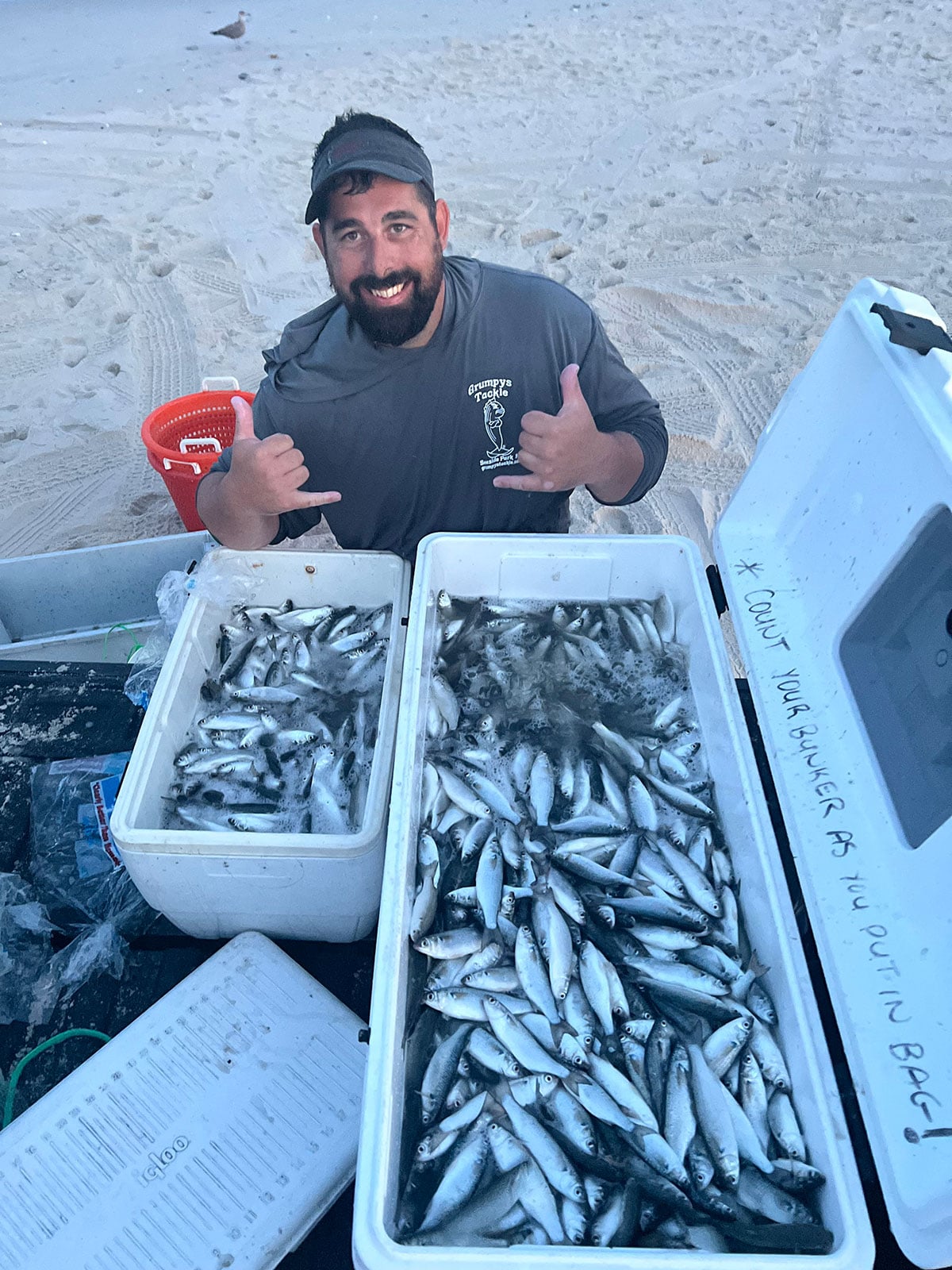
As the sun starts to set, the dark v-wakes become more difficult to make out so now it’s time for phase two of the “Mullet Lords”. Phase two can last multiple hours if you’re turning that mullet to cash at your local tackle shops. Some nights we can fill multiple sleds full of mullet and you have to take them all and fit 12 mullets into a quart size bag. After bagging, the fresh mullet are sold to tackle shops and either put into a cooler full of ice or they get frozen because the shop has too much mullet, which is a good thing. Too much mullet is a great problem for a tackle shop to have, so many people come in to use it as bait for the buzzer beater fluke, bluefish, and those first alarm stripers.
If this subject of the “Mullet Lords” piqued your fascination enough to want to learn more, you’re in great luck. I made an Open Boat episode for The Fisherman on the subject. The whole video sums up the full operation, from airing down your tires to hit the beach, to placing those mullet in the coolers ready to be sold. It’s such a cool “behind the scenes” look that encapsulates more of what fishing can be for an angler. This reflects back on the history of the fishing and bait industry itself, since the invention of the cast net is traced back to around the 4th century, estimated to be around 301 AD, the history of the “Mullet Lords” is a rich one.
Make sure to check your state’s regulations before trying to sell mullet to your local tackle shops.