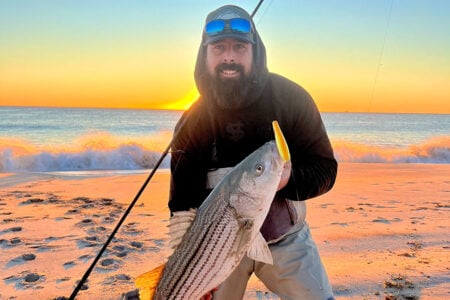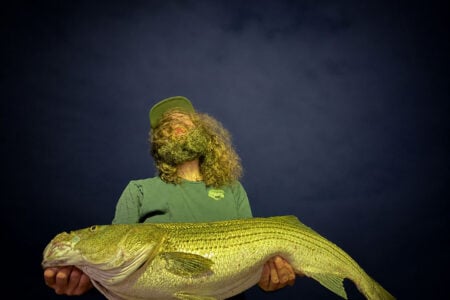
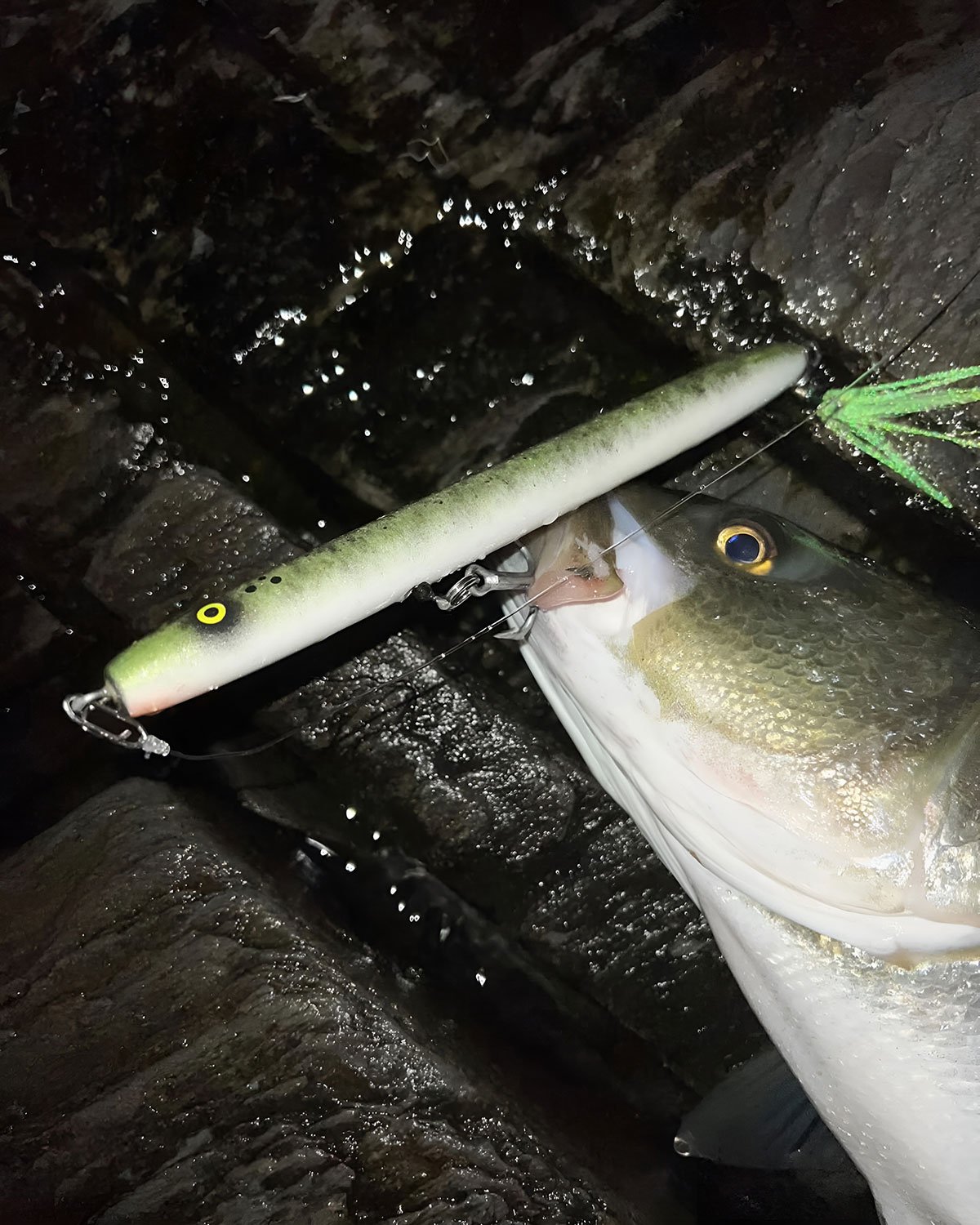
Tips and tricks that are sure to ‘level up’ your needlefish game.
The versatile needlefish plug has proven to be one of the top workhorses of the surf bag that has scored countless stripers, and many trophy fish, for East Coast anglers since at least the 1980s. The magic lies in its simplistic design. It is basically a stick with hooks. It has no lip or strategic cuts to make it dive or swim, yet fish will attack this plug with a vengeance.
The needlefish quickly rocketed to fame in the early 1980s when huge bass were showing a clear preference for needles in the surf from Montauk to Block Island, and up to Cape Cod. Schools of sand eels were driving this bite and the needlefish plug proved to be the perfect imitation. The only problem was that these giant fish were destroying the needles that were available at the time. Wooden models with screw eyes for hook hangers were no match for the giant bass that swam the surf during those amazing years.
It was the need for a needle that could withstand the punishment doled out by those outsized stripers that lead to the configuration of the needlefish that we all know today. Now we have thru-wired versions of every size and sink rate, made from both wood and plastic, a full arsenal of needles is available to the modern day surfcaster.
Fishing these plugs is pretty simple, and the standard retrieve is a slow crank with an occasional twitch of the rod. From that starting point you can modify your retrieve depending on conditions and the type of water you are fishing.
The Super Strike brand of needles, which are plastic molded, are in my opinion the most widely used, and for good reason; they catch fish! They’re available in many sizes and weights and are very durable and versatile. They also make a stubby bullet model that casts like a rocket, has a wider profile and will mimic various wider-bodied baitfish, other than sand eels. There are many wooden needlefish available made by several companies including Gibbs , Afterhours, 24-7 and Choopy to name only a few, and an endless number of “basement” builders churn out unique designs and classic replicas that are very effective, if you can get your hands on them!
The needlefish can be used on the ocean sand beaches, rocky areas, boulder fields, back bays and estuaries, with or without current; this is what makes them so versatile. Windy rough conditions are no problem for needlefish and the heavy models will work wonders in stormy seas when it can be tough to stay in contact with your plug. Drifting them in fast currents and letting them sink down and working them back slowly can be very effective. One trick for sandy beaches is to let the needle sink to the bottom where it will stir up some sand, then resume the retrieve, repeating this pattern several times, this method has turned on the bite on slow nights more than a few times.
Floating models can be used in calm areas and will create a v-wake to draw strikes where a subtle presentation is key to getting strikes. The needlefish can also be worked on the surface similar to a pencil popper with great results. It’s important to note that needlefish will also produce when sand eels are not present, contrary to what some believe. I have worked them slowly along rock jetties casting parallel along the boulders, where bass would blast them inches from the rocks!
Some modifications can also be made by replacing the rear treble hook with a single hook, dressed with feathers or bucktail. Some anglers like to load the plugs with water or lead shot for extra weight. The needlefish plug has proven its worth to the surf fisherman from the beginning, when giant cow bass forced the ingenious Northeast surfcasters to modify this deadly plug from the south that would become an instant classic. And to this day, the needlefish is a plug that ranks high on the surfcasters list!