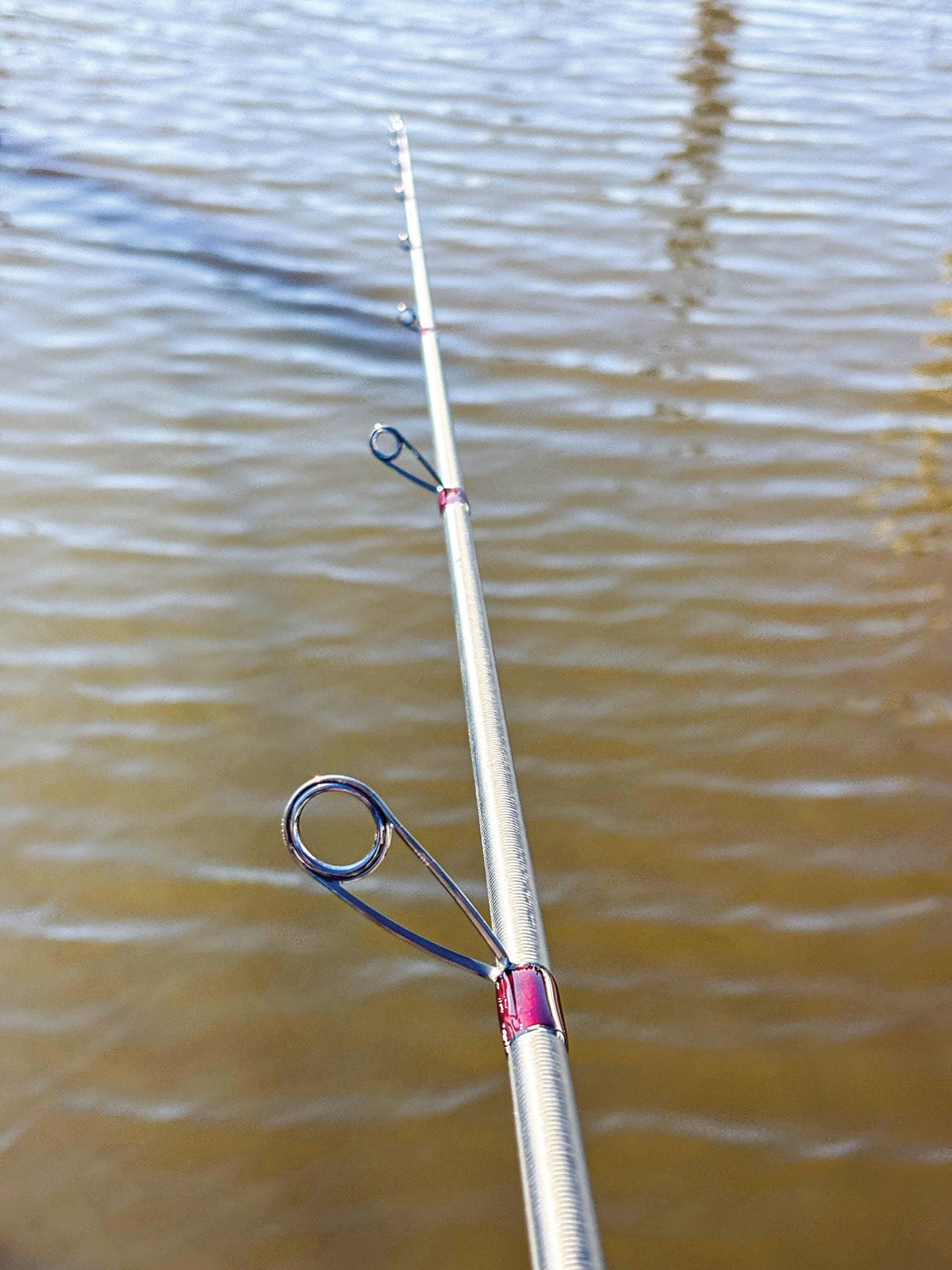
A 7-1/2-foot spinning rod built with light striper plugging and bucktailing in mind.
There’s certainly no shortage of rod options when it comes to striped bass fishing. From heavier outfits designed for working large plugs in strong currents, to lighter spinning setups intended for smaller presentations, every application seems to have its own specialized equipment. However, one particular type of rod I’ve always found useful is a relatively light spinning outfit capable of handling several different techniques without sacrificing the power needed to battle a good-sized striped bass.
That was the thought process behind my latest custom rod build. I wanted a 7-foot, 6-inch spinning rod primarily intended for casting smaller swimming plugs, soft plastics and bucktails up to an ounce from the boat. Something that would feel comfortable casting through an entire tide, with plenty of sensitivity to work smaller lures and the backbone to handle a respectable bass when necessary.
While this build certainly has applications beyond striped bass fishing, the primary focus was putting together an outfit that could take advantage of the lighter presentations that often produce throughout the spring, summer and fall.
Choosing The Blank
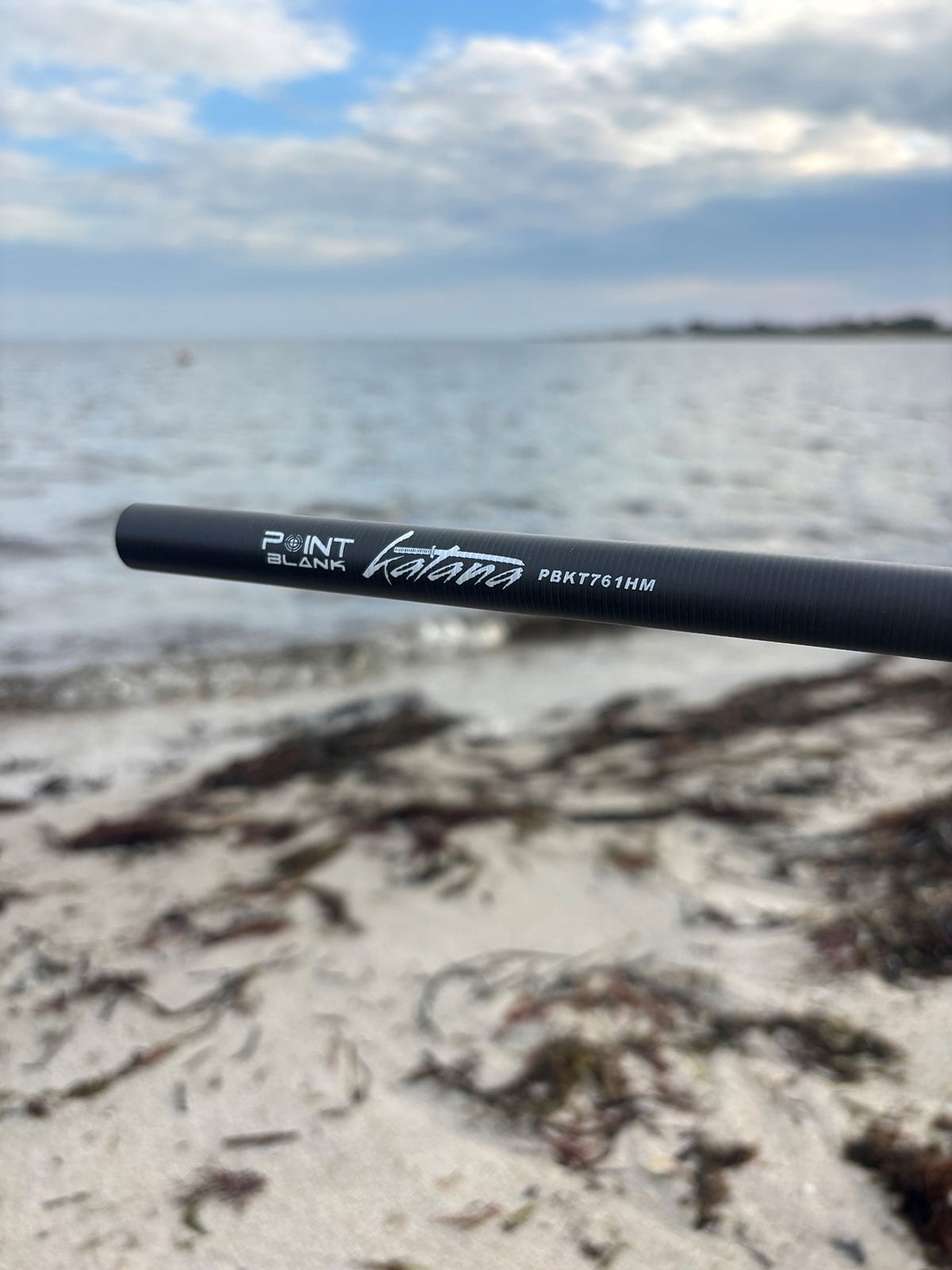
Every good rod build starts with the blank, and for this particular project, I selected the Point Blank Katana PBKT761HM. At 7 feet, 6 inches, with a 20- to 40-pound line rating, it offered the general specifications I was looking for in a lighter inshore spinning rod. The length was one of the first considerations. While shorter rods can be convenient when fishing around tight quarters aboard a boat, the additional length of a 7-foot, 6-inch blank provides several advantages when casting lighter lures. It offers some extra distance when reaching toward breaking fish and provides additional leverage when maneuvering a bass around the bow or alongside the hull.
The medium-heavy designation also provides an interesting combination of characteristics. Although the intention is to use this rod primarily with presentations weighing an ounce or less, the stronger lower portion of the blank offers reserve power when a larger fish is hooked. This balance between a responsive tip and a stronger backbone is particularly important when fishing lighter bucktails and soft plastics. A rod that’s too heavy can make smaller offerings difficult to cast and work effectively, while a rod that’s too light may struggle when attempting to control a sizable bass around structure.
The goal was to land somewhere in the middle, creating an outfit that would make smaller fish enjoyable while remaining capable of handling something considerably larger.
Selecting Components
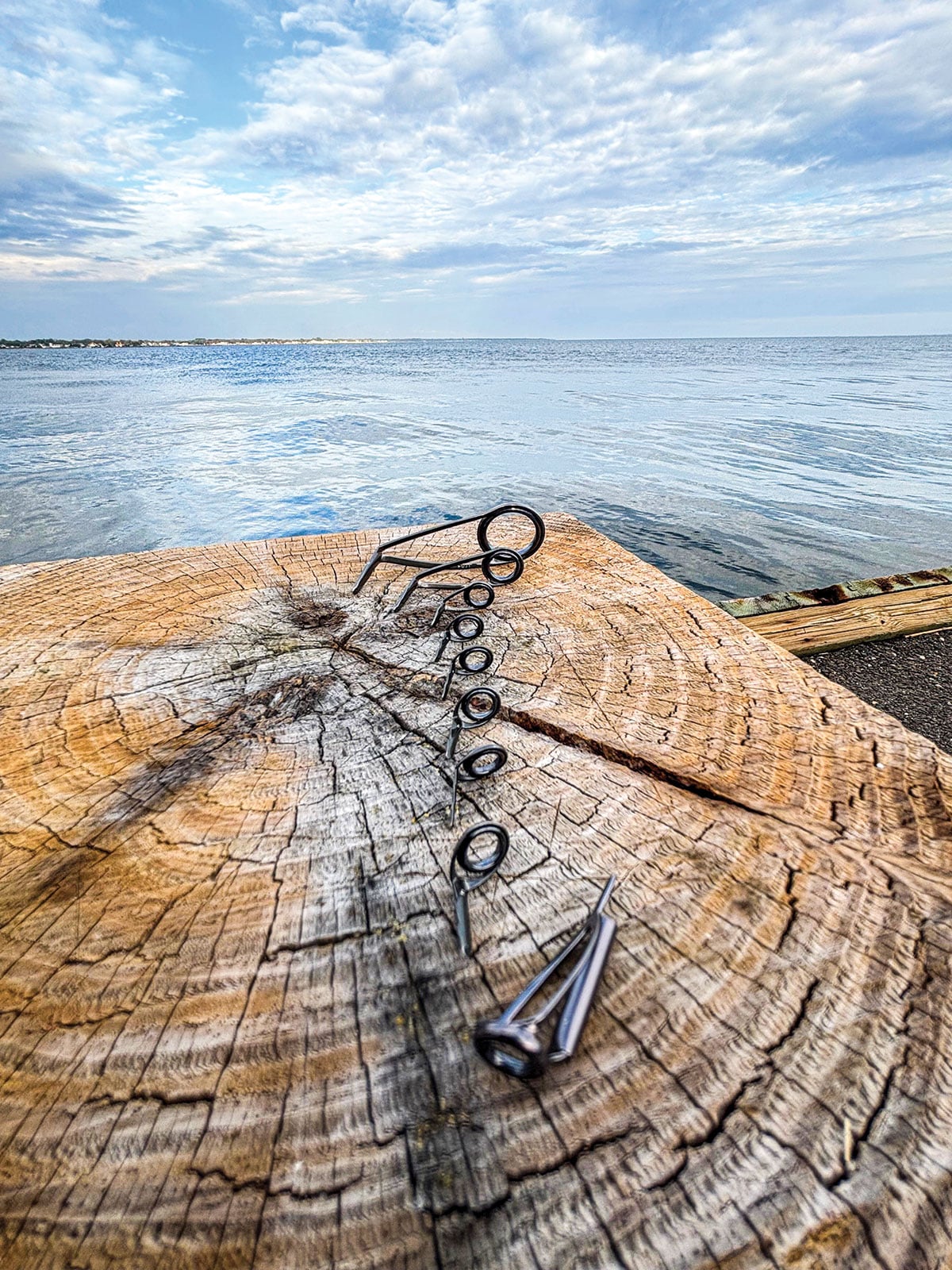
With the blank chosen, attention turned toward the guide train and handle components. For this build, I selected Fuji guides, including KLSG-20SH, KLSG-12SH and KLSG-10SH reduction guides, along with a KBSG-6SH guide and a GMMNST-6-6 tip. One important consideration when building a spinning rod is managing how line travels from the reel through the guides. Unlike a conventional reel where line leaves the spool relatively straight, spinning reels release line in coils. The reduction guides help control these coils before the line transitions through the smaller guides toward the tip.
| COMPONENT LIST |
| Blank: PBKT761HM / 7’6″ / 20-40 lb.
Guides KLSG-20SH x 1 KLSG-12SH x 1 KLSG-10SH x 1 KBSG-6SH x 1 GMMNST-5.5-6 x 1
Reel Seat: TCP-NHSSK17 plus ETC-TCH17S Rear Trim Piece: ARBPTS17-1E Butt: GRC 19 plus ARB GC butt cap |
For a rod intended to spend considerable time casting relatively light lures, an efficient guide layout is important. Proper placement can help minimize unnecessary line interference while allowing the blank to flex naturally under pressure.
Static testing is another part of the building process that shouldn’t be overlooked. Before permanently wrapping the guides, the blank can be placed under load to determine how the line follows its natural bend. Adjustments can then be made to ensure the line remains properly supported throughout the rod’s working range.
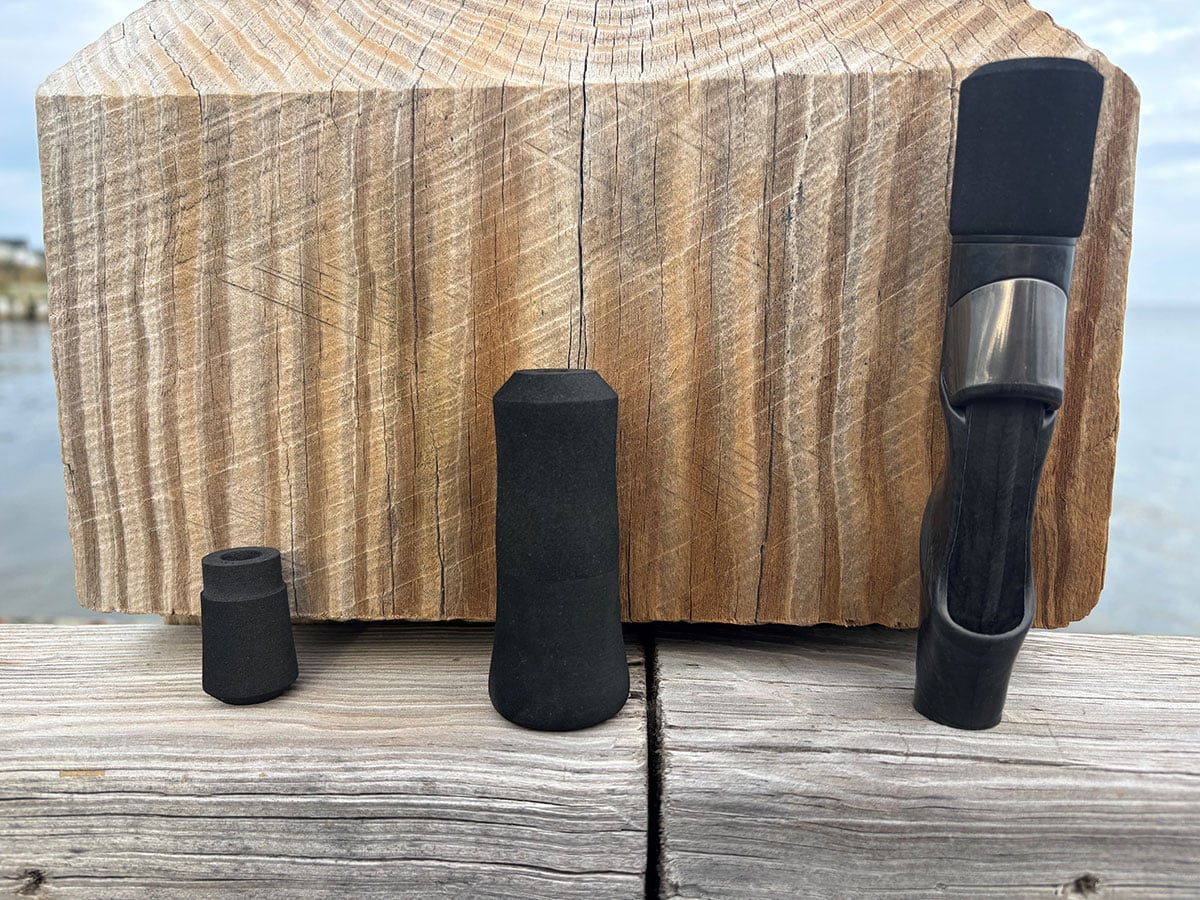
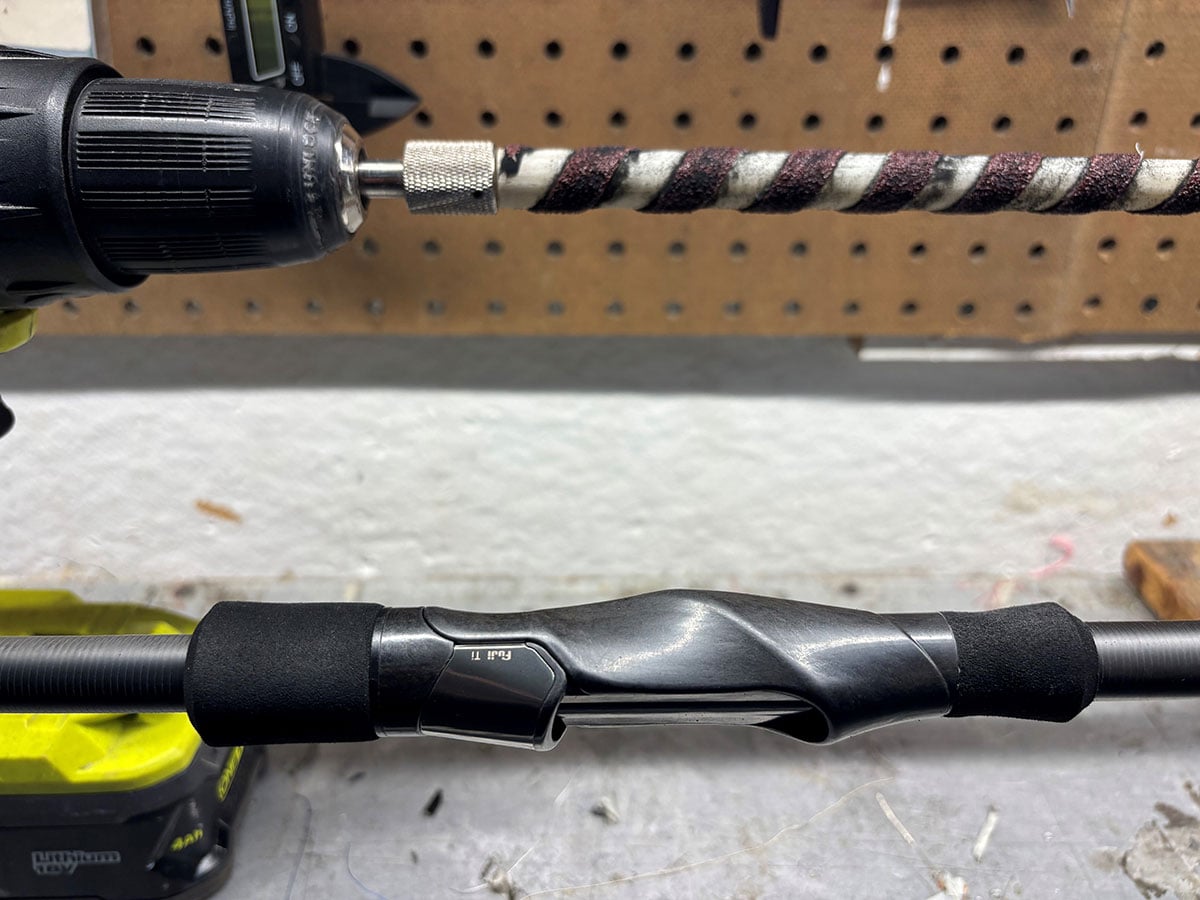
The handle assembly was also selected with repeated casting in mind. A TCP-NHSSK17 reel seat, paired with an ETC-TCH17S component, forms the foundation of the reel attachment. The rear section incorporates an ARBPTS17-1E trim piece, GRC 19 grip component and ARB GC butt cap. Beyond appearance, the handle configuration plays an important role in how the completed rod performs. A comfortable grip and properly positioned reel seat make a difference when casting hundreds of times throughout the day. The rear grip also needs to provide sufficient leverage when fighting fish without becoming cumbersome during repeated casts.
For this project, maintaining a comfortable and balanced feel was just as important as selecting a blank with the appropriate power.
Light Boat Plugging
One of the main applications for this rod will be throwing smaller swimming plugs for striped bass. Throughout much of the season, bass can become focused on relatively small baitfish, making oversized presentations less effective. During the spring, smaller swimming plugs and soft plastics can be particularly productive around back-bay channels, points and shallow structure. As water temperatures rise and fish begin spreading throughout the bays and along the beachfront, these same presentations continue to have a place.
A 7-foot, 6-inch spinning rod provides the length needed to make respectable casts while remaining manageable aboard the boat. When working a smaller swimming plug, the objective is to maintain enough sensitivity to feel how the lure is swimming without overpowering its action. This becomes especially important when fishing around current seams and channel edges, where a plug might need to be worked slowly through a relatively narrow strike zone.
The same outfit should be particularly useful during the fall run when stripers key in on peanut bunker, spearing and other small forage. Rather than reaching for a heavier plugging outfit, a lighter rod can make presenting smaller lures considerably more enjoyable.
It also provides an advantage when fish begin feeding just outside casting range. The extra length can help deliver lighter presentations toward those breaking fish without requiring an unnecessarily heavy lure.
A Bucktailing Option
Another major consideration behind this build was its ability to throw and work lighter bucktails. While heavier bucktailing certainly has its place, there are plenty of situations where a 3/4-ounce to 2-ounce jig is more than enough. Shallow channel edges, flats, bridge approaches and back-bay structure can all provide opportunities to work lighter bucktails for stripers. In these situations, the goal isn’t necessarily to maintain constant bottom contact. Instead, it’s often about allowing the jig to move naturally with the current while maintaining enough control to detect a strike.
The responsive upper portion of the blank should make it easier to work these smaller offerings without introducing excessive movement. Whether using a traditional bucktail dressed with a trailer or a soft-plastic jighead, having a rod that allows subtle adjustments can be an advantage.
There are also situations when a lighter bucktail can be particularly effective around larger schools of bait. When bass are feeding on smaller forage, matching the general size and profile of what they’re eating can be more important than casting the largest lure possible.
Of course, current and water depth will ultimately determine how practical this setup becomes. Around stronger inlet currents or deeper structure where heavier jigs are necessary, a more powerful rod would remain the appropriate choice.
Matching Reel & Line
| BUILD SPECS | ||||||||||||||||||||||||||||||
Guide Layout — Tip to Butt
Handle Measurement Butt to back of reel seat: 13-1/2″ *All guide measurements are taken from the tip of the rod toward the butt. |
For a rod of this length and intended application, a spinning reel in the 3000 to 5000 size range would be a logical starting point, depending on the manufacturer and the specific reel’s dimensions. The goal is to maintain a balanced outfit capable of making repeated casts without feeling unnecessarily heavy. A reel with a smooth drag is especially important when fishing lighter presentations, particularly when a larger bass takes off after the initial hookup.
Braided line in the 15- to 30-pound range would provide a good starting point for open-water plugging, with 30-pound braid offering additional versatility around structure. Leader material can then be adjusted depending on conditions, with lighter fluorocarbon appropriate for clear water and more substantial leaders useful around abrasive structure.
Ultimately, the reel and line combination should complement the blank rather than overpower it. Even though the rod has a 20- to 40-pound line rating, the objective is to put together a lighter outfit that makes throwing smaller offerings practical and enjoyable.
Although striped bass fishing was the primary motivation behind this build, its applications certainly won’t stop there. During the fall, when false albacore and bluefish begin chasing smaller baitfish along the beaches, the same rod should provide a useful option for casting epoxy jigs and small metals. The additional length will be helpful when attempting to reach fast-moving schools of fish.
It could also see time jigging for blackfish around shallow rock piles and bridges. With an appropriate jig and manageable current, the relatively light presentation would make targeting smaller and keeper-sized tog particularly entertaining. These additional applications were part of the appeal of choosing a versatile blank rather than building something intended for only one specific technique.
Put It All Together
The real appeal of a custom rod is the ability to select components and specifications around the way an angler actually fishes. While there are certainly plenty of factory-built rods that could accomplish many of these same tasks, building one from the blank up allows the finished product to reflect personal preferences. In this case, the objective was straightforward: create a comfortable, responsive 7-foot, 6-inch spinning outfit that excels at throwing smaller lures and bucktails for striped bass from the boat.
With the right reel and line combination, it should be equally at home working a shallow back-bay channel in the spring or casting toward feeding bass along the oceanfront during the fall. And when the bass aren’t cooperating, having a rod that can be pressed into service for bluefish, albies or shallow-water blackfish only adds to its usefulness.
Sometimes the most valuable rod aboard the boat isn’t the heaviest or most specialized outfit in the rack. It’s the one that can be picked up throughout the season and put to work in a variety of situations. That’s exactly what this build was intended to accomplish.