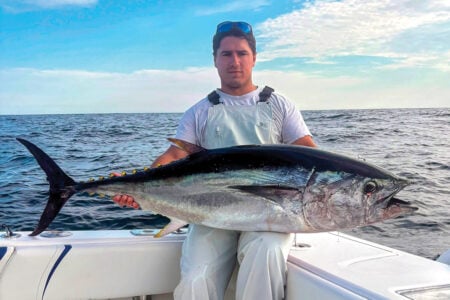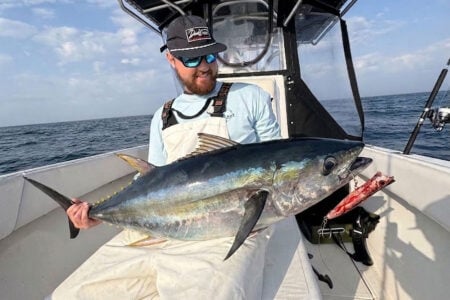
How to target tuna a limited budget.
When it comes to offshore fishing, let’s be honest, budget-friendly is not one of the first terms that comes to mind. Most people associate offshore fishing with large sportfishing yachts and fast center consoles, expensive gas bills, and shiny new offshore gear. However, while it is absolutely amazing to fish offshore in style, there are numerous ways to accomplish the same task of catching pelagic species in a safe and comfortable manner, all while not breaking the bank.
For starters, let’s assume you have your own boat. It’s pretty expensive (and rather difficult—even unsafe) to fish offshore alone. Offshore fishing is a whole lot more fun, safe, and affordable when you have a crew to help cover basic costs. Depending on your crew, you might consider chipping in for expenses like gas, or certain people might help to cover food, drinks, bait, and ice, to name a few of the various expenses. Moreover, when it comes to your boat, don’t feel like you need a 35-plus foot new center console with triple outboards or a big sporty to make it offshore. Knowing your boat, crew, local area, and conditions are arguably more important than what type of boat you drive. That means pick your days, but it is more than possible to fish offshore in a “small” boat.
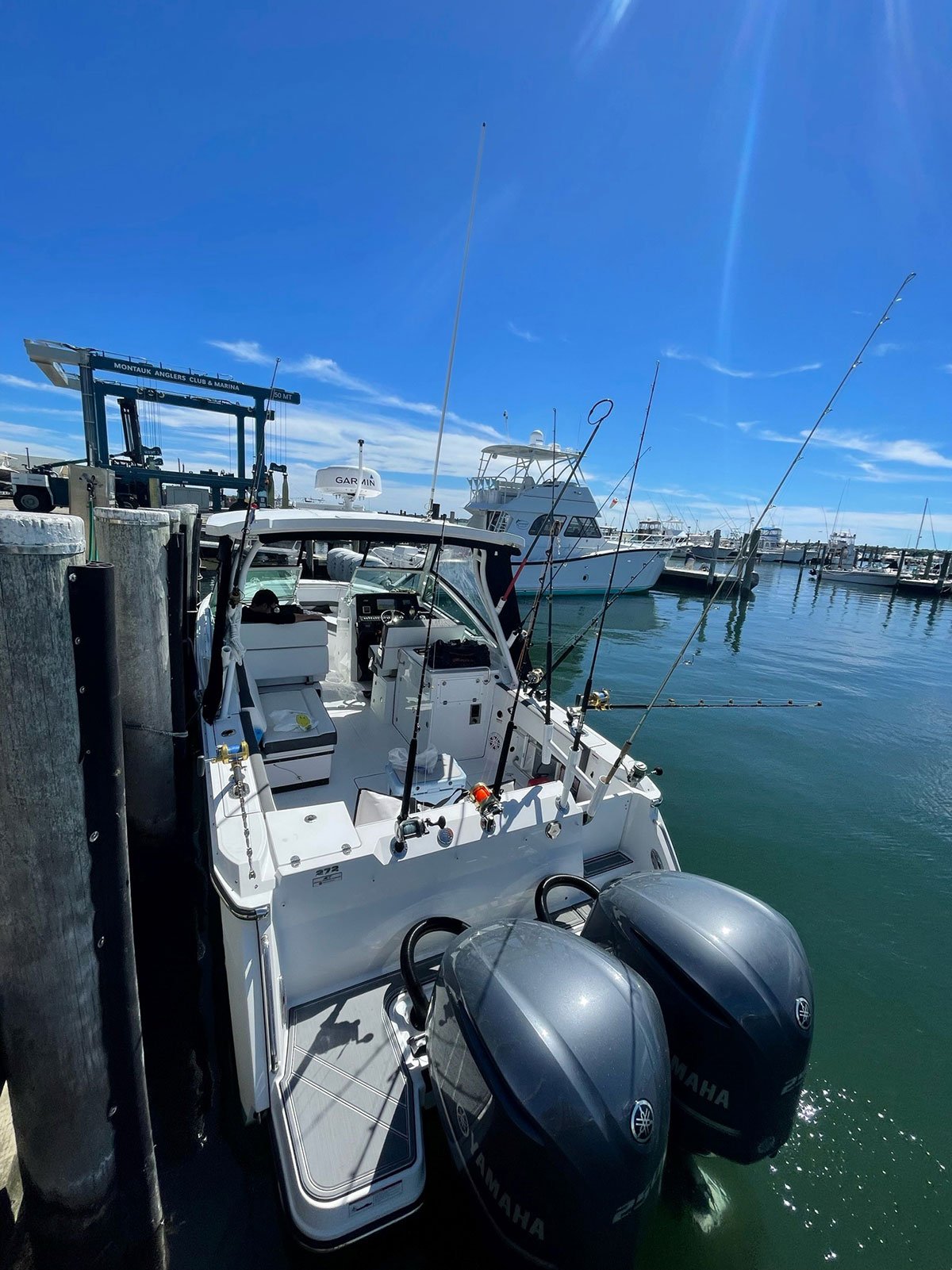
I used to fish for tuna in a 21-foot boat and now regularly fish the canyons in a 27-foot vessel, but remember to understand your boat and its limitations before your next adventure. Speaking of boats, there are also options for “open boat”-style private charters that make it far more affordable to target pelagics. There are also well-seasoned party boat-style offshore trips for larger groups of anglers at a more reasonable price, along with a variety of charter options (see the Report Section of this month’s edition for more on who is sailing, for what and from which port).
Rods & Reels
Offshore fishing gear can be very expensive. Outfitting even a small boat for a canyon trip can add up quickly. However, one important lesson I learned from a mentor early on is that tuna fishing is a process—and that applies to your gear too. A full custom set of new 50W rods and reels does not need to be bought overnight in order to land your first tuna fish. Used and even lightly used gear is my method of choice for those on a budget. I started tuna fishing with lightly used Penn Senators / 30W / 50W that had been serviced by a local tackle shop. Were they fancy? Heck no. Were they properly maintained and serviced by a respectable tackle shop I trusted? Yes. And did I catch my first tuna, sharks, and many more on them? Absolutely!
When it came to jig ‘n pop and chunking, smaller-class conventional reels can serve double duty in a pinch for chunking, jigging, and even light trolling (especially if the target is schoolie-sized bluefin or yellowfin in the midshore grounds). For rods & reels, using local resources like tackle shops and current online marketplaces can be great places to shop around for used gear if you’re trying to get offshore without breaking the bank.
Remember, while it might not look picturesque, you don’t need a completely matching 11-rod spread to put tuna in the boat. Quality gear that you can trust (even if bought used) will make for a great trip without being a limiting factor on your wallet.

Tackle & Accessories
When it comes to tackle, you don’t necessarily need to buy everything and the kitchen sink in order to put a successful trip together offshore. For trolling, I started out with new and lightly used bars and chains that had been freshly serviced so I knew I could trust my tackle. Yes, it’s important to have a variety of colors and sizes, but whether it’s starting out running a seven-rod spread or getting into run ‘n gun jig ‘n pop-style tuna fishing, you don’t need to bring 30 spreader bars to get into tuna fishing! Go-to colors like green, zucchini, rainbow, purple and black, and white for spreader bars, daisy chains, ballyhoo rigs, cedar plugs, and diving plugs are a few basics to help you get started and get the ball rolling.
Now, let’s say you have the fish nearing the boat, you need the proper gear to get that tuna from the water into your fish box. Sure, custom-engraved carbon fiber gaffs and harpoons are great, but balling on a budget might mean starting out with a basic aluminum, bamboo, or any strong material with a sharp gaff that will get the job done. Also, keep in mind if you plan on harvesting mainly schoolie-sized fish or minimal canyon fishing, you can likely get away with two basic 6 to 7-foot standard gaffs without the need for a harpoon and an arsenal of gaffs of different lengths and sizes.
Nearly any type of boating and fishing—let alone offshore fishing—offers an endless list of accessories and neat gadgets. Keep in mind that when starting off, especially on a budget, many of these accessories might be nice to have but not necessarily essential to landing your first tuna. For example, a fighting belt and rod butt cushion are near-essential, but a full harness setup might not be necessary if you are only targeting schoolie-sized bluefin close to shore.
Binoculars are great for looking for life and finding the fish. a basic pair or partially stabilized pair would definitely be nice to have, but it’s not necessary to spend $3,000 plus on your first pair of binoculars to head offshore with full digital and gyro-stabilized capabilities. Basic coolers and fish bags are definitely needed to hold ice and take good care of your catch, but it might not be necessary to purchase a brand-new Yeti coffin box to get started out on the water.
Safety
One area where I do not recommend balling on a budget is safety. If you are boating – and especially if you are offshore boating – don’t bring the brand-new 50W spread but forget to leave room in your budget for safety gear. A few essentials for offshore fishing regardless of boat size would be an EPIRB, liferaft, and some type of communication device back on land. Nowadays, devices like Garmin inReach make satellite texting a breeze for communication, along with technology like Starlink bringing Wi-Fi capability offshore for boats of all sizes. We recently installed Starlink on the 27-foot Blackfin, so we’re excited to use it this season and definitely appreciate the safety aspects of communication while out at sea.
Other important pieces of safety equipment for offshore fishing depending on conditions would be survival suits, complete first aid kits, inflatable life jackets, cold weather gear, and more. And of course, you’ll also need the Highly Migratory Species (HMS) permit for your vessel which you can purchase online at hmspermits.noaa.gov.
While offshore fishing can seem extremely expensive to break into, knowing what gear you really need versus want can make tuna fishing on a budget a reality. Keep in mind that many people who get into offshore fishing are hooked for life (pun intended), so like myself, it will be a process of upgrading your gear that takes time (and money) and does not happen overnight.
Taking good care of your gear will not only help increase your odds of a successful trip but can also help maintain resale value. Plus, you never know—as you upgrade your own gear, maybe the buyer of your gear will be an angler just getting started themselves and looking to be budget-conscious.