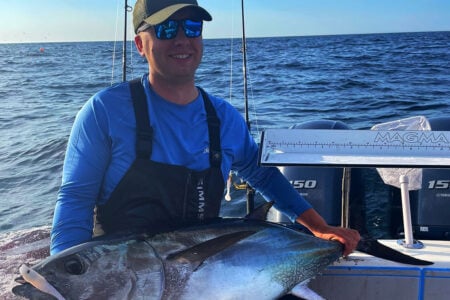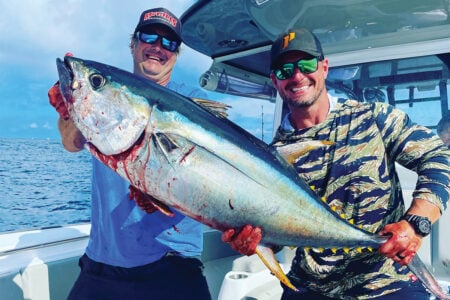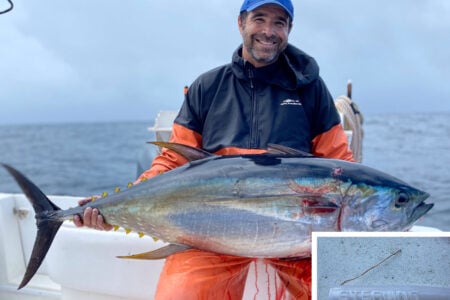
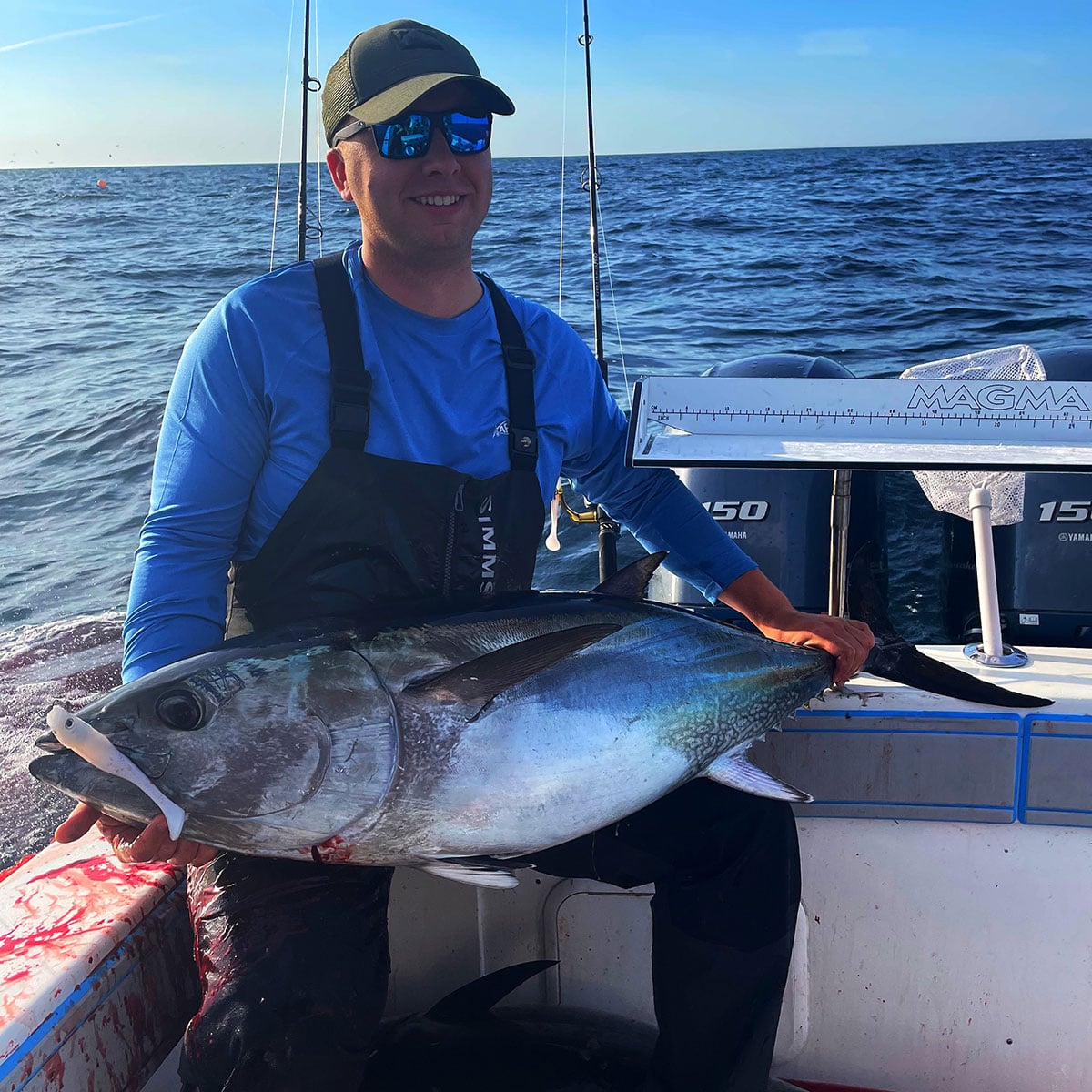
With more anglers heading offshore than ever before, it pays to double down on the prep.
Over the past five to ten years we’ve seen many new anglers entering the booming bluefin fishery we have here on the Atlantic coast. The perception of what it means to “go offshore” has changed, some say you have travel at least 10 miles from land, others claim you aren’t offshore until you cross 30 meters of depth. I think we all watched fishing shows as kids and created this profile that offshore fishing meant traveling a long way, in a serious boat and catching huge fish on heavy gear.
But today, we see anglers out on the tuna grounds in 16-foot aluminum boats, sporting small tiller outboards, with just inshore experience, and putting the boots to tuna of all sizes with gear that doesn’t weigh much more than a bottle of soda! Just this past season we saw a kayaker go viral for landing a 136-pound bluefin in a Hobie kayak, only to have his brother pull off the same feat with a 107-pounder this past April. While this certainly is not the norm and you will get some crazy looks if you embark upon a suicide mission riding out 30 to 40 miles in an old Boston Whaler Super Sport or Montauk, the past several years have changed perceptions enough that we now understand that it can be done in much smaller boats than previously believed.
Everyone seems to have an opinion about what safe and what’s possible when it comes to getting to the grounds, but what remains true is that we have a serious fishery that’s ever-evolving and these fish are often closer to home than many of us realize.
Heading to the nearshore fishing grounds such as those South of Block, South of the Vineyard, or east of Montauk, or the Cape, you can truly bring the kitchen sink with you to conquer the day. In large part, this will depend on the size of the boat you’re on, the bite that’s currently happening, and what the crew wants to do that day. For me, I stay very far away from trolling. Without a doubt trolling is effective to cover water and find fish especially in early season when bluefin or more scattered, it’s personally not for me.
Going Vertical
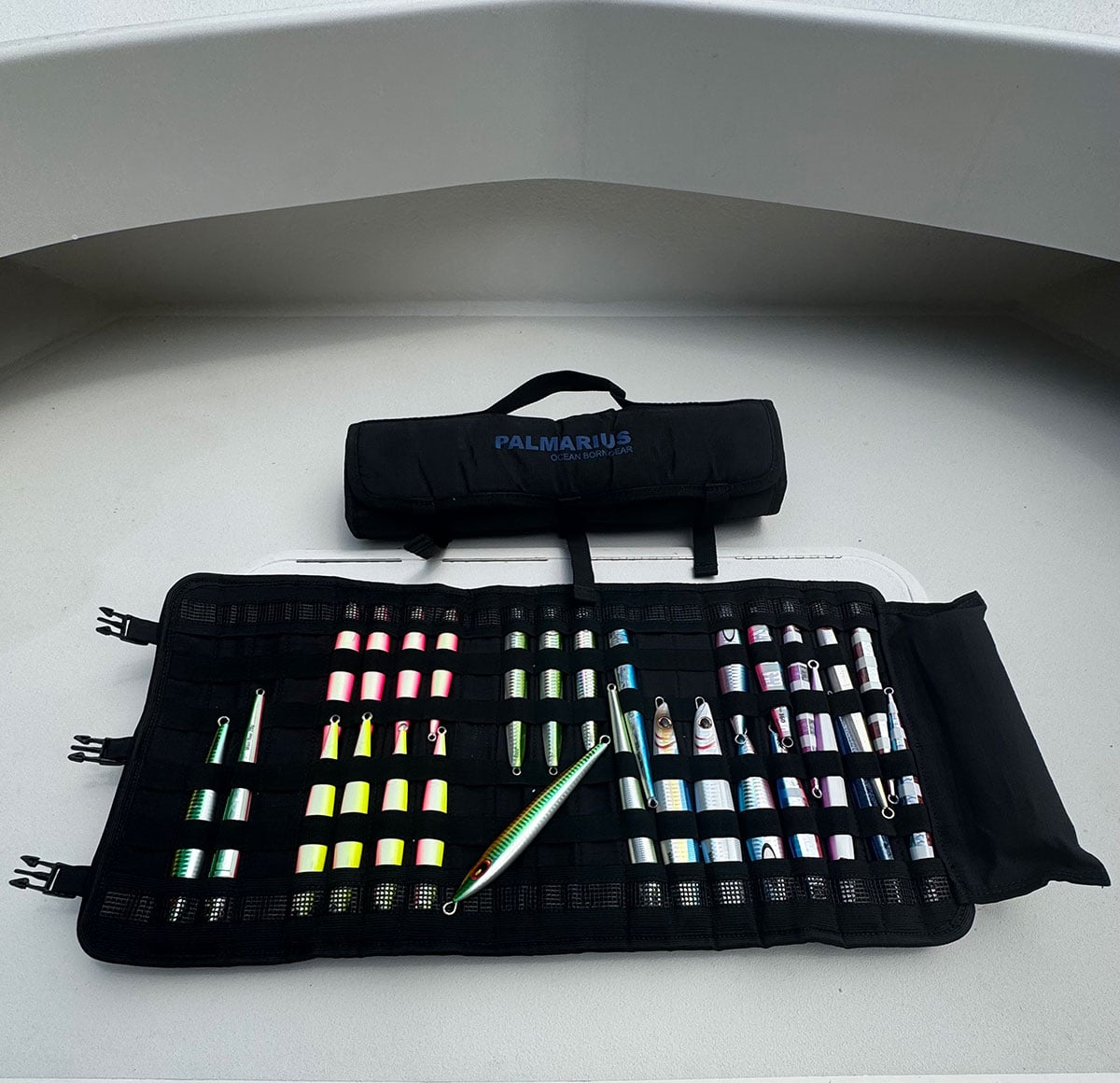
If I were to have one lure on the boat, it would be a vertical jig. They can cover the entire water column, can be fished at varying speeds, and come in a plethora of weights, shapes and colors. As for the jigs themselves, you can get slim “speed” styled options like the UVT Captain Cory’s, Shimano Shimmerfall, Daiwa SL, Nomad Streaker, JYG Pro Stryke, or the Mustad Moonriser. These jigs are highly hydrodynamic, cutting through the water and current with minimal resistance. They descend to the bottom extremely fast and be worked back to the surface very erratically, with flutter and flash that triggers fish to eat.
While designed for speed, I’ve seen this profile work in just about every jigging method for bluefin, from simply bouncing the jig into the seafloor as you drift along, all the way to the highest speeds with the fastest reels on the market. I tend to find myself just constantly adjusting the speed of the jig throughout the retrieve, working them all the way to the surface. Even if I’m marking fish on the bottom, I still work these jigs the entire way, as the fish will often follow through the entire water column or may come from far away to investigate.
The other profile that’s always with me are “slow jigs”, such as the Daiwa SK jig, Shimano Butterfly Flat-Fall, Point Jude Deep Force, Point Jude Deep Force Slim, and the Mustad Rip Roller. Being a little bit nit-picky on terminology, slow jigs are retrieved without the rhythmic action of slow pitch jigging, forgoing the “pitch” concept. Slow pitch jigging (SPJ) has a pitch to dart the jig to the surface; while immediately letting it fall under slack line so the jig falls much flatter. “Slow jigging,” as a technique, utilizes jigs that have bit more swimming, rolling, and fluttering built into their action. Slow jigs are generally a bit easier to work and can be the true ticket when there’s slower and fatter baitfish like butterfish around.
As for weights, I find most often that I can get away with 160- to 200-gram jigs. You will still want to have something heavier and a bit lighter on hand, depending on the current, forage, and many other factors, but, the vast majority of time, I’m pulling these out of my bag first. For colors, you can keep it simple with blue/pink, blue/silver, green/silver, and glow. There are many forage species out there, and generally you can count on sand eels to show up, however whiting, mackerel, squid, butterfish, herring and more can come into play, which sometimes keys the tuna in on size and profile.
Put It On Plastic
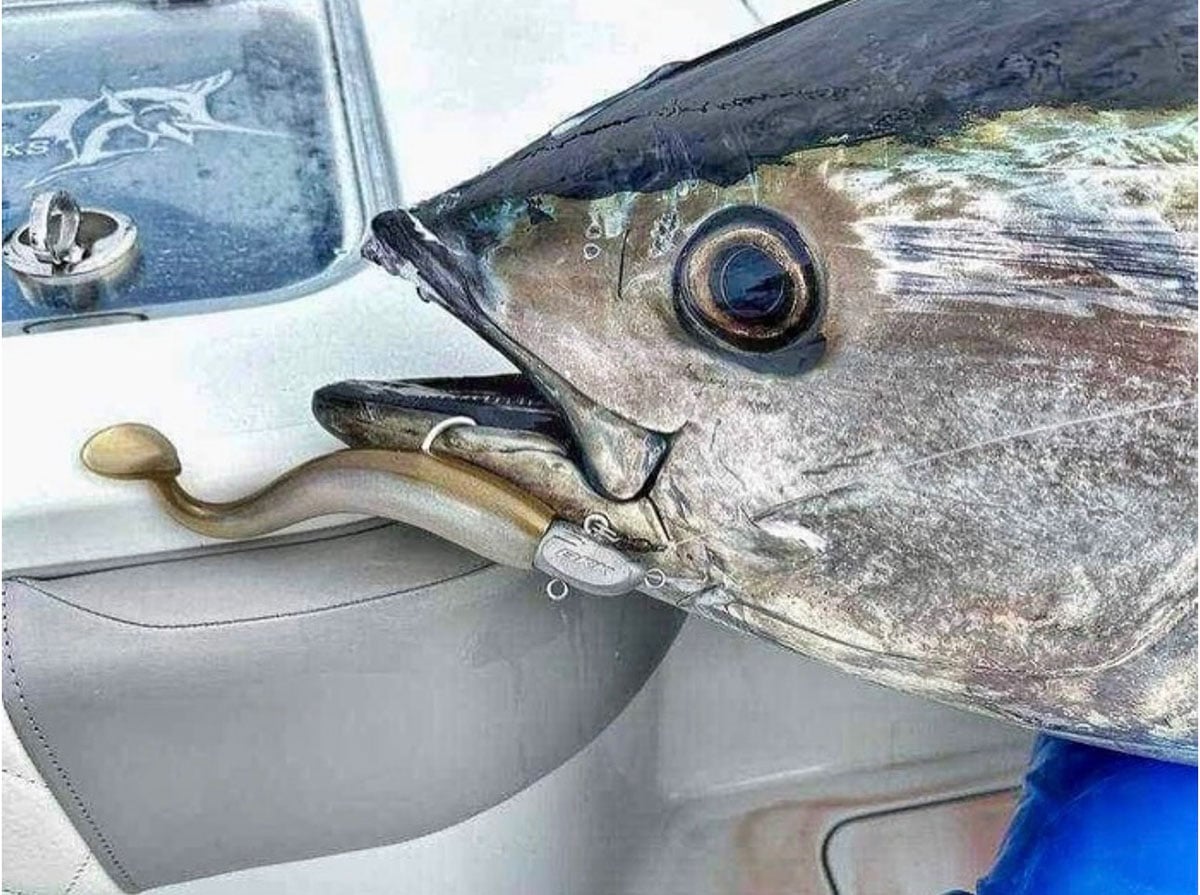
Similar to metal jigs, plastics can be used throughout the entire water column. Some of my favorites include the RonZ, Gravity Tackle Paddles and the Hogy Protail Paddles. The RonZ is a lure here in the Northeast that holds a permanent spot in the hearts and minds of just about every bluefin tuna angler. They can be deadsticked in the rod holder, deriving its action from the boat drifting along in the calmest or most intense conditions.
I generally set them up just off the bottom all the way to the middle of the water column, with a heavier jigging setup. No real need to buy specific tackle for this, however it’s nice to have a conventional with a clicker. All three plastics can be dropped and vertically fished or casted and retrieved. Many anglers around the Cape use paddletails in September and October when butterfish are around, but any time the bluefin become picky, these baits might crack the bite.
Poppers & Stick Baits
A bit further down the list for me personally, but poppers and stick baits have their place and, when the bite is on, they can produce one of the most adrenaline-pumping experiences sportfishing to offer. While I would love to use a popper every single time I’m out there, the reality is getting bites often proves difficult. Conditions have to be right and all-too-often we have to deal with shearwaters and other birds that lose their minds when they see something splashing on top. But for this method to even be considered, the fish need to be further up the water column, meaning boat traffic will probably have to be at a minimum.
For poppers, the Small Lure Co. Mikros, Shimano Ocea Bomb Dop 170 and the Madd Mantis Cherry, among others, are all great options. If yellowfin decide to show up with bluefin the mix this coming season, their competition between one another will sometimes create the ultimate popper situation.
Rigging Tough
Whether it be bluefin or yellowfin, both species are known to test the limits of rigging and terminal tackle. Quality fluorocarbon and mono leaders are a must, along with proven swivels and hooks, and your knots should be perfect. I’ve found that a selection of 40- to 100-pound fluorocarbon covers the bases for jigging, I increase to 80- to 120-pound mono for poppers. Knowing some reliable knots like the FG and the Palomar are also key, however you can avoid the FG if you would like, by running wind on leaders.
| KEEPING THE CATCH FRESH |
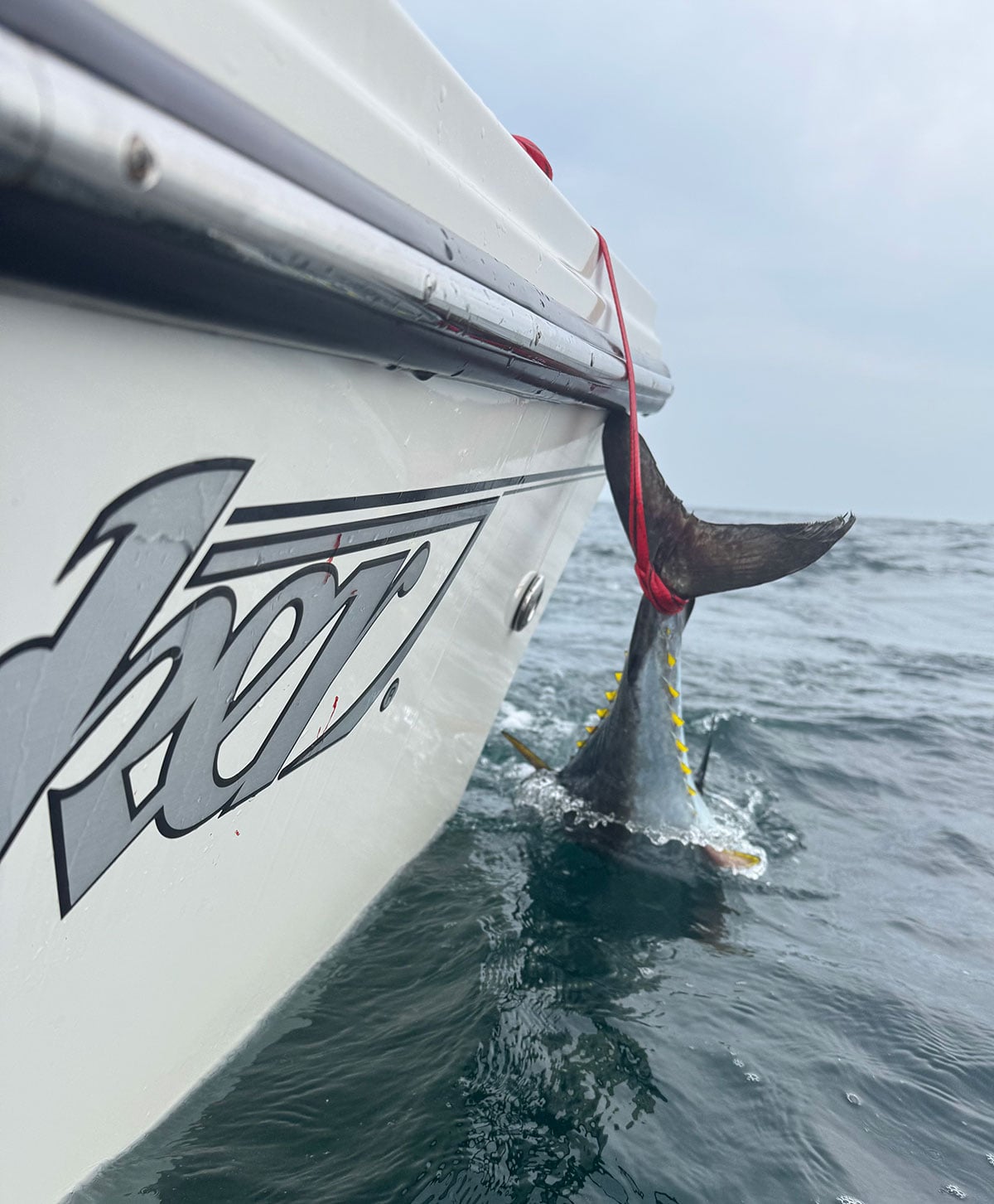
| Immediately upon hitting the deck, I like to spike the fish (Ike Jime) first so fish isn’t suffering but this practice helps in so many other ways. For starters, stopping a green fish from jumping around the deck will limit the possibility of damage to your boat and blood being sent everywhere. If you’re not in a downeast or larger boat that has an enclosed transom, you also have to be mindful that your fish could end up dislodging your outboard rigging. A lot of anglers, going for rec-sized fish, will dispatch them and hang them over the side with a tail rope, keeping your deck and bilge from filling up with blood. After that you can further process them by removing the internal organs, gills and more, which helps when icing the fish so you can get the core temp down, which vastly improves the quality of the meat. |
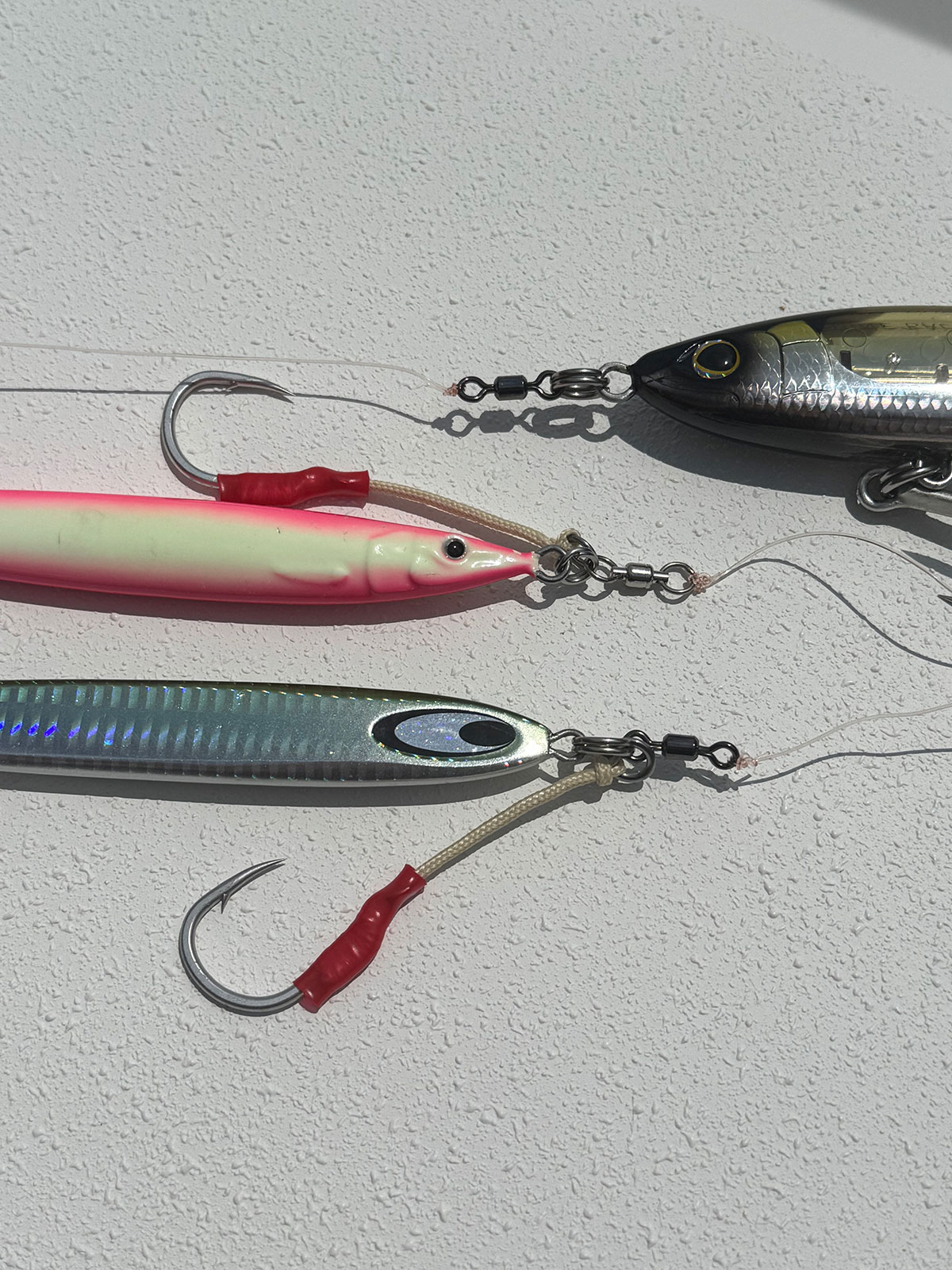
As for actual hardware, I really only rig jigs in a couple ways, simplifying the process. For the jig I use a #3 Shout Assist BB Swivel. Some shops locally have them in the Northeast and you can order them online, but I will say they are a bit harder to get. I personally like these as it’s the most compact you can get for a swivel with a solid ring as they come straight from the package, already attached. The swivel is a ball bearing which is nice but I wouldn’t say its 100% necessary. For an alternative I use a #2, 230-pound Spro barrel swivel along with a #8, 120-pound Owner Hyper Wire Split Ring. One end of the swivel connects to my leader, while the split ring can be attached a solid ring and the jig. The solid ring connects your assist hook and swivel together. The proper way of jigging is to attach your leader line directly to the solid ring, but given how much speed, circling and pinwheeling bluefin do, compared to your standard reef fish, I like having a swivel in there to mitigate line twist
For everything else, such as poppers or plastics, I’ll use the same #2, 230-pound Spro barrel swivel along with a #8, 120-pound Owner Hyper Wire Split Ring. The majority of the RonZ big game series heads come with a swivel already attached, so you can forgo rigging and just direct tie. The #2 Spro swivel size allows the #8 Owner split ring to pass seamlessly through which I like, and allows for quick exchanges of lures. It’s also nice to be able to remove lures entirely for the ride to and from the grounds, keeping your gear from tangling, scratching up the rod or the boat, or becoming randomly dislodged in the night when you might not see that jig and razor-sharp treble hook flying in your face.
Tools
Being set up with all the correct tools on the boat can make or break a day out on the water. I can’t count the number of times I’ve heard another angler nearby call out on the radio for split ring pliers, a lighter for finishing knots, or something else… sometimes offering $100 to get people to commit. I tend to carry spares of everything, if not multiple spares in the event one falls overboard, gets broken or whatever else might happen. I try to keep a running list going so every season I can make the first trip count.
Short List:
- Lighter or Torch (For Burning Tag Ends)
- Knot Puller Tool (Cinching Knots)
- Gaffs
- Heavy Duty Pliers
- Heavy Duty Split Ring Pliers
- Fish Processing Knife
- Tuna Blood Knife
- Ike Jime Spike
- Tail Wrap Rope
- Gloves
- Light Duty Fighting Belt
Backup Opportunities
Without a doubt, every time I head South of Block, I bring a light spinning setup, squid, bait hooks and even Sabiki rigs. There have been more than a few times where the fish weren’t cooperating, and we saved the trip by going after mahi and filled the cooler. These fish are plentiful if you get the right temps and some floating structure. Additionally, when you have mackerel, whiting, or other bait around, they make for prime live bait options that most offshore species will happily devour when they are ignoring artificials.
Whether it be your first trip or your hundredth, gear selection, emergency supplies, and proper preparation are the main keys to making the best of an “offshore” trip, regardless of whether you are with a guide, riding on a buddy’s boat, or taking your own vessel to the grounds. With this evolving fishery, spending time on the water and learning new things, making mistakes, and keeping your head on a swivel for changing weather conditions will ensure that you continue growing as an angler, and hopefully putting more fish in the boat for seasons to come!