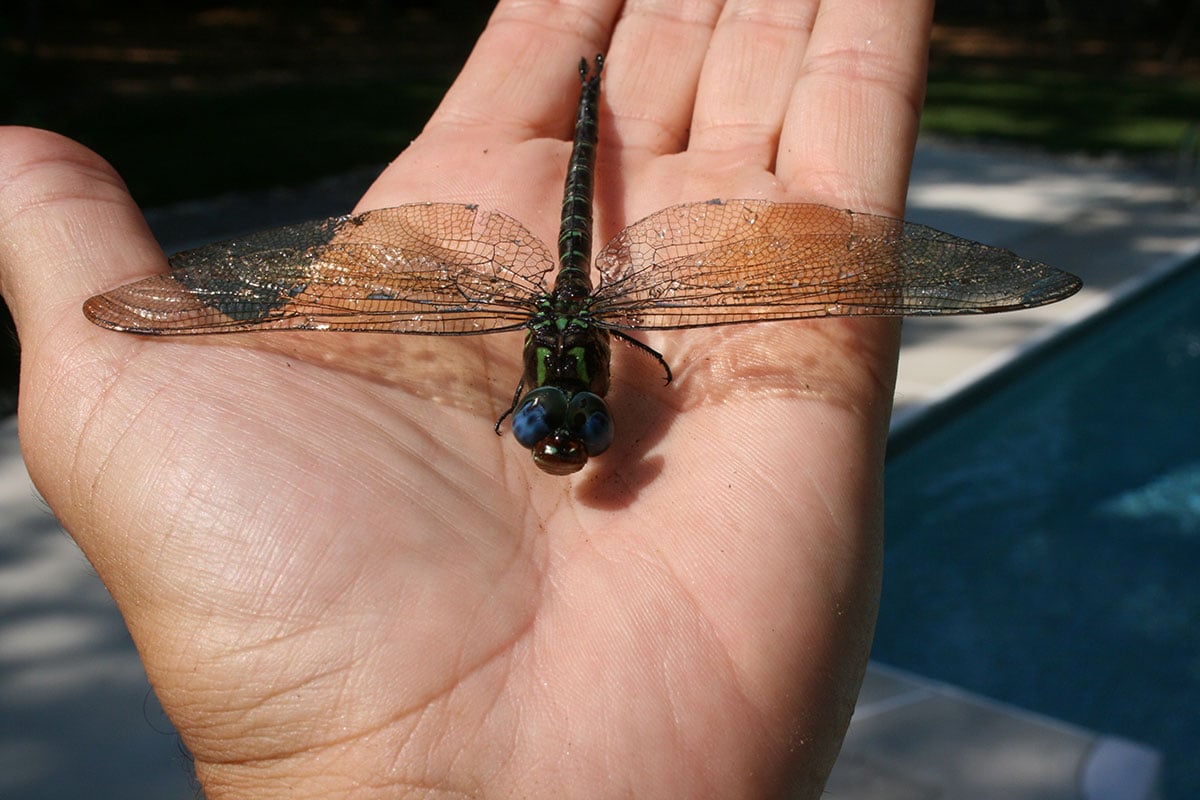
Dragonflies and their damselfly kin are relished by gamefish and panfish alike.
It was one of those “What the bleep,” cast stoppers. Moments earlier I’d been watching a pair of dragonflies buzzing over and around a laydown that was surrounded by lily pads, chasing the assortment flying bugs that would make for a lunch that hot, muggy early July afternoon.
The pond surface was as still as glass…the water slightly stained as shallow ponds normally are with summertime’s periodic thunderstorms roiling the skinny depths.
A trio of retrieves with a hollow body frog through the pads drew no interest, and a cast to the left down the bank was about to be in motion when the peripheral vision caught a launch of a husky bass through the liquid skin finishing with resounding splashdown. Silence, and movement of wavelets bank side.
Still staring at the ambush sight, perhaps a minute later, a lone dragon appeared minus what was either a companion or competitor, or both.
No use scrambling through the tackle bag because there was nothing inside even remotely resembling the victim. As luck would not have it, the omnipresent 7-weight fly setup and the vest hosting a decent mix of rubber-legged poppers and deer hair whatevers, was not present in the rear hatch of the SUV. It was neglected and remained in the rack as this would be spur of the minute shorty; it was decided to stick with an amphibian approach.
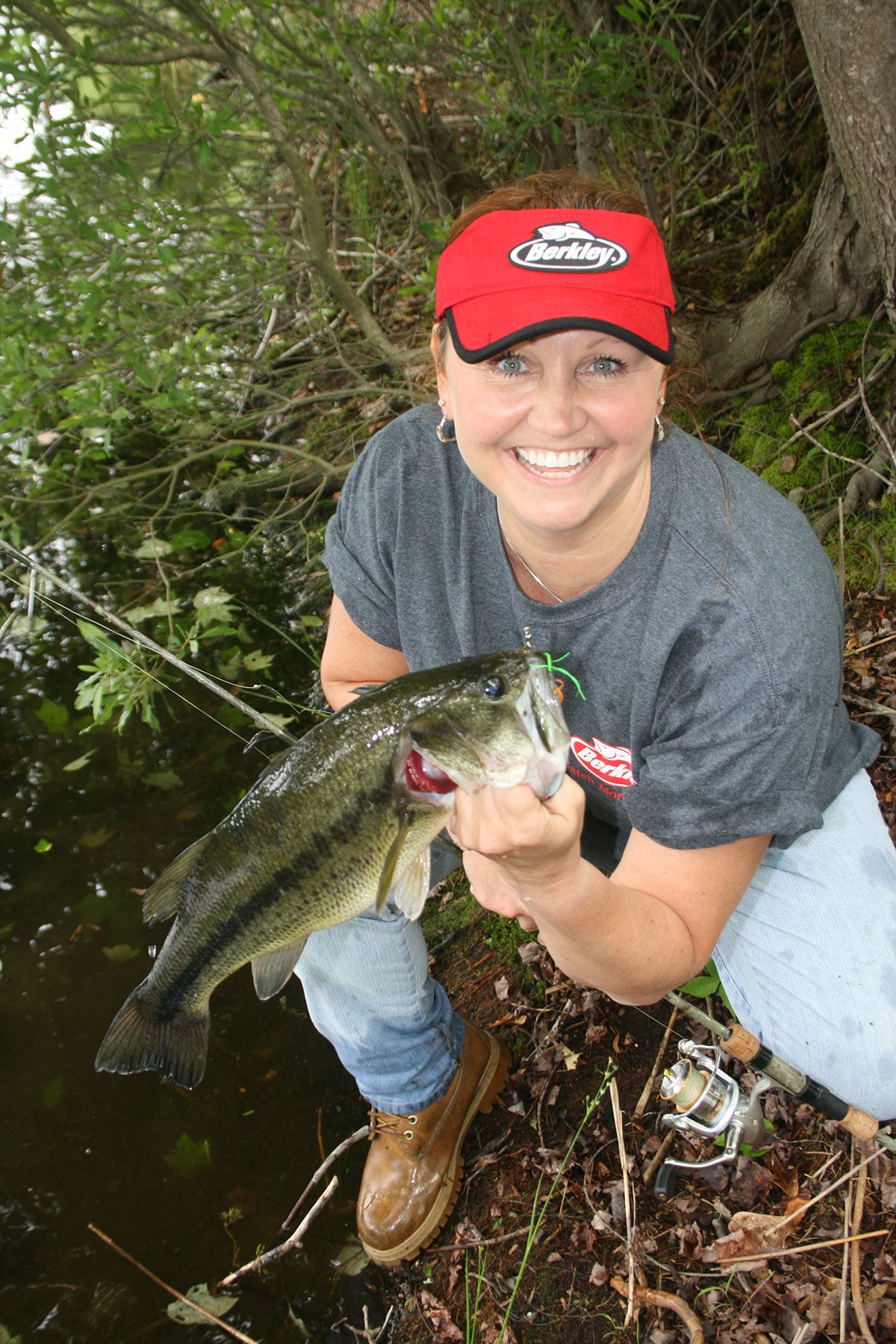
Fast forward a week or so later, and the bag held a small selection of dragonfly imposters. No, that particular bass at that particular location was not caught, but another half dozen around the 12-acre something venue were. Over the years and on swims from small to large, dragons have caught bass, both largemouth and smallmouth, as well as the occasional pickerel and the rare but there channel cat that took a poke at something struggling on the liquid skin.
Hotter The Better
Dragonflies are creatures of hot weather; the hotter the better with humidity thrown in for good measure. While we’ve seen them as early as late May, it’s generally the late June period when you’ll start noticing them in numbers. They’ll be around through September and into mid-October. It’s usually the second or third real chill that will end dragon play.
These mosquito and fly eating specialists (and their damselfly kin) are relished by gamefish and panfish alike, the nymph forms especially sought by sunfish, crappies, rock bass and perch, and in hospitable moving water environs, trout. We’ve had dragon nymphs crushed by trout on both freestone and limestone streams and have noticed them in stomachs when cleaning.
No mistaking the dragonfly and damsel. The former is much larger and meatier, with wings at a horizontal position when stationary; the latter folds its wings vertically. Colorful all, no worries about matching the hatch stuff. They hover, they’re targets. Dragons will station over the shallows out to 3 to 4 feet, sometimes deeper depending on insect-attracting vegetation on or breaking the surface. Numbers will be predicated on the amount of winged prey, going anywhere from one or two to a dozen or more maneuvering to get a mouthful.
It’s a dart/dip/dive when it comes to the grab ‘n kill, with the predators oftentimes only inches from the surface. Bass stationed underneath observe this and will make a play as instinct dictates, be it an inhalation should the dragon hit the water, or going airborne, sometimes to body length and longer, make the clamp. Sometimes there will be a suck in should an exhausted dragon be limp on the surface film or sinking beneath it.
No Common Bait
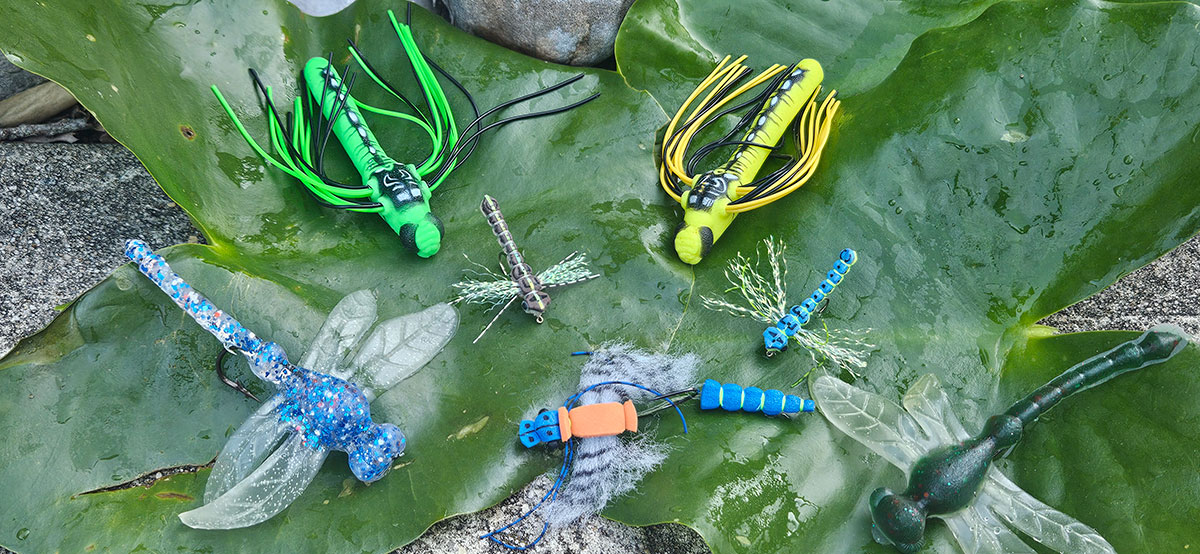
By no means a common bait, there are enough hardware dragonfly selections to run the gamut from sub $5 to the $25 to $40 price range. As basic or as esoteric as one wants to invest. We’ve banked and decked on both ends. Our basics have come down to the LunkerHunt Dragonfy and the Delong Lures Dragonfly. Both are reasonably priced, tough and have proved successful but in different situations.
The former is designed to be fished weedless and comes equipped with a 4/0 offset hook. Rigged Texas style, it can lay on a broad lily pad leaf without getting snagged. A meaty floater, it can be worked with a twitching/struggling motion through and over pads and surface laying vegetation, letting the silicon strand wings do their enticing work. Momentarily stopping the retrieve for a few seconds adds to the realistic distress.
The anise-scented equally meaty DeLong Dragon will slowly sink, is equipped with double flexible wings on both sides and is armed with a hook protruding from the bottom. The metal precludes it from effective use landing on, then moving off the pad(s) because of the inevitable snag. Same with surface laying weeds.
Where it shines is in the alleys…those elongated, narrow openings through the vegetation where it can be effectively employed (after landing with a “splat” as with the LunkerHunt) via a few rapid twitches, allowed to sink for a second or two, and then brought to the surface, rested momentarily until again submerged, and repeating the process. We found this also works in the wider gaps in the weed spreads.
The Dragon Wagon
We prefer medium heavy spinning tackle, with 30- to 50-pound test green braid the tether based on the venue/vegetation. Tying direct, as bass are not line shy and the braid is able to slice through the pad stalks should a hooked fish get wrapped.
The dainty damsel is another matter, as it is thinner, smaller and lighter than its dragonfly kin. The majority of damsel imitations are geared to the fly rod, and we have success with bass and big sunfish with the Rainy’s Whitlock Gorilla Damsel in Brown/tan and blue/chartreuse.
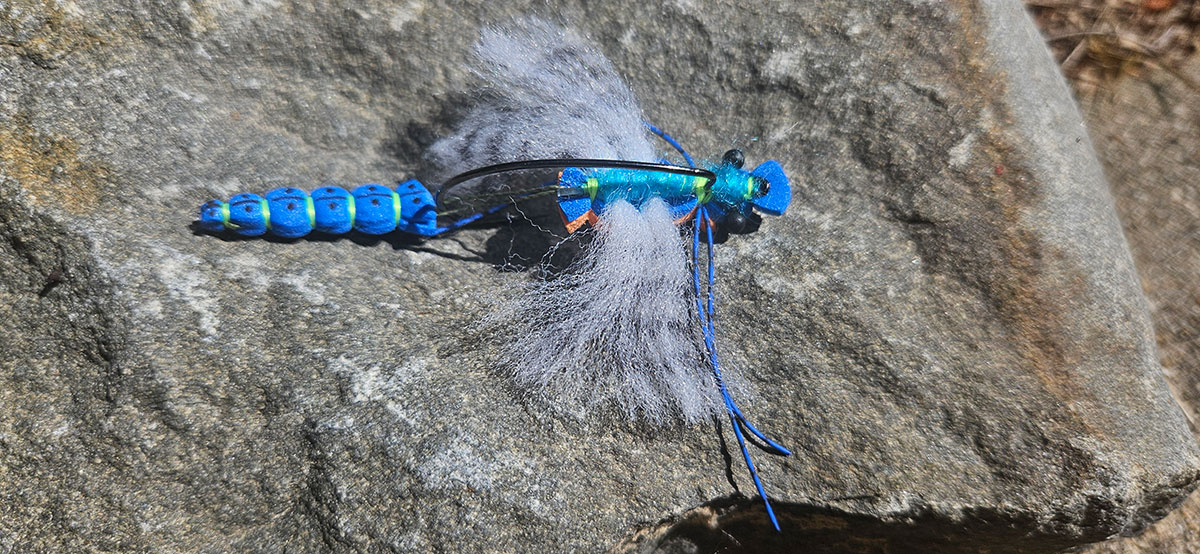
A hybrid of sorts is the Rainy’s Satkowski’s Disembodied Damsel. Weird looking, for sure, as it’s in two pieces, the free moving back end held by a loop of thread. The front has fluffed fluff wings, and a pair of ultra-thin rubber legs on both sides. The 1/0 offset hook is attached to the head and lays in between the body sections. Three inches in length it’s nonetheless feather light. Although made for the fly rod, we opt to fish this is more open waters utilizing medium light spinning gear, with a small, partially filled casting bubble the ballast to make distance possible. Long rod sacrilegious yes, but the largemouth and smallmouth crush it.
Oft ignored as a bass bait option, both can deliver when the heat is on.
Welcome to the summertime dragon wagon; climb aboard!