Picking up where we left off in March, trout season is steaming ahead!
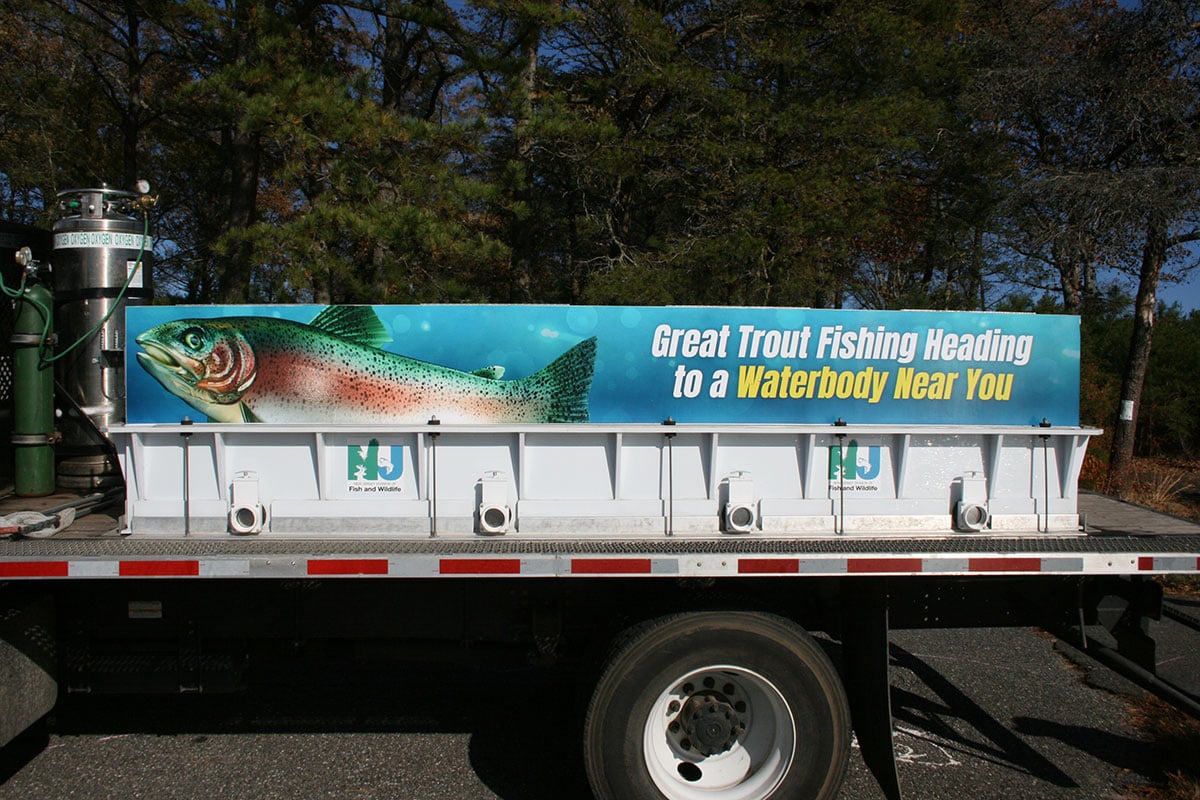
The Pequest Trout Hatchery trout train has been rolling since March 23 as per the revamped, and revitalized, Garden State stocking program highlighted in the March issue of The Fisherman Magazine.
To be sure, this forward sighted new beginning is sure to be, and most likely is as you are reading this, greeted eagerly by lake and pond trout anglers that can wet a line for the rainbows with the two-fish limit that will increases to six trout with the April 11th Opening Day.
The more than half-century the “no fishing” mandate during the late March-early April three-week preseason stocking is thankfully in the rearview mirror on the still waters stocking roster. This also opens said venues to those seeking early season opportunities for largemouth bass, pickerel, panfish and catfish. A win-win all around.
And yes, there will be the wait until 8 a.m. on brooks, streams and rivers for the traditional opener, which this year is April 11 and as per the changes, will henceforth be the second Saturday in April.
Some things remain in place, including the 5 p.m. openings and stocking dates on the select waters, often referred to as the Sweet 16, that are listed on page 18 in this year’s Freshwater Fishing Digest (available in tackle shops or downloaded at njfishandwildlife.com). Said regulation goes back to the early 70s and was met with mixed reviews then and still today, liked by those who can be streamside by 5 p.m. (jockeying for position underway by 4 p.m.) on the respective delivery day, and not so much by those who can’t.
Gains & Loses
Some gains and a loss to the stream stockings, the former in stocking boundary extensions, the latter with the removal of a swim from the roster. On the plus side, the Lopatcong Creek (Route 519 Harmony to south Main Street in Phillipsburg) picked up an additional .6 of a mile that includes a new park and access; the North Branch of the Raritan (Peapack Road Bridge in Far Hills/Bedminster Township to confluence with the South Branch of the Raritan) trout stocked reach extends another 2.3 miles on its upper end to the base of the Ravine Lake Dam that includes the stunning Natirar Park; and it’s 2 miles for the Pompton River from Riverdale Road in Riverdale to NY Susquehanna railroad bridge that includes the Pompton Aquatic Park complex. That’s another 4.9 miles of rainbow releases on prime, easily fished flows.
On the losing end, it’s the diminutive Neldon Brook in Sussex County’s Stillwater Township. Previously stocked pre-season and twice in season for a total of 300 trout, it fell victim to private land ownership concerns and an overall lack of angler interest.
On the wild brown trout-rich Pequannock River, the minimum length is raised from 9 inches to 12 inches from Route 23/Smith Mills to the railroad trestle below Appelt Park. The creel limit for combined trout remains the same, but only two can be brownies.
Of note, Lake Shenandoah in Ocean County has been removed from the stocking list, as dam repairs have yet to be completed. The 1,780 trout allocated will be returned to the “pool” and released in other area waters.
“Players” & Payloads
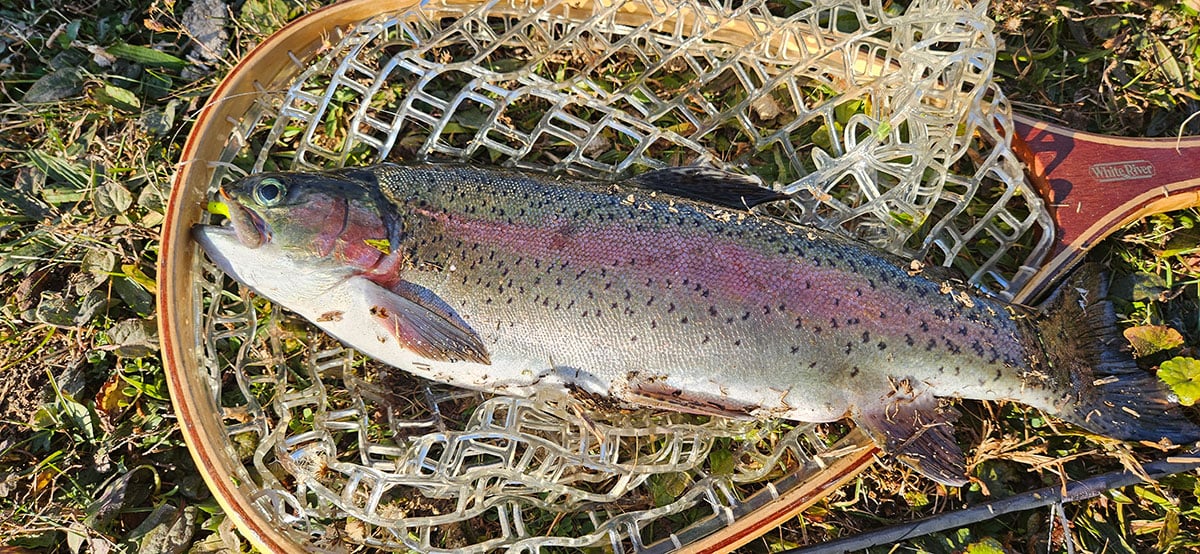
Rainbows, rainbows, and more rainbows. When the trucks pull into the Pequest Trout Hatchery grounds on the afternoon of Friday, May 29, the overall baseline total of 570,010 ‘bows ranging from the standard 11.5 inches to spent breeders tipping the scale to 6 to 7 pounds will have been loosed in 188 waters from Saw Mill Lake in High Point State Park to Ponderlodge Pond in lower Cape May County. “It’s all systems go, and we’re excited about getting the trout out there,” said Pequest Trout Hatchery superintendent Ed Conley, adding “They’re in excellent shape, and with the Bonus Broodstock Program and the breeders going out in the pre-season stocking and into the first week or two, maybe the third and, well, we’re expecting a great spring trout fishing season.”
Excluding the pre-season doses, there is a seven-week in-season stocking schedule that extends through the Friday of the Memorial Day weekend. The majority of the swims are stocked a minimum of three to four times; these generally being classified as “Non Trout Waters” where put-and-take is the name of the rod bending game. Another 20 are stocked five times, another trio getting hit six times, and the aforementioned Sweet 16 seeing a seven count of deliveries.
This year, 188,040 ‘bows will have been stocked, including the 20 new one shots in the pre-season venues, with weeks two (April 20-24) and three (April 27-May 1) seeing 80,450 and 75,520 respectively the most in season trout being released. By week seven, the count is down to a still very respectable 18,600, with these being confined to the Sweet 16.
With the addition of 20 waters receiving ‘bows in the early going, one has to wonder if there will be any surplus trout available for fattening the nets during weeks five to seven. This has become the norm (no promises, of course) with the high octane, crackerjack performance of the Pequest Trout Hatchery crew the past decade, even longer. The normally poker-faced Conley was even more so; it difficult to tell if he had a rainbow royal flush to show.
“We’ll wait and see,” he mused.
Outlook Is Good
Barring heavy rains and subsequent over the banks runoff, things look promising and beyond for the 2026 springtime rainbow rodeo. Low running waters were bolstered by snow runoff as per a pair of February storms and save for a slow ice melt on some of the northern tier county lakes and ponds (up to 8 inches still reported as this was being submitted) it looks great for the still waters as well.
| SIGN OF THE TIME |
| With all the new things happening, why not unveil new Trout Stocked Waters signage? And here you go, new signs at stocked waters that sport a QR Code that connects one to the stocking schedule, special regulations as per water body, and trout fishing resources in addition to myriad mounds of other freshwater fishing information.
Indeed, springtime 2026 introduces a new and exciting era for the Garden State’s trout fishing experience. Let it be long lived; but not without the occasional tweaking as times and conditions evolve.
|

The daily limit from April 11 through May 31 is six at a statewide minimum of 9 inches. From June 1 through December 31 the limit is reduced to two at the same minimum.
Lake trout regulations have been revised for the Garden State’s premier pair of laker venues. Round Valley Reservoir’s daily limit will now be eight from 15 inches to less than 24 inches, and one equal to or greater than 24 inches. On Merrill Creek Reservoir, the daily kill count will two lakers from 15 inches to less than 24 inches, a two equal to or greater than 24 inches. It’s now a year ‘round fishery on both.
There are things in motion to once again put brown trout in the spring trout fishing lineup, and this is a wait and see for at least another year. At least things are happening in that regard. However, for those who relish the wild brown trout experience, there are some eye-popping opportunities available, as in fish approaching a thick bodied 17 to 20 inches, some in locations hiding in plain sight. These waters are managed as Wild Trout Streams (where browns are present with rainbows and brook trout), and Wild Brown Trout Enhancement Streams, with brownies the dominant salmonid. The most easily recognized is the 2.2-mile Ken Lockwood Gorge “no kill” section of the South Branch of the Raritan. The tributaries fuel this beat with wild fingerling recruits. Not to overlooked are the Bartley and Long Valley beats.
The aforementioned Pequannock is a stellar brownie hang out, and we’ve caught them to 14 inches behind homes and the occasional garden apartment in Butler and Riverdale, the nearby rumbling vehicular vibrato of Route 23 notwithstanding. The lower Van Campens Brook, Lopatcong Creek, Dunnfield Creek, the Wanaque River, Rockaway Creek, Beaver Brook (Clinton) and the North Branch of Rockaway Creek are hoppin’ Brown Towns.
There are special management regs in place for the species; these can be found on page 20 in the Freshwater Fishing Digest.