Transitioning from fall to winter, and ultimately into a new year of trout fishing.
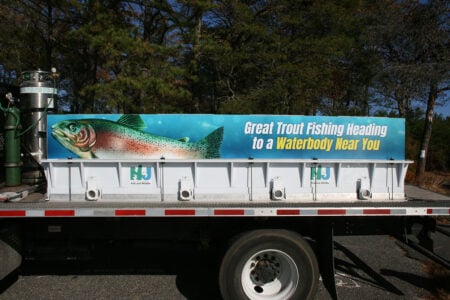
The trout stocking of Northeast rivers in October initiates the cold-water season. Streams can be crowded early on, though not as packed as they might get in the springtime. You can find spots to cast from, and you might see trout much bigger than you’re used to, if you’ve only fished them in the spring.
They haven’t spread out and acclimated to the water, and the fishing can feel artificial for that reason, as if you’re tossing bread to a flock of crows on a scheduled round. Crows can be picky, though. Like trout, not easy to catch. I have cast marabou jigs struck without hesitation, but then on other occasions trout have taken some interest, nosing at the jig, but didn’t strike. I’ve walked away from more than one river skunked after big trout and many smaller swam in plain sight.
If you’ve experienced the like, you might feel more in your element from December through February. The October and November months are for scouting while also anticipating the straightening out of ambiguity regarding the value of fishing. Soon you won’t feel riveted by interest in fish seen in low water on the one hand, and vaguely that fishing them is unfair, on the other. The trout have been in the rivers awhile by December, and they never suffer their obvious presence as they do in October and even in November.
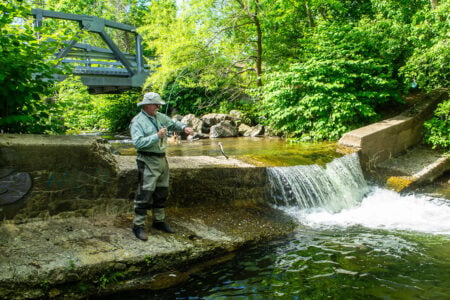
From December on, the comfort of boot-foot neoprene waders complements dressing for cold weather. The fishing is usually solitary, which might be appealing, and the productivity is good enough if one or two get caught. They’re good fish.
Until the rivers close for the coming spring season, the fishing can be good in March, too, although by then the season has begun to feel like early spring. You might see daffodils blooming on the way to a river, and on more than one occasion temperatures might be in the 60s, though fishing for “river trout” can be best when the temperature is right about 40.
Between 10 a.m. and 2 p.m. sunlit water temperatures come up just a hair in the winter, compared to colder days when the water’s tendency is to ice over in calm spots and near the bank. Last season, rivers froze solid from edge-to-edge and some river anglers went ice fishing, though the rivers were especially good in March after the lack of fishing pressure. But about favorably brisk temperatures near 40 and sunlit water, trout do respond to those conditions by being more active than when it’s colder.
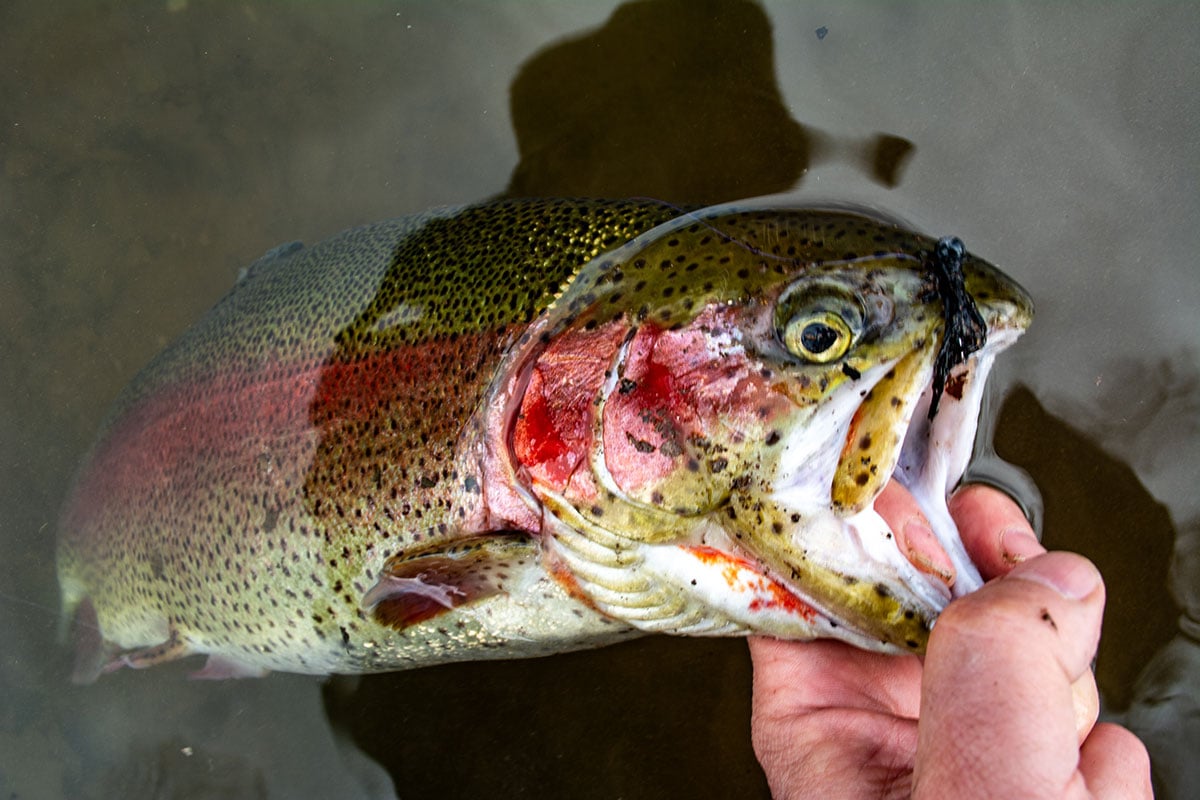
Any of them might lash out at a black marabou jig retrieved at moderate speed and jerked around a little. The Haggerty brand is tough to find locally and can be found online at higher cost than Kalin’s. But Kalin’s jigs work, and the supporting of local business rather than the spending of money online helps assure such shops remain in business. Both 1/16- and 1/8-ounce produce. Berkley 4-pound test is better than Berkley XT, which doesn’t cast nearly as well. Other brands work fine, so long as the monofilament is limp, which makes a critical difference in cold weather. I prefer a clear line because I fear any color might be visible to fish.
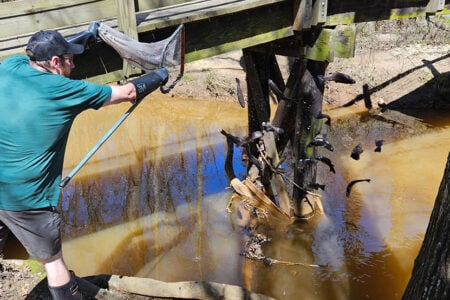
Tackle doesn’t matter if you don’t find trout, and you can take advantage of one kind of spot in particular: shallow depressions. In one case, the location is downstream of the dump spot. There by the bridge, the water is too shallow to hold fish, but on downstream maybe a few hundred yards, it deepens by only a foot. I’ve waded into that spot and it’s only thigh deep, but that’s where trout hold. On downstream almost a quarter mile, a spot deeper yet holds trout, too, but the point is that the water doesn’t have to be very deep.
It doesn’t necessarily have to be far from the dump spot, either. My favorite spot on all the rivers I fish is a small depression right at a bridge. Not necessarily right where the trout got dumped, but everywhere else under that bridge is too shallow to hold any fish. Most of the trout—by December—have got caught or gone exploring and spread out, but a few stay in that shallow dip late into January. The fishing pressure doesn’t find them.
Spots like that remain virgin. Again, it’s only thigh deep, but that extra foot of depth makes all the difference.