A tide-driven walk along the shoreline reveals how current, structure, timing and careful observation can unlock some of the surf’s most productive fishing windows.
There is a long-held belief among coastal fishermen and baymen that if you don’t like the local marine weather, just wait—change is only minutes away. The same could be said of saltwater fishing. The next tide change can transform the fishing from feast to famine, or vice versa.
Tides are generated by the periodic bulging of the earth’s water both toward and away from the moon. This hydrodynamic phenomenon creates high and low tides, and as a result of the earth’s rotation, two cycles of high and low tides typically occur each day. The direct alignment of the earth, moon and sun during new and full moon phases creates the strongest tides and currents. These cycles are known as spring tides. At the other end of the spectrum are the weaker neap tides that occur during quarter moon cycles.
Understanding the relationship between tide and current is one of the most important factors in becoming a successful angler, whether fishing from the surf or a boat. Tidal changes and the resulting currents influence the movements and feeding behavior of baitfish and predatory species.
Fish often transition deeper into intertidal areas on the flood and follow bait toward deeper water on the ebb. Striped bass and redfish, for example, frequently move onto flats as the tide rises and retreat as the water falls. Fish can push deeper into marshes, grass lines, harbors and backcountry areas on high water, only to reposition when the tide begins to ebb.
Gamefish naturally gravitate toward areas of current where they can ambush prey. But every shoreline is different, and topography has a tremendous influence on where that moving water goes and how fish respond to it.
Current Changes Everything
Tides also produce currents. While tidal changes move water vertically, currents move it laterally or horizontally. Those currents vary depending on the strength of the tide, wind direction and velocity, the contour of the coastline, and surface and subsurface structures such as jetties, rock formations, underwater boulders, channels and troughs. Areas where water funnels and accelerates can be particularly important.
All these variables create a scenario where the fishing can change dramatically during a single day. An angler needs to recognize those changes and be prepared to take advantage of them. To better understand this relationship, I once spent a full day on the water fishing all four cycles of the tide and observing how the conditions changed.
That day took place during late spring while fly fishing the surf from a Long Island beach. My outing began about two hours into the flood tide. I mapped out a course that looped around a series of beaches and covered approximately three miles of shoreline. Traveling down those beaches and eventually returning to my starting point enabled me to fish specific zones during different periods of the tide.
One of the most obvious lessons reaffirmed that day was that a particularly good piece of water often holds fish during only specific tidal windows. Bait availability, current, season, water temperature and the presence of your targeted species all contribute to a location’s productivity. But current was especially revealing.
One location produced fish during two very specific phases: first, when the current was approaching peak strength, and again when that same current slowed enough for reverse back eddies to form along sections of the beach. In both instances, the window of opportunity lasted no more than about 45 minutes.
That experience reinforced an important lesson: productive fishing spots do not produce all the time. You have to know when to fish them.
An angler arriving during an off period could easily conclude that the location is a dead zone. Visit the same piece of water under the right conditions and it can transform into a hot spot.
Spots That Hold Secrets
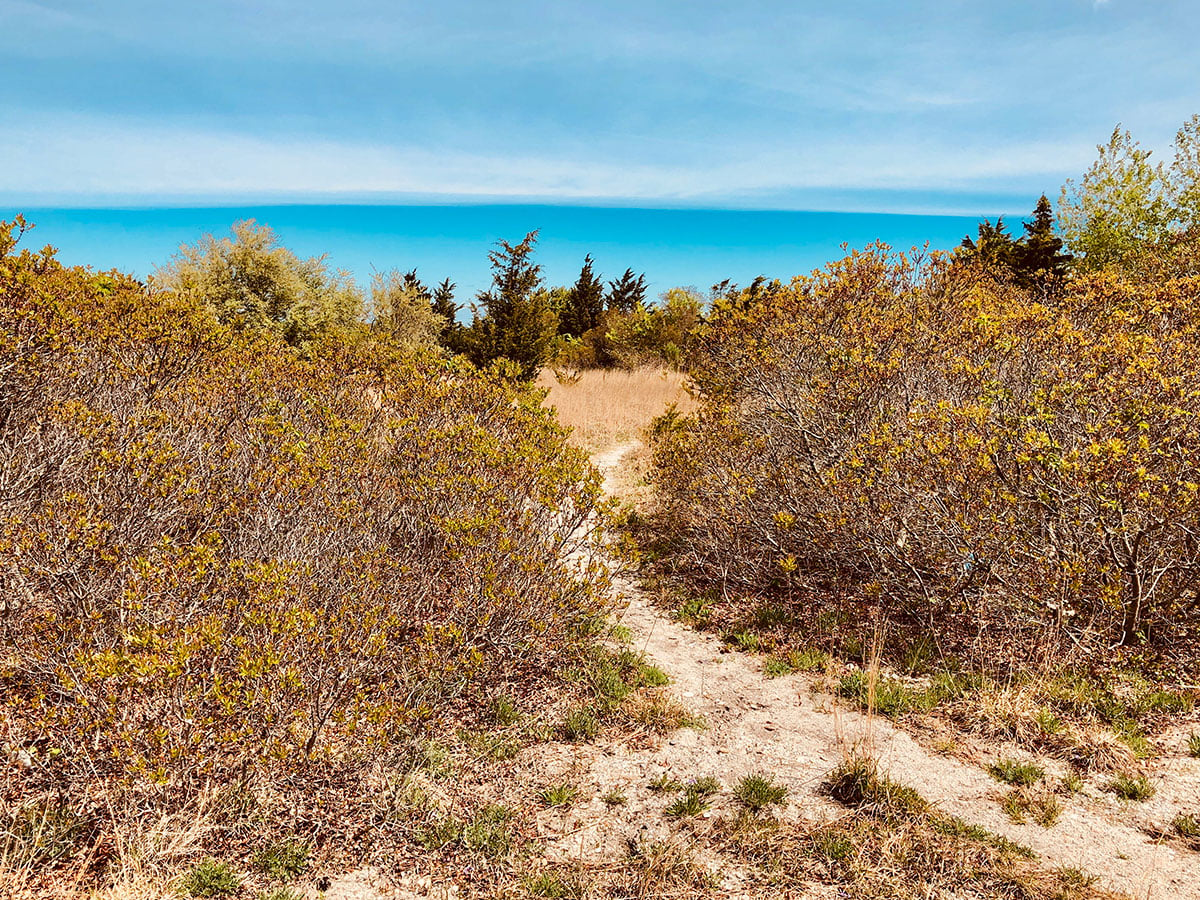
I have watched anglers walk right past productive sections of beach without making a single cast. The true secret to fishing tidal locations is understanding how all the variables work together to create an environment conducive to catching fish. Heavily fished areas may have few true secret spots, but they have plenty of spots that hold secrets.
Many beach anglers take up a fixed position and wait through tidal changes, hoping fish eventually swim within casting range. I prefer to stay on the move and seek out the fish. This isn’t simply a serendipitous walkabout along the beach. I try to time my movements and fishing activity to coincide with the periods when I anticipate peak activity at each stop.
One method is comparable to sitting in a tree stand while deer hunting. The other is more like still hunting, with the hunter slowly moving through the woods searching for game. Both approaches can be effective, but success depends on understanding when and why a particular location switches on or off. Equally important is knowing when to sit still and when to move.
The Bass I Almost Missed
I am painfully reminded of one day when I chose to sit home watching a Yankees game rather than join my friend Chuck for a late-afternoon surf fishing outing.
It was a hot summer Sunday, and I figured the beach would be swarming with people and the water crowded with boat traffic. I checked the tide chart and wasn’t particularly happy with the stage of the tide, either. Foolishly, I declined his invitation.
My phone rang during the eighth inning.
“Hey Ang, meet me at the beach and bring your camera. I got a good one!”
My stomach sank.
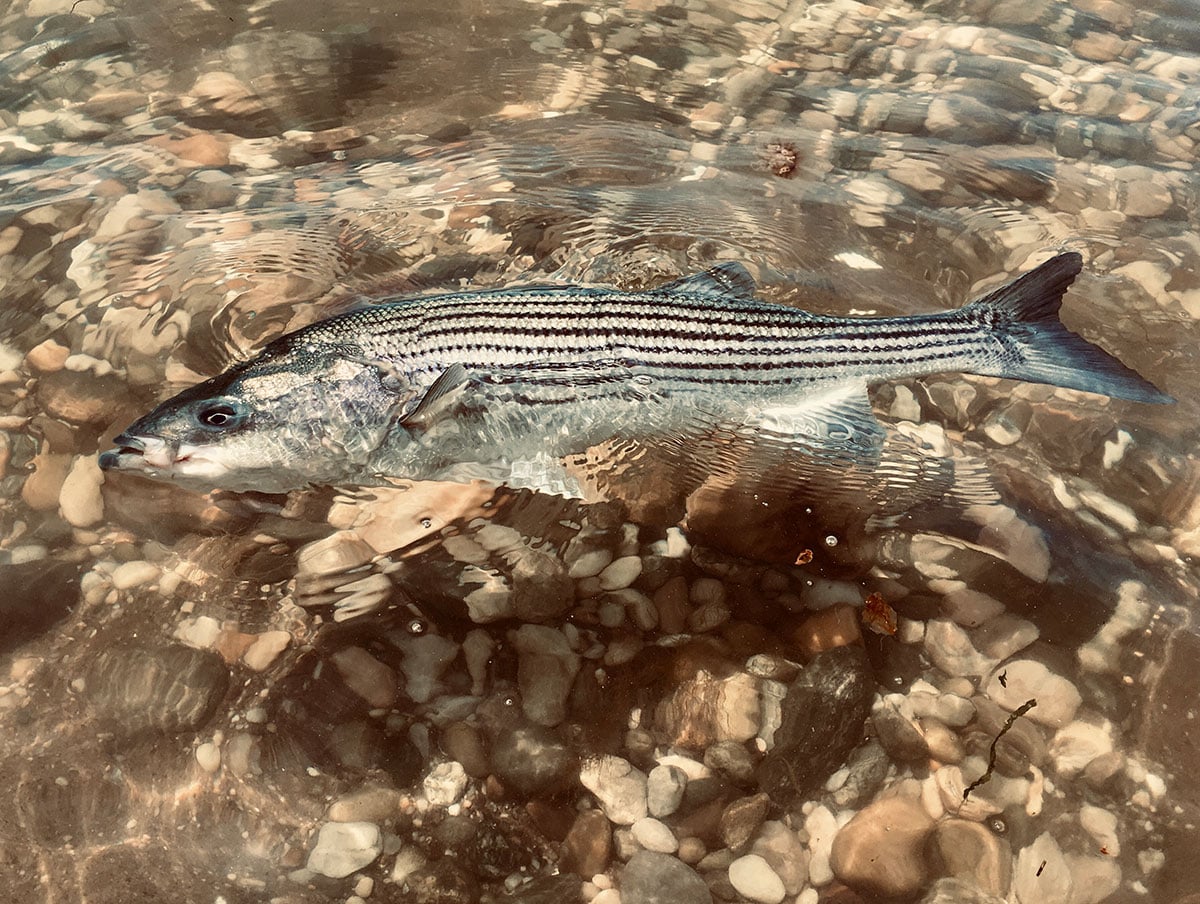
My friend rarely, if ever, kept a bass, so I knew it had to be an exceptional fish. Indeed it was. The striped bass weighed 51 pounds and was the largest bass Chuck had ever caught from the beach.
My assessment of the tide had been less than enthusiastic, but Chuck understood something I had overlooked. That area offered a productive pre-slack opportunity that coincided with one final push of structure-related current. There was a small window when the movement and feeding behavior of any bass in the neighborhood could work in his favor.
His big striper hit at the very end of the tide among a series of exposed boulders where the slightest current remained. It required a long cast, but as a former professional baseball pitcher, Chuck could throw a plug quite a distance.
Following the capture of that trophy bass, we returned to the area regularly during similar tidal conditions and experienced considerable success. The bass didn’t bite every time, but when they did, the results could be exceptional.
That fish was another reminder that it isn’t enough to know where fish are caught. You also need to understand why they were there and, perhaps more importantly, when they were there.
Racing The Weather
I eventually had an opportunity to redeem myself, albeit with some assistance from the tides, currents and a fishing friend who happens to be a bit of a weather geek.
I had been catching solid numbers of schoolie striped bass when I received word that larger fish had migrated into my region of Long Island Sound. Based on past experiences and lessons learned during countless outings, I knew exactly where and when I wanted to fish.
There was just one problem: an ominous thunderstorm was rapidly approaching the central North Shore of Long Island.
Having spent considerable time fishing those beaches, I had a strong intuitive sense that there would be a peak opportunity at one particular location. Getting there, however, required a considerable hike during some nasty weather.
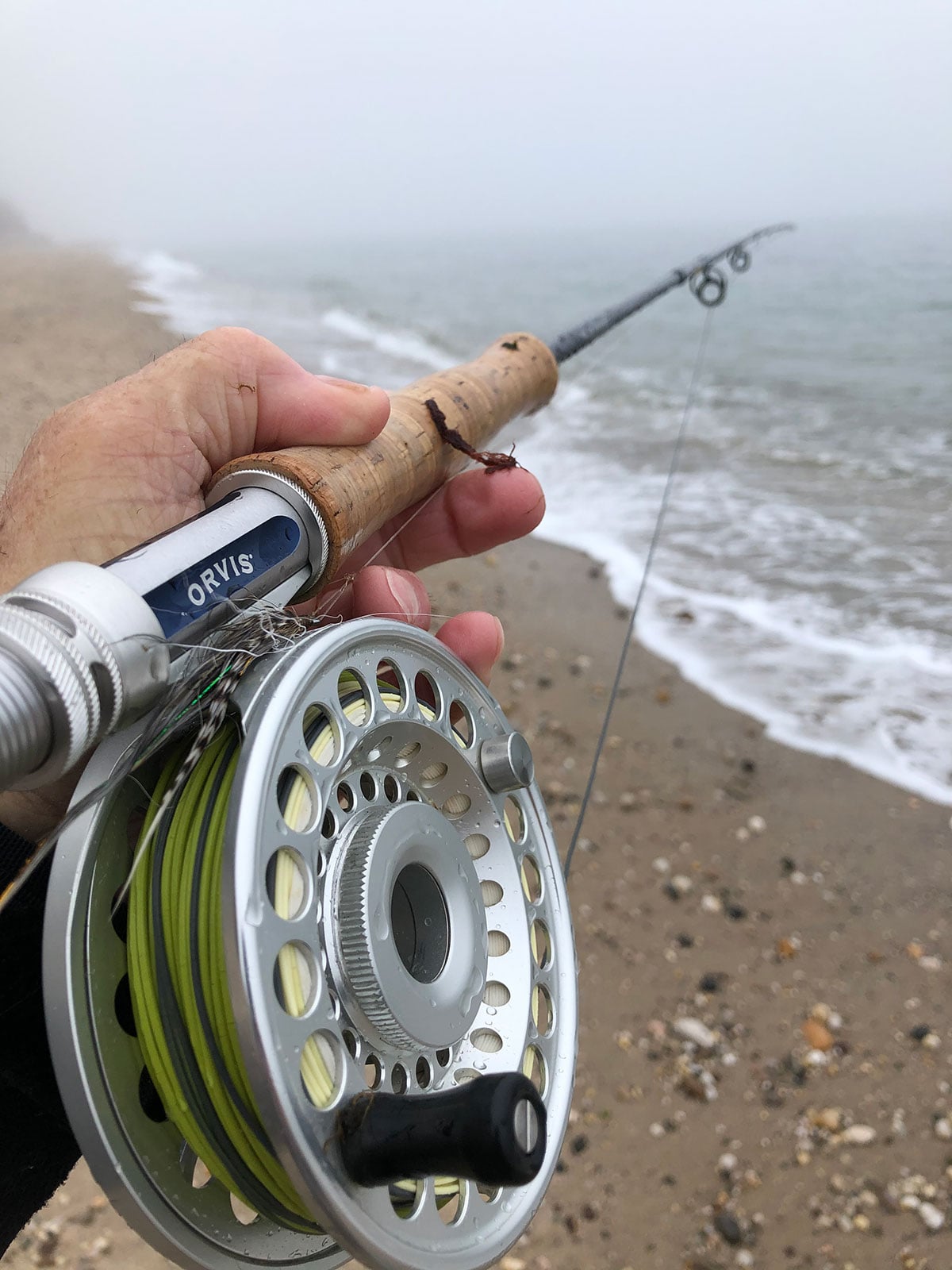
I had made the hike many times before, but I didn’t particularly like the thought of standing on an isolated beach with a 9-foot lightning rod in my hand.
I watched the approaching front in the distance over Connecticut and called my weather-savvy friend.
“Hey buddy. I’m on a local beach and I need your help.”
“What’s up?”
“Check your weather apps and tell me how much time I have before that thunderstorm building in Connecticut reaches me.”
After a brief pause, he responded.
“You’ve got about an hour and a half.”
“OK, thanks. Gotta run. I’ll call you later.”
Off I went, double-timing my pace.
From previous outings I knew the tide phase I would encounter should be ideal and that the right currents would have formed. My decision did not disappoint.
I landed only three striped bass that day on the fly rod, but those fish ranged from 38-1/2 to 42 inches, with the largest weighing 31 pounds. I admittedly overstayed my weather window, and lightning began cracking across the sky as I returned to my truck.
The fishing was memorable, but the larger lesson was again about putting experience to work. Past observations of tide, current and structure had allowed me to predict when that particular piece of water would come alive.
Learn To Read The Beach
Fishing is a journey of discovery. Even the worst days can teach lessons that pay dividends on future outings. You don’t necessarily have to spend entire days on the water unraveling the mysteries of your local fishing grounds. But spending time exploring with your eyes open and your senses tuned to the lessons nature provides can completely change how you view and fish an area.
Learning to read water is almost like learning a foreign language. Eventually, you begin to understand the environment well enough to visualize what is happening beneath the surface, including structure and the resulting movements of water and bait.
As you walk the surf line, take cues from the land adjacent to the water. The gradient of the beach often provides clues about how that land continues to slope after disappearing beneath the surface. Following sloping terrain can lead to a hole, depression or trough that may concentrate bait within casting distance.
Extreme low tides are among the best times to explore and get the lay of the land. A trough, boulder, cut or depression exposed at dead low may become an important feeding station once several feet of water cover it.
When striped bass move through the surf zone, these features can create periods of exceptional productivity. Sloping drop-offs and troughs are particularly attractive to migrating fish. That knowledge is equally useful whether fishing from the beach, boat or kayak.
Find What’s Different
When examining surf structure, look for anything that stands out from the surrounding environment. Even a slight bend or depression along an otherwise featureless shoreline can alter current enough to influence your fishing.
Classic fish-attracting structures include boulder fields, channels, cuts, docks, piers, sunken barges, boats and rock piles. Some are obvious. Others remain completely hidden beneath the surface.
One of my most productive beach locations is a cluster of large concrete blocks that fell from a barge during the 1930s. Hardly anyone knows they are there, with the exception of the town historian.
There’s another lesson in that: take your fishing wisdom from any and all sources.
The angler willing to explore at low tide, study charts, talk with locals and examine the shoreline carefully can develop a mental map of structure that isn’t apparent to someone simply walking onto the beach and casting straight ahead.
Timing Your Walkabout
Time of day is another important consideration, and it is closely connected to season and tidal conditions. The period around false dawn through an hour or so after sunrise is traditionally productive. Dusk and sunset can offer another prime window.
The period from roughly 11 p.m. through 2 a.m. has also been very productive for me when targeting nocturnal feeders.
But don’t overlook daytime fishing if your schedule permits. This is especially true during early spring and the fall migration. Even high noon can provide excellent opportunities to spot and catch migrating fish moving across sand or mud flats.
Moon phase also plays a role because tides are dependent upon the moon. Both new and full moons have devoted followers. Some anglers fish religiously for two or three days on either side of a new moon, while others concentrate almost exclusively on the larger tides surrounding a full moon.
Regardless of personal preference, each phase can have a profound impact on tidal intensity and the currents those tides create.
The key is not simply memorizing which moon or tide someone else considers best. Instead, learn what those conditions do to the particular places you fish. A strong tide that improves one location might make another nearly unfishable. A weak tide that produces little current along one beach could create exactly the right conditions somewhere else.
Keep Moving, Keep Learning
One of the keys to becoming a better angler is maintaining a desire to explore. Hiking, biking or driving to reach productive areas can often be much more effective than standing in one place waiting for the fish to arrive.
And when you venture onto an unfamiliar stretch of beach or into a new backwater, you might discover your own slice of seclusion.
But an angler’s walkabout is not just a random stroll down the shoreline. There should be purpose behind every move. Watch the tide. Study the current. Look at the shoreline. Remember where bait gathers. Pay attention to the subtle pieces of structure that change how the water moves, and make note of exactly when those locations produce. The watchful and alert angler is often the one who catches the most fish.
Many factors go into preparing a day’s fishing plan, and much of that knowledge can only be acquired through experience and time on the water. Every outing provides another piece of the puzzle. Make your own discoveries, learn from your successes and failures, and above all, heed the wisdom of the tides.